HomeCategory

Risk Advisory

AI Incident Response: What Happens When an AI System Fails?

Why organizations need response playbooks before AI failures become legal, operational, and reputational crises EXECUTIVE SUMMARY Artificial intelligence governance is often discussed before deployment: policies, vendor reviews, risk assessments, access controls, human oversight, audit trails, and board reporting. But the real test of AI governance comes when something goes wrong. An AI system may leak...

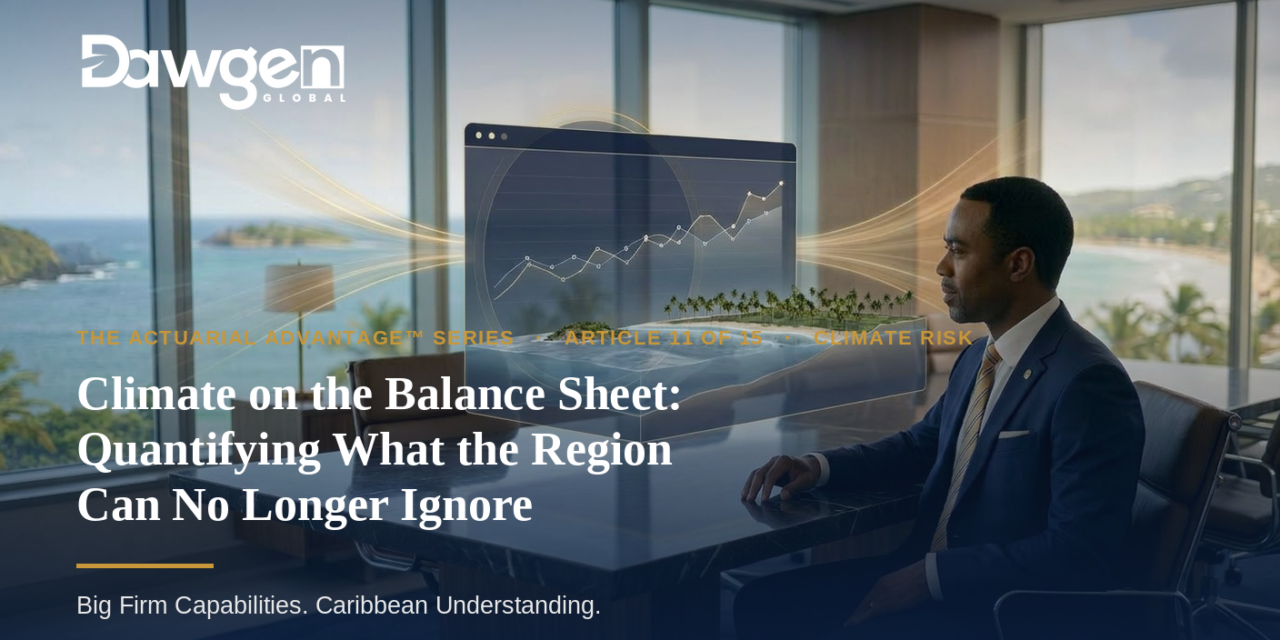
Climate on the Balance Sheet: Quantifying What the Region Can No Longer Ignore

  Climate risk has stopped being an environmental footnote and become a financial one. It reaches the balance sheet through two channels — physical and transition — and the organisations that quantify it early will navigate the decade ahead far better than those that wait to be told. For most of the last two decades,...

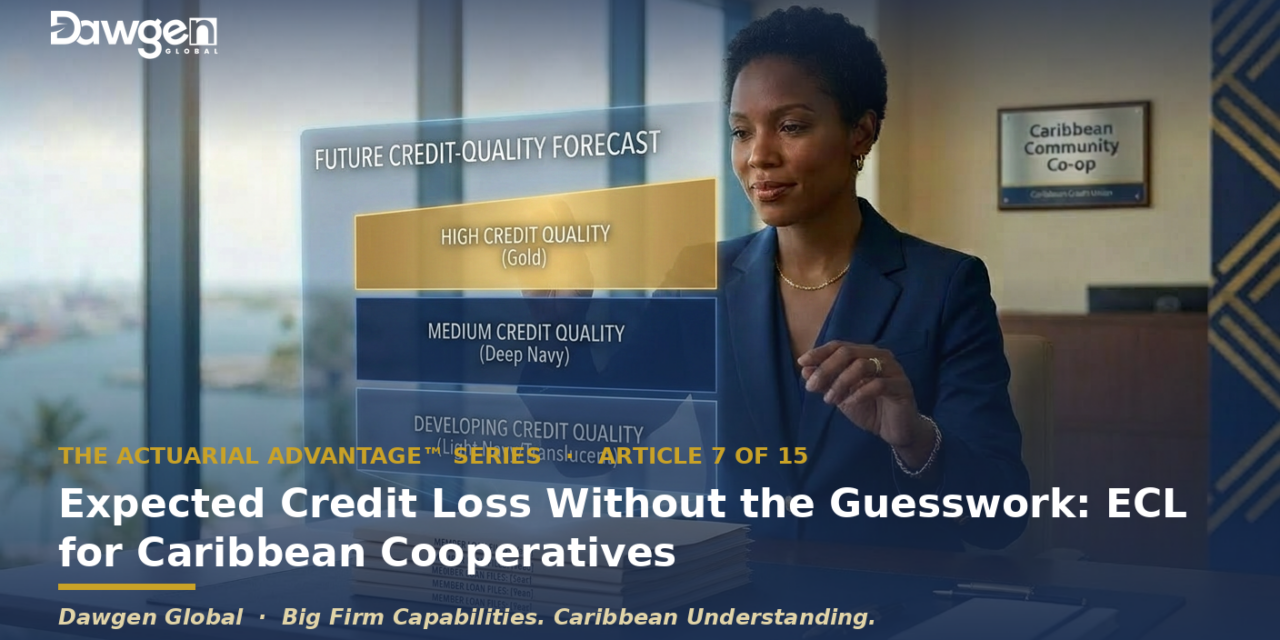
Expected Credit Loss Without the Guesswork: ECL for Caribbean Cooperatives

  For the credit unions at the heart of Caribbean finance, IFRS 9’s expected-credit-loss model can feel like institutionalised guessing. Done with discipline, it is the opposite — and a powerful early-warning system. Across the Caribbean, credit unions and cooperatives are not a financial-sector afterthought — they are a cornerstone. They hold the savings of...

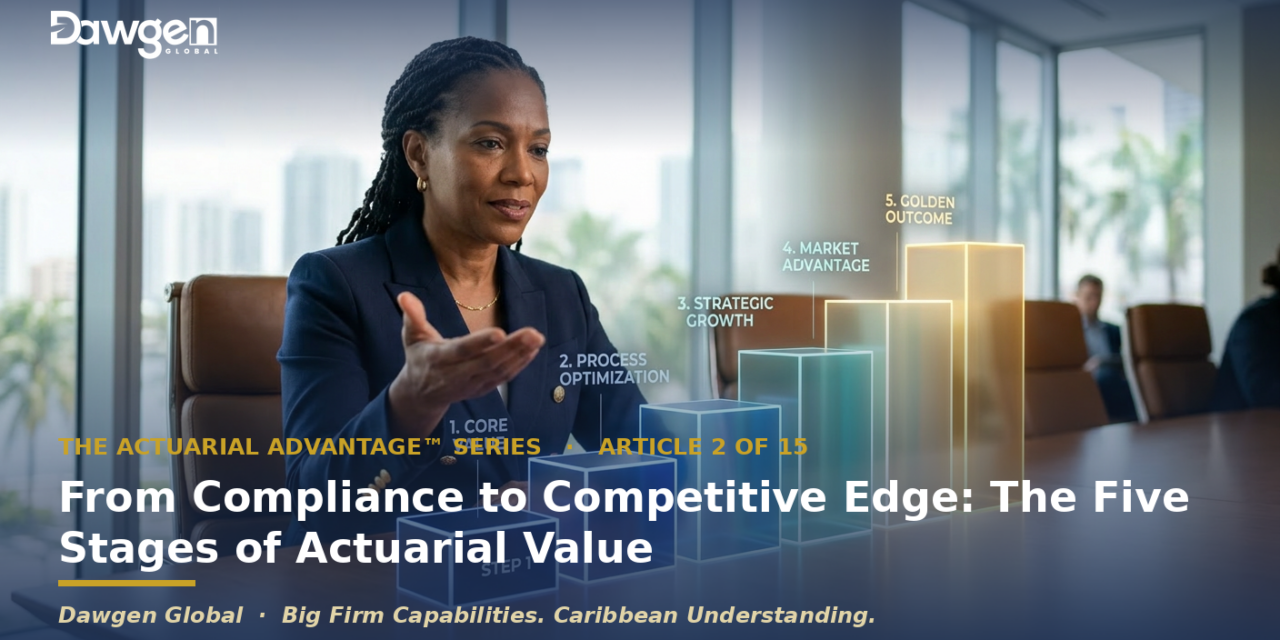
From Compliance to Competitive Edge: The Five Stages of Actuarial Value

  Every organisation that carries financial risk sits somewhere on a five-stage continuum — usually without having chosen its position. Knowing where you are, and what it would take to climb, is the first strategic decision a board should make.   There is a tendency, in boardrooms and management teams alike, to think of actuarial...

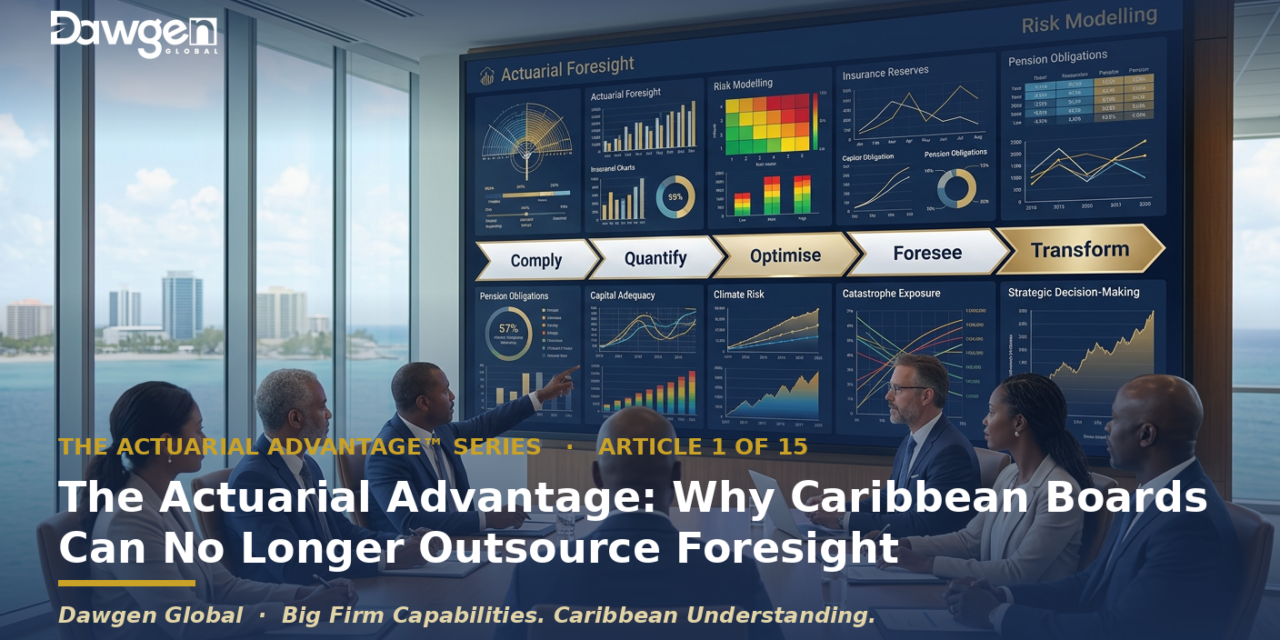
The Actuarial Advantage: Why Caribbean Boards Can No Longer Outsource Foresight

  Executive Summary Every consequential decision made by a board rests on assumptions about the future. For insurers, pension funds, credit unions, banks, governments and large corporates, those assumptions often relate to uncertain claims, future benefits, expected credit losses, catastrophe exposures, longevity, investment returns, liquidity, solvency and capital adequacy. This is the world of actuarial...

The Past Has Stopped Predicting: Climate Risk Quantification for Caribbean Boards

Actuarial science rests on the premise that the past is a guide to the future. Climate is the exposure for which that premise no longer holds — and a region built on coastlines is being asked, by ratings agencies, correspondent banks, and supervisors, to measure a risk for which its own history has stopped being...

Every Valuation Is an Argument: Pension Valuation Governance for Caribbean Trustees

  When a Caribbean trustee approves a pension valuation, they are not approving a fact. They are endorsing a chain of assumptions reached by someone else — and the governance question that matters is whether the board has seen the argument, or only the conclusion.   This is the second of four papers in The...

Numbers That Outlast the Quarter: Why Caribbean Boards Need Actuarial Insight

The actuarial perspective on board decisions whose financial consequences will not show up in the next four management reports — and why every Caribbean institution holds more of them than it has measured. Caribbean boards routinely authorize decisions whose financial consequences will not appear in the next four management reports. This is the first of...

The Caribbean Board Risk Dashboard: What Directors Should See Every Quarter — and Why Most Do Not

  What Directors Should See Every Quarter — and Why Most Do Not. A practical dashboard architecture for Caribbean carriers covering capital, underwriting, market, operational, and emerging risk Most Caribbean board risk committees receive a quarterly risk paper. Few receive a quarterly risk dashboard. The distinction matters more than the terminology suggests. A risk paper...

The Reinsurance Trap: Why Caribbean Cedants Pay Too Much and Capture Too Little

Three structural reasons most regional reinsurance programmes underperform — and the four-step economic review that typically recovers 10 to 20 percent of reinsurance spend within 18 months Reinsurance is the single largest expense line for most Caribbean life and health insurers after claims and operating costs. It is also the line where cedants have the...

https://www.dawgen.global/wp-content/uploads/2023/07/Foo-WLogo.png

Dawgen Global is an integrated multidisciplinary professional service firm in the Caribbean Region. We are integrated as one Regional firm and provide several professional services including: audit,accounting ,tax,IT,Risk, HR,Performance, M&A,corporate recovery and other advisory services

Where to find us?
https://www.dawgen.global/wp-content/uploads/2019/04/img-footer-map.png
Dawgen Social links
Taking seamless key performance indicators offline to maximise the long tail.
https://www.dawgen.global/wp-content/uploads/2023/07/Foo-WLogo.png

Dawgen Global is an integrated multidisciplinary professional service firm in the Caribbean Region. We are integrated as one Regional firm and provide several professional services including: audit,accounting ,tax,IT,Risk, HR,Performance, M&A,corporate recovery and other advisory services

Where to find us?
https://www.dawgen.global/wp-content/uploads/2019/04/img-footer-map.png
Dawgen Social links
Taking seamless key performance indicators offline to maximise the long tail.

© 2023 Copyright Dawgen Global. All rights reserved.

© 2024 Copyright Dawgen Global. All rights reserved.