

Jamaica’s public service runs three separate pay ladders. The core civil service has thirteen incremental points to a band; the disciplined services have nine; the health families have eight. All three are built from the same 2.5 per cent increment. And within that one service, the allowance paid to nurses holds constant at around 16 to 17 per cent of salary all the way up the scale, while the allowance paid to police and correctional officers falls from 21.6 per cent at the base grade to 10.0 per cent at inspector level. Two occupational groups, two opposite reward philosophies, one employer.
Why not one scale for everyone?
The principle underlying every structure examined in this series is that posts of comparable weight should be paid comparably. Job evaluation exists to establish that comparability, and internal equity is the result. It follows fairly directly that an organisation ought to operate one grade structure, into which every post is placed.
Almost no public service does. Nurses, police officers, teachers and soldiers are typically on scales of their own, and this is not an accident of history that nobody has got round to tidying. It is a deliberate and generally defensible choice, and the reasons are worth setting out because the same question arises in any organisation employing a distinct professional group.
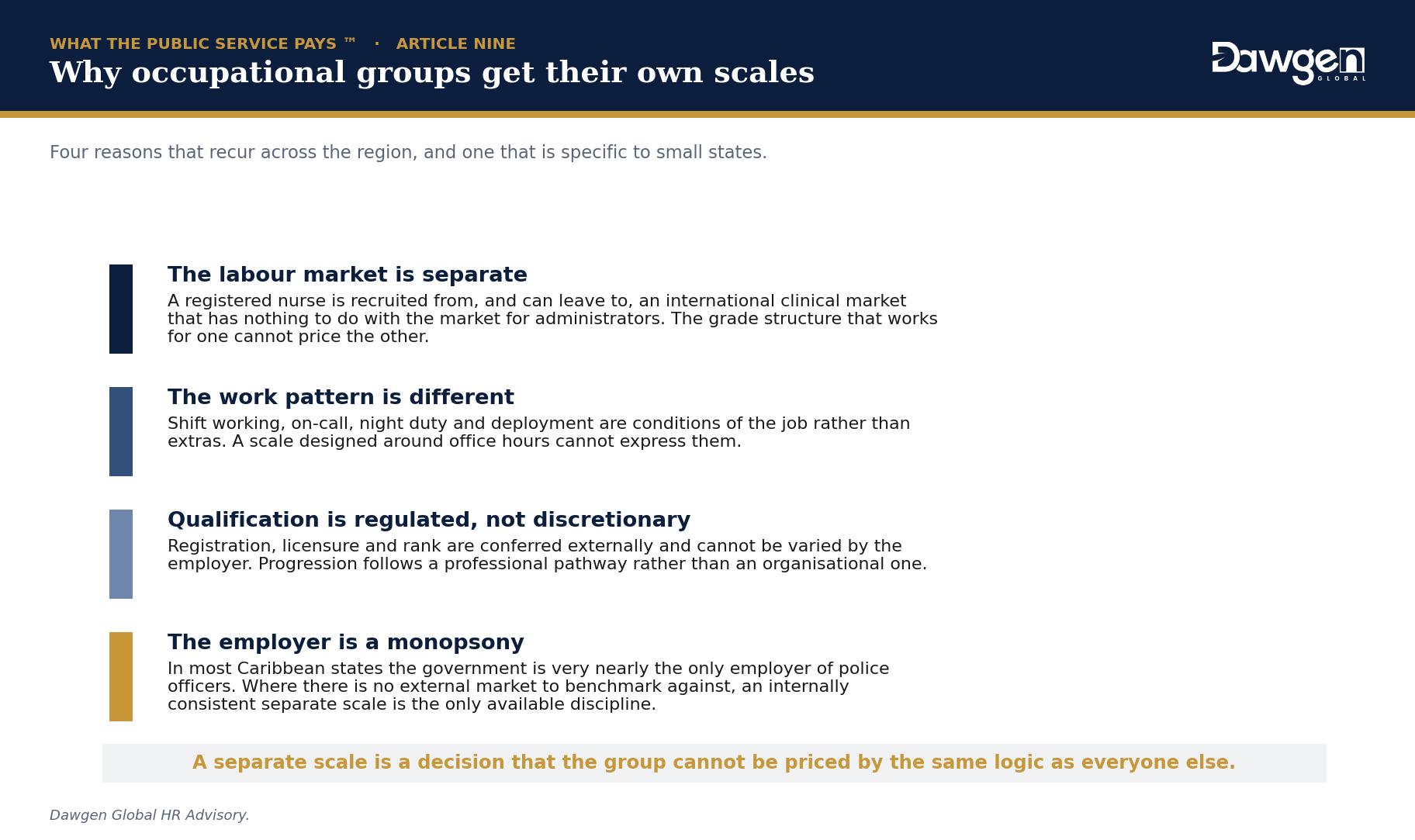
Exhibit 1. Four reasons occupational groups are given their own scales.
The first reason is the decisive one. A registered nurse is recruited from, and can leave to, a clinical labour market that operates internationally and has nothing to do with the market for administrators. A grade structure calibrated to one cannot price the other, and forcing both into a single scale means one of them is always wrong.
The fourth is specific to small states and rarely discussed. In most Caribbean jurisdictions the government is very nearly the only employer of police officers. There is no external market to benchmark against, because there is no external market. Where that is true, an internally consistent separate scale is not merely convenient; it is the only available discipline.
How the nursing ladder is built
Jamaica’s Registered Nurses scale runs eight grades, HPC/RN 1 to HPC/RN 8, on the health families ladder rather than the core pay bands. Each band has eight incremental points and a spread of 1.1887 — which, as readers of the second article will recognise, is 1.025 to the seventh power. The same increment as the rest of the service, in a shorter band.
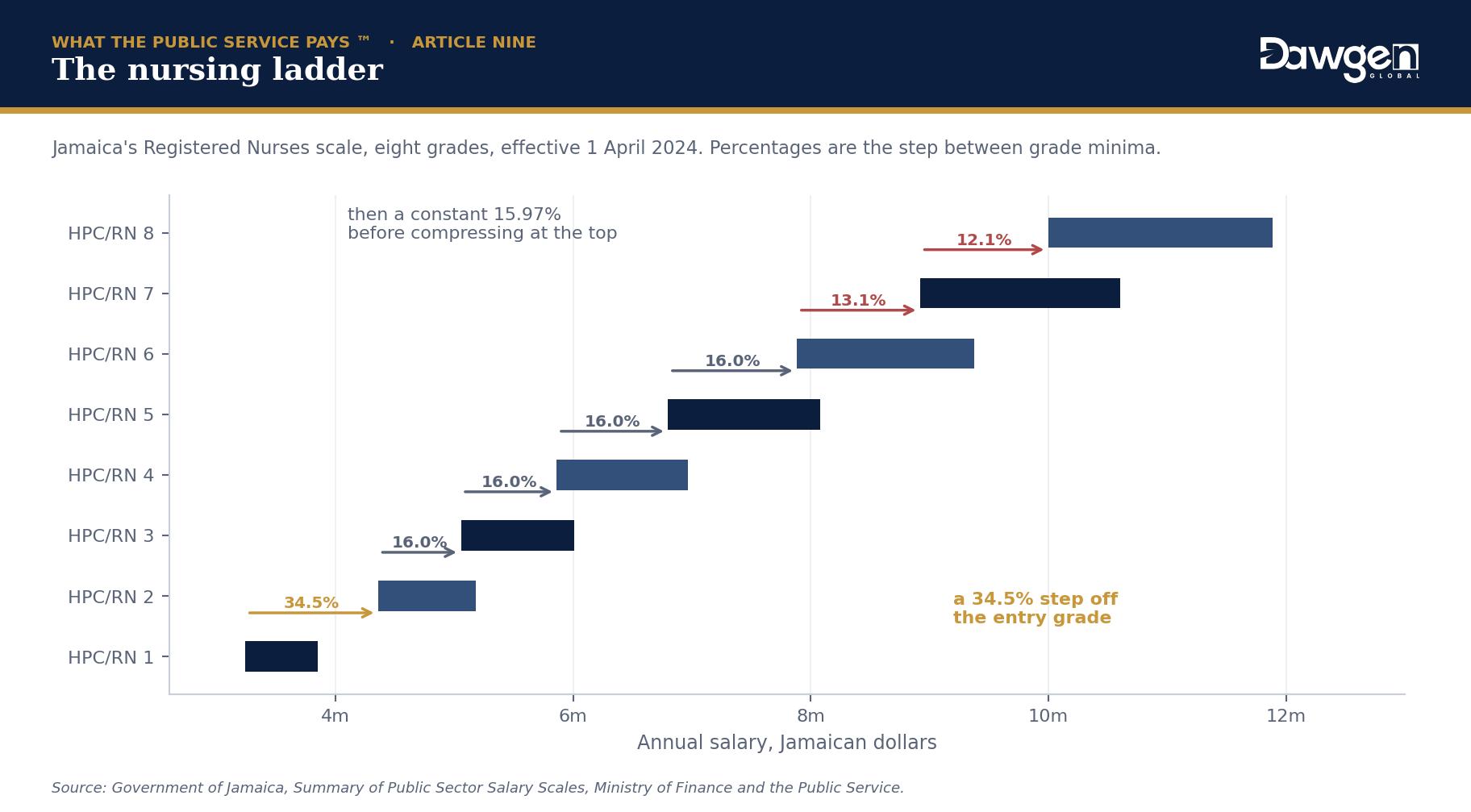
Exhibit 2. The eight nursing grades, with the step between consecutive grade minima.
The shape of the progression is more interesting than the bands themselves, and it appears to have been designed rather than arrived at.
The step from HPC/RN 1 to HPC/RN 2 is 34.5 per cent — a very large jump, and one that happens to be exactly the core service band spread of 1.3449. From RN 2 to RN 6 the step settles to a constant 15.97 per cent. From RN 6 the steps then narrow, to 13.1 per cent and then 12.1 per cent.
| WHAT THAT SHAPE SAYS
A large step off the entry grade, a long regular middle, and compression at the top. That is the profile of a structure designed to move people out of the entry grade quickly, reward steady professional progression through the middle of a career, and limit automatic cost growth at senior clinical levels. Whether or not it was reasoned through in those terms, that is what it does. |
One further detail is worth noting because it is so plainly deliberate. The minimum of HPC/RN 8, the top nursing grade, is exactly J$10,000,000. Round numbers do not occur naturally in a scale generated by compounding 2.5 per cent increments. Somebody set that figure and built around it.
An allowance designed to scale
The nursing scale carries four attaching allowances: a standby and on-call allowance, porterage, a location incentive and, at the two most senior grades, travelling. The standby allowance is much the largest, running from J$562,692 at RN 1 to J$1,750,788 at RN 8.
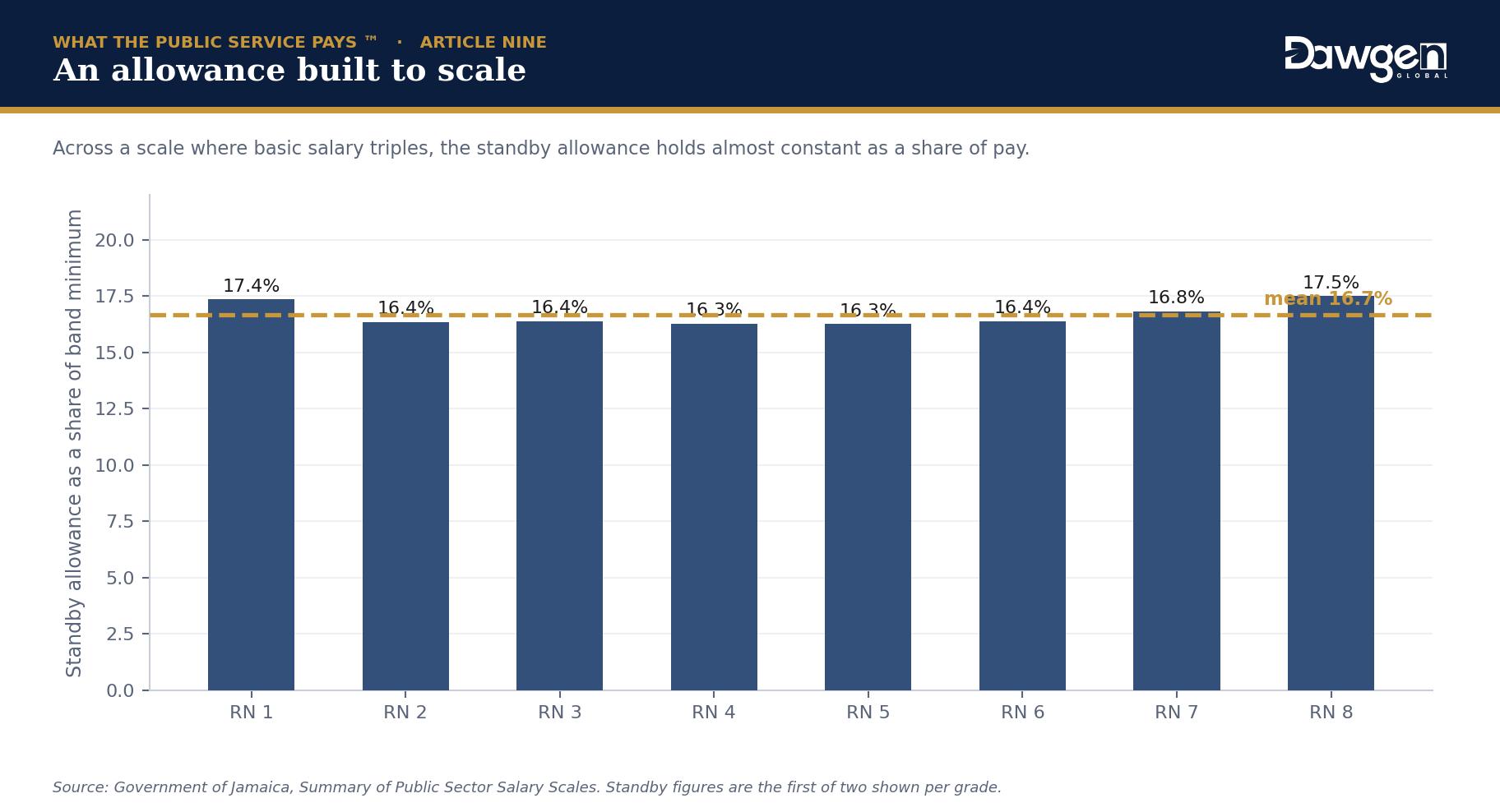
Exhibit 3. The standby allowance expressed as a share of each grade’s band minimum.
Across a scale on which basic salary triples, the standby allowance holds between 16.3 and 17.5 per cent of the band minimum at every grade. That is not a coincidence of rounding. The allowance was set to scale with pay.
There is a clear logic to it. Standby and on-call compensate for a restriction on personal time, and the value of an hour of a senior nurse’s time is higher than that of a junior nurse’s — which is precisely what the salary scale already says. An allowance that scales with salary carries that judgement through consistently. A flat allowance would say that an hour on call is worth the same to everyone, which is a different and harder claim to defend.
Two of the other three allowances go the other way and are flat: porterage at J$11,826 and the location incentive at J$94,280 are identical at every grade from RN 1 to RN 8. That is also defensible. A location incentive compensates for where the work is done rather than for the value of the person doing it, and geography is the same inconvenience for everybody.
And an allowance that does not
The disciplined services present the opposite case, in the same public service.
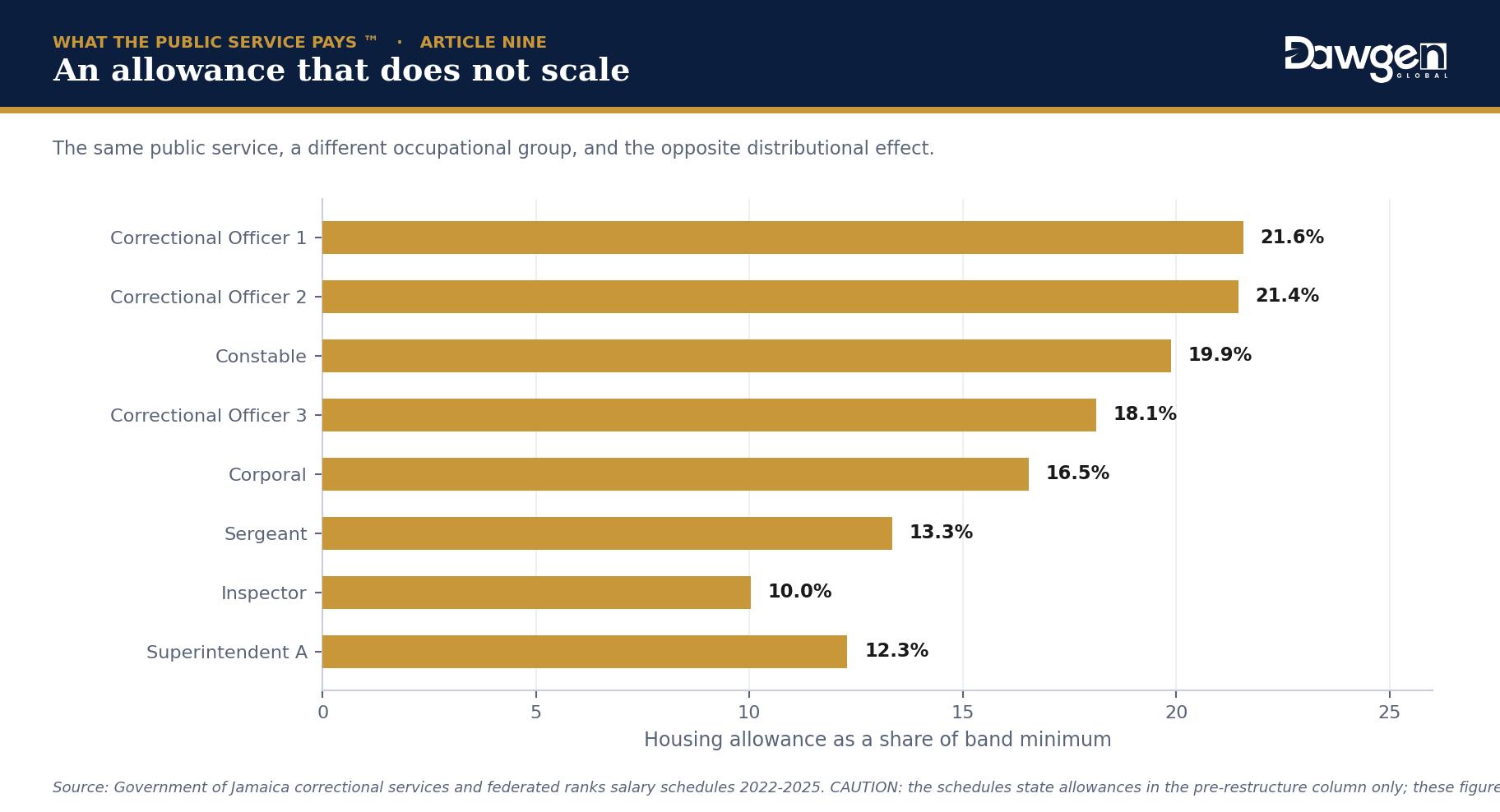
Exhibit 4. The housing allowance in the police and correctional schedules, as a share of band minimum.
The housing allowance is worth 21.6 per cent of the band minimum at Correctional Officer 1, 19.9 per cent for a Constable, 13.3 per cent for a Sergeant and 10.0 per cent at Inspector level. It rises in cash terms as rank rises, but far more slowly than salary does, so its proportional value falls steadily.
| AN IMPORTANT CAVEAT ON THESE FIGURES
The correctional and federated ranks schedules state allowance amounts in the pre-restructure column only. They do not restate them for the 2022-2025 period, even though the salary columns are fully restated. The proportions above are therefore computed against current salaries using allowance figures that require confirmation against a current circular. We report them because the pattern is clear and the direction unambiguous, but the precise percentages should be treated as indicative. |
That gap in the published record is itself worth noting. A schedule that updates salary and leaves allowances in an older column is not concealing anything, but it does mean that anyone computing total reward from the document alone will silently understate it.
The disciplined services ladder
The police and correctional structures are worth a paragraph of their own, because they are neither the core service nor the health families but a hybrid of the two.
Their bands contain nine incremental points, giving a spread of 1.2184 — 1.025 to the eighth power, the same increment again. But unlike the health families, which run on a ladder entirely of their own, several disciplined services grades begin at figures that are exact points on the CORE service ladder. Correctional Officer 1 starts at J$1,711,060, which is precisely the Pay Band 4 minimum. Correctional Officer 3 starts at J$2,873,866, an increment point within Pay Band 6.
So the disciplined services are pinned to the core structure at their anchor points and then given their own band width. That is a considered piece of design: it keeps the two structures in a stated relationship, which is exactly what stops them drifting apart over successive settlements.
| WHY THE PINNING MATTERS
Two separate scales that share no reference point will diverge, because each is negotiated and adjusted on its own timetable. Two scales that share anchor points cannot diverge without somebody noticing, because the divergence is visible in the numbers themselves. It is a cheap and effective control, and it is available to any employer running more than one structure. |
The ranks themselves reveal the other feature of disciplined services pay: progression is by rank rather than by grade in the administrative sense. A constable does not advance to a higher band by taking on a differently evaluated job; they are promoted to corporal, then sergeant, then inspector, through a defined hierarchy in which each step carries specific authority. The pay structure follows the command structure, which is why it looks less like a job-evaluated grade ladder and more like a sequence of named posts.
Two philosophies, one employer
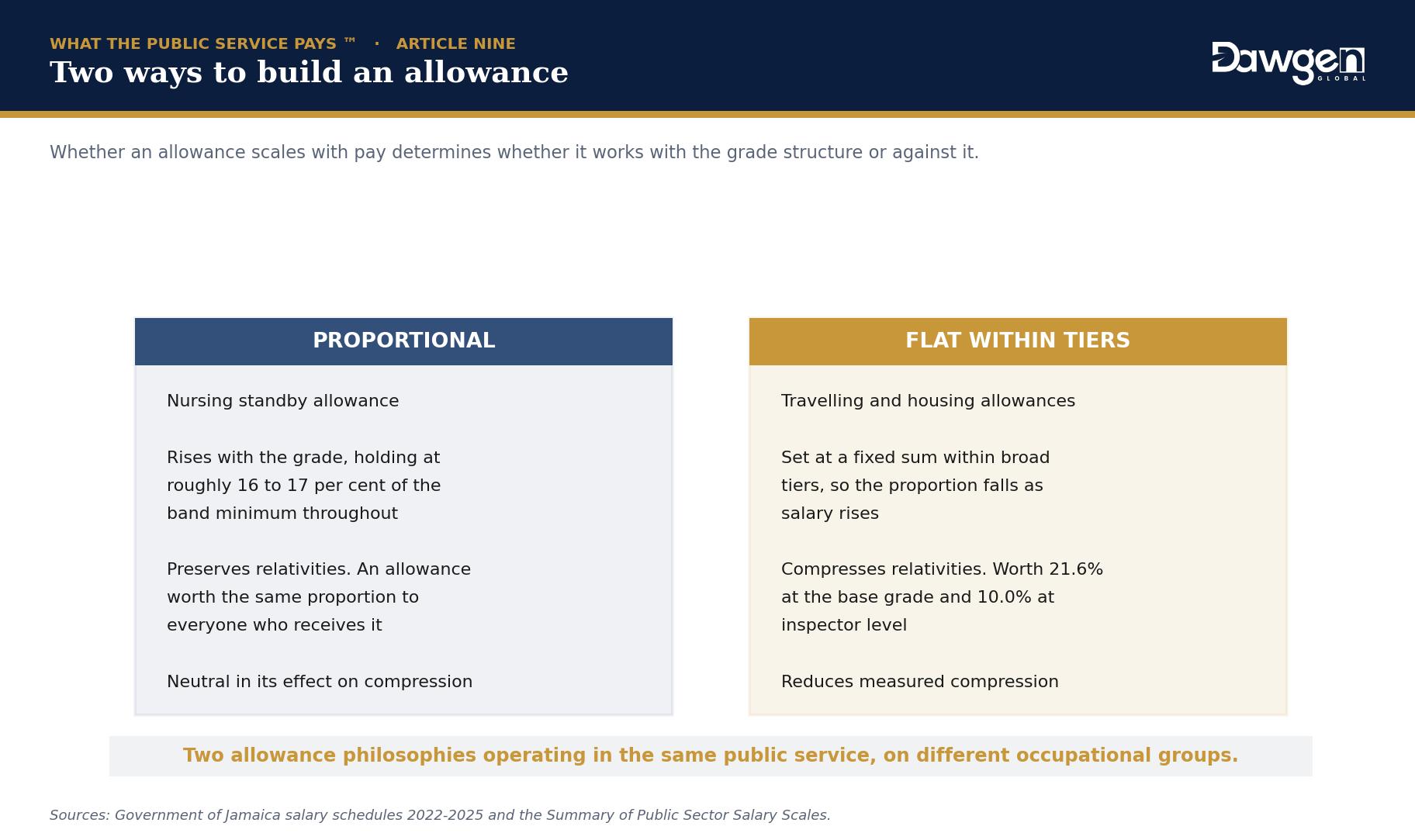
Exhibit 5. The two ways an allowance can be built, and what each does to the structure.
This is the finding that makes the article worth writing. Within a single public service, two occupational groups are subject to opposite reward philosophies.
The nursing standby allowance is proportional: it preserves the relativities the grade structure establishes, and it is neutral in its effect on compression. The disciplined services housing allowance, and the core service travelling allowance examined in the fifth article, are flat within tiers: they are worth proportionally more at the bottom, and they compress the structure.
Neither is wrong. A proportional allowance says the thing being compensated scales with responsibility. A flat allowance says it does not — that a night on call, or the cost of housing, is the same burden whoever bears it. Both are coherent positions.
What is striking is that one employer holds both simultaneously, applied to different groups, and that nothing in the published record suggests the two designs were ever considered together. They have different origins, different negotiating histories and, almost certainly, different authors.
Why it matters practically
Because the two philosophies pull in opposite directions, a public service measured on basic pay and the same service measured on total reward will show different internal relativities — and the difference will vary by occupational group. Nursing relativities are roughly unchanged by adding allowances. Disciplined services relativities compress. Core civil service relativities compress.
For an employer benchmarking against public rates, the implication is specific: the adjustment you need to make when moving from basic pay to total reward is not a single uplift. It depends which occupational group you are benchmarking, and it runs in a different direction up the scale for each.
The crossing problem
Separate ladders create one difficulty that has no clean solution, and it is worth naming because it affects careers rather than spreadsheets.
A registered nurse who wants to move into hospital administration, or a police inspector who wants to move into policy, has to cross from one structure into another. Somebody must decide where they land. There is no formula for it, because the two scales were built to price different things and the whole premise of separating them was that they are not directly comparable.
In practice the crossing is usually resolved by matching salary — placing the person at the point on the new scale closest to what they were earning. That is administratively simple and it quietly destroys the logic of both structures, because it grades the person by their history rather than by the job they are taking.
| WHAT A CONSIDERED CROSSING POINT LOOKS LIKE
The defensible approach is to evaluate the receiving post on its own terms, place the person at the grade that post carries, and then deal separately with any shortfall — by a time-limited protection payment if the move is in the organisation’s interest, or by declining the move if it is not. That is harder and it produces uncomfortable conversations. It also keeps both structures meaning what they say. |
Jamaica’s common increment helps here in a way that is easy to miss. Because all three ladders are built from the same 2.5 per cent step, a given cash gap between two points means the same thing in proportional terms wherever it occurs. That does not solve the crossing problem, but it makes the comparison legible, which is more than most multi-structure employers can say.
What this means for private employers
Any organisation employing a distinct professional group faces a version of this question — clinical staff in a private hospital, security personnel, licensed engineers, admitted attorneys, aircraft engineers. The temptation is to create a separate scale as soon as the group starts to complain that the main structure does not fit them.
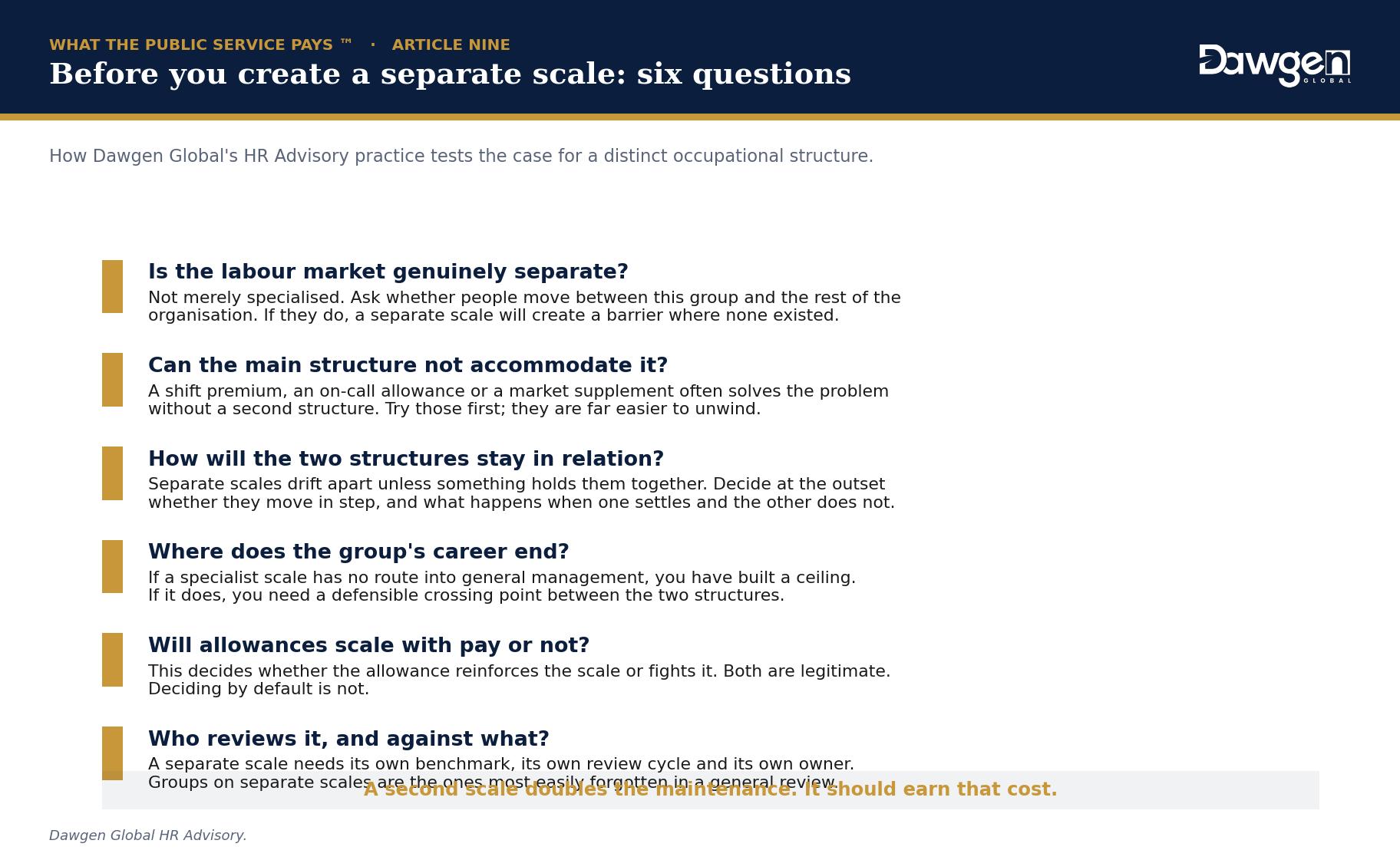
Exhibit 6. Six questions, in the order our HR Advisory practice asks them.
The second question saves the most trouble. A great many cases that present as needing a separate scale are actually cases needing a shift premium, an on-call allowance or a market supplement. Those solve the same problem, cost far less to maintain, and can be unwound. A second structure cannot be unwound easily, and every structure requires its own review, its own benchmarking and its own owner.
The fourth is the one organisations most often discover too late. If a specialist scale has no route into general management, you have built a ceiling and told your most capable specialists that the only way up is out. If it does have a route, you need a defensible crossing point between the two structures — and defining that crossing point is considerably harder than defining either scale.
The maintenance cost nobody budgets
A second scale does not merely double the design work. It doubles the review cycle, the benchmarking exercise, the negotiation if you bargain collectively, and the internal explanation. In our experience the group on the separate scale is also the group most easily forgotten in a general review, because the general review is scoped around the main structure.
The result, over several years, is drift: two structures that were set in a considered relationship to one another, moving at different speeds, until nobody can explain why a senior nurse and a senior administrator sit where they do relative to each other. Jamaica’s three ladders share a common increment, which is a substantial defence against exactly that. It is worth noticing as a design feature rather than a coincidence.
Four tests for an allowance you already pay
Most organisations inherit their allowances rather than designing them. These four questions can be answered in an afternoon and usually surprise people.
- Is it flat or proportional, and did anyone choose? Express each allowance as a percentage of the band minimum at your lowest and highest grades that receive it. If the two numbers differ sharply, the allowance is compressing your structure whether or not that was intended.
- Does it compensate for a burden that scales, or one that does not? On-call restricts time, and time is worth more further up. Travel costs and housing costs are largely the same for everyone. Match the design to the burden and most of these questions answer themselves.
- Is it paid to a group or to a grade? An allowance attached to an occupational group will migrate with people who move within the group and stop abruptly at its boundary, which is where disputes originate.
- When was the amount last set? An allowance fixed in cash and never revisited erodes silently. One indexed to salary does not. Neither is wrong, but an employer should know which of the two they are operating and for how long it has been running unattended.
A note on our work
This research sits within Dawgen Global’s HR Advisory practice, which advises on job evaluation, grading reviews, pay structure design and reward benchmarking across the Caribbean. Requests to create a separate scale for a professional group are among the most common we receive. The answer is sometimes yes. It is more often that the main structure can accommodate the group with an allowance properly designed, and that what is really being asked for is recognition rather than a second structure.
Next in this series
Article ten looks at who the public service actually employs — the composition of the workforce behind the scales, and what an establishment schedule reveals about how a state is staffed.
| AN INVITATION
We are seeking current allowance circulars for the Jamaican disciplined services, without which the housing allowance proportions above cannot be stated with confidence. More broadly, eleven of the sixteen jurisdictions in this study have not yet been collected. Public service ministries, personnel departments and statistical offices wishing to supply information, or to correct anything published in this series, are invited to contact the firm. |
SOURCES
Government of Jamaica, Summary of Public Sector Salary Scales; Salary Scales for Monthly Paid Staff 2022-2025; and the job-family salary schedules for correctional services senior uniform officers, correctional services rank and file, and federated ranks, Ministry of Finance and the Public Service. Band spreads, grade steps and allowance proportions are Dawgen Global calculations from those published schedules. Allowance figures for the disciplined services are taken from the pre-restructure column of the relevant schedules, which do not restate allowances for the 2022-2025 period, and require confirmation against a current circular.
This article is the ninth in What the Public Service Pays™, a Dawgen Global series drawn from research across sixteen Caribbean jurisdictions. Dawgen Global is an independent, integrated multidisciplinary professional services firm serving the Caribbean. Enquiries: [email protected] | dawgen.global
About Dawgen Global
Dawgen Global is an independent, integrated multidisciplinary professional services firm headquartered at Dawgen Towers, 47-49 Trinidad Terrace, Kingston 5, Jamaica, serving more than 15 territories across the Caribbean. Founded and led by Dr. Dawkins Brown, Executive Chairman, the firm is independent and not affiliated with any international network. It delivers a full suite of professional services under one roof: audit and assurance; tax advisory; IT and digital transformation; risk management; cybersecurity; actuarial and insurance regulatory advisory; HR advisory; mergers and acquisitions; corporate recovery; business advisory and strategy; accounting BPO and virtual CFO services; and legal process outsourcing.
The proposition is simple: big-firm capability without the big-firm price. Dawgen Global’s integrated approach is built for the specific complexities and opportunities of the Caribbean market, helping organizations make sharper, better-informed decisions that drive measurable progress.
To explore a partnership, reach out:
- Website: dawgen.global
- Email: [email protected]
- WhatsApp (Global): +1 555-795-9071
- Caribbean offices: +1 876-665-5926 | +1 876-929-3670 | +1 876-926-5210


