
Trinidad and Tobago’s Budget Statement 2026 records that public service wage negotiations remain outstanding for two periods: 2014 to 2016, and 2017 to 2019. The Government has instructed the Chief Personnel Officer to submit a revised offer. A jurisdiction can therefore be impossible to compare not because its data is hidden, but because its pay has not been settled — and this is a matter the country has published about itself.
A different kind of gap
Every previous article in this series has dealt with data that exists and must be found, interpreted or harmonised. This one deals with something else: a case where the number a researcher wants does not exist yet, and will not exist until a negotiation concludes.
We approach it with some care. Nothing in this article is a criticism of the Government of Trinidad and Tobago, of the Chief Personnel Officer, or of any union. Every fact stated here is drawn from documents that country has itself published, including its own Budget Statement, and the Government has committed publicly to resolving the position. Our interest is analytical: an unsettled pay period is a condition that affects employers everywhere, it has consequences that are widely misunderstood, and it happens to be visible here because the record is unusually transparent.
What the record says
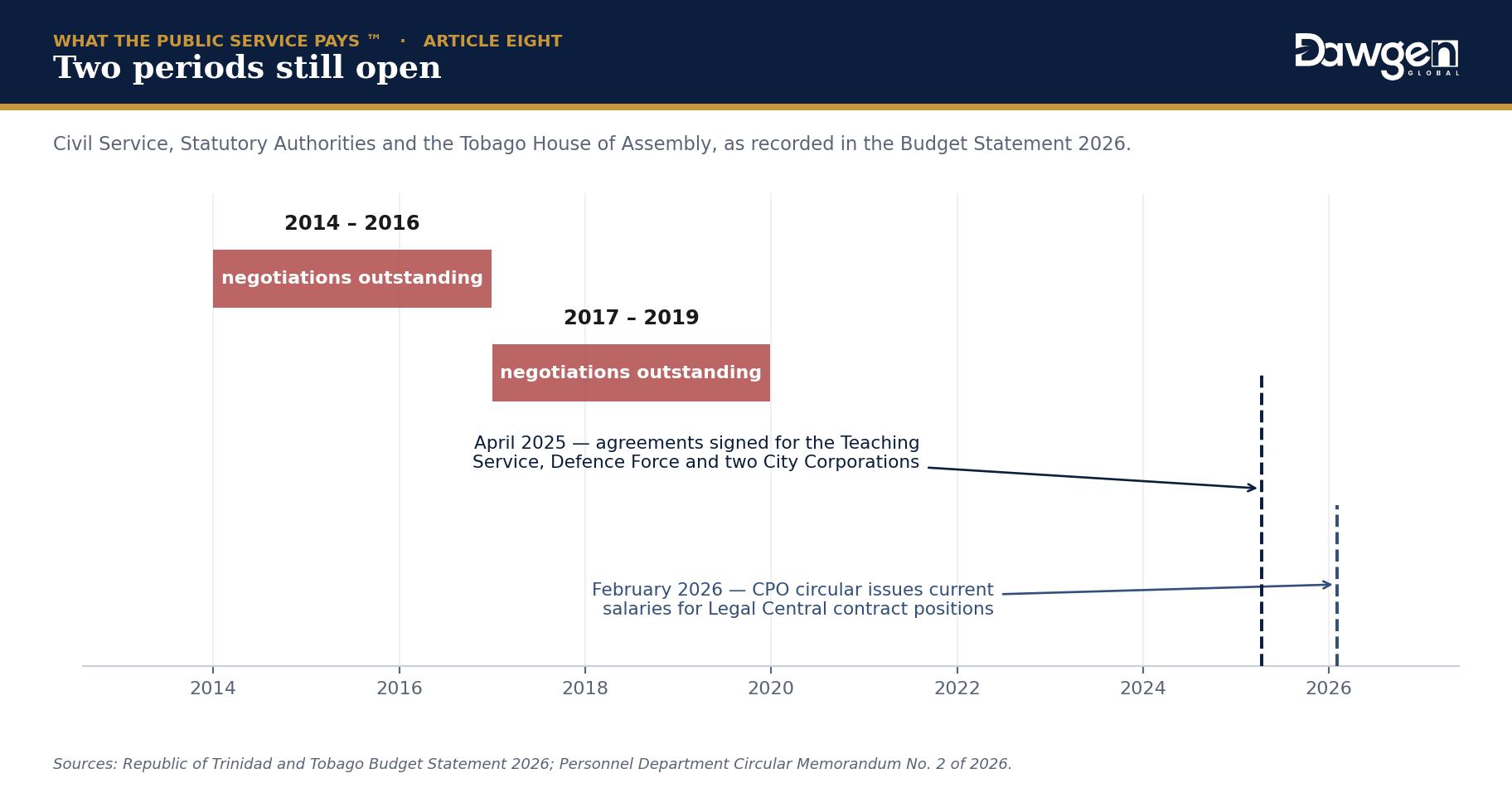
Exhibit 1. The two outstanding periods, and the settlements concluded alongside them.
The Budget Statement records that negotiations for the Civil Service, the Statutory Authorities and the Tobago House of Assembly remain outstanding for both the 2014-2016 and the 2017-2019 periods, describes the resulting stagnation, and states that the Chief Personnel Officer has been instructed to submit a revised offer of ten per cent.
Two further facts belong alongside it, because reporting the first without them would give a false impression.
Collective agreements were signed in April 2025 covering the Teaching Service, the Defence Force and two City Corporations, at a recorded recurrent cost of $214 million a year plus arrears. And in February 2026 the Chief Personnel Officer issued a circular setting current salaries for Legal Central contract positions, with allowances stated per position. Parts of the public service are settled and current.
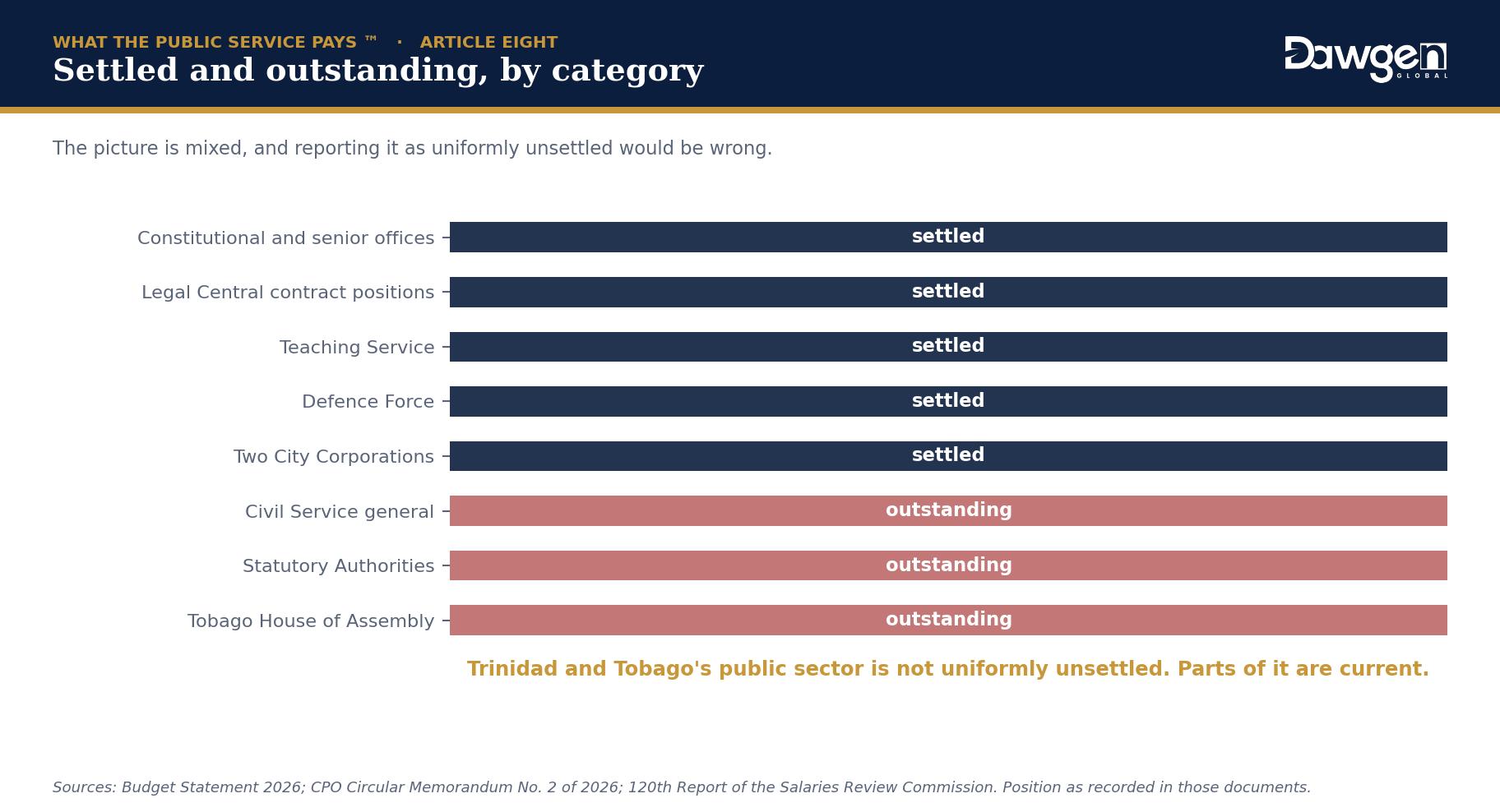
Exhibit 2. Settled and outstanding, by category, as recorded in the published documents.
| WHY THE DISTINCTION MATTERS
It would be easy — and wrong — to summarise this as “Trinidad and Tobago has not settled its public service pay”. Several major categories have. What is outstanding is the general Civil Service, the Statutory Authorities and the Tobago House of Assembly, for two specific historical periods. That is a more limited statement and it is the accurate one. |
What “unsettled” actually means
The word does more work than it appears to, and unpacking it is the analytical core of this article.
In a negotiated pay system, a salary scale is agreed for a defined period. When that period ends, a new negotiation opens. Until it concludes, officers continue to be paid at the last agreed rate. If the negotiation then settles with retroactive effect — which is the norm — the new rate is deemed to have applied from the start of the period, and the difference becomes payable as arrears.
So an officer in an unsettled period is not unpaid. They are paid at a rate agreed for an earlier period, holding a contingent claim of unknown size on a date that has not been set.
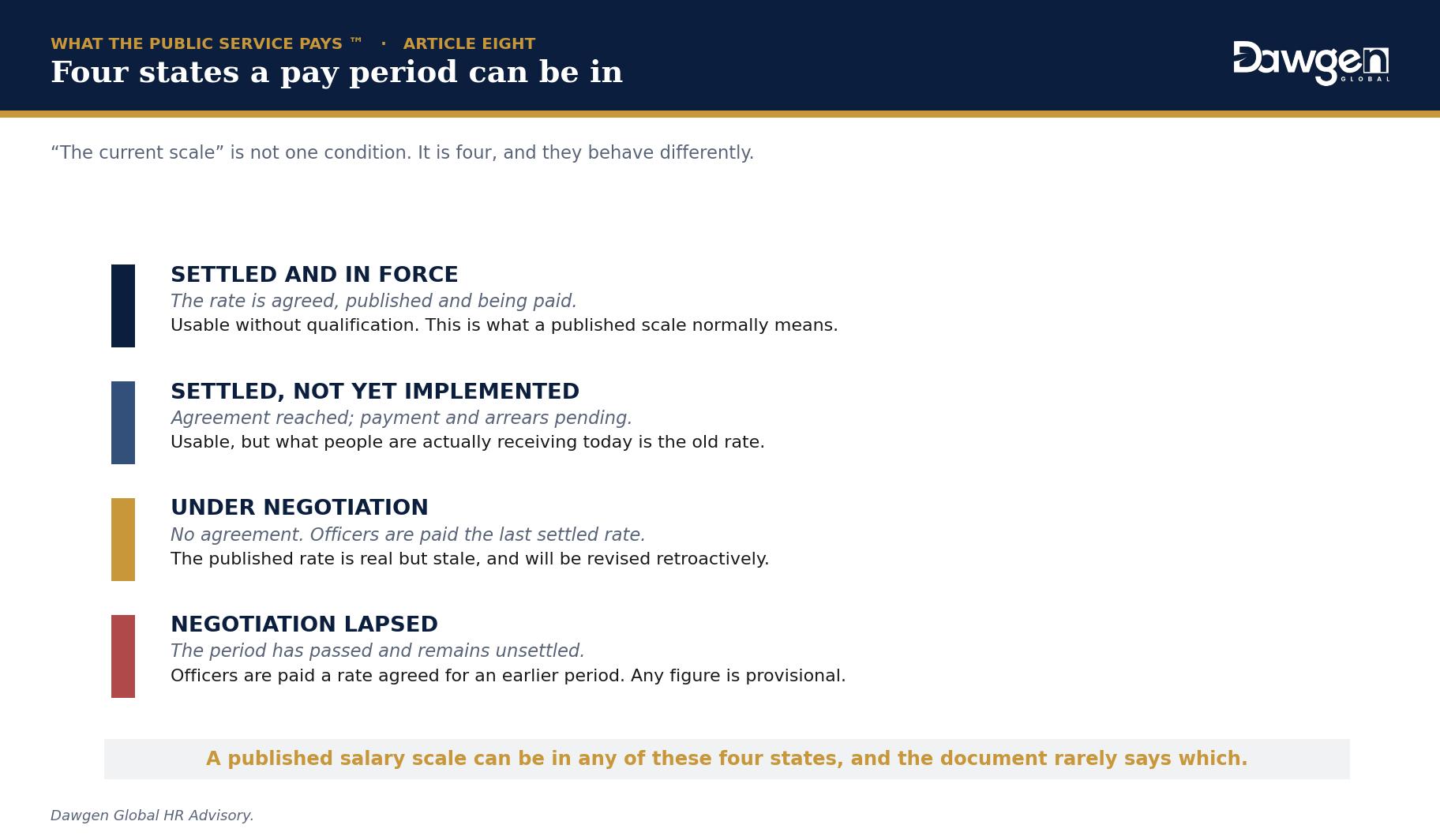
Exhibit 3. Four states a pay period can be in. A published scale rarely says which applies.
This is the distinction that most often trips up external users of pay data. A published scale looks the same in all four states. Nothing on the document tells you whether the rate is settled and current, settled and awaiting implementation, under negotiation, or agreed for a period that ended years ago.
Our methodology now carries a rule on this: where a jurisdiction has no settled scale, it is not scored, and the reason is published. Publishing provisional figures alongside settled ones without that qualifier would present two quite different kinds of number as though they were the same.
How arrears accumulate
The mechanics of retroactive settlement deserve setting out, because their consequences compound in a way that is easy to underestimate.
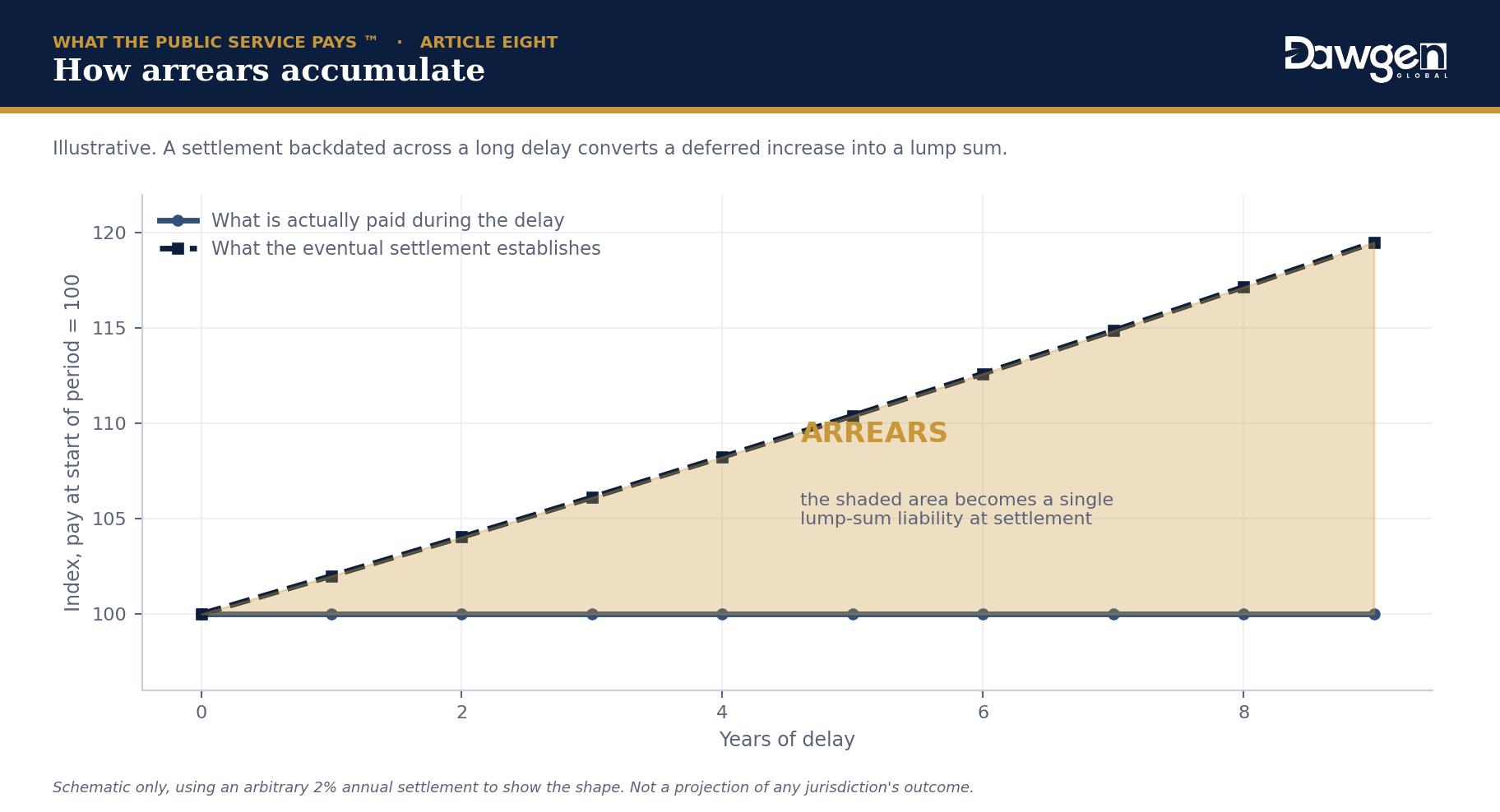
Exhibit 4. Schematic. The shaded area is the liability that accrues while a period remains open.
During the delay, the employer pays the old rate and the employee receives it. The gap between that and whatever is eventually agreed does not disappear; it accrues. When settlement comes, the whole accumulated difference falls due at once, as a lump sum, alongside the ongoing cost of the new rate.
Two consequences follow, and both are the opposite of what a casual reading suggests.
The first is that delay does not save money. It defers the cost and converts a series of manageable annual increases into a single large payment, which lands in whichever fiscal year the settlement happens to fall. An employer that has not made provision experiences a properly foreseeable liability as a shock.
The second is that the longer a period stays open, the harder it becomes to close. The arrears figure grows, the affordability question sharpens, and each year of delay makes settlement more expensive than it would have been the year before. Delay is not neutral; it is self-reinforcing.
Who carries the cost
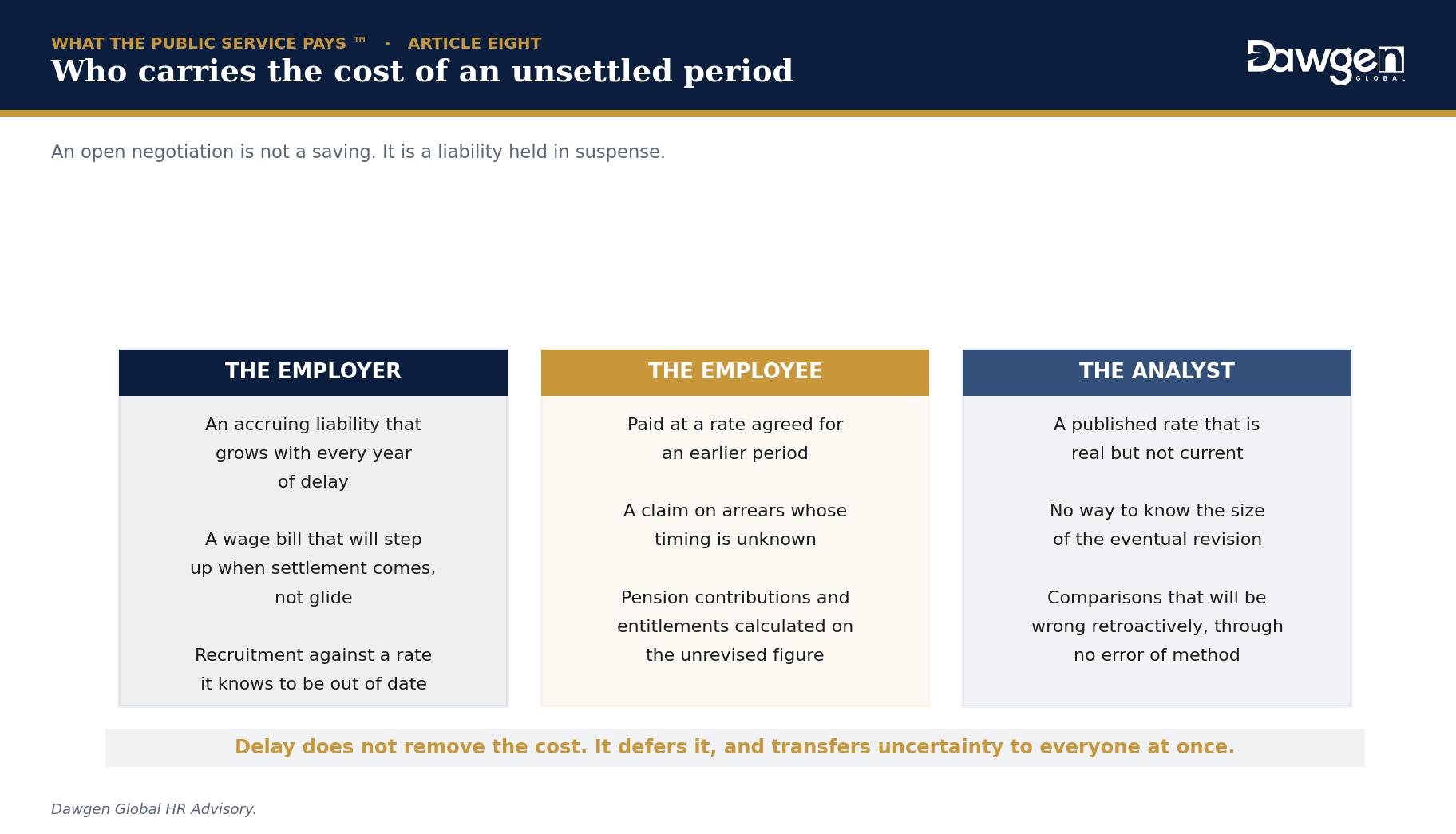
Exhibit 5. The consequences of an open period, seen from three positions.
The employer
Carries a growing liability that must be provided for, faces a step change rather than a glide when settlement arrives, and recruits against a rate it knows to be out of date. That last point is often overlooked: an organisation advertising a post at a rate agreed years earlier is competing in today’s market with yesterday’s number, whatever it intends to pay eventually.
The employee
Is paid at a rate agreed for an earlier period, holds a claim of uncertain size and timing, and — the consequence least discussed — may have pension contributions and entitlements calculated on the unrevised figure in the interim. Where a pension is based on final salary or on a career average, the treatment of a retroactive award is a genuine technical question with real consequences for people retiring during the delay.
Anyone trying to analyse it
Faces a published rate that is real but not current, no basis on which to estimate the eventual revision, and comparisons that may become wrong retroactively through no fault of method. This is why our rule is to exclude rather than to estimate: a figure that will be revised by an unknown percentage on an unknown date is not a figure that can be responsibly compared with a settled one.
Why this happens
It would be a mistake to read a long negotiation as simply a failure. Negotiated pay systems have a structural vulnerability, and it is worth naming because it applies to any employer bargaining collectively.
A negotiation has two parties, and either can find delay preferable to agreement. For an employer under fiscal pressure, not settling defers cash outflow into a future year. For a union that considers an offer inadequate, not settling preserves the claim rather than extinguishing it at a figure members would reject. Neither party is behaving unreasonably, and yet the combined effect can be years of stasis in which nobody has chosen the outcome.
| THE ASYMMETRY THAT KEEPS PERIODS OPEN
Settlement is a decision. Delay is what happens when no decision is taken. The two are not symmetrical: closing a period requires both parties to act, while leaving it open requires neither. That is why unsettled periods accumulate rather than resolve, and why an explicit mechanism for what happens when a review slips is worth more than good intentions. |
Fiscal context matters too, and Trinidad and Tobago’s is well documented. The periods in question span a stretch during which energy revenues, on which the country’s public finances substantially depend, were volatile. A government facing uncertain revenue and a large recurrent wage bill has a genuine affordability question to answer before it can commit to a multi-year settlement. That is not an excuse; it is the condition in which the decision has to be taken.
The change coming
One further element of the Trinidad and Tobago position deserves attention, because it will materially change the figures whenever this jurisdiction can be measured.
The Budget Statement records a Job Evaluation Exercise expected to reduce fixed-term contract employment by as much as sixty-three per cent, bringing those officers within the ambit of the Public Service.
Readers of the fifth article in this series will recognise why that matters. A post held on contract and the same post held on established terms carry materially different total reward: one typically an end-of-contract gratuity, the other a pension. Our method records both bases separately and reports the pensionable basis as primary. A shift of sixty-three per cent between them is not a marginal change in composition. It would move Trinidad and Tobago’s reported position substantially between one edition and the next, for reasons that have nothing to do with rates rising or falling.
We flag it now so that when it happens it reads as what it is — a structural reclassification — rather than as a data error or a sudden change in what the country pays.
How other systems avoid this
Unsettled periods are not inevitable. Different pay-setting mechanisms carry different exposure to them, and the comparison is instructive because all three mechanisms appear within this study.
| Mechanism | How pay changes | Exposure to unsettled periods |
| Collective negotiation | Parties agree a scale for a defined period, then renegotiate. | HIGH. Requires agreement. Either party may prefer delay, and there is no default outcome if neither acts. |
| Standing commission | An independent body reviews and recommends; government responds. | MODERATE. The review happens on the body’s own initiative, but implementation still requires a decision. |
| Administrative determination | The employer sets and adjusts the scale by circular. | LOW. No counterparty is required. The risk shifts from stalemate to neglect — the scale can simply be left alone. |
| Indexation | The scale moves by formula, usually against prices. | VERY LOW for the mechanism itself. The formula operates whether or not anyone attends to it. |
Each has a characteristic failure, and the failures are different. Negotiation stalls. Administrative determination drifts — the Cayman Islands left its statutory minimum wage unchanged for a decade, which is not a stalemate but a decision nobody took. Indexation tracks prices faithfully and can lose touch with the labour market entirely, because the cost of living and the price of a skill are different things.
| WHAT THIS SUGGESTS
The mechanisms that are least exposed to stalemate are most exposed to neglect, and vice versa. There is no design that removes the need for someone to attend to pay deliberately and on a schedule. The value of a formula or a standing review body is not that it removes judgement; it is that it forces the question to be asked at a fixed point, which is most of the battle. |
What every employer should take from this
Very few private employers negotiate collectively across a whole workforce. Almost all of them, however, operate some form of periodic pay review — and a review that is deferred behaves in exactly the same way as an unsettled negotiation.
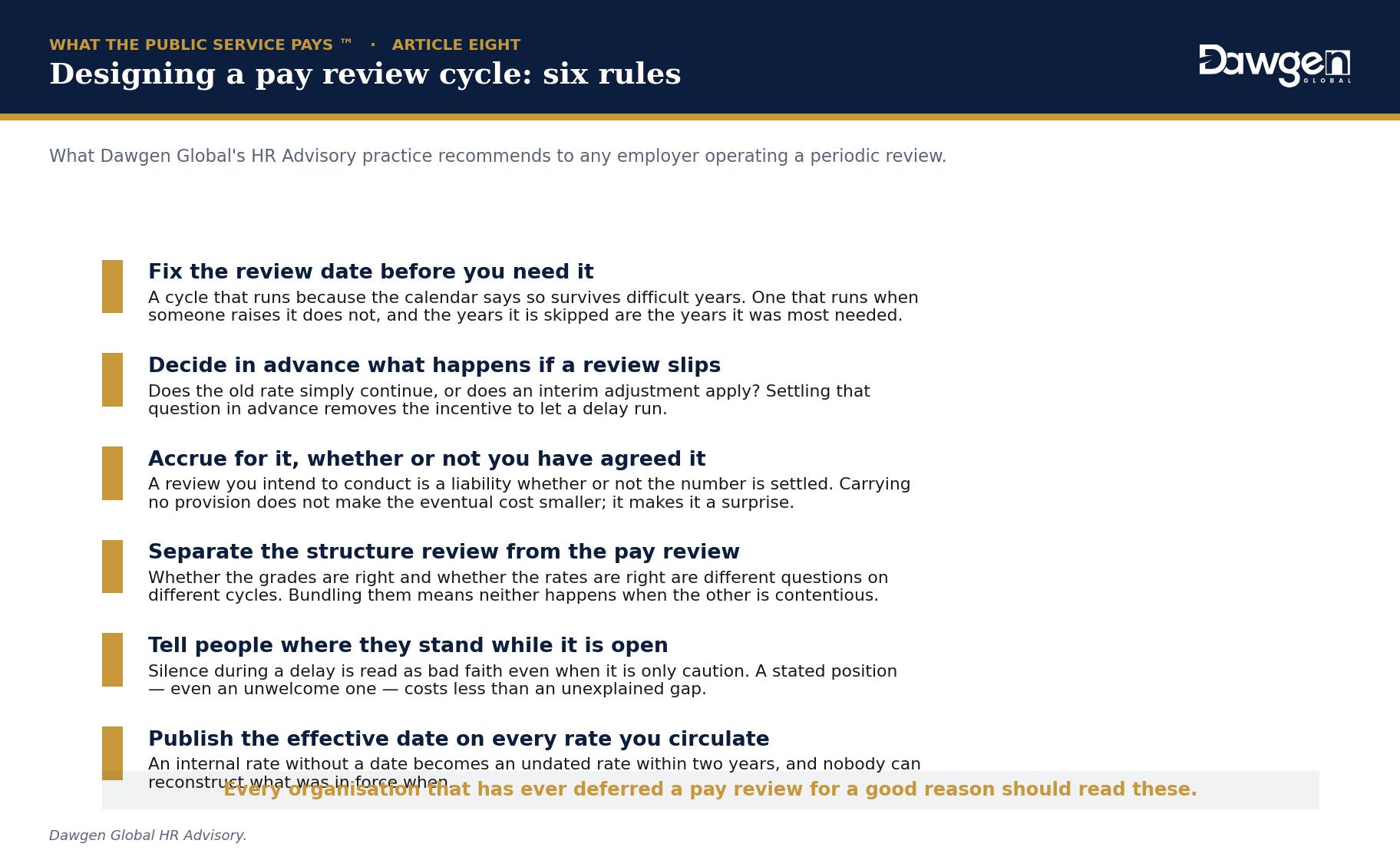
Exhibit 6. Six rules, from what an unsettled period does to everyone involved.
The third of those is the one most often neglected and the most expensive to neglect. An organisation that intends to conduct a pay review has a liability whether or not it has agreed the number. Carrying no provision does not reduce the eventual cost; it converts a known obligation into an unbudgeted one.
The fifth is the one that does most damage to trust. During a delay, silence is read as bad faith even when it is only caution. Employees who are told nothing conclude that nothing is being done, and the conclusion is very hard to reverse once reached. A stated position, even an unwelcome one, costs an organisation far less than an unexplained gap.
The deferral trap
The pattern we see most often in practice runs like this. A pay review is due in a difficult year and is postponed for sound reasons. The following year, the postponed review and the current one are both due, so the combined cost is now larger and the decision harder. It is postponed again. By year three the amount required to restore competitiveness is large enough that no one wants to present it to a board, and the organisation is losing people it cannot afford to lose while spending nothing to keep them.
Every step in that sequence is defensible. The outcome is not. And the mechanism is precisely the asymmetry above: settlement requires a decision, deferral requires none.
Three questions for your own review cycle
- When was your last review, and was it on schedule? If you cannot answer the first part quickly, the answer to the second is almost certainly no. Organisations that review on time know the date without looking.
- What is your default if a review slips? Most organisations have none, which means the default is that nothing happens. An explicit fallback — an interim adjustment, a stated commitment to backdate, even a formal decision to skip — removes the ambiguity that lets a delay run unremarked.
- If you settled today at the level you privately think is right, what would the arrears be? That number exists whether or not anyone has calculated it. Organisations that have calculated it tend to settle sooner, for the obvious reason.
A note on our work
This research sits within Dawgen Global’s HR Advisory practice, which advises on job evaluation, grading reviews, pay structure design and reward benchmarking across the Caribbean. Pay review cycles come up in most reward assignments, usually because an organisation has deferred one and is now facing the compounded question. The technical work in those cases is rarely difficult. Deciding to take the decision is.
Reading pay data from an unsettled jurisdiction
For anyone who does need to work with figures from a jurisdiction in this position — an investor, an employer establishing there, an adviser — the practical guidance is short.
Establish the effective date of every rate you are given, and separately establish whether the period covering that date is settled. Those are two different questions and the second is rarely volunteered. Ask what periods remain open, and treat any figure covering an open period as a floor rather than an estimate.
Then ask what the last settled increase was, since that is the only observable guide to the likely shape of the next one. It is a weak guide and should be described as such, but it is better than assuming no change. And if you are budgeting for staff costs in that jurisdiction, provide for retroactivity explicitly rather than hoping the timing falls outside your planning horizon.
What we will do
Trinidad and Tobago will appear in the first edition of this research, in the structural and source chapters and in this finding. It will not carry a scored comparison of its general service pay, and the reason will be stated in the publication rather than in a footnote.
If the outstanding periods settle before publication, we will collect and score the jurisdiction on the settled figures. We would be glad to. An unsettled jurisdiction is a poorer publication for us and a harder position for everybody in it.
| AN INVITATION
We would welcome contact from the Chief Personnel Officer’s department, the Ministry of Finance or any of the recognised unions, both to correct anything stated here and to advise us when the position changes. More broadly, eleven of the sixteen jurisdictions in this study have not yet been collected. Public service ministries, personnel departments and statistical offices wishing to supply information are invited to contact the firm. |
Next in this series
Article nine returns to structure, and to a question that decides more about career earnings than any starting salary: whether a scale increments by a percentage or by a fixed sum of money, and why two Caribbean jurisdictions answered it differently.
SOURCES
Republic of Trinidad and Tobago, Budget Statement 2026, Ministry of Finance. Personnel Department Circular Memorandum No. 2 of 2026, Chief Personnel Officer, 19 February 2026. One Hundred and Twentieth Report of the Salaries Review Commission of the Republic of Trinidad and Tobago, 24 October 2024. The arrears illustration is schematic and uses an arbitrary settlement rate to show the shape of the liability; it is not a projection of any jurisdiction’s outcome. All statements about the status of negotiations are drawn from the published documents cited and reflect the position as recorded in them.
This article is the eighth in What the Public Service Pays™, a Dawgen Global series drawn from research across sixteen Caribbean jurisdictions. Dawgen Global is an independent, integrated multidisciplinary professional services firm serving the Caribbean. Enquiries: [email protected] | dawgen.global
About Dawgen Global
Dawgen Global is an independent, integrated multidisciplinary professional services firm headquartered at Dawgen Towers, 47-49 Trinidad Terrace, Kingston 5, Jamaica, serving more than 15 territories across the Caribbean. Founded and led by Dr. Dawkins Brown, Executive Chairman, the firm is independent and not affiliated with any international network. It delivers a full suite of professional services under one roof: audit and assurance; tax advisory; IT and digital transformation; risk management; cybersecurity; actuarial and insurance regulatory advisory; HR advisory; mergers and acquisitions; corporate recovery; business advisory and strategy; accounting BPO and virtual CFO services; and legal process outsourcing.
The proposition is simple: big-firm capability without the big-firm price. Dawgen Global’s integrated approach is built for the specific complexities and opportunities of the Caribbean market, helping organizations make sharper, better-informed decisions that drive measurable progress.
To explore a partnership, reach out:
- Website: dawgen.global
- Email: [email protected]
- WhatsApp (Global): +1 555-795-9071
- Caribbean offices: +1 876-665-5926 | +1 876-929-3670 | +1 876-926-5210


