

Of the five Caribbean jurisdictions we have examined in detail, exactly one publishes a schedule mapping established posts to salary scales. Jamaica’s Estimates of Expenditure for 2026/27 run to 716 pages and contain no salary scale codes anywhere. The source that turned out to be genuinely universal was one we had not expected to rely on at all — and knowing what it is would save any researcher in this field several months.
Why this article exists
The previous five articles have been about what Caribbean public services pay. This one is about what they publish, which is a different question and, for anyone trying to do this work, the more immediately useful one.
It is also the article in which we are most explicitly asking for help. Eleven of the sixteen jurisdictions in this study have not yet been collected, and in several of the five that have, important documents remain outstanding. Setting out precisely what we looked for, what we found and what we could not find seems a more honest way to make that request than a letter would be.
What we expected to find
Our original methodology rested on a single assumption about sources, and it was a reasonable one.
Every Caribbean parliament must lay Estimates of Revenue and Expenditure before it. That is a constitutional requirement, not a matter of administrative preference. And in the Westminster tradition those Estimates have historically included personnel schedules — lists of every established post in each ministry, with the salary scale attaching to it and the provision made for it in the year’s budget. If that held across the region, the whole exercise reduced to obtaining sixteen documents that were already public by law.
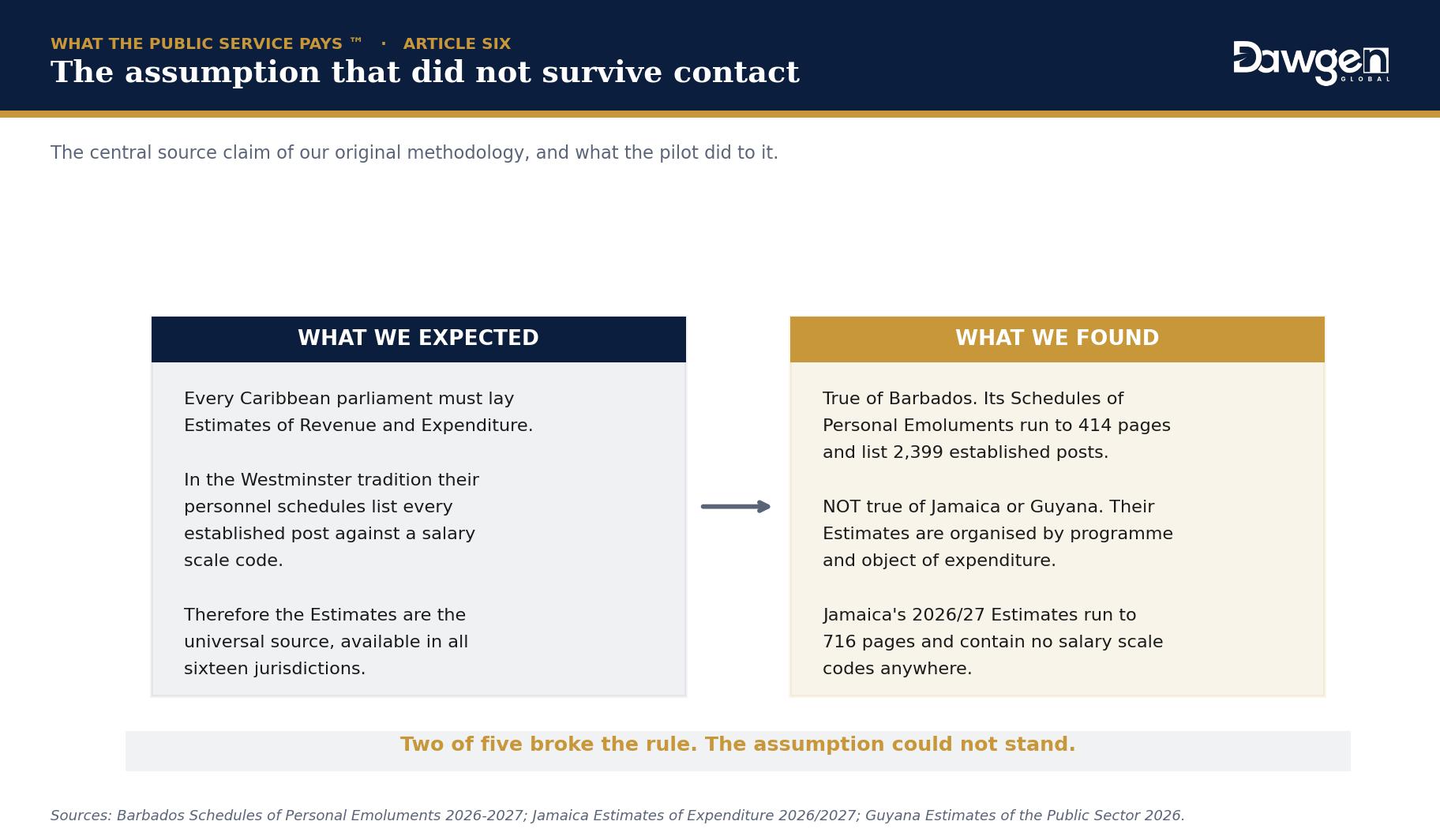
Exhibit 1. The central source assumption of our original methodology, and what the pilot did to it.
It held in Barbados. The Schedules of Personal Emoluments for 2026-2027 run to 414 pages and list every established post in central government with its establishment count, its salary scale code and its provision. We parsed 2,399 establishment rows from it. It is exactly the document the methodology described.
It did not hold in Jamaica or Guyana. Both publish Estimates organised by head, programme and object of expenditure — how much each ministry will spend on compensation of employees in aggregate, with no post-level detail at all. Jamaica’s runs to 716 pages without a single salary scale code.
| TWO OF FIVE BROKE THE RULE
An assumption that fails in forty per cent of a sample is not a rule with exceptions. It is not a rule. We removed it from the methodology and replaced it with a source hierarchy applied jurisdiction by jurisdiction, which is what the evidence actually supports. |
What we found instead
The source that proved genuinely universal was the published vacancy circular — the notice a government issues when a post falls open.
In the Westminster tradition these notices carry the job title, the salary scale code and, very often, the full incremental range in the compact notation the region inherited. A Barbados circular of August 2023 states a scale as $47,361.26 by $1,253.03 to $48,614.29, then by $1,604.99 to $59,849.21 per annum. From that single line you can derive the number of incremental points, the band spread and the years required to traverse it.
Nothing else in the entire Barbados published record gives a scale range. The establishment schedule gives the code and what the current holder is paid; only the circular gives the range the code refers to.
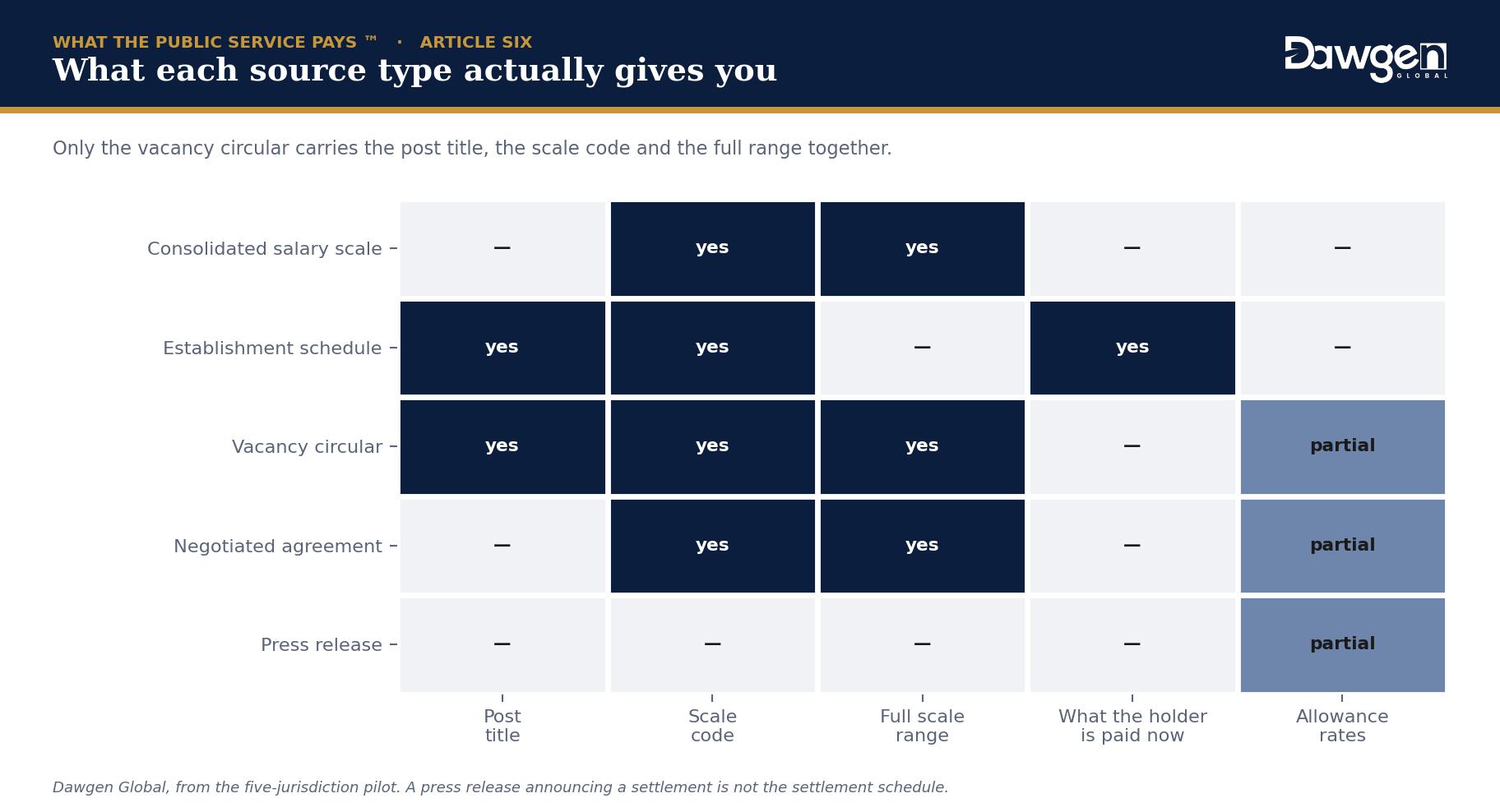
Exhibit 2. What each source type actually yields.
The pattern in that table is the practical finding of this article. Each source answers part of the question. The consolidated scale gives the structure but not which posts sit where. The establishment schedule gives the posts but not the ranges. Only the vacancy circular carries the title, the code and the range together — and it does so one post at a time, which is why it is laborious rather than difficult.
Why nobody thinks of it
Vacancy circulars are ephemeral by design. They are issued to fill a post, they are of no interest once filled, and they are rarely archived systematically. A researcher looking for pay data reasonably starts with the documents that look like pay documents — scales, estimates, agreements — and never reaches the recruitment notices.
The consequence for anyone doing this work is that circular harvesting should be a standing activity rather than a last resort, and that circulars should be collected continuously rather than searched for when needed. A circular that was public last month may be unreachable next month.
The source hierarchy
Replacing the Estimates assumption required a hierarchy — an order in which sources should be attempted for any jurisdiction, since no single source works everywhere.
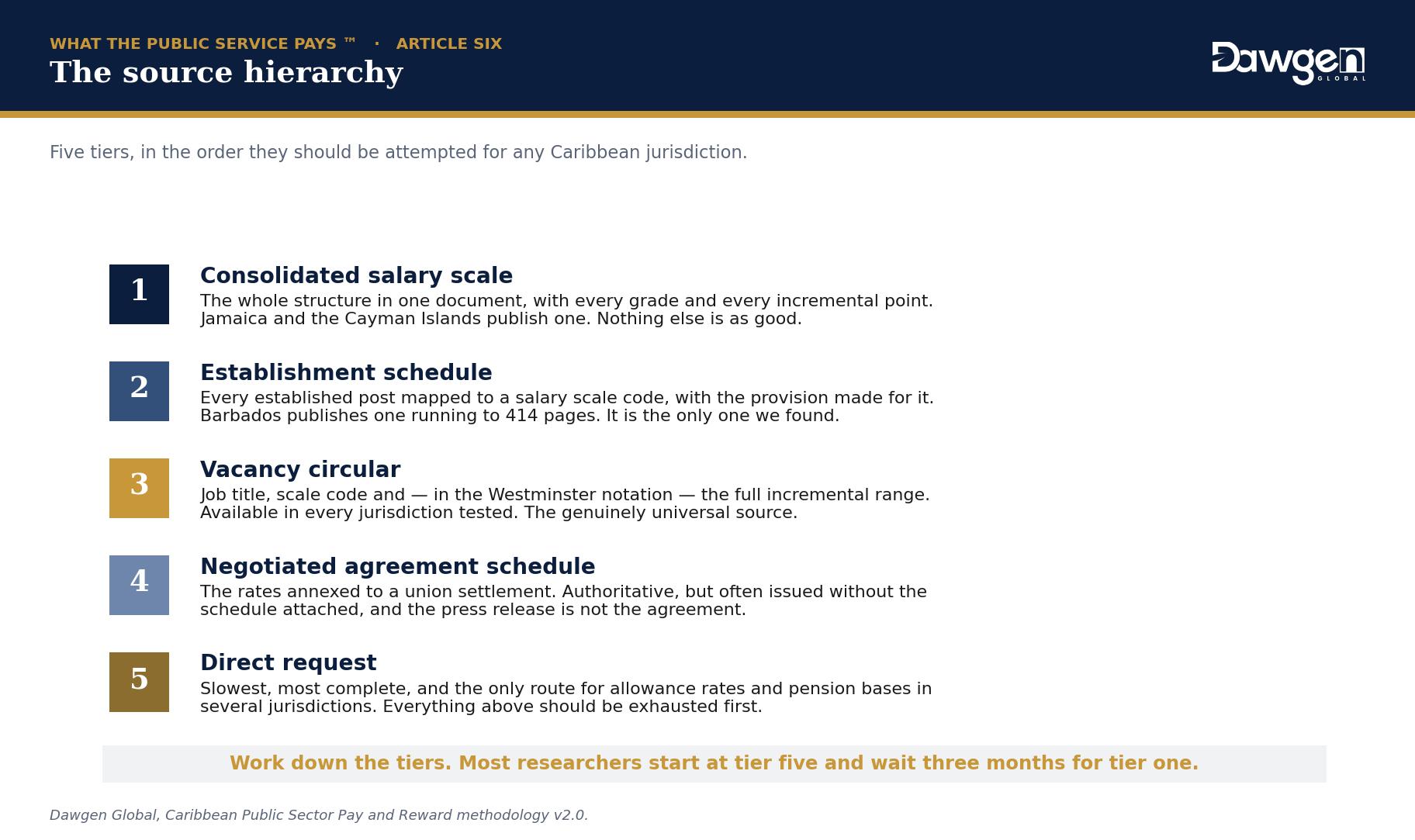
Exhibit 3. Five tiers, in the order they should be attempted.
Two observations about using it.
First, the tiers are not alternatives but complements. In Jamaica we have tier one and no tier two, so posts cannot be mapped to the scale without tier three. In Barbados we have tier two and no tier one, so codes cannot be resolved to ranges without tier three. In both cases the vacancy circular is the bridge.
Second, most researchers begin at tier five. They write to the ministry, wait, and receive a courteous reply some weeks later pointing them to a document that was public throughout. Working down the hierarchy first is not merely faster; it makes the eventual request far more precise, and a precise request is far more likely to be answered.
What each jurisdiction publishes
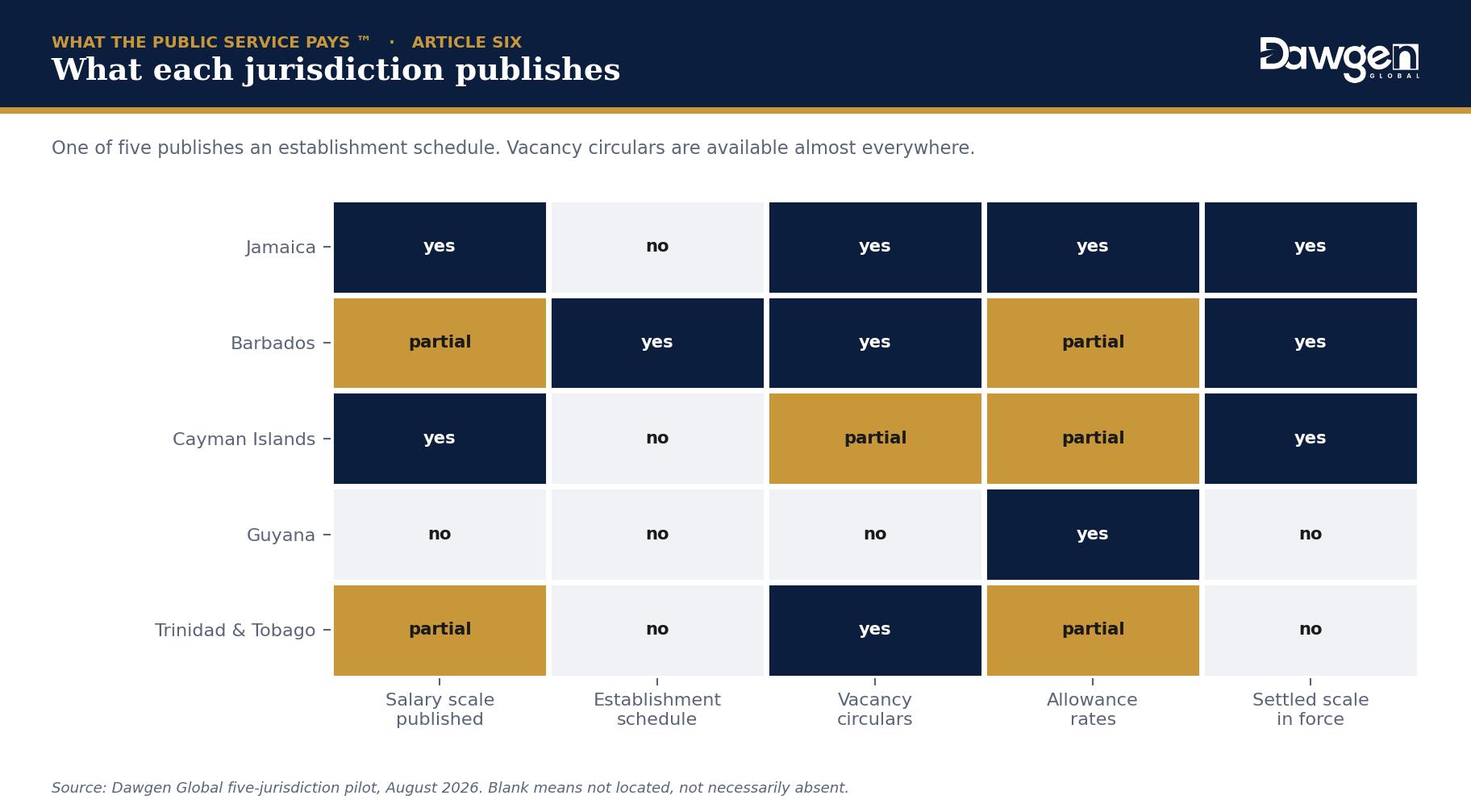
Exhibit 4. The five pilot jurisdictions against the five source types.
Read across the rows rather than down the columns. Each jurisdiction has a different pattern of strength and gap, and the gaps are what determine whether it can be scored.
JAMAICA publishes complete salary scales for every job family, several as downloadable spreadsheets, together with a summary insert giving allowance rates by classification. What it does not publish is any mapping of job titles to scales for the generic management ladder — and because human resources, procurement, policy and economist roles all sit on that ladder rather than on function-specific scales, nine of our twenty-three benchmark roles cannot be mapped from the scale document alone.
BARBADOS publishes the establishment schedule and issues vacancy circulars, but no consolidated scale schedule. Ranges must be assembled circular by circular.
THE CAYMAN ISLANDS publishes the complete salary scale — eighteen grades, annual and monthly, with its own history of adjustments printed on the document, which is a small but genuinely useful piece of practice. What it does not publish is any post-to-grade mapping, and because grading is by job evaluation points rather than job title, that mapping requires the evaluation outcomes rather than a title list.
GUYANA publishes a detailed allowance schedule and, in its Estimates, a wage bill disaggregated into seven occupational categories — the best workforce composition data in the pilot. What it does not publish is the current salary scale.
TRINIDAD AND TOBAGO publishes current salaries for standardised legal contract positions through the Chief Personnel Officer, with allowances stated per position, and its Salaries Review Commission reports cover senior constitutional offices. What it does not have is a settled general service scale.
Three traps
Some documents are authentic, official, easy to find, and misleading if used as they appear. These are the three we walked into, and each would have produced a confidently wrong answer.
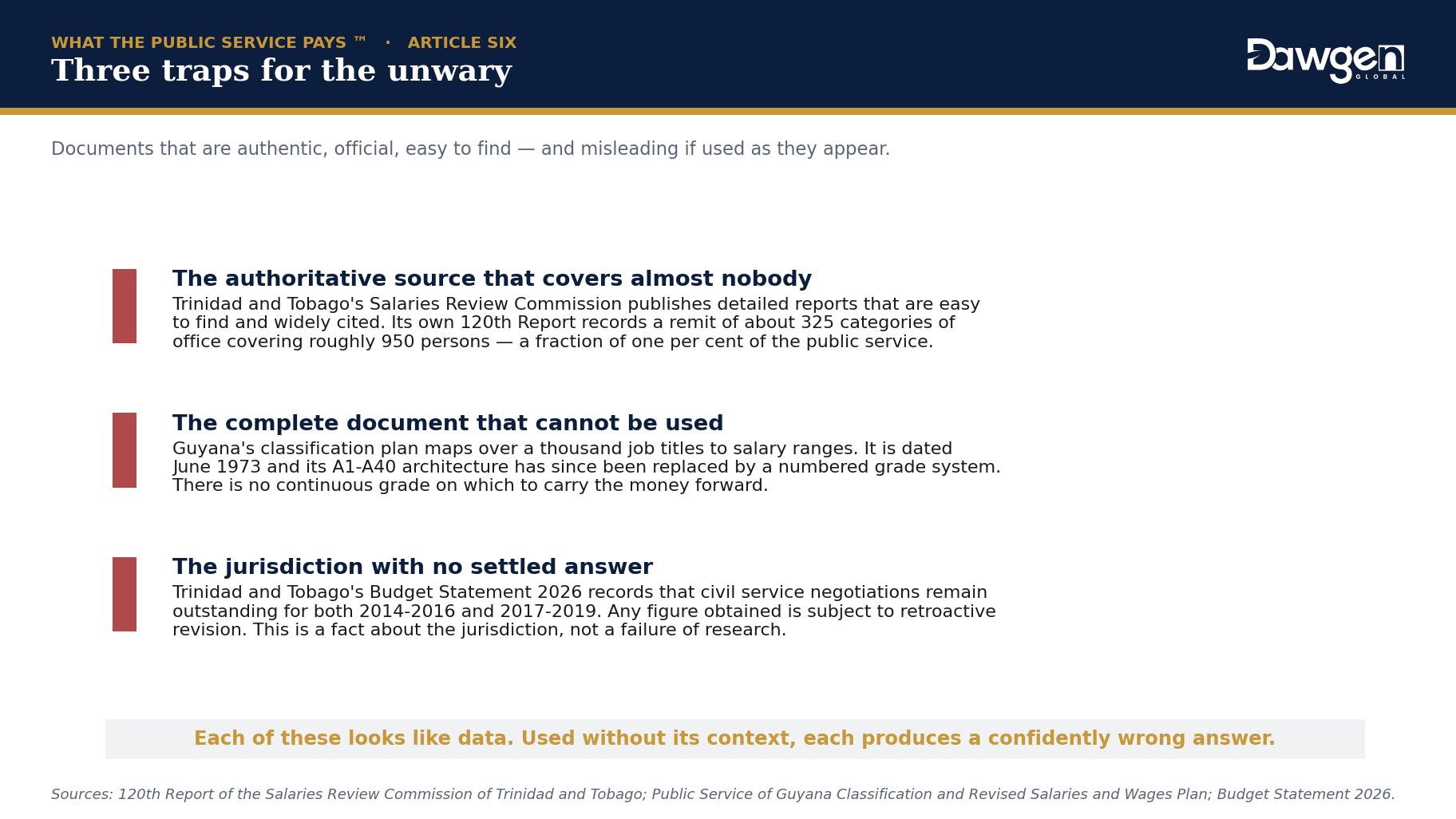
Exhibit 5. Three official documents that cannot be used as they present themselves.
The authoritative source that covers almost nobody
Search for Trinidad and Tobago public sector salaries and you will find the Salaries Review Commission. Its reports are detailed, formally laid before Parliament, and freely available. They are also, by the Commission’s own account in its 120th Report, confined to a remit of approximately 325 categories of office representing an establishment of about 950 persons.
Against a public service of tens of thousands, that is a fraction of one per cent. Anyone treating SRC reports as Trinidad and Tobago’s public sector pay data would be describing 950 people while implying a great many more. The general service sits with the Chief Personnel Officer, and that is a different and much less visible body of documents.
The complete document that cannot be used
Guyana’s Public Service Classification and Revised Salaries and Wages Plan is in one respect the best document we obtained anywhere. It maps over a thousand job titles to salary ranges and covers every one of our twenty-three benchmark roles by name — precisely the mapping Jamaica does not publish.
It is dated June 1973. Its salary ranges run A1 to A40 in monthly dollars, from $130 to $1,250, and the agreement it implements expired in 1976. More importantly, the architecture has since been replaced: current agreements refer to numbered grades, not to the A-range structure. There is no continuous grade on which to carry the money forward, so the increase chain cannot be applied to it.
| WHY THIS TRAP IS THE MOST DANGEROUS
An old document with obviously old money invites the obvious remedy: apply the intervening increases. Had we done so, we would have produced Guyanese figures that looked entirely plausible, carried a real citation, and described a grade structure that no longer exists. Nothing in the document itself warns you. The warning is in the current agreements, which use different grade names. |
The jurisdiction with no settled answer
Trinidad and Tobago’s own Budget Statement 2026 records that public service wage negotiations remain outstanding for both the 2014-2016 and the 2017-2019 periods, and that the Chief Personnel Officer has been instructed to submit a revised offer.
A jurisdiction can therefore be impossible to compare not because its data is hidden but because its pay is unsettled. Any figure obtained is provisional and subject to retroactive revision. We have added a rule to the methodology: where a jurisdiction has no settled scale, it is not scored, and the reason is published. That is a finding about the jurisdiction rather than a gap in our research, and it belongs in the publication rather than in a footnote.
The lesson that cost us the most time
One practical discovery deserves its own section, because it nearly cost us three of the most important documents in the study.
A PDF that returns no text when processed is not necessarily an empty or corrupted document. It may be a scan, or it may be a document whose text has been converted to vector outlines for print. In both cases the content is perfectly legible to a human eye and entirely invisible to any automated extraction.
Three of the five jurisdictions had a critical document in this condition. Jamaica’s Summary of Public Sector Salary Scales — the only document giving allowance rates by classification — is outlined text. The Cayman Islands salary scale, the single most important document for that jurisdiction, is a graphic. Trinidad and Tobago’s 120th Report of the Salaries Review Commission runs to 248 pages of image.
We set aside two of those three before returning to them. The rule now written into our method is simple: render every unextractable document as an image and read it before drawing any conclusion about its usefulness. It sounds obvious. It is easy not to do when a file returns nothing and there are fifteen more jurisdictions waiting.
Why publication practice varies so much
It would be easy to read the availability table as a league table of transparency. That would be unfair, and it would miss what is actually going on. The differences have structural causes, and understanding them explains why the gaps sit where they do.
What the budget document is FOR
The clearest driver is a decision about public financial management that has nothing to do with pay at all.
Traditional line-item budgeting appropriates money against inputs — so many posts, at such a grade, costing so much. That produces an establishment schedule as a by-product, because Parliament is approving the posts themselves. Programme budgeting appropriates against outputs and objectives — so much for primary health care, so much for revenue administration — and treats compensation as one input line within each programme.
Jamaica and Guyana present programme-based Estimates. Their compensation lines are aggregated because that is what programme budgeting does. The absence of an establishment schedule is not opacity; it is a consequence of a reform many would regard as an improvement in fiscal management. Barbados retains the older presentation, and the researcher benefits.
| AN UNINTENDED TRADE-OFF WORTH NAMING
Programme budgeting improves accountability for what money achieves and reduces transparency about what posts cost. Both are legitimate public goods and they pull against each other. A jurisdiction moving to programme budgeting could preserve both by publishing the establishment schedule as a separate annex — the data already exists internally, since the budget cannot be built without it. |
Where pay is actually determined
The second driver is institutional. Where pay is set by a standing commission — as with Trinidad and Tobago’s Salaries Review Commission — the reasoning is published in detail, because the commission’s authority depends on its transparency. But the commission covers only what falls within its remit, and the rest of the service is settled by collective bargaining, where the outcome is a negotiated agreement whose schedule may never be published separately from the announcement.
Where pay is set administratively, as in the Cayman Islands, a single consolidated scale is issued by circular and the whole structure appears in one place. That is why Cayman’s scale is the cleanest document in our study and its post mapping the least accessible: the scale is an administrative instrument, and the grading decisions behind it are internal evaluation records rather than published policy.
Size and capacity
The third driver is unglamorous. Publishing a machine-readable schedule requires someone whose job it is to do so. In a personnel department of a few dozen people, serving a service of a few thousand, that task competes with payroll, recruitment and industrial relations. Jamaica publishes downloadable spreadsheets by job family; a smaller jurisdiction issuing a scanned circular is not being less open, it is being differently resourced.
This matters for how the request in this article should be read. We are not asking ministries to become more transparent. In most cases the information is already public. We are asking whether it might be published in a form that survives contact with anyone trying to use it.
What would make this data usable
The following are offered to public service ministries across the region, from the experience of trying to use what is published. None requires disclosing anything that is not already public. Each concerns publishing it usably.
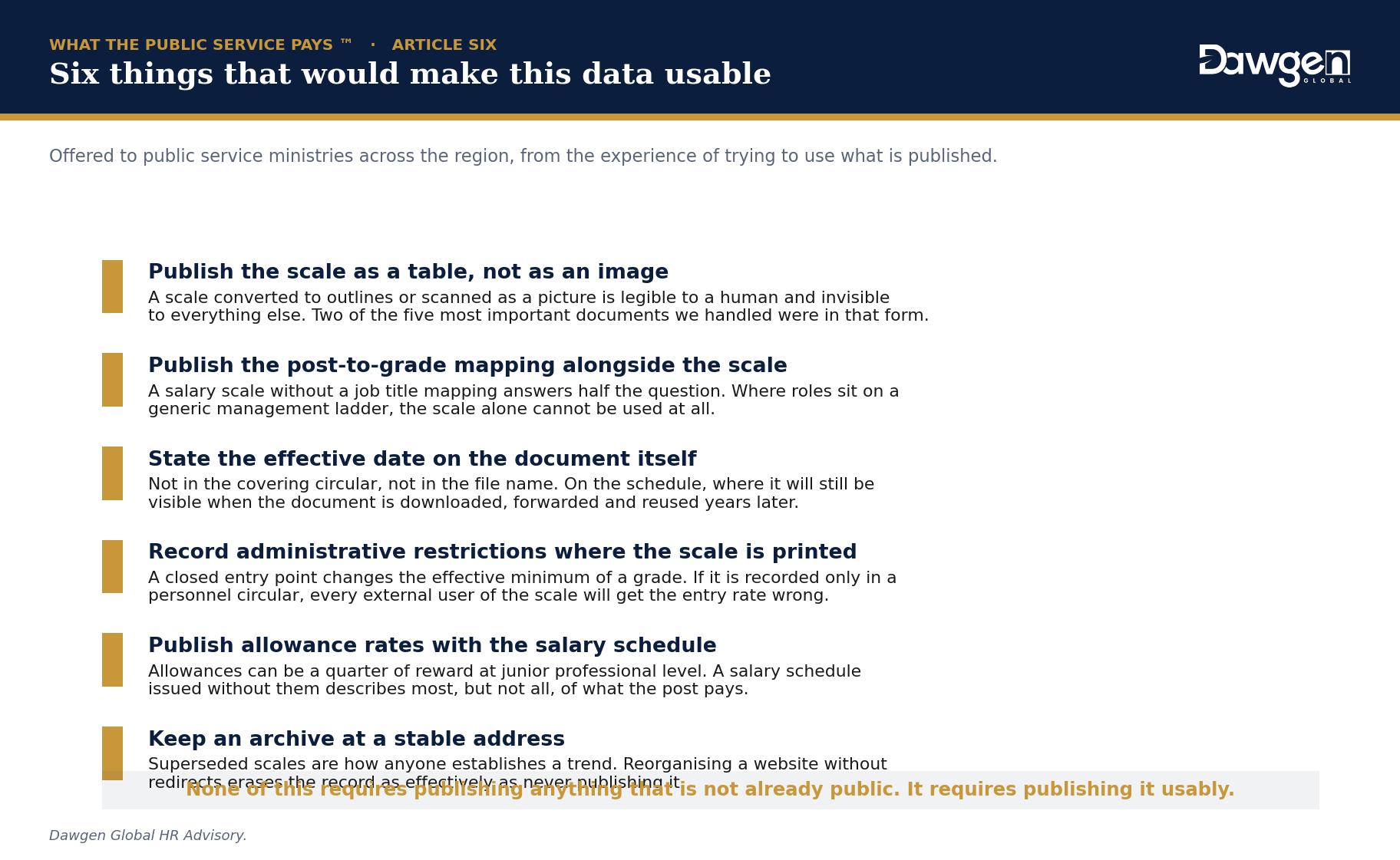
Exhibit 6. Six changes that would make Caribbean public pay data materially easier to use.
The second of those is the one that would make the largest difference to this research and, we suspect, to a good deal of other work. A salary scale without a job-title mapping answers only half the question. Where roles sit on a generic management ladder, as they do throughout Jamaica’s structure, the scale alone cannot be used to establish what any particular profession is paid.
The fourth is the one most likely to produce quiet error. The Cayman Islands closed the bottom incremental point of fifteen of its eighteen grades in December 2022. That restriction is recorded in a personnel circular; the printed scale still shows the closed points. Anyone reading the scale without the circular will take the entry rate wrong for most of the service, and will have no way of knowing.
What this means for anyone doing benchmarking research
- Establish what kind of Estimates a jurisdiction publishes before assuming anything. Object-based and establishment-based Estimates look similar from the contents page and yield entirely different things.
- Harvest vacancy circulars continuously, not when you need them. They are the bridge between structures and posts in every jurisdiction we have tested, and they disappear.
- Check the vintage of the architecture, not just the vintage of the money. A superseded grade structure cannot be uprated however complete the document looks.
- Check the remit of any commission before citing it. Authority and coverage are different properties and are easily confused.
- Render before discarding. Three of our five most important documents returned no text.
- Archive everything you obtain, at your own address. Government sites reorganise, and a live link is not a record.
A note on our work
This research sits within Dawgen Global’s HR Advisory practice, which advises on job evaluation, grading reviews, pay structure design and reward benchmarking across the Caribbean. The source map above is, in a sense, the most transferable output of the whole exercise: it is the part any other researcher, ministry or firm can use immediately, whatever they think of our conclusions.
The request
We are missing, specifically: the current salary scale for Guyana; post-to-grade mappings for Jamaica and the Cayman Islands; full scale ranges for Barbados; employer pension and health contribution rates for every jurisdiction; and everything for the eleven jurisdictions we have not yet reached.
| AN INVITATION
Public service ministries, personnel departments, statistical offices and central banks holding any of this information are invited to contact us. So is anyone who believes a figure we have published is wrong. Corrections will be acknowledged and reflected, and the institution supplying them credited. If your jurisdiction publishes something we have recorded as unavailable, we would particularly like to hear from you — the likeliest explanation is that we did not find it. |
Next in this series
Article seven turns to what it would take to complete this work: the eleven remaining jurisdictions, the documents required for each, and the shape of the first published edition.
SOURCES
Barbados, Schedules of Personal Emoluments 2026-2027, and Public Service Circular No. 44/2023, Ministry of the Public Service. Government of Jamaica, Estimates of Expenditure 2026/2027, the salary scales for monthly and weekly paid staff 2022-2025, the job-family salary schedules and the Summary of Public Sector Salary Scales, Ministry of Finance and the Public Service. Cayman Islands Government Salary Scale effective 1 January 2025, Appendix B to Personnel Circular 11 of 2024. Republic of Trinidad and Tobago, 120th Report of the Salaries Review Commission dated 24 October 2024, Personnel Department Circular Memorandum No. 2 of 2026, and Budget Statement 2026. Public Service of Guyana Classification and Revised Salaries and Wages Plan, Public Service Ministry, June 1973, and Estimates of the Public Sector 2026. Document page counts and parsed record counts are Dawgen Global’s own.
This article is the sixth in What the Public Service Pays™, a Dawgen Global series drawn from research across sixteen Caribbean jurisdictions. Dawgen Global is an independent, integrated multidisciplinary professional services firm serving the Caribbean. Enquiries: [email protected] | dawgen.global
About Dawgen Global
Dawgen Global is an independent, integrated multidisciplinary professional services firm headquartered at Dawgen Towers, 47-49 Trinidad Terrace, Kingston 5, Jamaica, serving more than 15 territories across the Caribbean. Founded and led by Dr. Dawkins Brown, Executive Chairman, the firm is independent and not affiliated with any international network. It delivers a full suite of professional services under one roof: audit and assurance; tax advisory; IT and digital transformation; risk management; cybersecurity; actuarial and insurance regulatory advisory; HR advisory; mergers and acquisitions; corporate recovery; business advisory and strategy; accounting BPO and virtual CFO services; and legal process outsourcing.
The proposition is simple: big-firm capability without the big-firm price. Dawgen Global’s integrated approach is built for the specific complexities and opportunities of the Caribbean market, helping organizations make sharper, better-informed decisions that drive measurable progress.
To explore a partnership, reach out:
- Website: dawgen.global
- Email: [email protected]
- WhatsApp (Global): +1 555-795-9071
- Caribbean offices: +1 876-665-5926 | +1 876-929-3670 | +1 876-926-5210


