HomeTag

AI governance for audit committees

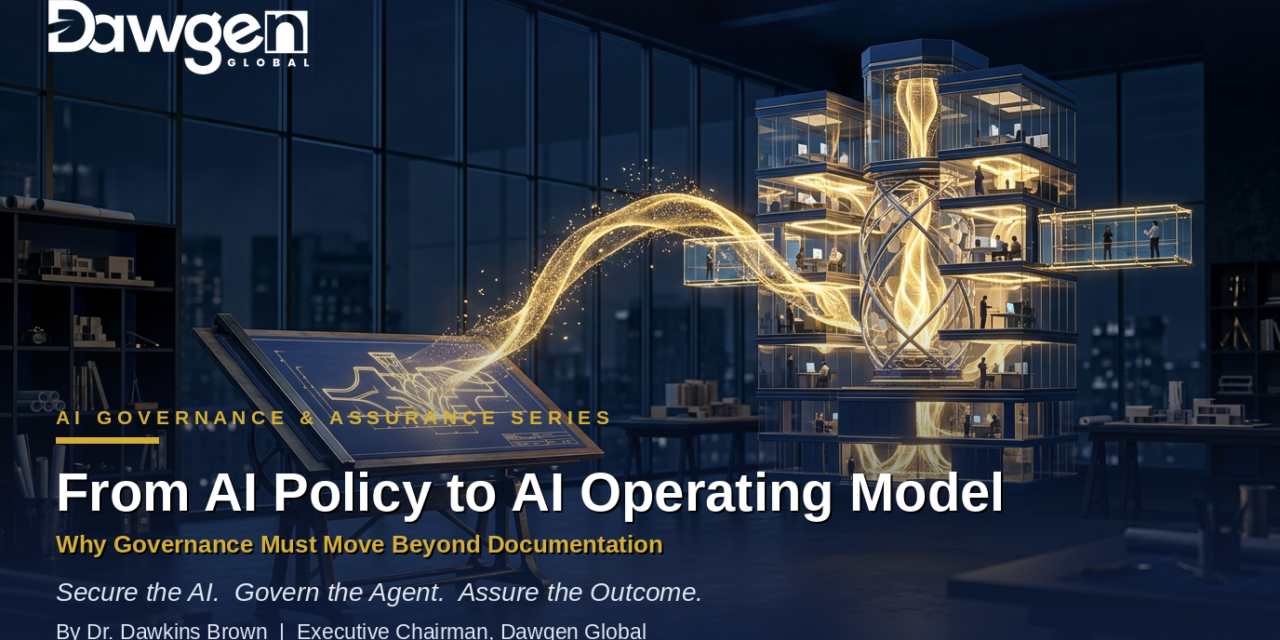
From AI Policy to AI Operating Model: Why Governance Must Move Beyond Documentation

How organizations can turn responsible AI principles into daily control discipline   EXECUTIVE SUMMARY Many organizations have responded to AI risk by drafting an AI policy. That is a necessary first step — but a policy is not governance. A policy defines the rules; an AI Operating Model defines how those rules are executed: who...
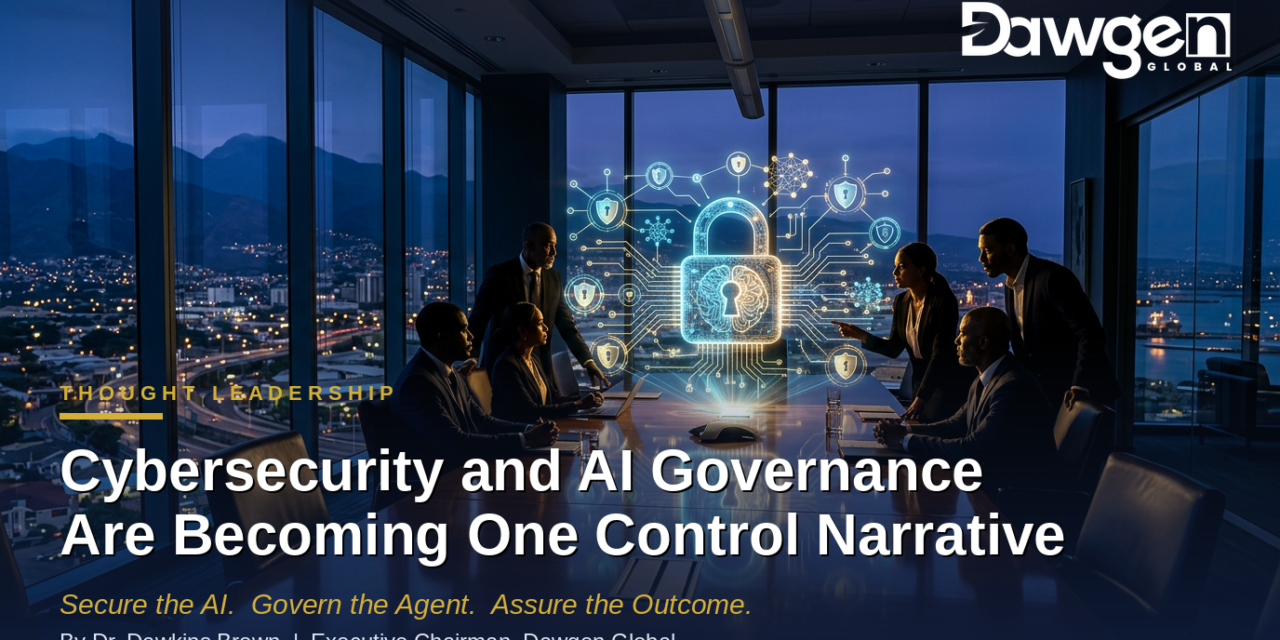
Cybersecurity and AI Governance Are Becoming One Control Narrative

Why Caribbean organizations must secure the AI, govern the agent, and assure the outcome EXECUTIVE SUMMARY Artificial intelligence has moved from pilot projects into the operational core of Caribbean enterprises — into finance, customer engagement, compliance, procurement, and decision-making itself. As it does, the traditional boundary between cybersecurity and AI governance is disappearing. The defining...

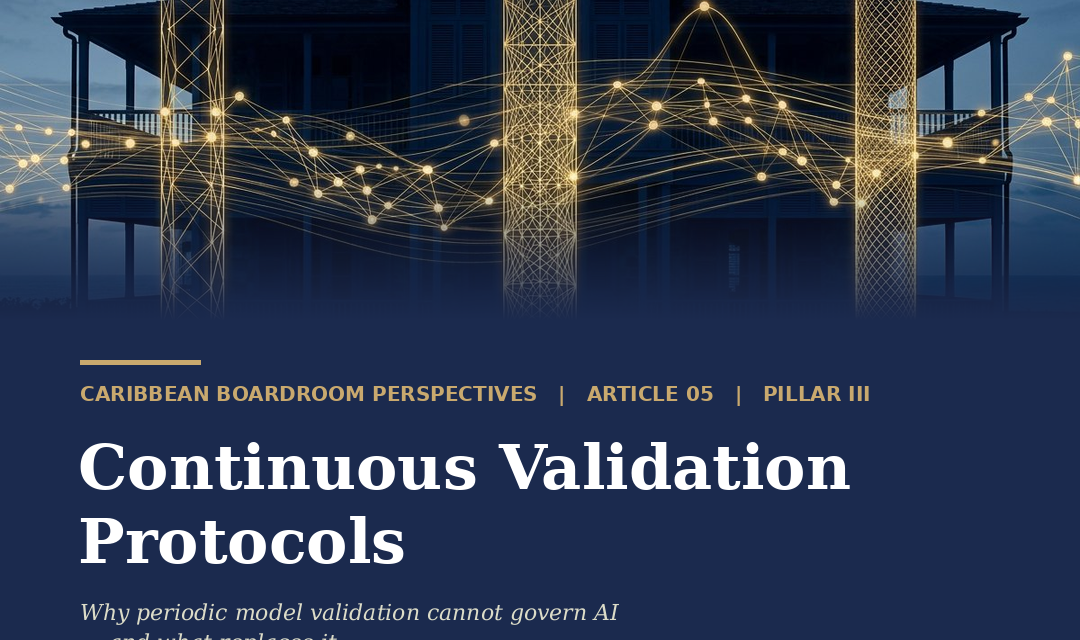
Continuous Validation Protocols: Why Periodic Model Validation Cannot Govern AI.

  Why periodic model validation cannot govern AI — and what replaces it in institutions that must oversee systems faster than the institution itself can convene   THE ARGUMENT IN ONE PARAGRAPH Traditional model validation operates on calendar time: annual reviews, quarterly committee meetings, semi-annual revalidation cycles. Artificial intelligence operates on operational time: thousands of...

The Three-Owner Principle: Who Is Accountable When an AI-Influenced Decision Goes Wrong?

Who is accountable when an AI-influenced decision goes wrong — and why three separate owners are required for every consequential decision class   THE ARGUMENT IN ONE PARAGRAPH When a credit decision goes wrong, the institution must be able to identify, within hours, who is accountable for what. Traditional governance answers this with a single...

Distributed Oversight Architecture: Why Caribbean Boards Must Federate AI Decision Rights — and How to Do It Without Losing Central Authority

  THE ARGUMENT IN ONE PARAGRAPH Traditional governance routes consequential decisions to the centre. Artificial intelligence makes consequential decisions at the edge — in the credit officer’s interface, in the underwriter’s screen, in the analyst’s recommendation engine — at machine speed, in volumes the centre cannot review. Pillar I of the AEGIS™ framework — Distributed...

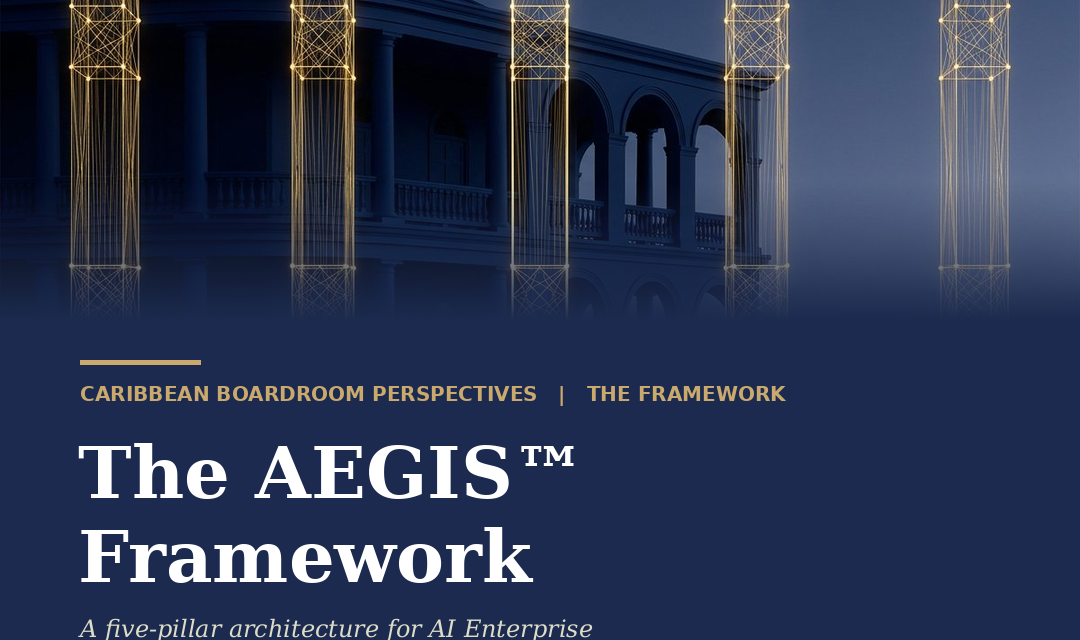
Introducing AEGIS™: A Five-Pillar AI Governance Framework for Caribbean Institutions

  THE ARGUMENT IN ONE PARAGRAPH Artificial intelligence does not extend the risk surface of an institution — it inverts the assumptions on which the institution’s governance was built. The Landmark Edition of Caribbean Boardroom Perspectives set out The Governance Inversion Thesis, arguing that AI requires governance itself to be re-architected, not merely extended. This...

https://www.dawgen.global/wp-content/uploads/2023/07/Foo-WLogo.png

Dawgen Global is an integrated multidisciplinary professional service firm in the Caribbean Region. We are integrated as one Regional firm and provide several professional services including: audit,accounting ,tax,IT,Risk, HR,Performance, M&A,corporate recovery and other advisory services

Where to find us?
https://www.dawgen.global/wp-content/uploads/2019/04/img-footer-map.png
Dawgen Social links
Taking seamless key performance indicators offline to maximise the long tail.
https://www.dawgen.global/wp-content/uploads/2023/07/Foo-WLogo.png

Dawgen Global is an integrated multidisciplinary professional service firm in the Caribbean Region. We are integrated as one Regional firm and provide several professional services including: audit,accounting ,tax,IT,Risk, HR,Performance, M&A,corporate recovery and other advisory services

Where to find us?
https://www.dawgen.global/wp-content/uploads/2019/04/img-footer-map.png
Dawgen Social links
Taking seamless key performance indicators offline to maximise the long tail.

© 2023 Copyright Dawgen Global. All rights reserved.

© 2024 Copyright Dawgen Global. All rights reserved.