
Most cyber attacks begin with a person, not a machine. A convincing email, a fake invoice or a phone call from someone pretending to be the boss. The organisations that resist best are not those that blame staff, but those that train, test and reinforce good habits until they become second nature.
Dawgen Global illustration
On a busy Thursday afternoon, the finance manager of a Caribbean manufacturing company receives an email from the chief executive, who is travelling. A confidential acquisition is close to completion, the email says, and a deposit must be wired today to a lawyer’s account. The chief executive cannot take calls but asks for the payment to be handled discreetly. The email address looks right. The tone sounds right. The urgency feels real.
The payment is made. The chief executive never sent the email.
Variations of this story play out across the region every week. Fake supplier invoices, changed bank details, messages from “the boss” on WhatsApp, calls from “IT support” asking for passwords, and parcel delivery texts with malicious links. None of these attacks requires sophisticated hacking. They require only that one person, under pressure, does what seems reasonable at the time.
Why people are targeted
Attackers target people because it works. Technology has become better at blocking malicious code, but people remain helpful, busy and trusting, which are qualities organisations want in their staff and qualities criminals exploit.
Modern social engineering is convincing. Attackers research their targets on professional networking sites and company websites. They copy the style and signatures of real suppliers and colleagues. They time messages to arrive during busy periods or when key people are travelling. Increasingly, they use voice cloning and messaging apps to add credibility.
The consequences can be severe. A single click can install malware that leads to ransomware. A single entered password can give access to email, files and customer data. A single payment to a fraudulent account can cost more than an entire year’s security budget.
Why traditional training fails
Many organisations respond with an annual training session: a presentation, a video and a quiz. It ticks a compliance box, but it rarely changes behaviour. People forget most of what they hear within weeks, and generic examples from other countries feel irrelevant to Caribbean staff.
Worse, some organisations take a punitive approach, naming and shaming staff who click on simulated phishing emails. This teaches people to hide mistakes rather than report them, which is exactly the wrong outcome. When someone clicks a real malicious link, the most important thing is that they report it immediately, so the security team can act before damage spreads.
| The goal is not to catch people out. It is to build a culture where everyone notices, questions and reports. |
What works: train, test, reinforce
Effective awareness programmes share several features.
They are continuous. Short, regular touchpoints throughout the year build habits far more effectively than a single annual session.
They are relevant. Scenarios use local banks, utilities, couriers, government services and suppliers that staff recognise. Examples reflect the scams staff are actually seeing, including messaging app fraud and fake payment requests.
They are role-based. Finance teams need deep training on payment fraud. Customer service and contact centre staff need to recognise social engineering by phone. HR teams handle sensitive personal data. Executives are targeted for impersonation. Each group needs content that fits its risks.
They include safe practice. Phishing simulations give staff a chance to practise spotting malicious emails in a safe environment, with instant feedback when they make a mistake.
They are measured. Click rates, reporting rates and training completion show whether the programme is working and where to focus next.
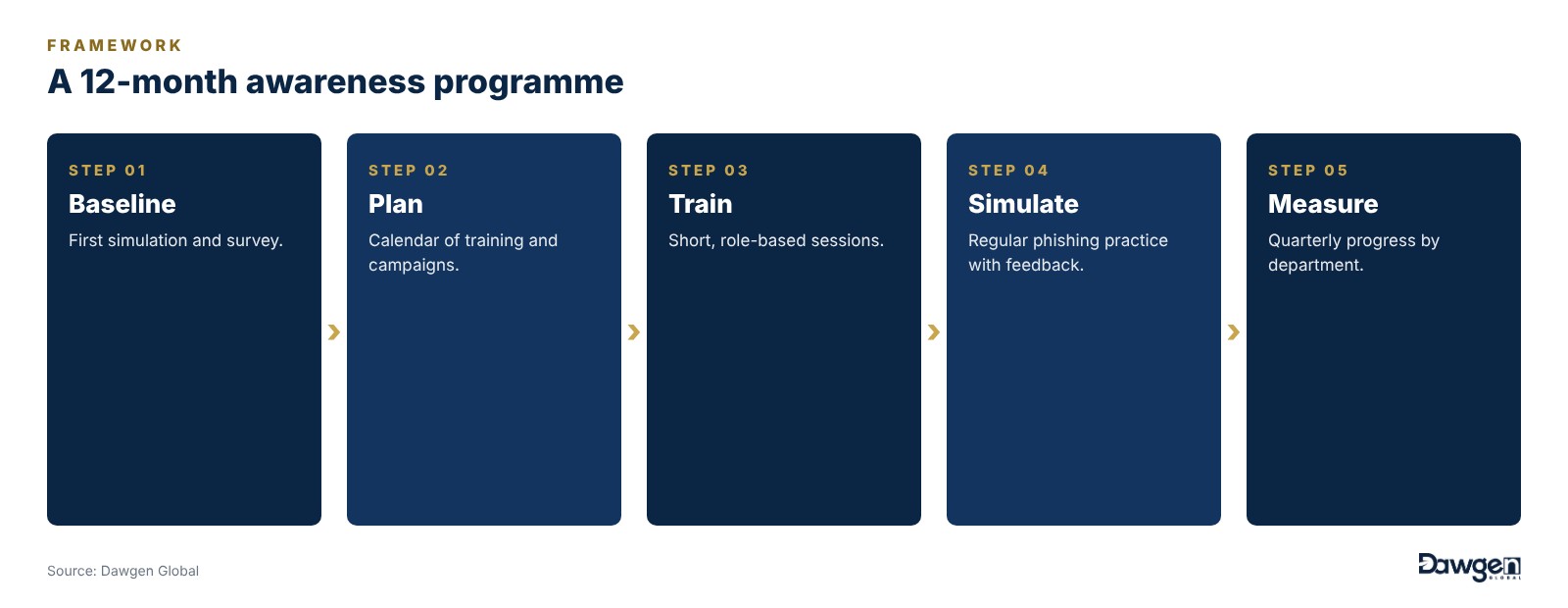
Figure 1. A 12-month awareness programme
Phishing simulations done well
A phishing simulation sends realistic but harmless emails to staff, imitating the kinds of messages attackers use: courier notifications, invoice queries, password reset requests and HR announcements. Staff who click are shown a short lesson immediately, explaining the warning signs they missed. Staff who report the email are recognised.
Over time, simulations become steadily more sophisticated, matching current attacker techniques. Results are reported by department rather than by individual, and used to target extra training where it is needed.
The most important measure is not the click rate but the reporting rate. A workforce where most people report suspicious emails quickly is a powerful early-warning system, often faster than any technology.
Payment fraud: the controls that matter
Business email compromise and fake payment requests are among the most costly cyber-enabled crimes in the region. The good news is that a few simple controls, practised consistently, stop most of them.
Verify bank detail changes by phone. When a supplier says its bank details have changed, call them on a number you already hold, not a number provided in the email. This single control prevents a large share of payment fraud.
Use two-person approval. Payments above a set limit should require approval by two people, so no single person can be pressured into a fraudulent transfer.
Treat urgency and secrecy as warning signs. Requests that are urgent, confidential and unusual should be escalated and verified, never rushed. Legitimate executives will understand.
Protect supplier master data. Changes to supplier records should be logged, reviewed and approved independently.
Know what to do if it happens. Contact the bank immediately to try to stop or recall the payment, preserve the emails and records, and report the incident. Speed is critical.
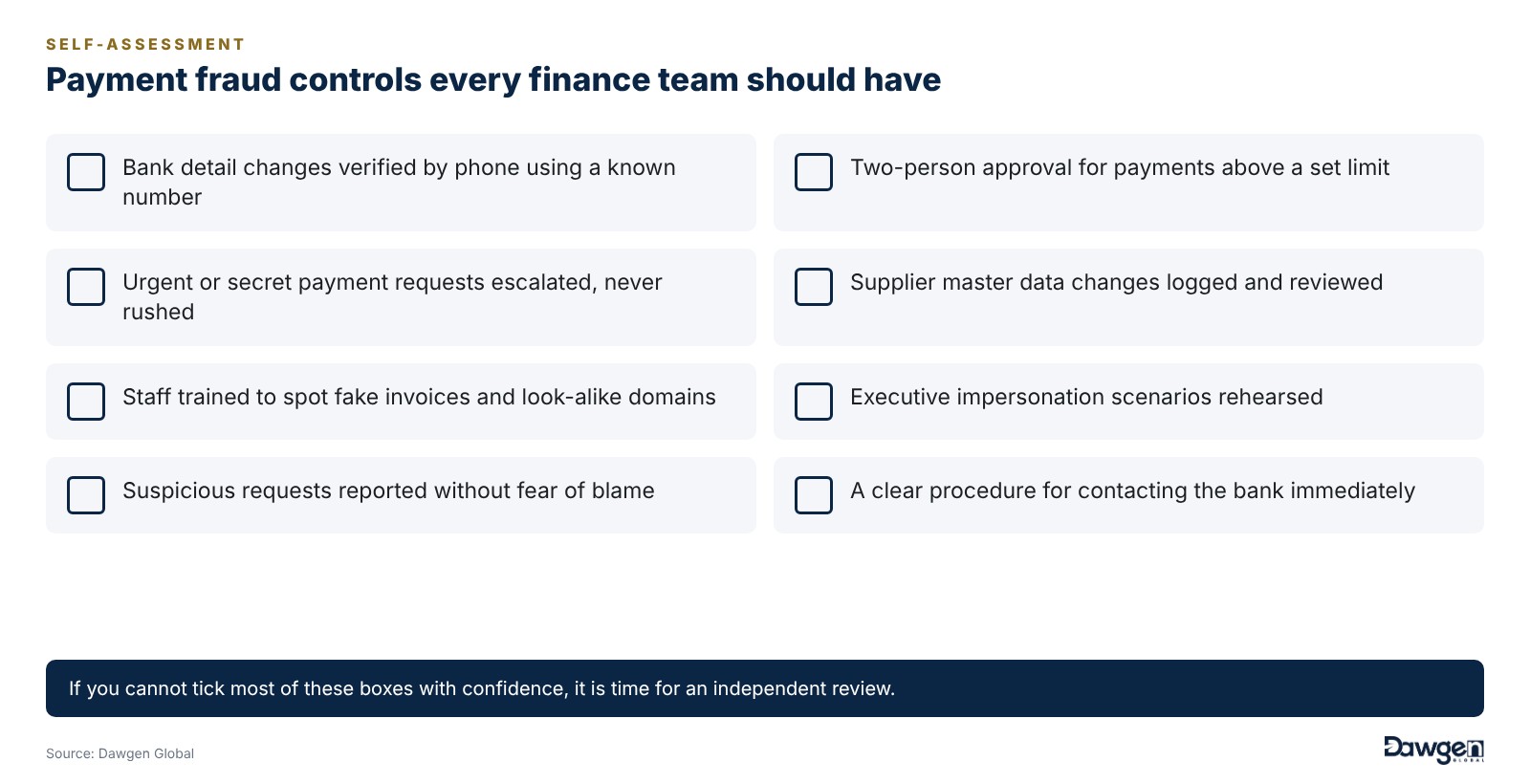
Figure 2. Payment fraud controls every finance team should have
The role of leaders
Culture starts at the top. When executives complete training, follow verification procedures themselves and thank staff who question unusual requests, even requests that turn out to be genuine, it sends a powerful signal. When leaders bypass controls because they are in a hurry, it undermines everything.
Boards also need awareness. Directors are targets for impersonation and phishing, and they need to understand cyber risk well enough to ask good questions. A short annual board briefing on current threats, the organisation’s programme and the board’s role in a crisis is time well spent.
New tricks to watch
Attackers constantly adapt. Current techniques that awareness programmes should cover include:
- Messaging app fraud. Messages on WhatsApp and similar apps from someone claiming to be a colleague or executive with a new number.
- Voice cloning. Phone calls or voice notes that imitate a known person’s voice, used to add credibility to urgent requests.
- QR code phishing. Malicious QR codes in emails, posters or parking notices that lead to fake login pages.
- Multi-factor fatigue. Repeated authentication prompts sent in the hope that a user will approve one to make them stop.
- Fake IT support. Calls or chat messages offering to fix a problem, then asking staff to install remote access software.
A composite case: changing behaviour in a year
Consider a distribution company that ran its first phishing simulation and found that a significant share of staff clicked on a fake courier notice, while only a handful reported it. The finance team had recently stopped a fraudulent payment by luck rather than process.
Over twelve months, the company ran short monthly training sessions, regular phishing simulations with instant feedback, a dedicated payment fraud workshop for the finance team and quarterly reports to management. It introduced a simple “report phish” button and thanked staff publicly, without naming individuals who clicked.
By the end of the year, click rates had fallen sharply, reporting rates had risen substantially and the finance team verified every bank detail change by phone as a matter of routine. When a real fake invoice arrived, it was reported within minutes.
Measuring success
Boards and management should expect regular, simple reporting on awareness: phishing click and reporting rates over time, training completion, repeat behaviour, and notable incidents prevented. These measures also support cyber insurance applications, where insurers increasingly ask about training and phishing simulations.
Getting started
A baseline phishing simulation is the best first step. It shows where you stand, gives you a benchmark to measure progress against and usually provides the evidence needed to secure support for a full programme. In parallel, introduce call-back verification for all bank detail changes immediately. It costs nothing and protects against one of the most damaging frauds.
Common objections, answered
“Our staff are too busy for training.” Effective programmes use short sessions of fifteen to twenty minutes and brief micro-lessons, scheduled across the year. The time invested is small compared with the time lost to a single successful phishing attack.
“Phishing simulations damage trust.” They damage trust only when used to embarrass people. When results are reported by department, staff are thanked for reporting and lessons are delivered supportively, simulations are widely accepted and even welcomed.
“Our email filter catches phishing.” Filters catch most malicious emails, but not all. Attackers constantly adapt their messages to slip through, and many scams now arrive by text message, phone or messaging app, where email filters do not apply.
“We trained everyone last year.” Threats change, staff change and memories fade. Awareness is a habit, and habits need regular reinforcement.
Sector perspectives
For financial institutions, staff must recognise attempts to obtain member information by phone, social engineering of help desks and fraud targeting both the institution and its customers.
For hotels and tourism businesses, front desk and reservations staff face fake booking enquiries, malicious attachments disguised as guest documents and payment fraud during busy periods.
For public bodies, staff handle citizen data and are targeted by impersonation of other agencies and suppliers.
For contact centres and BPO operators, staff handling customer data for overseas clients need training that meets those clients’ contractual and regulatory requirements.
Linking awareness to data protection
Data protection laws across the region expect organisations to train staff in handling personal data securely. A well-designed awareness programme meets that expectation at the same time as reducing cyber risk, covering topics such as recognising personal data, sharing it safely, reporting suspected breaches promptly and respecting individuals’ rights. One programme, properly designed, serves both purposes.
Conclusion
Technology alone cannot stop attacks that target people. But people, properly trained, tested and supported, can stop attacks that technology misses. The organisations that resist social engineering best are not those with the most rules, but those where everyone notices, questions and reports, and where leaders set the example.
Your people are already part of your security. With the right programme, they can become your strongest defence.
| TAKE THE NEXT STEP
Turn your people into your strongest defence. Our Security Awareness & Phishing Defence brochure explains our 12-month programmes, phishing simulations, finance team fraud workshops and board briefings, all built around Caribbean workplaces. Read the brochure: Security Awareness & Phishing Defence — https://www.dawgen.global/service-brochure/security-awareness/ Talk to us: Request a security awareness proposal or a baseline phishing simulation. Write to info@dawgen.global, or to your territory desk at territory@dawgen.com. |
About Dawgen Global
Dawgen Global is an independent, integrated multidisciplinary professional services firm headquartered at 47 Trinidad Terrace, New Kingston, Jamaica, serving 35 territories across the Caribbean. Founded and led by Dr. Dawkins Brown, Executive Chairman, the firm is independent and not affiliated with any international network. It delivers a full suite of professional services under one roof: audit and assurance; tax advisory; IT and digital transformation; risk management; cybersecurity; actuarial and insurance regulatory advisory; HR advisory; mergers and acquisitions; corporate recovery; business advisory and strategy; accounting BPO and virtual CFO services; and legal process outsourcing.
The proposition is simple: big-firm capability without the big-firm price. Dawgen Global’s integrated approach is built for the specific complexities and opportunities of the Caribbean market, helping organizations make sharper, better-informed decisions that drive measurable progress.
To explore a partnership, reach out:
- Website: dawgen.global
- Email: info@dawgen.global
- WhatsApp (Global): +1 555-795-9071
- Caribbean offices: +1 876-665-5926 | +1 876-929-3670 | +1 876-926-5210
Related service: Explore how we can help →