HomeCategory

Caribbean AI Ecosystem

Assurance as Advantage: Dawgen’s Compliance-as-a-Service Playbook

Most companies treat compliance as a checklist—necessary, expensive, and perpetually “almost done.” High performers turn it into a competitive advantage. In regulated or trust-sensitive markets, the ability to prove that you do the right things, the right way, every time is worth money: it wins tenders, unlocks partnerships, expands access to capital, and stabilizes pricing....
TOM, but Make It Profitable: The Dawgen TOM Blueprint™ for Faster Decisions

Most “target operating models” (TOMs) read like organization charts with new boxes and arrows. They are expensive to design, slow to implement, and—too often—decoupled from the economics of the business. The Dawgen TOM Blueprint™ fixes that by tying structure, roles, processes, data, and technology directly to unit economics, cash, and ROIC. It’s the execution backbone...

When Policy Meets Rails: How National Payment Systems Bend the Curve

Notes to Nodes: The Great Payment Transition The difference a rail makes Many countries don’t reduce cash usage by persuading people; they do it by lowering the cost of switching. That’s what national, interoperable, instant-payment rails do. When the rulebook (policy) and the track (infrastructure) are aligned, paying digitally becomes the default—cheap for small merchants,...

Disasters & Downtime: Designing Payments for Hurricanes and Blackouts

  Resilience is adoption’s silent engine In islands where storms redraw shorelines and power flickers like a heartbeat, payments that only work when the sun shines and the fiber holds won’t win people’s trust. The Caribbean doesn’t need “cashless.” It needs cash-resilient digitization: rails that hum during normal days, degrade gracefully during outages, and snap...

The Places Where Cash Still Rules

The paradox of progress Walk through a street market in Yangon, a minibus park in Kingston, or a craft village in St. George’s and you’ll see the same choreography—notes changing hands, coins in plastic tubs, a quick mental tally before the bag is tied. In many countries, cash still powers day-to-day life because it is...

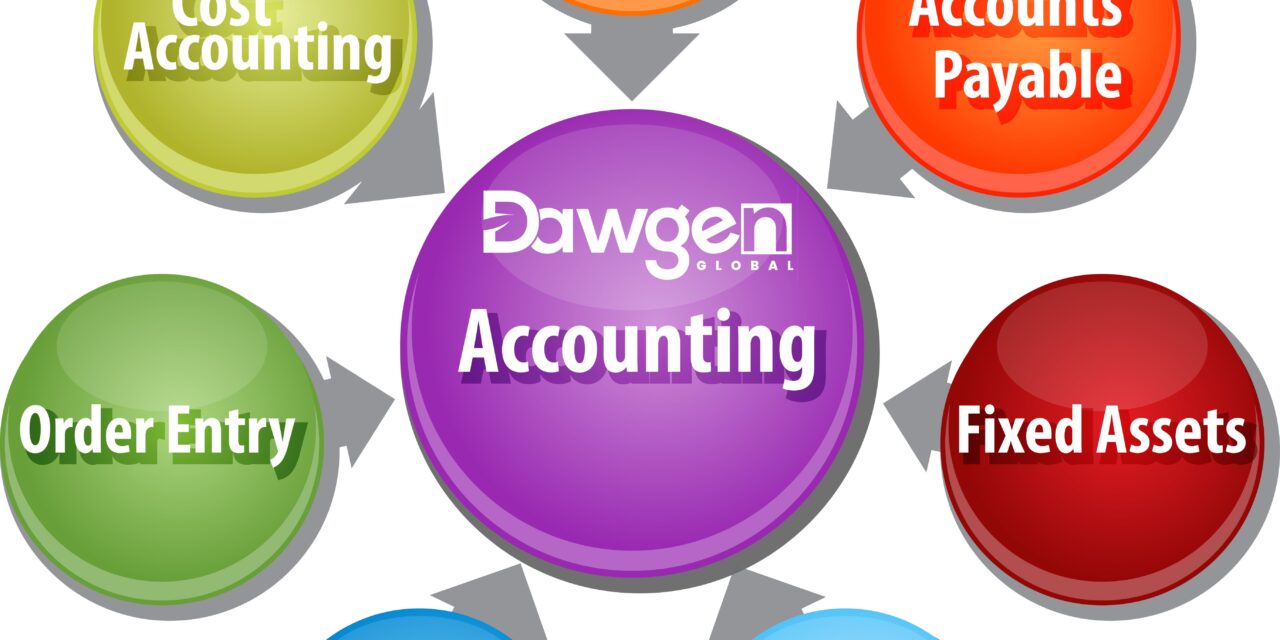
Accounting & Bookkeeping: Building a Reliable Finance Engine for Growth

SMEs and mid-market companies often outgrow DIY bookkeeping. This article explains how Dawgen Global designs a right‑sized accounting stack—people, process, and platforms—to deliver accurate, timely financials that support decisions, funding, and compliance. Who This Is For Founders, CFOs, and operations leaders seeking clean books, faster closes, and audit‑ready records. Common Pain Points Late or error‑prone...

Income Taxes After a Hurricane: Current, Deferred & Disclosures (Policyholders / Non-Insurers)

  Applying IAS 12 Income Taxes to storm-related losses, insurance proceeds, provisions, impairments, ECL updates, and rebuild projects—plus interaction with IAS 1/10, IAS 16, IAS 37, IFRS 9, IAS 23, IAS 20. Hurricanes can swing taxable profit, create tax losses, and move large temporary differences all at once. Under IAS 12, you must: Compute current...

Cash Flow Statement After a Hurricane: Where Everything Goes (Policyholders / Non-Insurers)

  Applying IAS 7 Statement of Cash Flows (with links to IAS 1, IAS 10, IAS 16, IAS 37, IAS 20, IFRS 9, IFRS 15) to classify and disclose cash effects of asset losses, rebuild projects, insurance proceeds (including BI), grants, provisions, and debt/liquidity actions—without netting. In disaster reporting, the cash flow statement is your...

IFRS 9 Credit Losses After a Hurricane: Receivables, Contract Assets & Overlays (Policyholders / Non-Insurers)

Applying IFRS 9 Expected Credit Loss (ECL) to trade receivables, contract assets and other short-term financial assets after a natural disaster—staging, overlays, forbearance, write-offs, recoveries, and disclosures. Links to IFRS 15 (contract assets), IAS 1/10 (presentation & events), IAS 12 (tax), IAS 37 (provisions). Hurricanes reshape credit risk overnight. IFRS 9 requires forward-looking ECL that...

Leases & Site Access After a Hurricane: IFRS 16 for Lessees (Policyholders / Non-Insurers)

Applying IFRS 16 to post-disaster scenarios for lessees—ROU asset impairment, rent concessions, lease modifications, onerous service components, and disclosures. Links to IAS 36, IAS 37, IAS 1/10, IAS 20. When a hurricane shutters facilities or disrupts logistics, leases become central: sites may be unusable, landlords may offer rent abatements, and you may need short-term swing...

https://www.dawgen.global/wp-content/uploads/2023/07/Foo-WLogo.png

Dawgen Global is an integrated multidisciplinary professional service firm in the Caribbean Region. We are integrated as one Regional firm and provide several professional services including: audit,accounting ,tax,IT,Risk, HR,Performance, M&A,corporate recovery and other advisory services

Where to find us?
https://www.dawgen.global/wp-content/uploads/2019/04/img-footer-map.png
Dawgen Social links
Taking seamless key performance indicators offline to maximise the long tail.
https://www.dawgen.global/wp-content/uploads/2023/07/Foo-WLogo.png

Dawgen Global is an integrated multidisciplinary professional service firm in the Caribbean Region. We are integrated as one Regional firm and provide several professional services including: audit,accounting ,tax,IT,Risk, HR,Performance, M&A,corporate recovery and other advisory services

Where to find us?
https://www.dawgen.global/wp-content/uploads/2019/04/img-footer-map.png
Dawgen Social links
Taking seamless key performance indicators offline to maximise the long tail.

© 2023 Copyright Dawgen Global. All rights reserved.

© 2024 Copyright Dawgen Global. All rights reserved.