HomeCategory

Business Financing

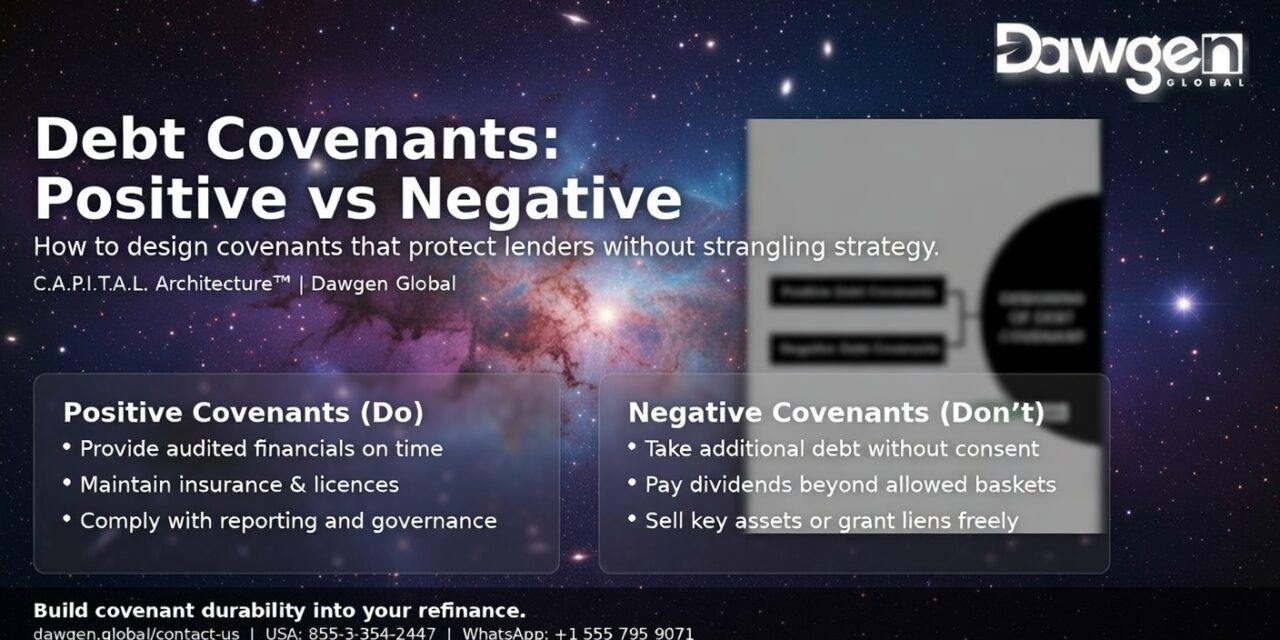
Covenants That Matter: Turning Legal Terms Into Strategic Protection

Executive Summary Debt covenants are often treated as “legal boilerplate.” In reality, covenants are risk controls that determine how much strategic freedom a business retains—and how quickly a liquidity issue can become a refinancing crisis. The wrong covenant package can force defensive decisions (capex cuts, asset sales, emergency equity) even when the underlying business remains...

Bullet vs Amortising Debt: Designing Maturity Ladders That Survive Downturns

  Executive Summary The repayment profile of debt—bullet (principal due at maturity) versus amortising (principal repaid over time)—is one of the most underappreciated drivers of capital structure risk. Bullet debt can preserve near-term liquidity and improve strategic flexibility, but it concentrates refinancing risk. Amortising debt reduces refinancing exposure by steadily paying down principal, but it...

Loans vs Corporate Bonds: The Real Trade-Off Is Flexibility, Not Just Interest Rate

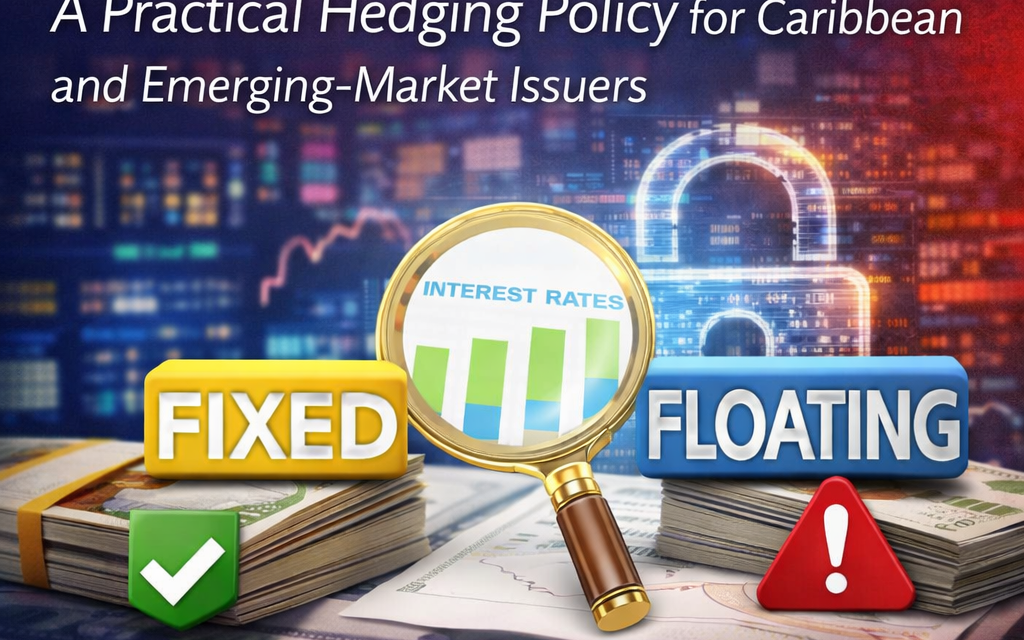
Executive Summary When organisations compare loans and corporate bonds, the conversation often starts—and ends—with interest rate. That is a costly simplification. The real differentiator is flexibility: how the instrument behaves under stress, how quickly it can be amended, how much liquidity it provides, how restrictive covenants become, and how refinancing risk is managed. This article...

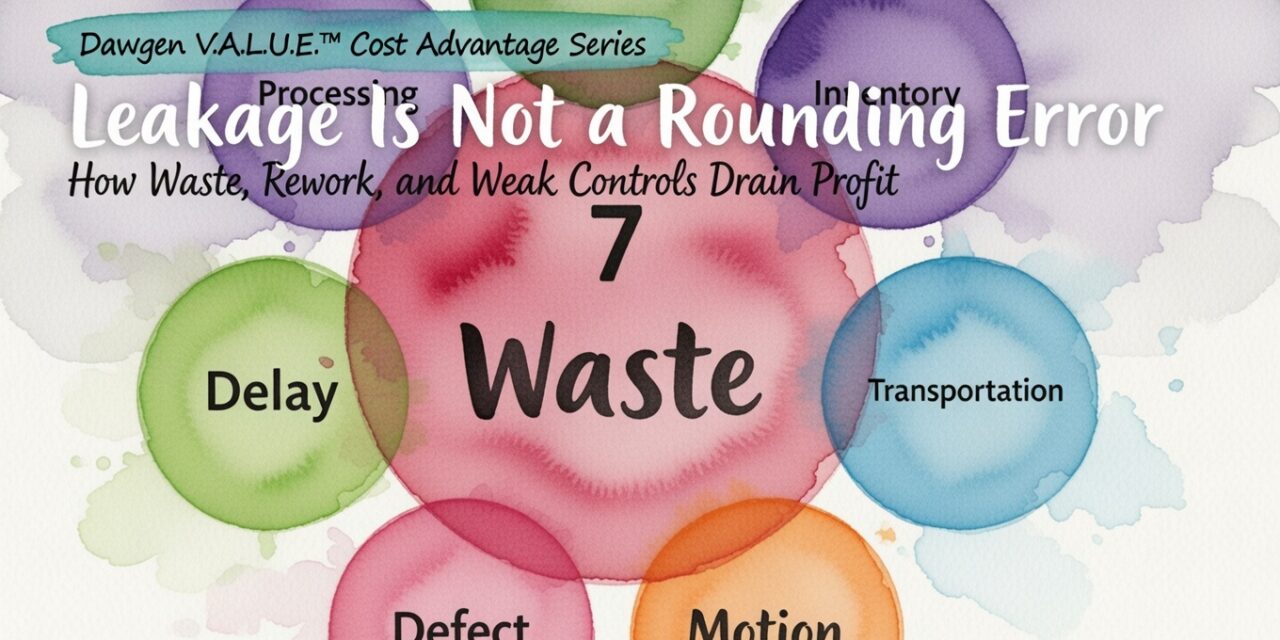
Leakage Is Not a Rounding Error: How Waste, Rework, and Poor Controls Drain Profit—and What to Do About It

Executive Summary Most organisations think profitability is lost in big-ticket decisions—pricing, headcount, or major contracts. In reality, margins often die quietly through leakage: small, repeated losses caused by waste, rework, errors, weak controls, and ungoverned exceptions. Leakage compounds. It creates hidden “cost gravity” that drags down profit even when revenue is stable. In the Caribbean,...

Logistics Under Pressure:  Cutting Distribution Cost Without Breaking Service Levels

Executive Summary Distribution and logistics are now a front-line profitability battlefield across the Caribbean. Freight volatility, port congestion, rising fuel and energy costs, FX pressures, labour constraints, and customer expectations for faster delivery have combined to make logistics one of the most stubborn cost pools in the value chain. Most organisations respond by “squeezing” transport...

Working Capital as a Cost Reduction Strategy

Freeing Cash, Reducing Financing Pressure, and Funding Growth Without Borrowing More Executive Summary When leaders think “cost reduction,” they often think expense cuts: headcount, procurement, travel, projects, and overhead. Yet one of the most powerful and underused profit levers sits on the balance sheet: working capital. Working capital is not just a finance metric. It...

SG&A Isn’t Overhead : Turning Support Functions Into a Lean Performance Engine (Without Breaking the Business)

 Turning Support Functions Into a Lean Performance Engine (Without Breaking the Business) Executive Summary When margins get tight, organisations often reach for Selling, General & Administrative (SG&A) cuts first—freezing hiring, trimming travel, reducing training, or squeezing “overhead.” Some of these moves deliver short-term relief, but many create long-term damage: slower decision-making, poor controls, service failures,...

Procurement Isn’t About Price : Building a Strategic Sourcing Engine That Reduces Cost and Protects Value

Executive Summary In many organisations, procurement is treated as a purchasing function—focused on negotiating lower prices, issuing purchase orders, and managing suppliers. That approach leaves significant value on the table. In today’s economic climate—marked by cost inflation, logistics volatility, FX pressures, and higher financing costs—procurement must evolve into a strategic sourcing engine. The organisations that...

Stop Paying the “Urgency Tax”:  Inventory and Planning as a Cost Reduction Strategy (Not a Finance Exercise)

 Executive Summary Many organisations treat inventory as a finance topic—something to “reduce” to free up cash. In reality, inventory is an operating system outcome. It is shaped by planning quality, supplier reliability, service promises, lead times, forecasting discipline, and decision rights. When these fundamentals are weak, organisations end up paying an invisible penalty every day:...

Introducing the Dawgen V.A.L.U.E.-Chain Cost Advantage Framework™

A Practical Playbook for Value-Protected, Sustainable Cost Reduction Across the Value Chain Executive Summary Organisations across the Caribbean and beyond are facing a new profitability reality: input costs are rising, revenue growth is harder to achieve, and the cost of capital has increased. In that environment, cost reduction is not a discretionary exercise—it is a...

https://www.dawgen.global/wp-content/uploads/2023/07/Foo-WLogo.png

Dawgen Global is an integrated multidisciplinary professional service firm in the Caribbean Region. We are integrated as one Regional firm and provide several professional services including: audit,accounting ,tax,IT,Risk, HR,Performance, M&A,corporate recovery and other advisory services

Where to find us?
https://www.dawgen.global/wp-content/uploads/2019/04/img-footer-map.png
Dawgen Social links
Taking seamless key performance indicators offline to maximise the long tail.
https://www.dawgen.global/wp-content/uploads/2023/07/Foo-WLogo.png

Dawgen Global is an integrated multidisciplinary professional service firm in the Caribbean Region. We are integrated as one Regional firm and provide several professional services including: audit,accounting ,tax,IT,Risk, HR,Performance, M&A,corporate recovery and other advisory services

Where to find us?
https://www.dawgen.global/wp-content/uploads/2019/04/img-footer-map.png
Dawgen Social links
Taking seamless key performance indicators offline to maximise the long tail.

© 2023 Copyright Dawgen Global. All rights reserved.

© 2024 Copyright Dawgen Global. All rights reserved.