

In Jamaica the top of the career public service pays 23.6 times what the bottom pays. In the Cayman Islands the figure is 7.0. In Barbados it is 6.4. Three public services in one region, inheriting the same administrative tradition, built to shapes so different that they can barely be described as the same kind of institution. And the widest gap between them is not at the top. It is at the floor.
The most revealing number in a pay structure
Compression is the ratio of the top of an organisation’s pay structure to the bottom. It is a single number, it is easy to calculate, and it tells you more about how an organisation actually works than any average salary ever will.
An average tells you what the organisation spends. Compression tells you what it values. It reveals how much further a career can travel, how much a promotion is worth, where the organisation is likely to lose people, and how it will behave under pressure. Two employers with identical average salaries and very different compression ratios are running fundamentally different institutions.
It is also the measure most easily misused, because it depends entirely on which two points you choose. Before any of the figures in this article can mean anything, that has to be settled.
Choosing the two ends
At the top, the natural candidate is the highest-paid person. But in a public service that is usually a political or constitutional office — a president, a chief justice — whose pay is set by a different mechanism entirely and which tells you nothing about the career structure beneath it. The meaningful apex is the most senior post an official can reach by working their way up: in the Westminster tradition, the Permanent Secretary or its equivalent.
At the bottom, the candidate is the lowest graded post. But some services operate trainee or apprentice grades that nobody occupies permanently, and including them stretches the ratio artificially. Others have closed the bottom points of their scales to new entrants, so the published minimum is not a real entry rate at all.
| THE CONVENTION USED HERE
Apex: the maximum of the most senior career administrative grade. Floor: the minimum of the lowest substantive grade open to a new entrant, excluding trainee grades. Both measured on basic pay. Every figure in this article states its basis, because a compression ratio without its basis is not a fact — it is a number. |
Three services, three shapes
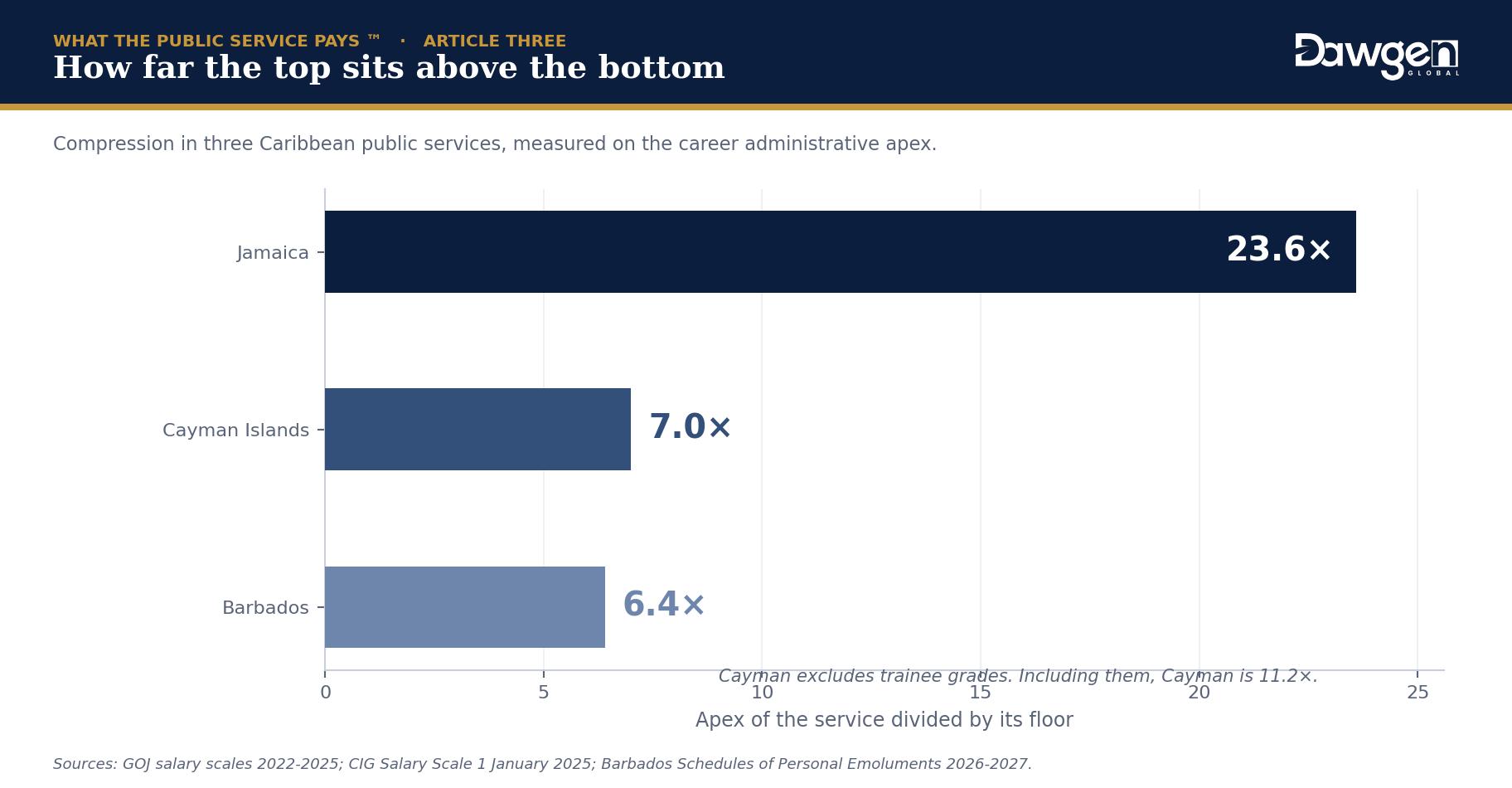
Exhibit 1. Compression in three Caribbean public services, measured on the career administrative apex.
Jamaica’s public service is more than three times as stretched as either comparator. The gap between Cayman and Barbados is modest; the gap between Jamaica and both is enormous.
Some sense of scale helps. A compression ratio of 6.4 is roughly what you would find in a mid-sized professional firm. A ratio of 23.6 is closer to what you would expect across an entire national economy — and Jamaica’s public service contains it within a single employer.
Including Cayman’s trainee grades would put its ratio at 11.2 rather than 7.0. We report the figure excluding trainees because trainee grades are transitional by design, but the alternative is stated so that anyone preferring it can use it. This is exactly the kind of choice that makes compression figures incomparable when the basis is not published.
The surprise is at the bottom
Converting to a common currency changes the question from how stretched each service is to how each compares with the others at each end. The result is not what the compression ratios alone would suggest.
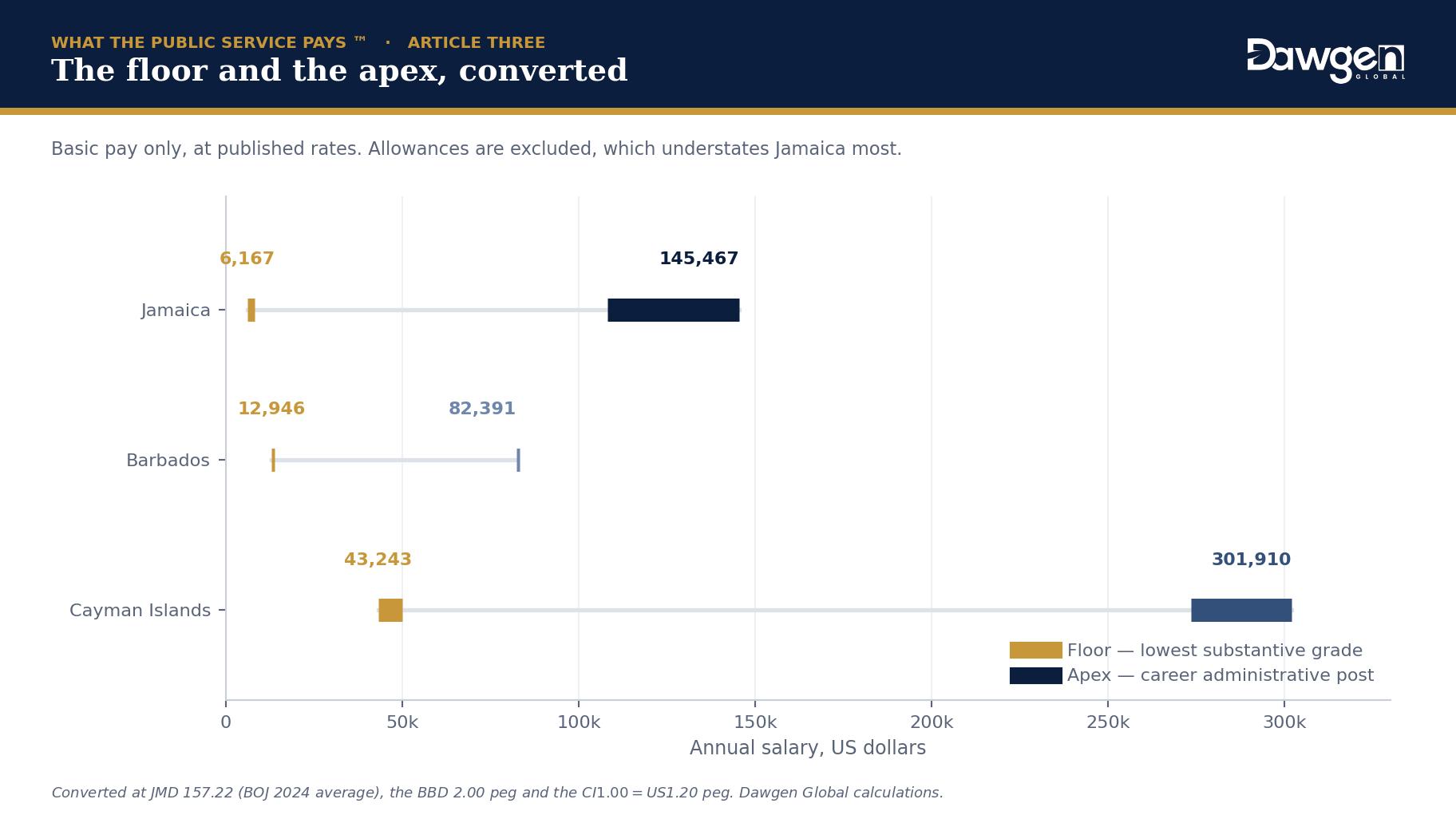
Exhibit 2. The floor and the apex of each service, converted to US dollars at published rates.
At the floor, the lowest substantive grade earns roughly US$6,200 in Jamaica, US$12,900 in Barbados and US$43,200 in the Cayman Islands. Barbados pays its lowest grade about twice what Jamaica does. Cayman pays it about seven times.
At the apex the ordering partly reverses. A Barbados Permanent Secretary is paid roughly US$82,000. A Jamaican one sits on a band running from about US$108,000 to US$145,000. Cayman’s Grade A runs from about US$273,000 to US$302,000.
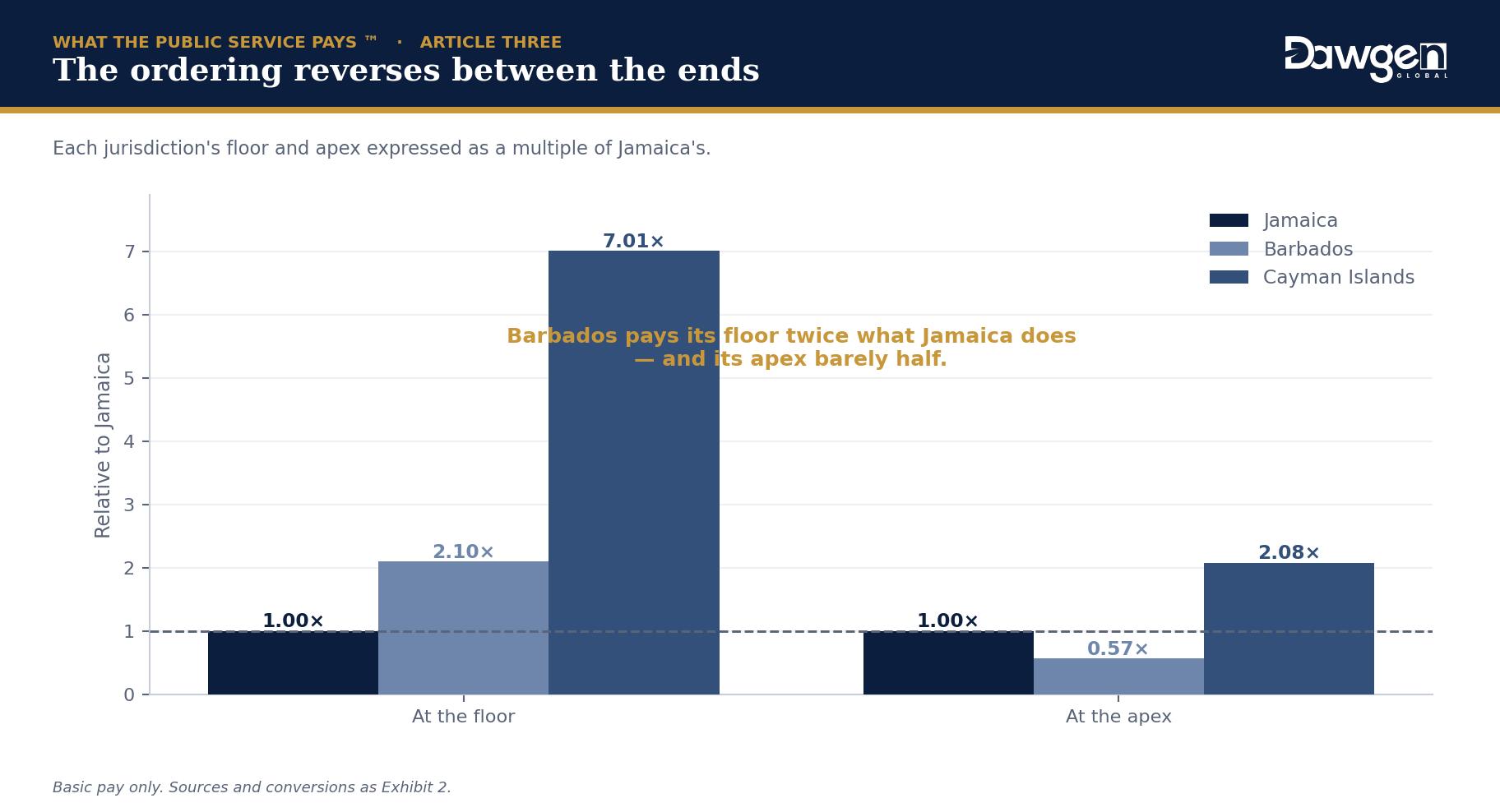
Exhibit 3. Each jurisdiction’s floor and apex expressed as a multiple of Jamaica’s.
Barbados pays its floor twice what Jamaica does and its apex barely half. Those two facts are the same fact, seen from opposite ends: a flat structure is not one that pays less, it is one that distributes differently.
| THE CAVEAT THAT MUST TRAVEL WITH THESE FIGURES
This is basic pay only. Allowances are excluded, and that understates Jamaica most — its travelling allowance alone is worth up to a quarter of a junior professional band minimum and is non-taxable. Nor do these figures account for cost of living, which differs sharply between the three. They compare what employers pay, not what recipients can buy. Both questions matter and they have different answers. |
Cost of living, and why we have not adjusted for it
The obvious objection to Exhibit 2 is that a US dollar does not buy the same thing in Kingston as in George Town. That is correct, and it is worth being precise about what it does and does not change.
There are three ways to convert pay across borders, and they answer three different questions. Converting at the MARKET EXCHANGE RATE answers what the pay costs the employer, and what it is worth to someone deciding whether to move. Converting at PURCHASING POWER PARITY answers what the pay is worth to the person receiving it in their own economy. Expressing pay as a MULTIPLE OF GDP PER CAPITA answers where the post sits within its own society — the question that matters most in a fiscal debate.
These three can rank jurisdictions in different orders, and choosing one silently is how a comparison becomes an argument. This article uses market rates throughout, for two reasons. First, the question it addresses is a labour market question: a Jamaican accountant weighing an offer in Grand Cayman is paid in Cayman dollars and converts at the market rate, not at parity. Second, we do not yet hold verified parity factors for the same reference year across all three jurisdictions, and publishing an adjustment we cannot source would be worse than publishing none.
| WHAT A LIVING-COST ADJUSTMENT WOULD AND WOULD NOT CHANGE
It would narrow the gaps at both ends, because the jurisdictions paying more in dollar terms are also generally more expensive to live in. It would NOT change the compression ratios at all. Compression is a ratio within a single currency, so cost of living cancels out entirely. The shape of each service — the finding this article is about — is unaffected by conversion of any kind. |
The other dimension: pay mix
Compression describes vertical distance. There is a second dimension that the ratio cannot see, and it is worth naming because it explains a good deal of apparent contradiction in pay data.
Pay mix is the proportion of total reward delivered as basic salary rather than as allowances, benefits or variable pay. Two organisations can have identical compression on basic pay and entirely different compression on total reward, if their allowances are distributed differently up the structure.
Jamaica illustrates this precisely. Its travelling allowance is worth 25.6 per cent of the Pay Band 7 minimum and 8.2 per cent of the Pay Band 16 minimum. Because it is proportionally larger lower down, adding it compresses the structure: measured on basic plus travelling rather than basic alone, Jamaica’s ratio falls. An allowance structure can therefore work against the grade structure, quietly, without anyone having decided that it should.
This is why the fourth of the six steps in Exhibit 6 matters more than it looks. An organisation that measures compression on basic pay and manages retention on total reward is measuring one thing and managing another.
What actually produces a shape
It would be natural to assume that a stretched service simply has more grades. It does not follow, and in this case it is the reverse: Jamaica has sixteen grades in its core service and the Cayman Islands has eighteen.
Compression is produced by two things multiplied together. The first is how far apart consecutive grades sit — the progression an officer receives on promotion, compounded across every grade between the floor and the apex. The second is the spread within the apex band itself, which adds the distance from the top grade’s minimum to its maximum.
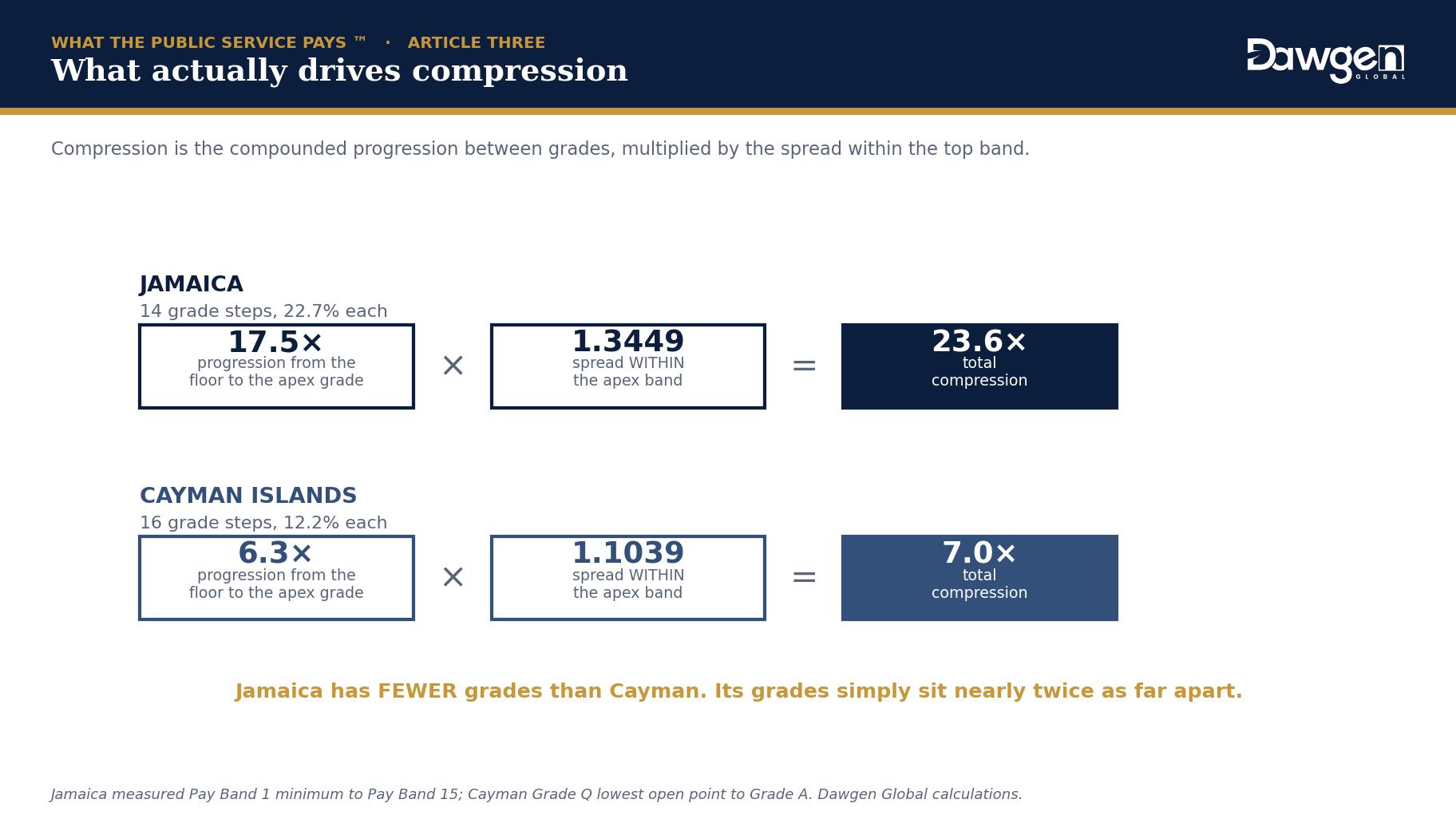
Exhibit 4. Compression decomposed into the progression between grades and the spread within the top band.
Jamaica’s grades sit an average of 22.7 per cent apart. Cayman’s sit 12.2 per cent apart. Compounded across fourteen and sixteen grade steps respectively, that single difference produces almost the whole gap between 23.6 and 7.0.
This matters practically, because the two components call for entirely different interventions. An organisation whose compression is driven by wide grade differentials has a promotion-value problem: each step up is worth a great deal, which concentrates attention and pressure on promotion decisions. One whose compression comes from very wide bands has a progression problem: people move a long way without any change in responsibility. Reading the headline ratio alone tells you which number is large. Decomposing it tells you which lever to pull.
What each shape does to an organisation
There is no correct compression ratio, and any consultant who tells you otherwise is selling a benchmark rather than an analysis. But each shape carries characteristic risks, and they sit at opposite ends of the structure.
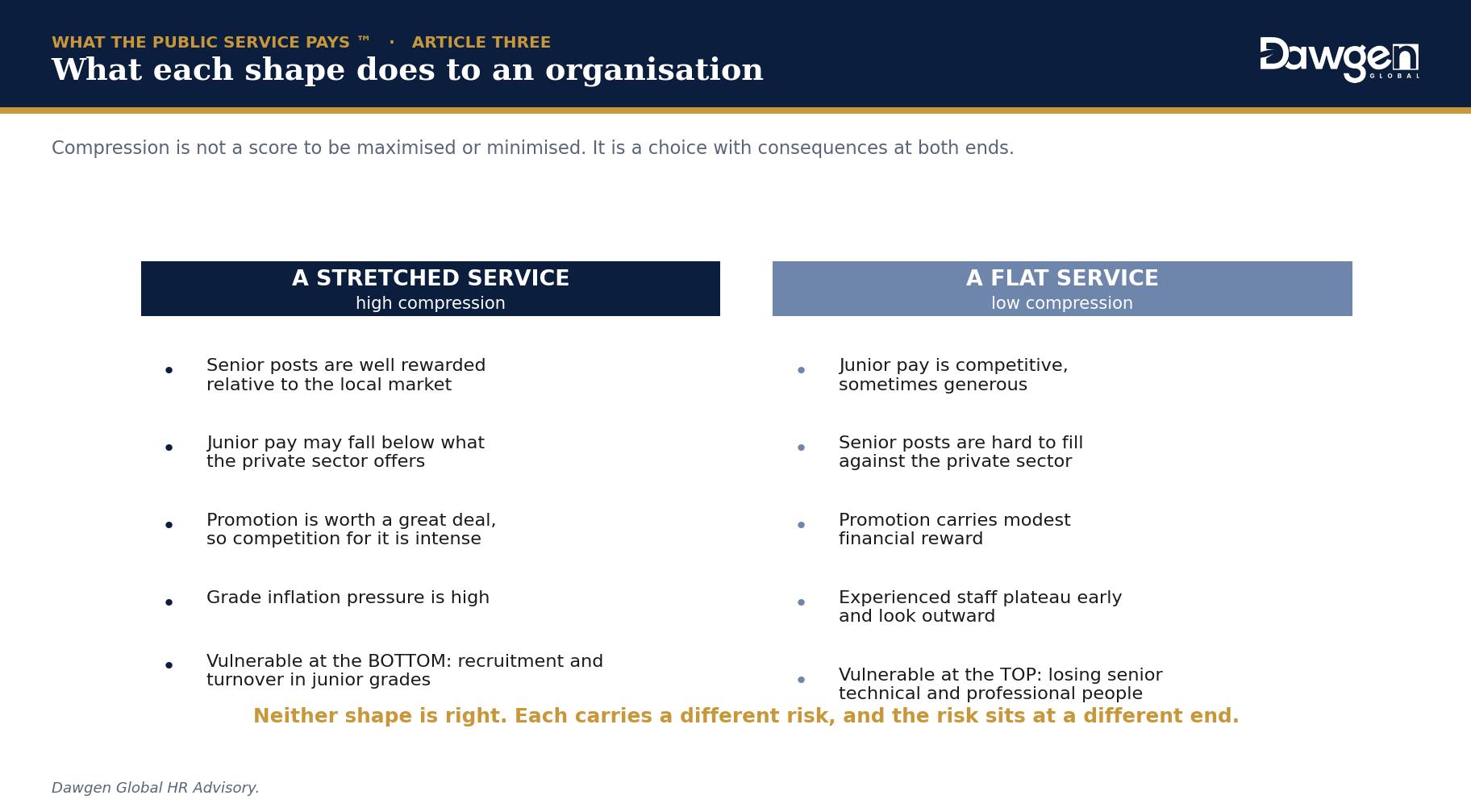
Exhibit 5. The characteristic behaviour of a stretched structure and a flat one.
The stretched service
Where compression is high, senior posts are well rewarded relative to the local market and are usually easy to fill. The pressure sits at the bottom. Junior grades may pay below what the private sector offers for equivalent work, producing recruitment difficulty and turnover concentrated among exactly the people an organisation is trying to develop.
Promotion is also worth a great deal, and that has a second-order effect that organisations rarely anticipate. Where a single grade step is worth twenty per cent or more, competition for promotion becomes intense, regrading requests multiply, and managers under pressure to retain good people reach for the only lever that moves money meaningfully. The result is grade inflation, and grade inflation is how structures come apart.
The flat service
Where compression is low, junior pay is competitive and sometimes generous, and recruitment at entry level is straightforward. The pressure sits at the top. Senior professional and technical posts — the financial controller, the chief engineer, the head of IT — become hard to fill against a private sector that has no corresponding ceiling.
Experienced staff also plateau early. If a band is narrow and the next grade is only twelve per cent above, an officer who has reached their maximum has very little left to gain by staying. In a flat structure the retention question arrives sooner and concerns more senior people.
Internal equity against external competitiveness
Underneath all of this sits the central tension in reward design, and it is worth naming because most disputes about pay are really disputes about which of the two should win.
INTERNAL EQUITY is the principle that pay should reflect the relative weight of jobs within the organisation. A post carrying more responsibility should pay more than one carrying less, consistently, everywhere in the structure. It is what job evaluation exists to establish, and it is what makes a pay system feel fair from the inside.
EXTERNAL COMPETITIVENESS is the principle that pay should reflect what the market will pay for that skill. It is what determines whether you can actually hire.
The two agree far less often than people assume. A registered nurse and a systems administrator may evaluate at the same weight internally and command entirely different prices externally. When that happens, an organisation must choose — and compression is largely a record of choices already made.
| If you prioritise | You get | And you accept | ||
| Internal equity | A structure that is consistent, defensible and easy to explain. Grading decisions survive challenge. | Difficulty recruiting in the specific skills where the market pays a premium your structure does not recognise. | ||
| External competitiveness | The ability to hire in scarce skills, because pay tracks the market for each role. | Relativities that cannot be explained by job weight, and grading decisions that are hard to defend when challenged. | ||
| THE USUAL RESOLUTION, AND WHY IT FAILS
Most organisations resolve this by quietly regrading a post upward to win a particular hire — solving an external problem with an internal instrument. Done once it is pragmatic. Done repeatedly it destroys internal equity without ever formally deciding to. The cleaner answer is a market supplement: a separately identified, reviewable payment attached to the scarcity rather than to the grade. It is visible, it can be withdrawn when the market moves, and it leaves the structure intact. |
||||
Measuring it in your own organisation
Compression is unusual among reward measures in that it can be calculated in an afternoon from information every employer already holds. Very few Caribbean organisations we work with have ever calculated it.
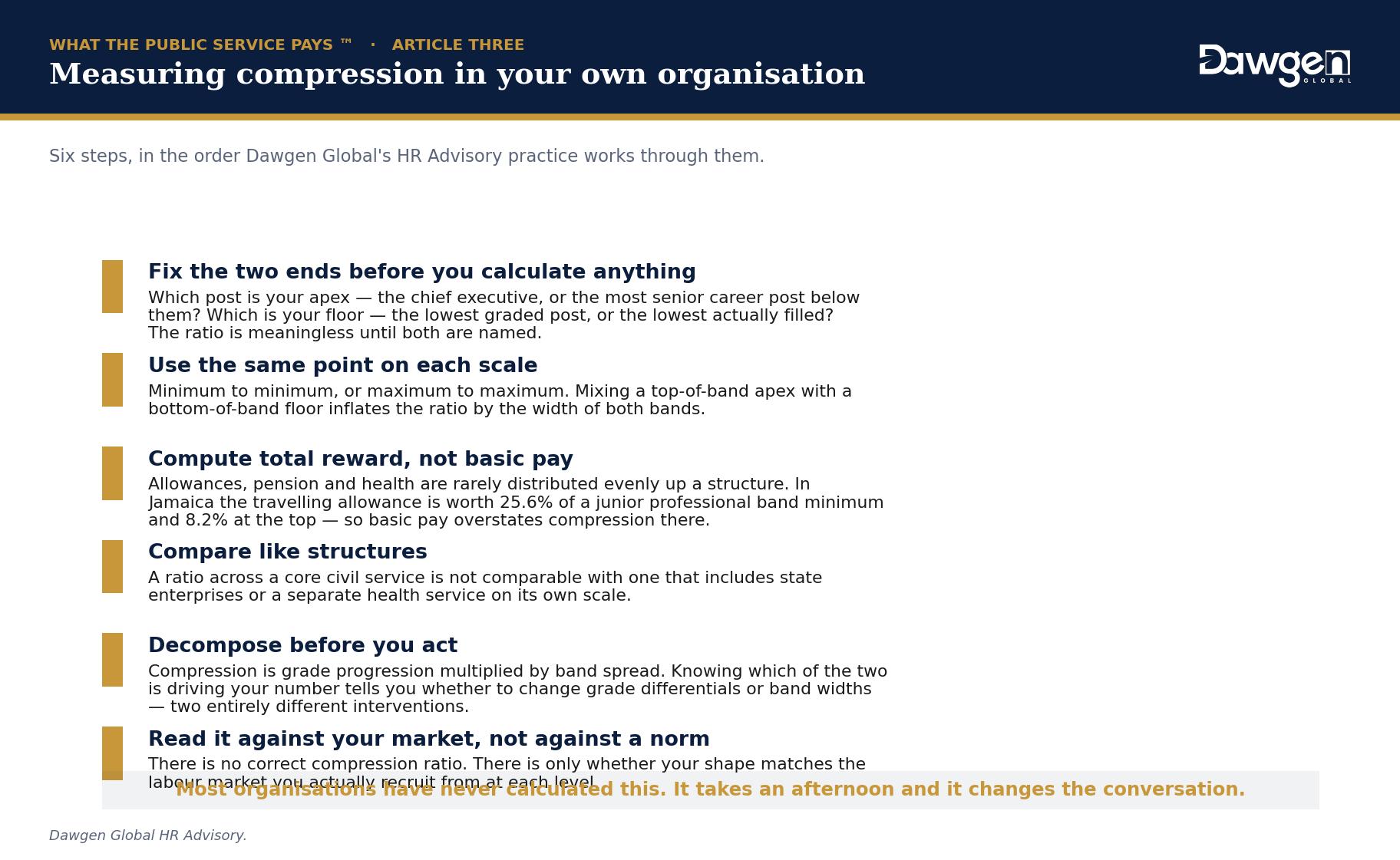
Exhibit 6. Six steps, in the order our HR Advisory practice works through them.
Two of those steps deserve emphasis because they are where the exercise most often goes wrong.
The first is consistency of measurement point. Comparing the maximum of your apex band with the minimum of your floor band builds the width of both bands into the ratio, which can inflate it by half again. Whichever convention you adopt, apply it at both ends and state it whenever the figure is quoted.
The second is total reward. Allowances, pension and health cost are rarely distributed evenly up a structure, and where they are regressive — as Jamaica’s travelling allowance is — basic pay overstates compression. In the one Caribbean jurisdiction with audited figures, total remuneration runs at 1.29 times salary across the service and 1.36 times for senior management, so the distribution of the non-salary element is not a rounding matter.
What to do with the answer
A compression ratio is not a verdict. It is a diagnostic that tells you where to look.
- Compare it against the labour market you actually recruit from at each level, not against a published norm. A ratio that is right for a professional services firm is wrong for a manufacturer, and both may be right for their own markets.
- Decompose it before acting. Wide grade differentials and wide bands produce the same headline number and require opposite remedies.
- Look at where your leavers sit. A stretched structure that is losing junior staff and a flat one that is losing senior specialists are both behaving exactly as their shape predicts. That is confirmation, not coincidence.
- Recalculate it after any significant regrading exercise. Compression drifts quietly, one reasonable decision at a time, and the ratio is the earliest place the drift becomes visible.
A note on our work
This research sits within Dawgen Global’s HR Advisory practice, which advises on job evaluation, grading reviews, pay structure design and reward benchmarking across the Caribbean. Compression analysis is usually the first thing we run on a grading review, because it takes very little time and it frequently reframes the problem the client came in with. An organisation that arrives asking about salary levels often turns out to have a shape problem instead.
Next in this series
Article four stays at the floor. The lowest substantive grade in a Caribbean public service is the single most widely divergent figure we have found anywhere in this research — seven times higher in one jurisdiction than in another — and it is the number with the most direct bearing on what a private employer must pay to recruit.
| AN INVITATION
Eleven of the sixteen jurisdictions in this study have not yet been collected, and in several of the five that have, documents remain outstanding. Public service ministries, personnel departments and statistical offices wishing to supply information, or to correct anything published in this series, are invited to contact the firm. Corrections received will be acknowledged and reflected. |
SOURCES
Government of Jamaica, Salary Scales for Monthly Paid Staff and for Weekly and Daily Paid Employees 2022-2025, and the Summary of Public Sector Salary Scales, Ministry of Finance and the Public Service. Cayman Islands Government Salary Scale effective 1 January 2025, Appendix B to Personnel Circular 11 of 2024; and Office of the Auditor General, Remuneration of the Cabinet, Judiciary, MPs and Key Management Personnel within the Civil Service in 2022, November 2023. Barbados, Schedules of Personal Emoluments 2026-2027. Currency conversions at JMD 157.22, the Bank of Jamaica annual average for 2024; the BBD 2.00 peg; and the CI$1.00 = US$1.20 peg. Compression ratios, decompositions and conversions are Dawgen Global calculations from those published sources.
This article is the third in What the Public Service Pays™, a Dawgen Global series drawn from research across sixteen Caribbean jurisdictions. Dawgen Global is an independent, integrated multidisciplinary professional services firm serving the Caribbean. Enquiries: [email protected] | dawgen.global
About Dawgen Global
Dawgen Global is an independent, integrated multidisciplinary professional services firm headquartered at Dawgen Towers, 47-49 Trinidad Terrace, Kingston 5, Jamaica, serving more than 15 territories across the Caribbean. Founded and led by Dr. Dawkins Brown, Executive Chairman, the firm is independent and not affiliated with any international network. It delivers a full suite of professional services under one roof: audit and assurance; tax advisory; IT and digital transformation; risk management; cybersecurity; actuarial and insurance regulatory advisory; HR advisory; mergers and acquisitions; corporate recovery; business advisory and strategy; accounting BPO and virtual CFO services; and legal process outsourcing.
The proposition is simple: big-firm capability without the big-firm price. Dawgen Global’s integrated approach is built for the specific complexities and opportunities of the Caribbean market, helping organizations make sharper, better-informed decisions that drive measurable progress.
To explore a partnership, reach out:
- Website: dawgen.global
- Email: [email protected]
- WhatsApp (Global): +1 555-795-9071
- Caribbean offices: +1 876-665-5926 | +1 876-929-3670 | +1 876-926-5210


