

The lowest substantive grade in the Jamaican public service pays about US$6,200 a year. In Barbados the equivalent post pays about US$12,900. In the Cayman Islands it pays about US$43,200. Seven times the Jamaican figure, for work that is recognisably the same work — cleaning, portering, general duties — in three public services that share an administrative inheritance. This is the widest divergence we have found anywhere in this research, and it is at the bottom of the structure rather than the top.
The number that affects the most people
Public sector pay debate concentrates almost entirely at the top. What the Permanent Secretary earns is a newspaper story; what the office attendant earns is not. Yet the floor of a pay structure is the rate that touches the largest number of employees, sets the reference point for every grade above it, and — for a private employer — determines what it costs to hire anybody at all at entry level.
It is also the figure most often quoted wrongly, because there are at least five different numbers that can honestly be described as an organisation’s floor, and they can differ from one another by a wide margin.
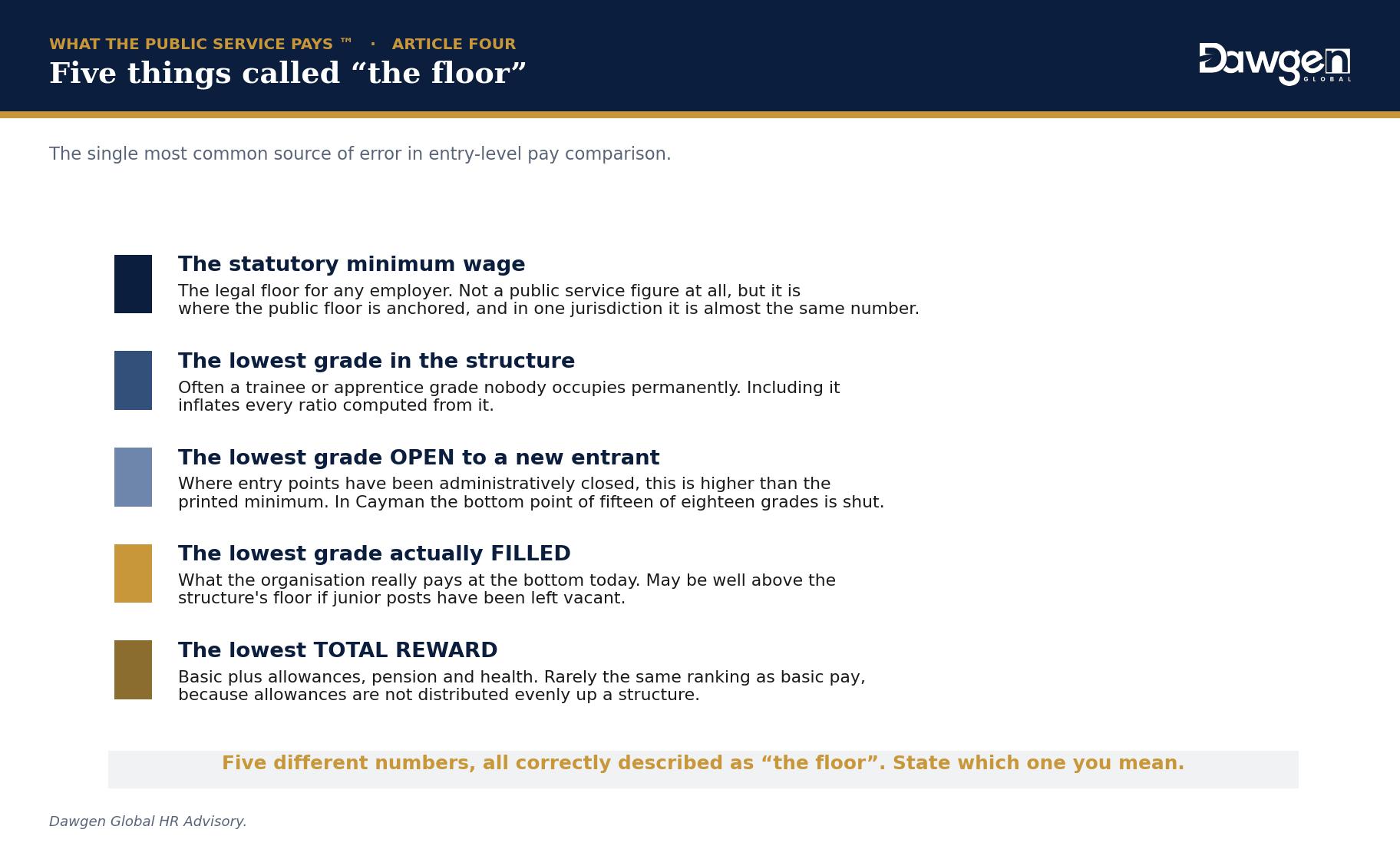
Exhibit 1. Five distinct quantities, each correctly described as “the floor”.
Two of these deserve immediate explanation, because they are the ones that silently corrupt comparisons.
Trainee grades
Many public services operate a trainee or apprentice grade at the base of the structure. It exists for people in formal training, it is transitional by design, and nobody occupies it permanently. Including it in a floor comparison produces a number that describes almost no one.
The Cayman Islands illustrates the size of the distortion. Its Grade R is a trainee grade, and its lowest open point converts to roughly US$26,900. Grade Q, the lowest non-trainee grade, has a lowest open point of roughly US$43,200. Choosing one over the other changes the answer by more than sixty per cent, and both choices are defensible provided you say which you have made.
Closed entry points
This one is less obvious and more consequential. A published scale minimum is not necessarily a rate anyone can be hired on.
| THE CAYMAN POINT 1 RESTRICTION
From 1 December 2022 the bottom incremental point of Grades E through R was closed to new entrants, and for Grade Q the closure extends through Point 6. Fifteen of eighteen grades therefore have a printed minimum that no new entrant can be appointed at. Any benchmarking exercise reading the first column of that scale as the entry rate understates it — in Grade Q’s case by six increments. |
Restrictions of this kind are a common and quite sensible administrative device. They lift the effective entry rate without formally restructuring the scale, which would require negotiation. But they are recorded in a circular rather than on the scale itself, which means anyone working from the published table alone will not know they exist.
The three floors compared
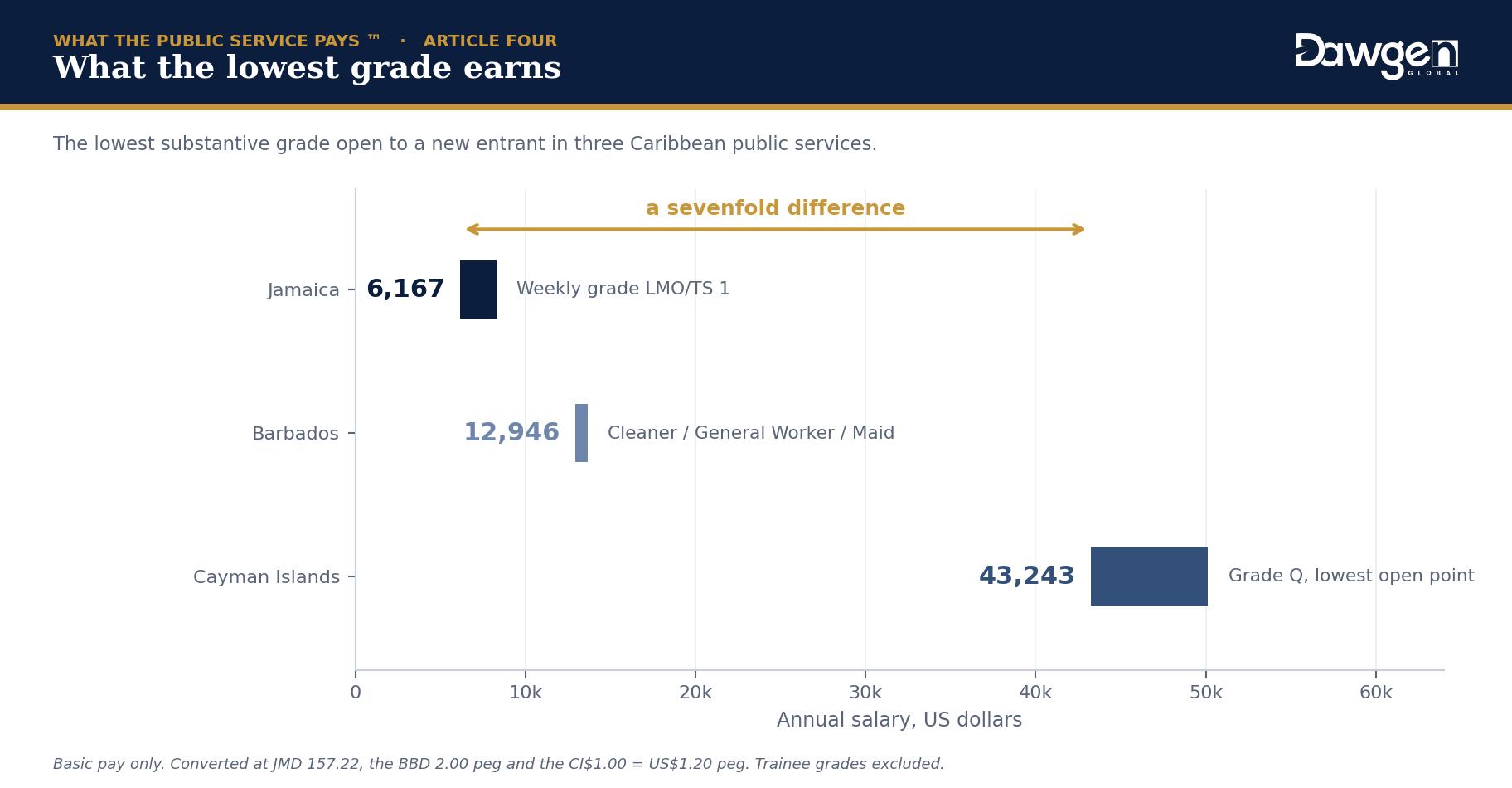
Exhibit 2. The lowest substantive grade open to a new entrant, in three Caribbean public services.
Jamaica’s floor is the weekly-paid grade LMO/TS 1, running from JMD 969,644 to JMD 1,304,056 a year — about US$6,200 to US$8,300. Barbados pays a flat rate of BBD 25,891 for its cleaner, general worker and maid classification, about US$12,900. Cayman’s Grade Q runs from CI$36,036 at its lowest open point, roughly US$43,200.
Barbados therefore pays its lowest grade about twice what Jamaica does. Cayman pays about seven times. In the previous article we saw that Cayman’s compression ratio is a third of Jamaica’s; this is the other side of that fact. A flat structure is not one that pays less. It is one that starts much higher.
The comparison that matters most
A public service floor means little in isolation. The question is what it sits above — and the natural reference is the statutory minimum wage, because that is the legal floor for every other employer in the same economy.
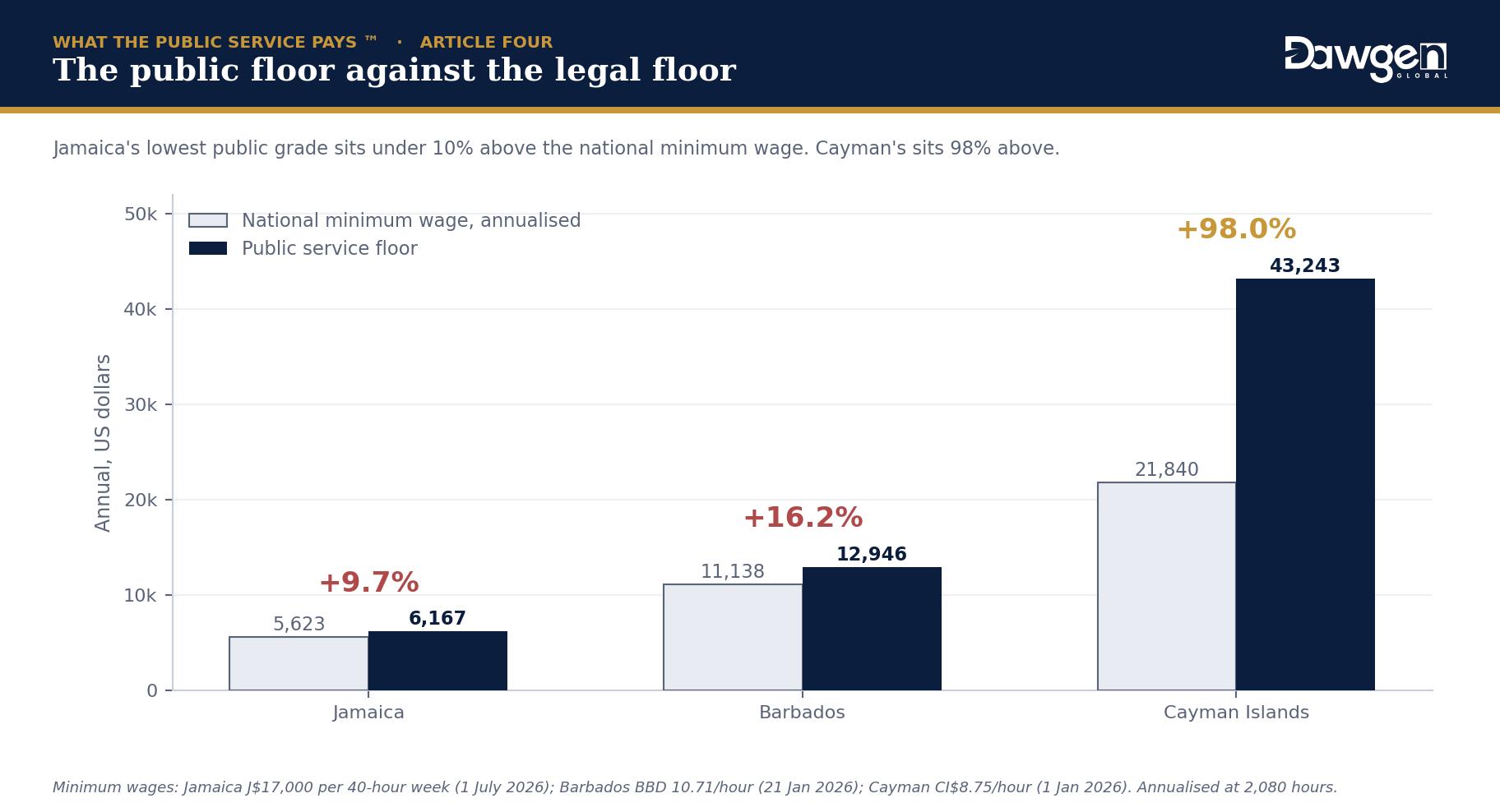
Exhibit 3. Each public service floor set against its own country’s national minimum wage.
Jamaica’s lowest public service grade sits 9.7 per cent above the national minimum wage. Barbados’s sits 16.2 per cent above. Cayman’s sits 98.0 per cent above — almost exactly double.
| WHAT THAT GAP REPRESENTS
The distance between the statutory minimum and the public service floor is, in effect, the premium a government pays over the legal minimum to staff its own lowest-graded posts. In the Cayman Islands that premium is a doubling. In Jamaica it is under ten per cent, which means the Jamaican public service is competing for entry-level labour at very close to the same rate as every other employer in the economy. |
A caution on comparability. Jamaica’s public rate is drawn from the 2022-2025 agreement at its 1 April 2024 level, while its minimum wage figure is the rate effective 1 July 2026. The two are not the same vintage, and because Jamaica’s minimum wage has been rising faster than its public scales, the gap shown is if anything generous. On the vintage-matched comparison it would be narrower still.
Why the floors have moved, and where they are going
None of these figures is stable. Both governments for which we have a clean long-run comparison have raised their statutory minimum sharply, and both have said publicly why.
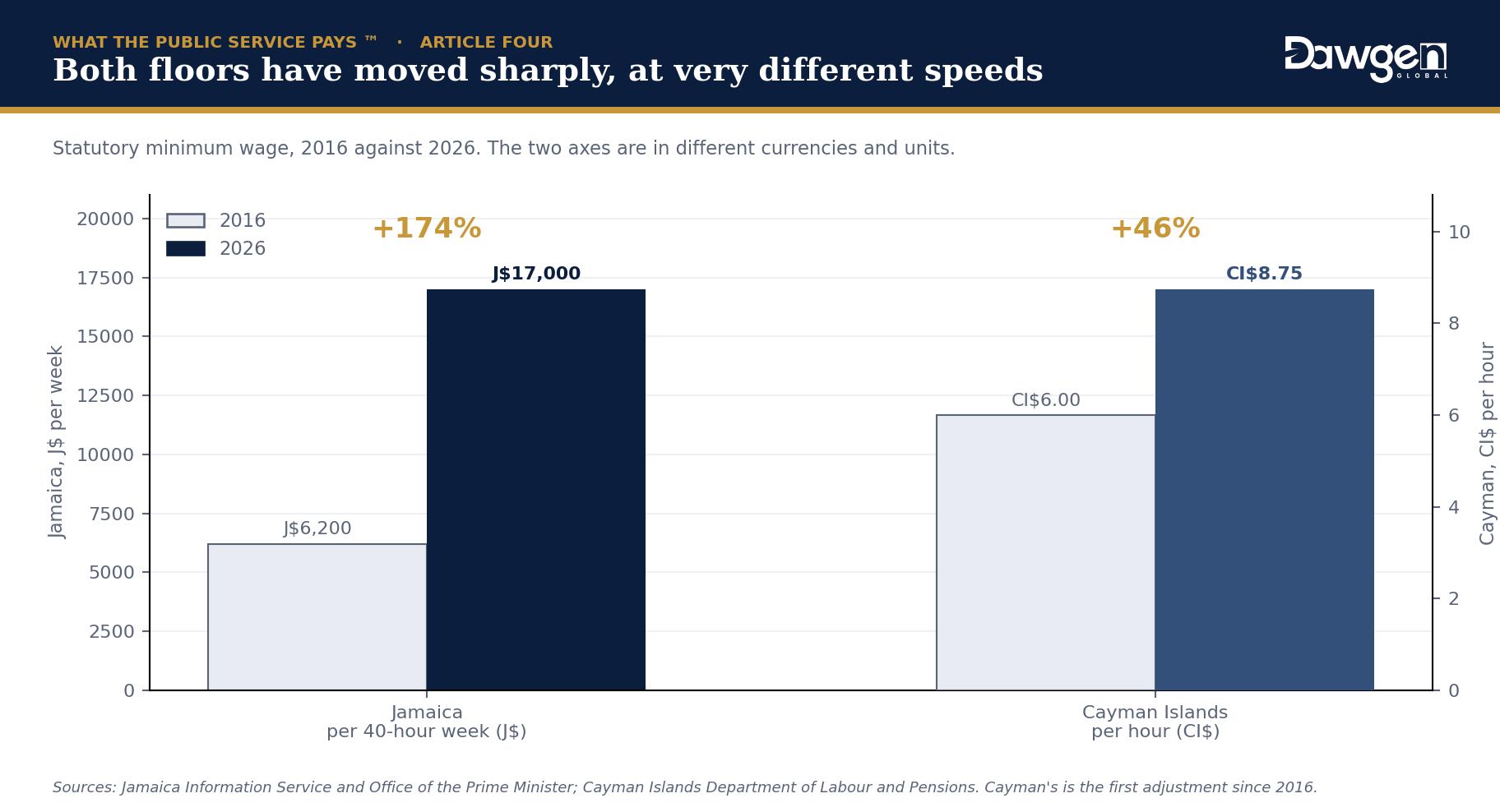
Exhibit 4. Statutory minimum wage in 2016 and 2026. Note the two panels use different currencies and units.
Jamaica’s national minimum wage stood at J$6,200 per forty-hour week in 2016. It moved to J$16,000 in June 2025 and to J$17,000 from 1 July 2026 — an increase of 174 per cent over the decade. The government has been explicit that this is a deliberate trajectory rather than a series of adjustments, describing it as the journey from a minimum wage to a livable wage, with a stated intention to continue phased increases.
The Cayman Islands took the opposite approach and then corrected sharply. Its minimum wage was introduced at CI$6.00 an hour in 2016 and left unchanged for a decade. It rose to CI$8.75 on 1 January 2026, an increase of 45.8 per cent in a single step, following work by the International Labour Organisation and a Minimum Wage Advisory Committee which found that the original rate no longer met workers’ basic needs. The government’s own account notes that inflation exceeded thirty-five per cent between 2016 and 2024.
Barbados has moved incrementally and recently: from BBD 8.50, to BBD 10.50 in June 2025, to BBD 10.71 from 21 January 2026 on a consumer-price indexation.
| THE PATTERN BENEATH THE NUMBERS
Three jurisdictions, three approaches: continuous phased increases in Jamaica, a decade of stasis followed by a single large correction in the Cayman Islands, and formula-based indexation in Barbados. Each produces very different planning conditions for an employer. An indexed floor is predictable. A floor corrected once a decade is not, and the correction arrives as a shock. |
Minimum wage, living wage, and what the floor is for
Two of the three governments have framed their recent increases in the language of a living wage rather than a minimum wage. The distinction is not rhetorical, and it is worth setting out because it determines where these floors are likely to go next.
| Minimum wage | Living wage | |
| What it is | A legal floor below which no employer may pay. | An estimate of what a worker needs to meet basic costs in a given place. |
| How it is set | By statute or order, following negotiation or advice. | By calculation from a basket of essential costs — housing, food, transport, utilities. |
| What it responds to | Political judgement, negotiation, and affordability for employers. | Cost of living. It moves when prices move, whether or not policy does. |
| Legal status | Binding on every employer. | Not binding anywhere in the Caribbean. It is a target, not a rule. |
The gap between the two is where the argument sits. A minimum wage set well below a credible living wage estimate is legally sufficient and socially contested; closing that gap is expensive and takes years. Jamaica has said openly that it intends to close it in phased steps, and has moved 174 per cent in a decade in the attempt. The Cayman Islands reached the same conclusion by a different route, when independent assessment found its decade-old rate no longer met basic needs.
| WHY AN EMPLOYER SHOULD CARE ABOUT THE DISTINCTION
A minimum wage is a compliance obligation and can be treated as one. A living wage trajectory is a market forecast. When a government states that it intends to keep raising the floor toward a living-cost benchmark, it is telling every employer in that economy what their entry-level cost base will do over the next several years. That is planning information, and very few organisations use it as such. |
The public service as employer of last resort
There is a second reason public floors sit where they do, and it is rarely stated in pay documents because it is a political function rather than a reward one.
In small economies the public service is frequently the largest employer of low-skilled labour, and its floor therefore carries social weight beyond the organisation itself. Raising it lifts a large number of households directly. Holding it down contains the wage bill, but in a service where the base grades are numerous, the floor is precisely where the fiscal pressure concentrates.
This creates a tension that shows up clearly in the data. A government under fiscal pressure can hold its floor close to the statutory minimum and let the structure above it stretch — which is broadly what Jamaica’s figures describe, with a floor under ten per cent above the legal minimum and a compression ratio of 23.6. Or it can pay a substantial premium at the base and accept a flatter, more expensive structure overall — which is what Cayman’s figures describe, with a floor at double the legal minimum and compression of 7.0.
Neither is a mistake. They are different answers to the question of what a public service is for at its lowest grades, and the compression figures in the previous article are largely a record of which answer each jurisdiction gave.
What this means for a private employer
Here is where the analysis becomes directly operational, and where most entry-level benchmarking goes wrong.
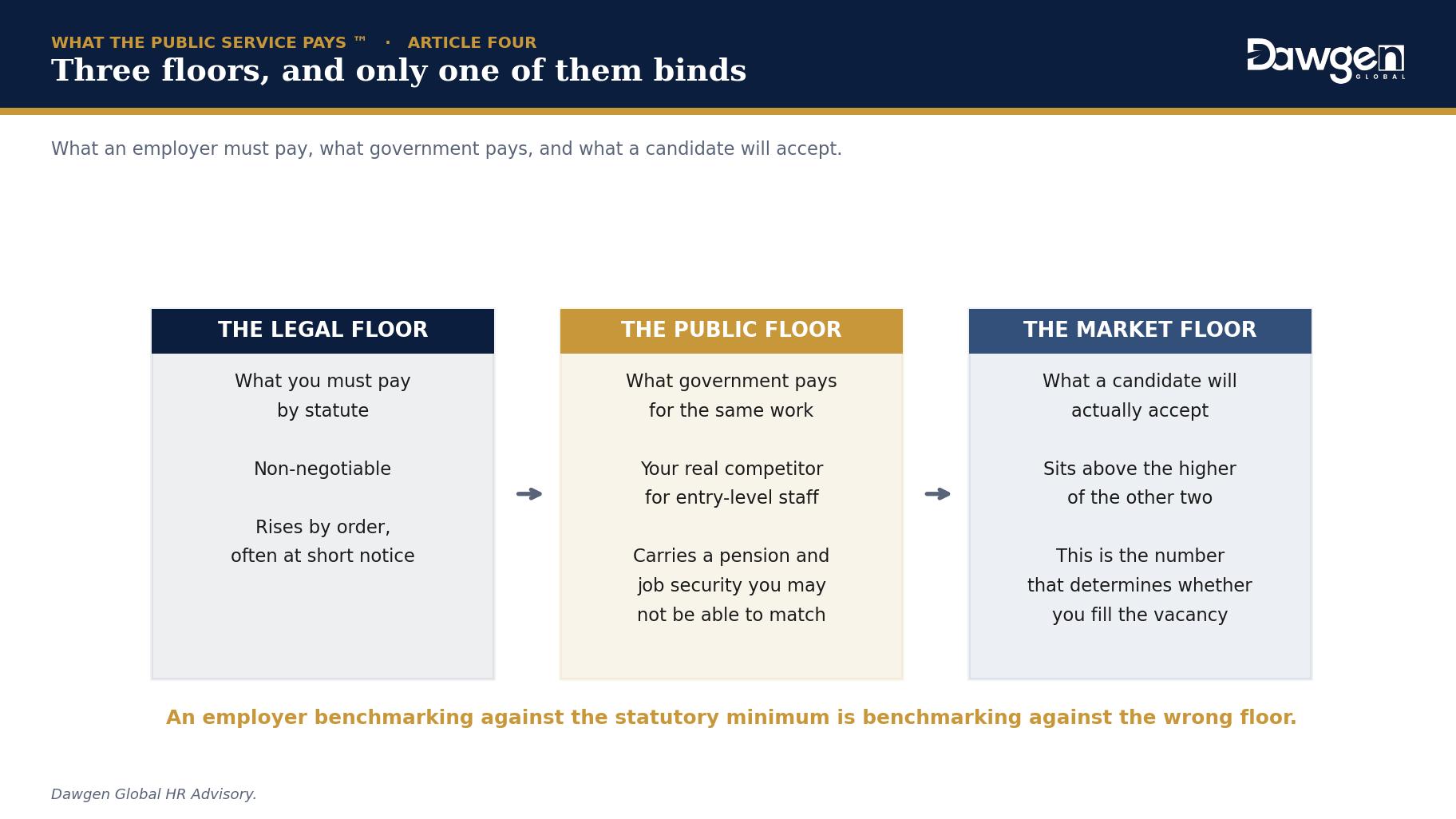
Exhibit 5. The legal floor, the public floor and the market floor are three different numbers.
An employer setting an entry rate faces three floors. The STATUTORY floor is what the law requires. The PUBLIC floor is what the government pays for comparable work. The MARKET floor is what a candidate will actually accept — and that sits above the higher of the other two, not above the statutory one.
The distinction matters enormously in a jurisdiction where the two diverge. In the Cayman Islands, an employer benchmarking an entry-level rate against the statutory minimum of CI$8.75 an hour is benchmarking against a number roughly half what the government pays for the same category of work. They will be legally compliant and commercially uncompetitive at the same time.
The security premium
Matching the public floor in cash does not match the public offer, and this is consistently underestimated.
A public post at the floor of the structure typically carries a pension, a defined incremental progression, and a degree of job security that very few Caribbean private employers can match. In the one jurisdiction where we have audited figures, total remuneration across the civil service runs at 1.29 times salary once employer health and pension costs are included. A private employer offering the same cash with no pension is offering materially less, and candidates know it.
The practical consequence is that the cash premium required to move someone from a public entry post to an equivalent private one is larger than a straight cash comparison suggests. How much larger depends on what the public scheme actually provides, which is why the pension basis is worth establishing before you set the rate rather than after you lose the candidate.
How long it takes to leave the floor
A floor rate is only half the picture. The other half is how quickly someone can move off it, and here the three structures differ again.
Jamaica’s Pay Band 1 contains thirteen incremental points at 2.5 per cent each. An officer appointed at the minimum reaches the maximum after twelve years, having gained 34.5 per cent — moving from about US$6,200 to about US$8,300 without any promotion. Cayman’s Grade Q also runs thirteen points, but with several closed at the bottom the effective progression is shorter, and the officer travels from roughly US$43,200 to US$50,100.
Barbados presents a different case entirely. The cleaner, general worker and maid classification appears in the establishment schedule at a flat BBD 25,891 across every occurrence we examined. There is no incremental progression visible at that grade at all. An officer at the Barbados floor may start above their Jamaican counterpart by a factor of two and have nowhere to go without changing grade.
| WHY THIS MATTERS FOR RETENTION
Two entry rates that look similar can behave completely differently over five years. An employer competing with a public service whose floor grade offers twelve years of automatic progression is competing with a rising number, not a fixed one. An employer competing with a flat floor grade has an opening most people underestimate: the public post is more valuable on day one and less valuable in year four, and that is precisely when a well-designed private progression becomes visible to the candidate. |
Trajectory beats level
An entry rate set just above today’s statutory minimum is a rate that will be below it within a short period, in any jurisdiction with a rising floor. Jamaica’s minimum wage has risen 174 per cent in a decade and the government has stated its intention to continue. An employer who set an entry rate at J$17,500 a week in mid-2026 — comfortably above the minimum — would find that margin substantially eroded by the next increase.
The discipline is to set entry rates against an external reference that moves with the market, review them on a stated cycle rather than when a problem appears, and know in advance what the government has said about where the statutory floor is going. In all three jurisdictions examined here, that intention is a matter of public record.
Setting an entry rate
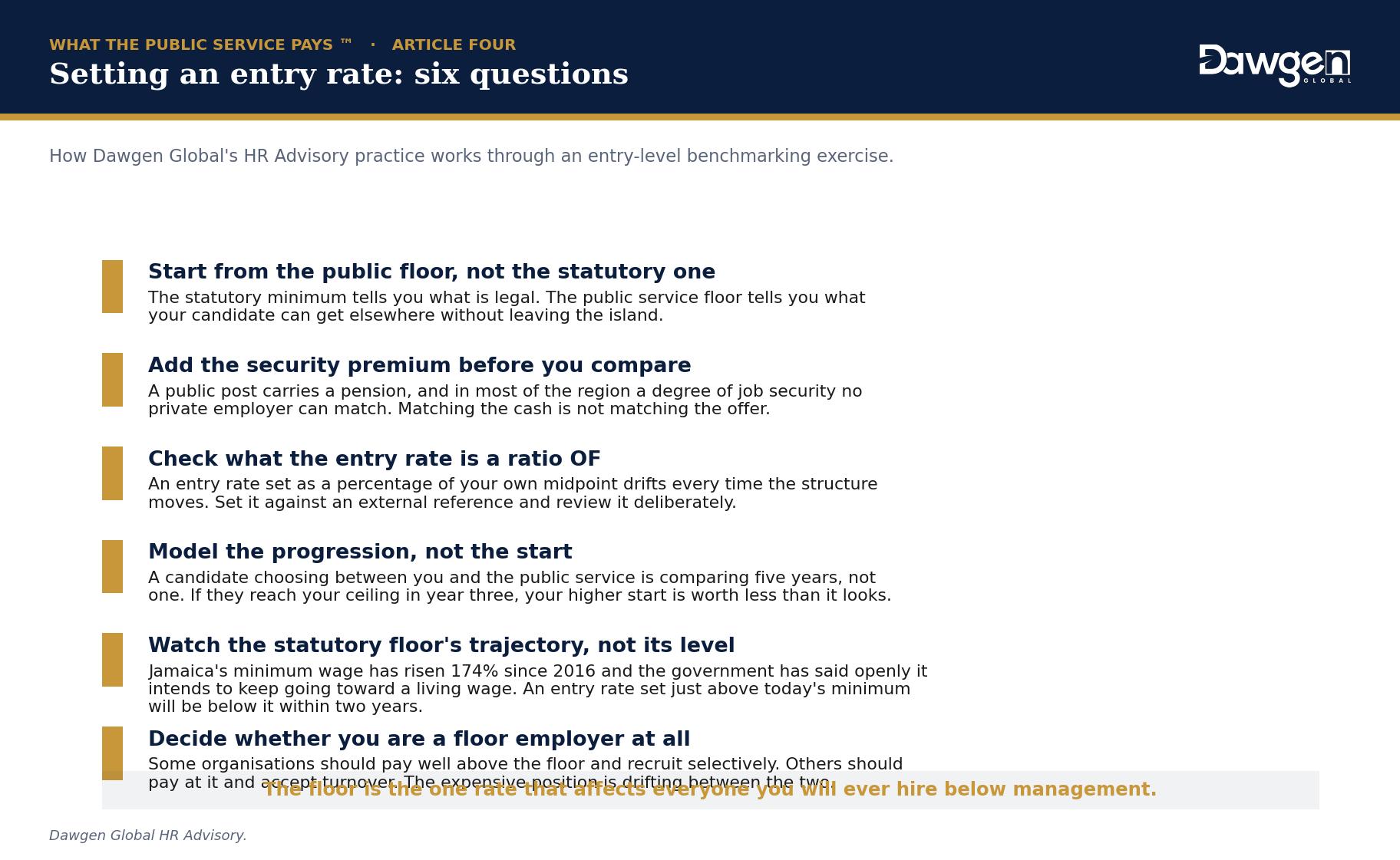
Exhibit 6. Six questions, in the order our HR Advisory practice works through them.
The last of those questions is the one organisations most often avoid, and it is worth stating plainly. Not every employer should pay above the floor.
There is a coherent strategy in paying at or near the entry rate, recruiting widely, accepting higher turnover and building a training pipeline that assumes it. There is an equally coherent strategy in paying well above the floor, recruiting selectively and retaining people for years. Both work. What does not work is drifting between them — paying slightly above the floor, which is too little to secure retention and too much to justify a high-turnover model, and then treating the resulting churn as a recruitment problem rather than a pricing decision.
A note on our work
This research sits within Dawgen Global’s HR Advisory practice, which advises on job evaluation, grading reviews, pay structure design and reward benchmarking across the Caribbean. Entry-rate reviews are among the most common assignments we run, and the most common finding is that the client has been benchmarking against the statutory minimum because it is the only number they could readily find. It is the wrong number, and until this research there was no accessible alternative.
Next in this series
Article five turns to what sits outside basic pay. In the one Caribbean jurisdiction where audited figures exist, employer health care costs four and a half times what the pension promise does — inverting the assumption on which almost all reward analysis in this region is built, including, until we found it, our own.
| AN INVITATION
Eleven of the sixteen jurisdictions in this study have not yet been collected, and in several of the five that have, documents remain outstanding. Public service ministries, personnel departments and statistical offices wishing to supply information, or to correct anything published in this series, are invited to contact the firm. Corrections received will be acknowledged and reflected. |
SOURCES
Government of Jamaica, Salary Scales for Weekly and Daily Paid Employees and for Monthly Paid Staff 2022-2025, Ministry of Finance and the Public Service. Cayman Islands Government Salary Scale effective 1 January 2025, Appendix B to Personnel Circular 11 of 2024; and Office of the Auditor General, Remuneration of the Cabinet, Judiciary, MPs and Key Management Personnel within the Civil Service in 2022, November 2023. Barbados, Schedules of Personal Emoluments 2026-2027. Minimum wage rates: Jamaica Information Service and Office of the Prime Minister; Cayman Islands Department of Labour and Pensions; Minimum Wage (National and Sectoral Minimum Wage) Orders, Barbados. Currency conversions at JMD 157.22, the BBD 2.00 peg and the CI$1.00 = US$1.20 peg. Annualisation of hourly minimum wages at 2,080 hours. Derived figures are Dawgen Global calculations.
This article is the fourth in What the Public Service Pays™, a Dawgen Global series drawn from research across sixteen Caribbean jurisdictions. Dawgen Global is an independent, integrated multidisciplinary professional services firm serving the Caribbean. Enquiries: [email protected] | dawgen.global
About Dawgen Global
Dawgen Global is an independent, integrated multidisciplinary professional services firm headquartered at Dawgen Towers, 47-49 Trinidad Terrace, Kingston 5, Jamaica, serving more than 15 territories across the Caribbean. Founded and led by Dr. Dawkins Brown, Executive Chairman, the firm is independent and not affiliated with any international network. It delivers a full suite of professional services under one roof: audit and assurance; tax advisory; IT and digital transformation; risk management; cybersecurity; actuarial and insurance regulatory advisory; HR advisory; mergers and acquisitions; corporate recovery; business advisory and strategy; accounting BPO and virtual CFO services; and legal process outsourcing.
The proposition is simple: big-firm capability without the big-firm price. Dawgen Global’s integrated approach is built for the specific complexities and opportunities of the Caribbean market, helping organizations make sharper, better-informed decisions that drive measurable progress.
To explore a partnership, reach out:
- Website: dawgen.global
- Email: [email protected]
- WhatsApp (Global): +1 555-795-9071
- Caribbean offices: +1 876-665-5926 | +1 876-929-3670 | +1 876-926-5210


