
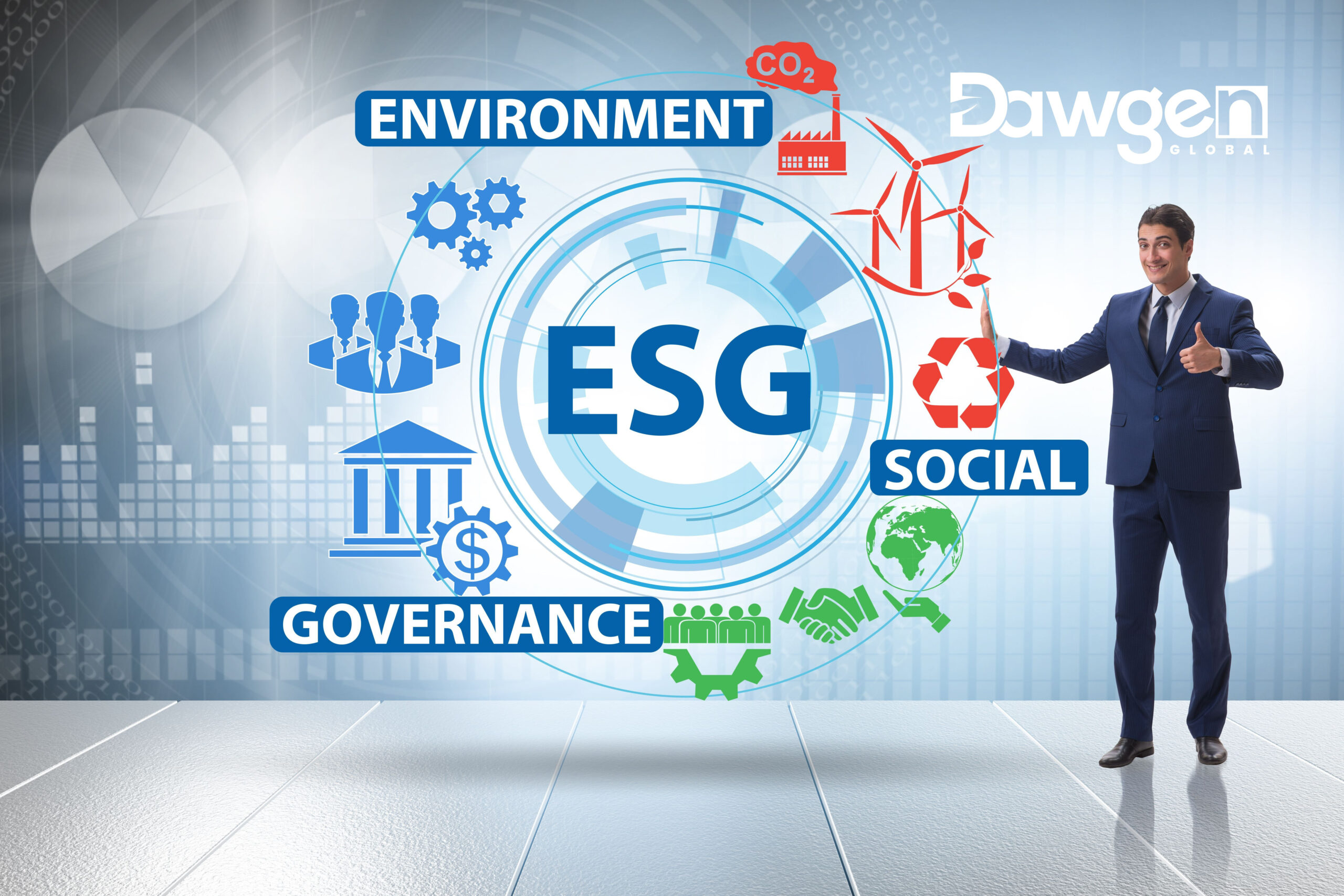
How Caribbean organisations can ensure integrity, traceability, and trust in AI-driven sustainability reporting
Executive summary
Environmental, Social, and Governance (ESG) reporting is rapidly moving from voluntary disclosure to regulated, decision-critical information. Across the Caribbean, organisations are facing growing pressure from regulators, investors, lenders, development partners, and multinational counterparties to demonstrate credible ESG performance.
At the same time, many organisations are turning to Artificial Intelligence (AI) to support ESG activities, including:
-
carbon and energy data analysis
-
climate risk modelling
-
supply chain and human rights assessments
-
workforce diversity analytics
-
sustainability dashboards and scorecards
-
ESG narrative drafting and disclosures
AI can significantly accelerate ESG reporting and insight generation. However, it also introduces new assurance risks:
-
inaccurate or unverifiable ESG metrics
-
“black box” calculations with no audit trail
-
biased or incomplete datasets
-
AI-generated sustainability claims that cannot be substantiated
-
misalignment with emerging global standards (ISSB, CSRD, GRI, TCFD-aligned disclosures)
-
greenwashing allegations and reputational damage
This article explains how AI Assurance for ESG & Sustainability Reporting enables Caribbean organisations to harness AI responsibly—ensuring that ESG data, models, and narratives are accurate, explainable, auditable, and defensible.
Dawgen Global’s AI Assurance & Compliance service helps organisations embed governance, controls, and evidence into AI-enabled ESG processes—turning sustainability reporting into a source of trust rather than risk.
Request a proposal for Dawgen Global’s AI Assurance & Compliance service:
Email: info@dawgen.global | WhatsApp: +1 555 795 9071
1) Why AI is transforming ESG and sustainability reporting
ESG reporting is data-intensive, cross-functional, and increasingly complex. AI is being adopted to address these challenges by:
-
aggregating data from multiple internal and external sources
-
identifying trends and anomalies in environmental and social metrics
-
modelling climate and transition risks
-
assessing supplier and value-chain risks
-
drafting ESG disclosures and management commentary
-
benchmarking performance against peers and frameworks
For Caribbean organisations—many of which operate across multiple islands, jurisdictions, and regulatory regimes—AI offers a way to scale ESG reporting without scaling cost.
However, ESG information is no longer “nice to have.” It increasingly informs:
-
lending and credit decisions
-
insurance pricing and coverage
-
investment allocation
-
government approvals and concessions
-
partner and supply-chain inclusion
This makes the integrity of AI-generated ESG outputs mission-critical.
2) The hidden risk: ESG automation without assurance
Many organisations are unknowingly exposing themselves to ESG-related risk by:
-
using AI models without understanding data sources or assumptions
-
relying on third-party ESG tools with limited transparency
-
generating ESG narratives that overstate performance
-
failing to retain evidence supporting reported metrics
-
lacking governance over changes in ESG models and methodologies
This creates vulnerability to:
-
regulatory challenge
-
investor scrutiny
-
lender and donor due diligence failures
-
accusations of greenwashing or social washing
-
audit qualifications and restatements
In an era of heightened ESG scrutiny, “we used AI” is not an acceptable explanation.
3) The Caribbean ESG reality: why assurance matters more, not less
Caribbean organisations face ESG pressures shaped by:
-
climate vulnerability and disaster exposure
-
energy transition and decarbonisation commitments
-
tourism and environmental impact scrutiny
-
labour, inclusion, and social development expectations
-
cross-border reporting aligned to international standards
Even where local ESG regulation is still evolving, international counterparties already expect global-grade ESG assurance.
AI assurance ensures that:
-
ESG data can withstand international scrutiny
-
sustainability claims are credible and defensible
-
AI does not become a source of reputational risk
4) Where AI intersects with ESG risk
AI influences ESG reporting at four critical layers:
4.1 Data collection and aggregation
AI ingests:
-
energy usage data
-
emissions estimates
-
workforce demographics
-
supplier and procurement data
-
incident and compliance records
Risk: poor data quality, inconsistent definitions, missing controls.
4.2 Modelling and estimation
AI models are used to:
-
estimate Scope 1–3 emissions
-
model climate scenarios
-
assess physical and transition risk
-
score suppliers and partners
Risk: opaque assumptions, unvalidated models, bias, and drift.
4.3 Narrative and disclosure drafting
AI generates:
-
sustainability reports
-
ESG policies
-
management commentary
-
website and investor disclosures
Risk: unsupported claims, exaggeration, misalignment with standards.
4.4 Performance monitoring and decision-making
AI informs:
-
ESG targets and KPIs
-
capital allocation decisions
-
supplier inclusion/exclusion
-
executive remuneration metrics
Risk: decisions based on flawed or unverifiable AI outputs.
5) What AI Assurance means for ESG & sustainability
AI Assurance for ESG ensures that AI-enabled ESG processes are:
-
Accurate – based on validated data and models
-
Explainable – assumptions and methodologies are transparent
-
Consistent – aligned with recognised ESG frameworks
-
Traceable – every metric can be linked to source data
-
Auditable – evidence exists to support disclosures
-
Governed – changes are controlled and approved
AI assurance transforms ESG reporting from a storytelling exercise into a disciplined, decision-grade system.
6) Aligning AI-enabled ESG reporting with global standards
AI assurance helps organisations align with leading frameworks, including:
-
ISSB (IFRS Sustainability Standards) – consistency, comparability, and financial materiality
-
CSRD-aligned expectations – governance, controls, and data integrity
-
GRI – completeness and stakeholder relevance
-
TCFD-style climate risk disclosures – scenario analysis and transparency
-
UN SDGs – outcome-based impact measurement
AI systems supporting ESG must be designed to map outputs to these frameworks, not generate disconnected metrics.
7) Evidence by Design for ESG: preparing for audit, lenders, and scrutiny
When ESG data is challenged, organisations must answer:
-
where did the data come from?
-
how was it calculated?
-
what assumptions were used?
-
who reviewed and approved it?
-
has the methodology changed?
-
can it be reproduced?
The AI ESG Evidence Pack should include:
-
ESG data sources and ownership
-
AI models and tools used for ESG analysis
-
Methodologies, assumptions, and limitations
-
Data quality and validation checks
-
Change logs for models and metrics
-
Governance and approval records
-
Alignment mapping to ESG frameworks
-
Narrative review and sign-off evidence
-
External data and benchmark sources
-
Incident and restatement logs (if any)
This evidence is increasingly expected by auditors, lenders, and development finance institutions.
8) Preventing greenwashing and AI-driven misrepresentation
AI increases the risk of unintentional greenwashing by:
-
drafting overly positive narratives
-
filling gaps with assumptions
-
smoothing inconsistencies
-
overstating progress against targets
AI assurance controls include:
-
mandatory linkage between narratives and metrics
-
prohibition of unsupported qualitative claims
-
review gates for external disclosures
-
explicit disclosure of estimation techniques
-
consistency checks across reports and channels
The goal is not perfection—but credibility.
9) A practical 60–90 day roadmap for AI ESG assurance
Weeks 1–2: Baseline and scoping
-
inventory AI tools used in ESG processes
-
identify ESG metrics supported by AI
-
map applicable frameworks and stakeholder expectations
-
classify ESG AI risk levels
Weeks 3–6: Control and evidence design
-
validate data sources and quality controls
-
document AI models and assumptions
-
design ESG Evidence Pack structure
-
establish review and approval workflows
Weeks 7–10: Integration and testing
-
align AI outputs to ESG frameworks
-
test reproducibility and consistency
-
stress-test narratives against metrics
-
train ESG and finance teams
Weeks 11–12: Governance and reporting
-
executive and board assurance briefing
-
ESG AI governance documentation
-
subscription-based monitoring and updates
10) The Dawgen Global advantage in AI ESG assurance
Dawgen Global supports organisations by providing:
-
AI governance tailored to ESG and sustainability reporting
-
assurance over ESG data, models, and narratives
-
Evidence Pack development for audits and due diligence
-
alignment with global ESG and sustainability standards
-
integration with risk, audit, and finance functions
-
borderless, high-quality delivery methodology
The outcome is ESG reporting that builds confidence with investors, regulators, and communities.
ESG credibility in the AI era requires assurance
As ESG reporting becomes more regulated and consequential, AI must be governed with the same rigour as financial reporting systems.
For Caribbean organisations, the question is no longer:
Should we use AI for ESG?
The real question is:
Can we prove that our AI-enabled ESG reporting is accurate, explainable, and trustworthy?
AI Assurance & Compliance provides that proof.
Next Step: Request a Proposal
If your organisation uses AI in ESG, sustainability, climate, or impact reporting—or plans to—now is the time to embed assurance.
Request a proposal for Dawgen Global’s AI Assurance & Compliance service:
Email: info@dawgen.global
WhatsApp: +1 555 795 9071
About Dawgen Global
“Embrace BIG FIRM capabilities without the big firm price at Dawgen Global, your committed partner in carving a pathway to continual progress in the vibrant Caribbean region. Our integrated, multidisciplinary approach is finely tuned to address the unique intricacies and lucrative prospects that the region has to offer. Offering a rich array of services, including audit, accounting, tax, IT, HR, risk management, and more, we facilitate smarter and more effective decisions that set the stage for unprecedented triumphs. Let’s collaborate and craft a future where every decision is a steppingstone to greater success. Reach out to explore a partnership that promises not just growth but a future beaming with opportunities and achievements.
 Email: info@dawgen.global
  Visit: Dawgen Global Website

 WhatsApp Global Number : +1 555-795-9071
Caribbean Office: +1876-6655926 / 876-9293670/876-9265210  WhatsApp Global: +1 5557959071
USA Office: 855-354-2447
Join hands with Dawgen Global. Together, let’s venture into a future brimming with opportunities and achievements


