
The case for continuous cyber resilience
Emerging Risk & Transformation Services • 2026
Executive Summary
Cybersecurity assessments remain essential, but the operating assumption that an organization can assess cyber risk periodically, remediate a list of findings and then wait until the next annual cycle is increasingly misaligned with the way digital risk now evolves. Software vulnerabilities are disclosed continuously. Cloud environments change. Third-party providers add dependencies. User privileges accumulate. New technology is introduced. Threat actors alter tactics. Artificial intelligence expands both defensive capability and the attack surface. A point-in-time assessment can therefore be technically accurate on the day it is performed while becoming progressively less representative of the organization’s exposure as the environment changes.
The 2026 Verizon Data Breach Investigations Report illustrates the urgency. Verizon reports that exploitation of software vulnerabilities is now the leading initial access vector, accounting for 31% of breaches, while ransomware appears in 48% of breaches. Its 2026 analysis also reports that only 26% of critical vulnerabilities in the Known Exploited Vulnerabilities catalog published by the United States Cybersecurity and Infrastructure Security Agency (CISA) were fully remediated by organizations in the reporting period, with median resolution time increasing to 43 days. The same report found ransomware present in 48% of breaches and third-party involvement in 48% of breaches, a 60% increase in a single year. These figures illustrate an important management problem: finding vulnerabilities is not the same as reducing them.
Continuous cyber resilience addresses that gap. It combines ongoing visibility, risk-based prioritization, accountable remediation, independent validation, monitoring, executive reporting and incident readiness. The objective is not perpetual scanning for its own sake. The objective is continuous reduction of material cyber exposure.
For Caribbean organizations, this is especially relevant. Many operate with smaller cybersecurity teams, concentrated technology providers, outsourced information technology (IT) functions, regional shared-service arrangements and infrastructure dependencies that can amplify disruption. Cyber resilience should therefore be treated as an enterprise-risk and continuity discipline, not merely a technical compliance activity.
This article explains the difference between periodic assessment and continuous resilience, the governance and operational changes required, the role of the National Institute of Standards and Technology (NIST) Cybersecurity Framework (CSF) 2.0, and a practical Dawgen approach built around six actions: IDENTIFY, PRIORITIZE, REMEDIATE, VALIDATE, MONITOR and REPORT.
1. Why the Annual Assessment Model Developed

Annual cybersecurity assessments became common for sensible reasons. Organizations needed an independent way to understand whether technical weaknesses existed, whether security controls were designed appropriately and whether management was addressing known risk. Regulatory requirements, audit programmes, insurance expectations and internal governance processes often reinforced an annual cycle. Vulnerability assessments identified weaknesses. Penetration tests demonstrated how selected weaknesses might be exploited. Internal audits reviewed governance and controls. Compliance assessments compared practices with required standards.
These activities remain useful. The problem is not that annual assessments are obsolete. The problem is assuming that they are sufficient.
A vulnerability assessment is fundamentally a point-in-time view. It examines a defined environment using information and testing available at a particular moment. A penetration test is also bounded by scope, time, rules of engagement and the systems selected for testing. An audit evaluates evidence over a defined period and against established criteria. None of these activities can, by itself, guarantee that the organization’s cyber-risk profile remains unchanged after the work is completed.
That distinction matters because modern technology environments are dynamic. A new application can be deployed days after the assessment. A critical software flaw can be disclosed the following week. A privileged account can remain active after an employee changes role. A vendor can suffer a breach. A firewall rule can be altered. A cloud resource can be exposed inadvertently. A ransomware group can begin exploiting a vulnerability that previously appeared theoretical.
Periodic assessment is therefore best understood as one component of a broader resilience system, not the entire system.
2. Point-in-Time Assurance Has Structural Limits

Cybersecurity risk differs from many slower-moving operational risks because the underlying environment can change quickly without a corresponding governance event. An annual audit date does not cause attackers to wait. Software vendors release patches according to vulnerability discovery, not the organization’s planning calendar. Threat intelligence evolves as adversaries change techniques. Digital business projects introduce new assets throughout the year.
This creates a structural mismatch between static assessment cycles and dynamic exposure.
Consider an organization that completes a successful penetration test in January. By March, a new internet-facing application has been introduced. In April, a software vendor discloses a critical vulnerability affecting a perimeter device. In May, a managed service provider changes remote-access arrangements. In June, several employees receive elevated privileges for a project but the access is never removed. In July, the organization launches an AI assistant integrated with internal information sources. None of these developments invalidates the January test, but they change the risk position it described.
The management implication is important: organizations need mechanisms that can detect, prioritize and respond to change between formal assessments. Continuous resilience does not mean testing everything every day. It means creating a governance and operating model capable of maintaining a current view of material risk and ensuring that important weaknesses move toward closure rather than remaining trapped in reports and ticket queues.
3. Vulnerability Management Is Not the Same as Cyber Resilience

The terms vulnerability management and cyber resilience are sometimes used as though they describe the same activity. They do not.
Vulnerability management focuses on identifying, assessing and treating technical weaknesses. It is an essential discipline, but cyber resilience is broader. Resilience concerns the organization’s ability to anticipate, withstand, respond to and recover from cyber disruption while continuing to deliver critical business outcomes.
A resilient organization therefore asks more than whether a vulnerability exists. It asks whether the vulnerability affects a critical business service, whether exploitation is likely, whether compensating controls exist, whether remediation is feasible, whether response plans are ready and whether the organization can recover if prevention fails.
This is why ransomware readiness, backup integrity, incident response, crisis escalation, third-party continuity and board governance belong in the same conversation as vulnerability remediation. A technically secure system can still be operationally fragile. Conversely, an organization cannot eliminate every vulnerability, but it can improve resilience by knowing which exposures matter most, reducing them quickly and preparing for failure where residual risk remains.
4. The Remediation Gap: Finding Risk Is Not Reducing Risk
Cybersecurity programmes often measure assessment activity more easily than remediation effectiveness. Management may know how many vulnerabilities were identified, how many penetration tests were completed and how many security findings were issued. Those metrics describe activity. They do not necessarily describe risk reduction.
The critical question is what happened after each finding was identified.
Was an owner assigned? Was the business impact understood? Was a target date established? Was remediation funded? Was the proposed fix appropriate? Was completion independently validated? Did the vulnerability recur? Was residual risk accepted by the correct authority?
The 2026 Verizon DBIR provides a useful illustration. Verizon reports that only 26% of critical vulnerabilities identified through the CISA Known Exploited Vulnerabilities context were fully remediated during the period analyzed, down from the previous year, while median time to full resolution increased to 43 days. The significance is not merely the percentage. It demonstrates the operational reality that security teams frequently face more material findings than they can close quickly.
This is the remediation gap: the distance between knowing that a weakness exists and demonstrating that exposure has actually been reduced.
Closing that gap requires governance. Findings need owners, deadlines, risk-based escalation, evidence standards and clear rules for accepting residual risk. Without those mechanisms, organizations can accumulate large vulnerability backlogs that give the appearance of extensive security activity while leaving the most consequential exposures unresolved.
5. Why Business Context Must Influence Prioritization
Technical severity is necessary but insufficient for remediation prioritization. A vulnerability-scoring system can indicate the characteristics of a software weakness, but it cannot fully describe what that weakness means to a particular business.
A technically severe vulnerability affecting an isolated test environment may pose less enterprise risk than a moderate-severity weakness on an internet-facing payment platform handling sensitive customer information. Context changes priority.
Effective prioritization should therefore consider multiple factors: technical severity, exploitability, whether exploitation has been observed in the wild, exposure to the internet, system criticality, data sensitivity, regulatory implications, availability of compensating controls, operational impact of patching and the potential consequences of compromise.
CISA’s Known Exploited Vulnerabilities catalog is particularly useful because CISA explicitly recommends using it as an input to vulnerability-management prioritization. A vulnerability known to be actively exploited deserves different treatment from one that is theoretically possible but not currently observed.
Organizations should therefore move away from the idea that every ‘critical’ scanner finding is identical. The objective is not to produce the longest list. It is to direct scarce remediation resources toward the exposures most capable of causing material harm.
6. Remediation Ownership, Ageing and Escalation

Cyber remediation frequently fails because responsibility becomes diffuse. The security team identifies the issue, the technology team owns the system, a vendor manages the application, the business unit depends on availability, and finance controls the budget. Everyone is involved, but no one clearly owns closure.
A disciplined remediation programme should assign a named owner to every material finding. It should also establish a target completion date based on risk. If remediation cannot be completed within the target period, the matter should not simply remain open indefinitely. Management should require escalation, a documented reason, interim controls where appropriate and formal risk acceptance when residual exposure is knowingly retained.
Ageing is an especially useful management metric. A list of 300 open vulnerabilities is difficult for a board to interpret. A report showing that 12 critical findings are more than 90 days overdue on systems supporting payments, customer data and remote access is far more decision-useful.
Ageing analysis also exposes structural problems. Repeated delays may indicate insufficient patch capacity, outdated platforms, excessive change-control friction, weak vendor contracts, poor asset ownership or inadequate funding. Continuous remediation therefore helps identify not only individual vulnerabilities but weaknesses in the organization’s operating model.
7. Independent Validation: Closed Does Not Always Mean Fixed

A common control weakness occurs when the same function responsible for remediation also determines that the remediation is complete. This is not always inappropriate, but higher-risk findings benefit from independent validation.
A ticket may be closed because a patch was scheduled, a configuration was changed or a vendor reported completion. Yet the underlying exposure may remain. The patch might not have deployed to every asset. The vulnerable service may still be active. A compensating control may not work as expected. A user may retain access through another group. A misconfiguration may be reintroduced by automation.
Validation can include vulnerability retesting, configuration inspection, access re-performance, evidence review, sample testing and residual-risk assessment. The purpose is not bureaucracy. It is to establish reasonable confidence that management’s reported action actually changed the risk position.
This is particularly important for findings reported to boards, regulators, internal audit or external stakeholders. ‘Remediated’ should mean more than ‘management said it was complete.’ It should mean that evidence supports closure.
8. Identity and Privileged Access Must Be Part of Continuous Remediation
Not all cyber exposure comes from software vulnerabilities. Identity has become a central attack surface because valid credentials can allow attackers to bypass many perimeter controls.
Continuous resilience therefore requires attention to privileged access, dormant accounts, excessive permissions, multifactor authentication, access recertification and joiner-mover-leaver processes. Access risk changes whenever employees join, transfer, assume temporary duties, work on projects or leave the organization.
A quarterly or annual access review may identify excessive permissions, but material privileged access often warrants more frequent monitoring. The principle is the same as vulnerability remediation: identify the exception, determine its business risk, assign an owner, correct it, validate closure and monitor recurrence.
Management dashboards should therefore integrate technical vulnerability exposure with identity-related exceptions rather than treating them as entirely separate risk universes.
9. Third-Party and Supply-Chain Risk Is Enterprise Risk
Modern organizations depend heavily on third parties: cloud providers, software-as-a-service platforms, payroll processors, payment providers, managed service providers, telecommunications companies, cybersecurity vendors and specialist business-process outsourcers.
This creates an important governance problem. The organization may not control the vendor’s infrastructure, but it remains exposed to service disruption, data compromise, regulatory consequences and reputational damage.
NIST Cybersecurity Framework 2.0 places greater emphasis on cybersecurity supply-chain risk management, reflecting this reality. Organizations should therefore classify critical providers, understand what data and services they support, assess contractual cybersecurity requirements, obtain appropriate assurance, monitor material incidents and track remediation of significant vendor findings.
Third-party risk should also appear in the same executive view as internal exposure. A critical outsourced platform can be just as important to business continuity as infrastructure physically located inside the organization.
10. Ransomware Changes the Definition of Preparedness
Ransomware illustrates why prevention alone is insufficient. Verizon reports that ransomware is involved in 48% of breaches in its 2026 dataset. Even strong security programmes cannot assume that every attack will be prevented.
Resilience therefore requires organizations to prepare for the possibility of compromise. That includes incident-response plans, escalation protocols, offline or protected backups, restoration testing, crisis communications, legal and regulatory notification procedures, cyber-insurance coordination, executive decision frameworks and tabletop exercises.
Backup existence is not the same as recovery readiness. Management needs evidence that critical systems can actually be restored within acceptable timeframes. Incident plans should also be tested under realistic conditions. A document stored on the same network affected by an incident may be inaccessible precisely when it is most needed.
The objective is to reduce both the probability and the business impact of disruption.
11. The NIST Cybersecurity Framework 2.0 and the Shift Toward Governance
The NIST Cybersecurity Framework 2.0 provides a useful organizing structure for continuous cyber resilience. The framework is designed for organizations of any size, sector or maturity and helps them understand, assess, prioritize and communicate cybersecurity outcomes.
One of the most significant changes in CSF 2.0 was the addition of GOVERN as a distinct function alongside IDENTIFY, PROTECT, DETECT, RESPOND and RECOVER. NIST explains that the Govern function was elevated to emphasize cybersecurity governance, including risk tolerance, roles, responsibilities, policies and alignment with enterprise risk management and legal obligations.
This matters because continuous remediation cannot succeed as a purely technical exercise. Management must decide which risks receive priority, what deadlines are acceptable, who can accept residual exposure, how vendors are governed, how investment is allocated and what information reaches the board.
The framework’s emphasis on governance also reinforces an important message for Caribbean organizations: cybersecurity should sit within enterprise risk management. Technology teams operate many controls, but accountability for material cyber exposure belongs to the organization as a whole.
12. The Caribbean Context
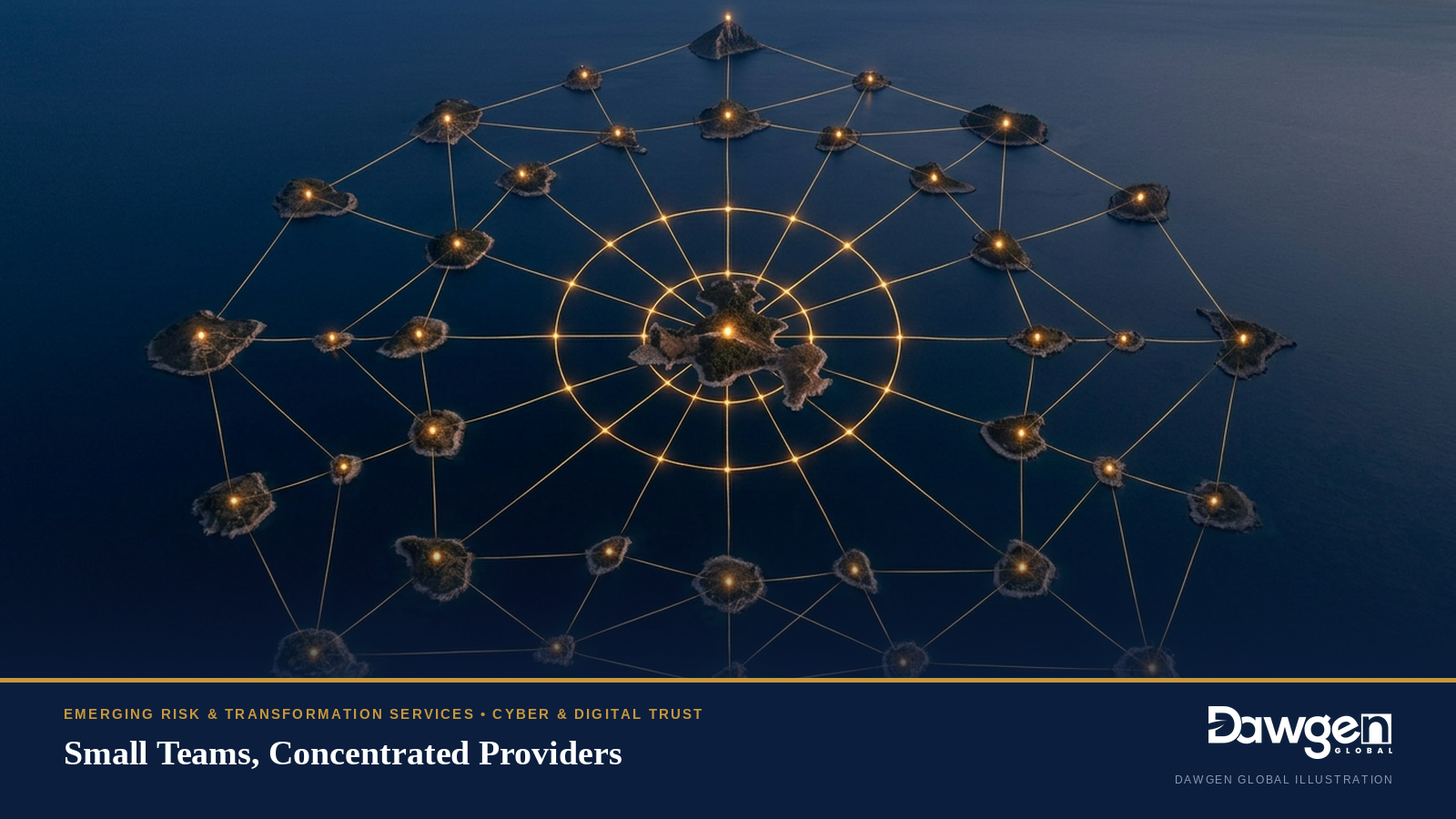
The principles of cyber resilience are global, but implementation should reflect the operating realities of Caribbean organizations.
Many regional businesses have smaller internal cybersecurity teams than multinational enterprises. Specialist skills may be concentrated in a few individuals. IT operations are frequently outsourced or supported by regional providers. Organizations can depend on shared telecommunications, cloud, payment and data-center infrastructure. Financial institutions, tourism operators, utilities, public bodies and professional-services firms often process sensitive information while operating under cost constraints.
These conditions increase the importance of prioritization. Caribbean organizations cannot remediate every theoretical weakness immediately, so they need a disciplined method for identifying what matters most.
Business continuity also has particular significance. Cyber incidents can coincide with other operational stresses such as hurricanes, power disruption, telecommunications outages and regional supply constraints. Backup, recovery and alternative operating arrangements should therefore be viewed through a multi-hazard resilience lens rather than cyber risk in isolation.
Cross-border operations add additional complexity. A regional business may process data in one jurisdiction, host systems in another and rely on providers located elsewhere. Privacy obligations, sector regulation and contractual requirements can therefore overlap.
The regional opportunity is not to replicate the largest global security operations center. It is to build a proportionate model that combines good visibility, disciplined remediation, independent validation, practical incident readiness and executive oversight.
13. Composite Caribbean Case Study: From Annual Reports to Continuous Remediation
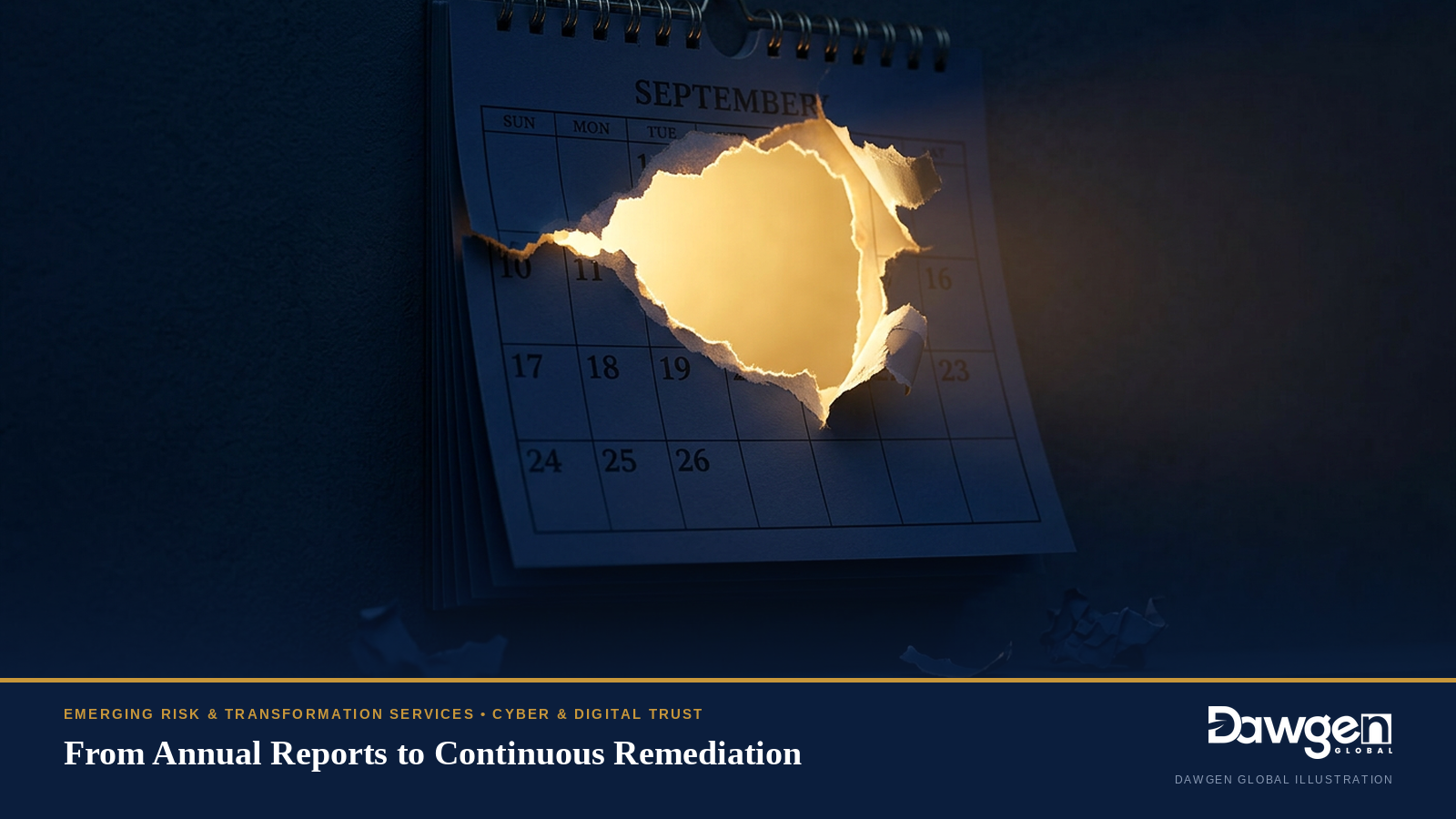
Consider a composite Caribbean organization that performed a vulnerability assessment every year. The annual report was detailed and management tracked findings through an internal spreadsheet. Before the following year’s assessment, many items were marked complete, creating a general perception that cyber risk was improving.
A deeper review produced a different picture. Several critical findings had remained open for extended periods. Some remediation items were closed after system administrators reported that changes had been made, but no independent retesting had occurred. A number of vulnerabilities reappeared in the next scan. Technical severity drove prioritization even when lower-rated weaknesses affected more business-critical systems. Third-party findings were managed separately, so executives did not see vendor exposure alongside internal risk. Privileged-access exceptions were tracked by another team and were not included in the same management dashboard.
The organization introduced a continuous cyber-remediation model. Findings were classified using technical severity, exploitability, criticality and business impact. Every material issue received a named owner and target date. Overdue items were escalated. Closure of higher-risk findings required validation. Vendor and privileged-access issues were integrated into the same risk view. Management received monthly dashboards and the executive committee reviewed material exposures quarterly.
Over several reporting cycles, the most significant improvement was not that the organization discovered more vulnerabilities. It already had extensive findings. The improvement was that management could distinguish between identified risk and actually reduced risk.
This is an anonymized composite illustration designed to demonstrate typical challenges and does not describe a specific Dawgen Global client.
14. A Practical Continuous Cyber Resilience Framework
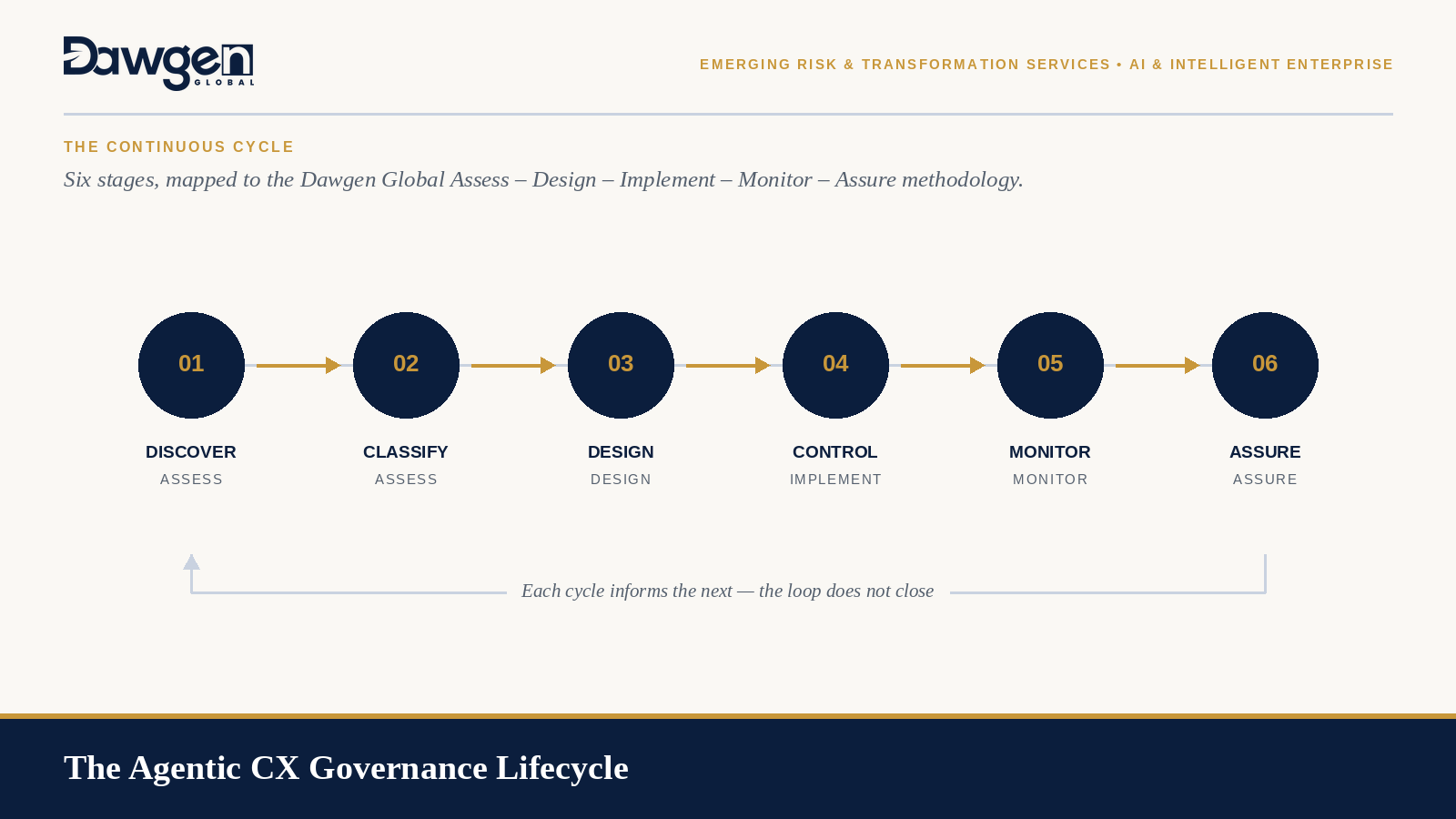
Dawgen Global recommends a six-stage operating cycle.
IDENTIFY. Maintain visibility over assets, vulnerabilities, access, third parties, control exceptions and emerging threats. Assessments, scanning and testing belong here, but they are the start rather than the finish.
PRIORITIZE. Combine technical severity with business context. Use exploitability, CISA KEV status, internet exposure, criticality, data sensitivity and regulatory consequence to determine what requires action first.
REMEDIATE. Assign accountable owners, define treatment plans, set target dates, implement patches or configuration changes, reduce access, strengthen process controls or deploy compensating measures where immediate remediation is not possible.
VALIDATE. Confirm that treatment actually reduced the exposure. Retest vulnerabilities, verify configurations and access, inspect evidence and reassess residual risk.
MONITOR. Track new weaknesses, ageing, recurring vulnerabilities, vendor developments, control performance, incidents and changes in the technology environment.
REPORT. Translate technical information into decision-useful management and board reporting. Focus on material exposure, trends, overdue remediation, critical dependencies, risk acceptance and resilience.
The cycle then repeats. Continuous resilience is therefore not a single technology product. It is an operating discipline.
15. What Management and Boards Should See
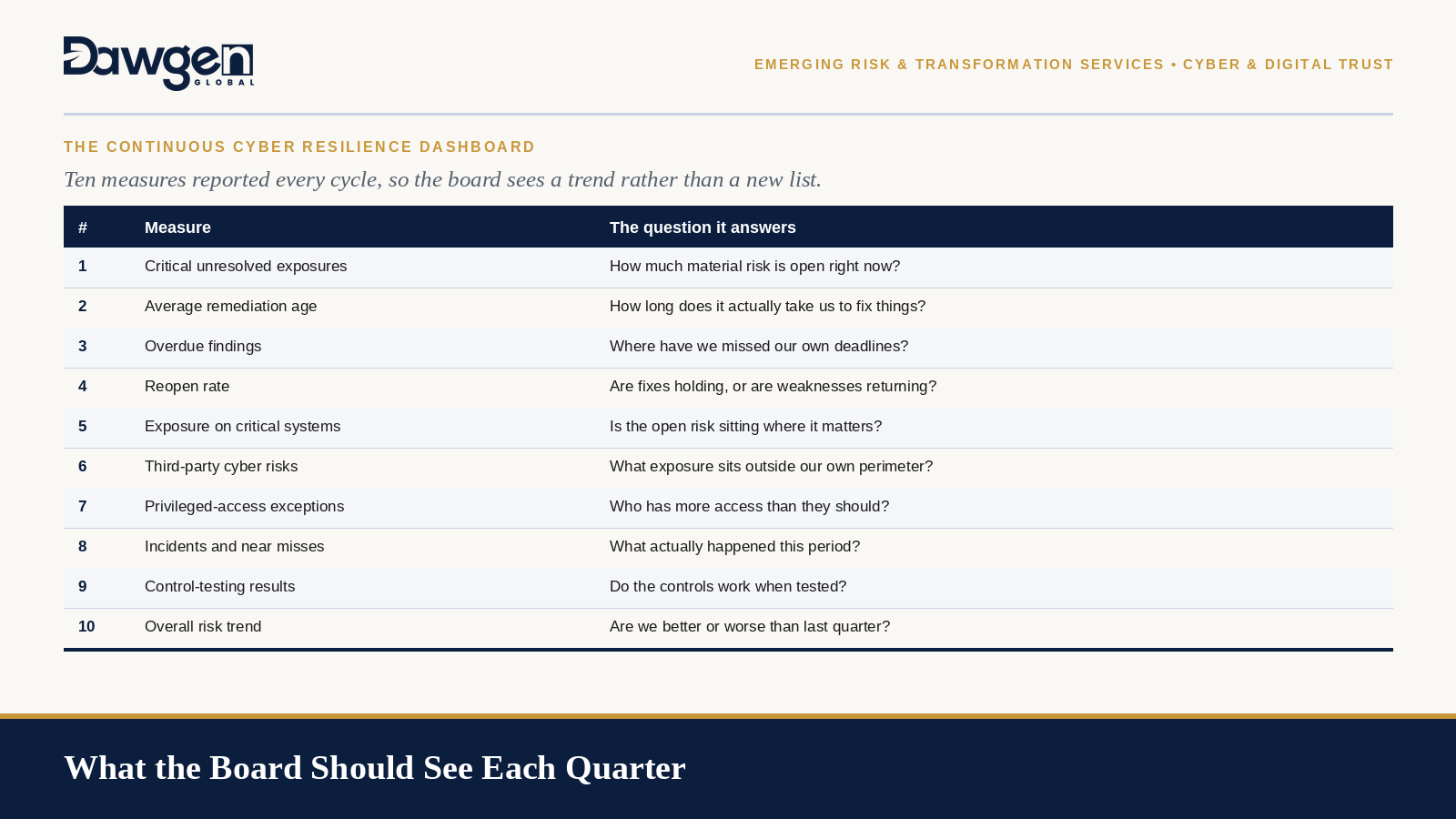
Board reporting should not consist solely of scanner counts or highly technical vulnerability descriptions. Directors need information that supports oversight.
Useful indicators can include the number of unresolved critical exposures, average remediation age, overdue high-risk findings, vulnerabilities affecting critical business services, percentage of higher-risk findings independently validated, third-party cyber exposures, privileged-access exceptions, significant incidents, recovery-test results and the overall direction of risk.
Boards should also see accepted risks. When management cannot remediate a material exposure within the required period, the decision to retain that risk should be transparent and made at an appropriate level of authority.
Trend is particularly important. A single month may show 50 critical findings, but management needs to know whether the number is falling, whether new findings are arriving faster than teams can close them and whether recurrence indicates systemic weakness.
The objective of executive reporting is not to turn directors into cybersecurity engineers. It is to help them understand whether the organization’s material exposure is being governed effectively.
16. Questions Boards and Executives Should Ask
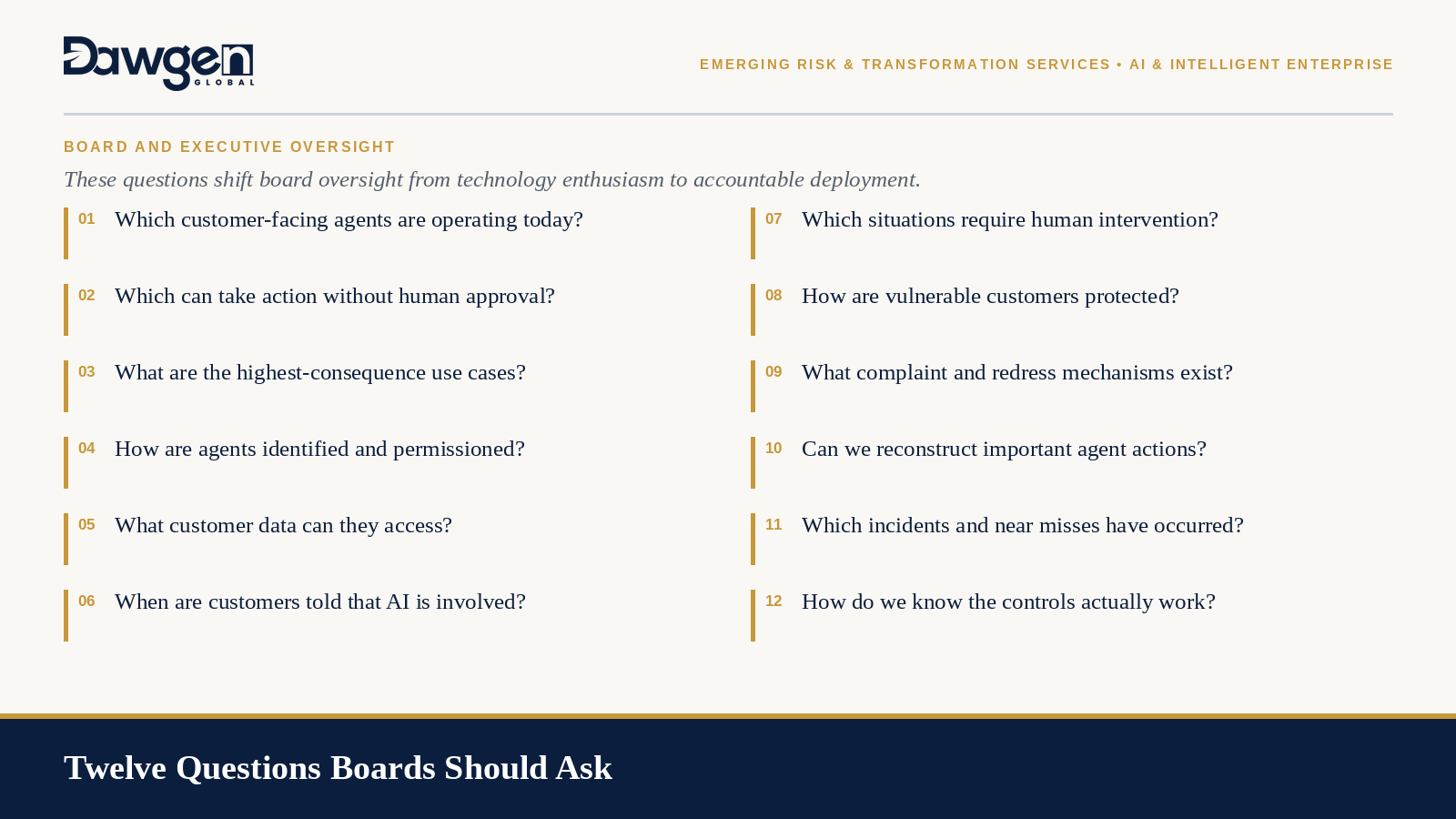
Senior leaders can improve cyber oversight by asking practical questions: What are our most significant cyber exposures today? Which critical findings are overdue? Which business services would be most affected by a major incident? Are we prioritizing vulnerabilities based on business risk rather than scanner severity alone? How do we know reported remediation is actually effective? Which third parties create material cyber dependency? Are privileged-access exceptions increasing or decreasing? When did we last test restoration of critical systems? Have we exercised our ransomware and crisis-response arrangements? Who has authority to accept residual cyber risk? Are recurring weaknesses revealing deeper process or technology problems? Is our cybersecurity investment reducing the exposures that matter most?
Organizations that cannot answer these questions consistently may have a governance problem even if they conduct regular technical assessments.
17. Dawgen Global Perspective

The future of cybersecurity management is not a choice between periodic assessment and continuous monitoring. Organizations need both.
Independent vulnerability assessments, penetration tests, internal audits and compliance reviews remain valuable because they provide structured challenge and specialist insight. But they should feed a living remediation and resilience process rather than produce reports that gradually lose relevance.
Dawgen Global’s perspective is that the key management unit should become the material cyber exposure: what it is, why it matters, who owns it, when it will be addressed, how closure will be validated, what residual risk remains and whether the broader environment is improving.
This approach also creates a natural link between cybersecurity, internal audit, risk management and executive governance. Continuous cyber resilience is not simply a technical service. It is an enterprise assurance discipline supported by technology.
18. How Dawgen Global Can Help
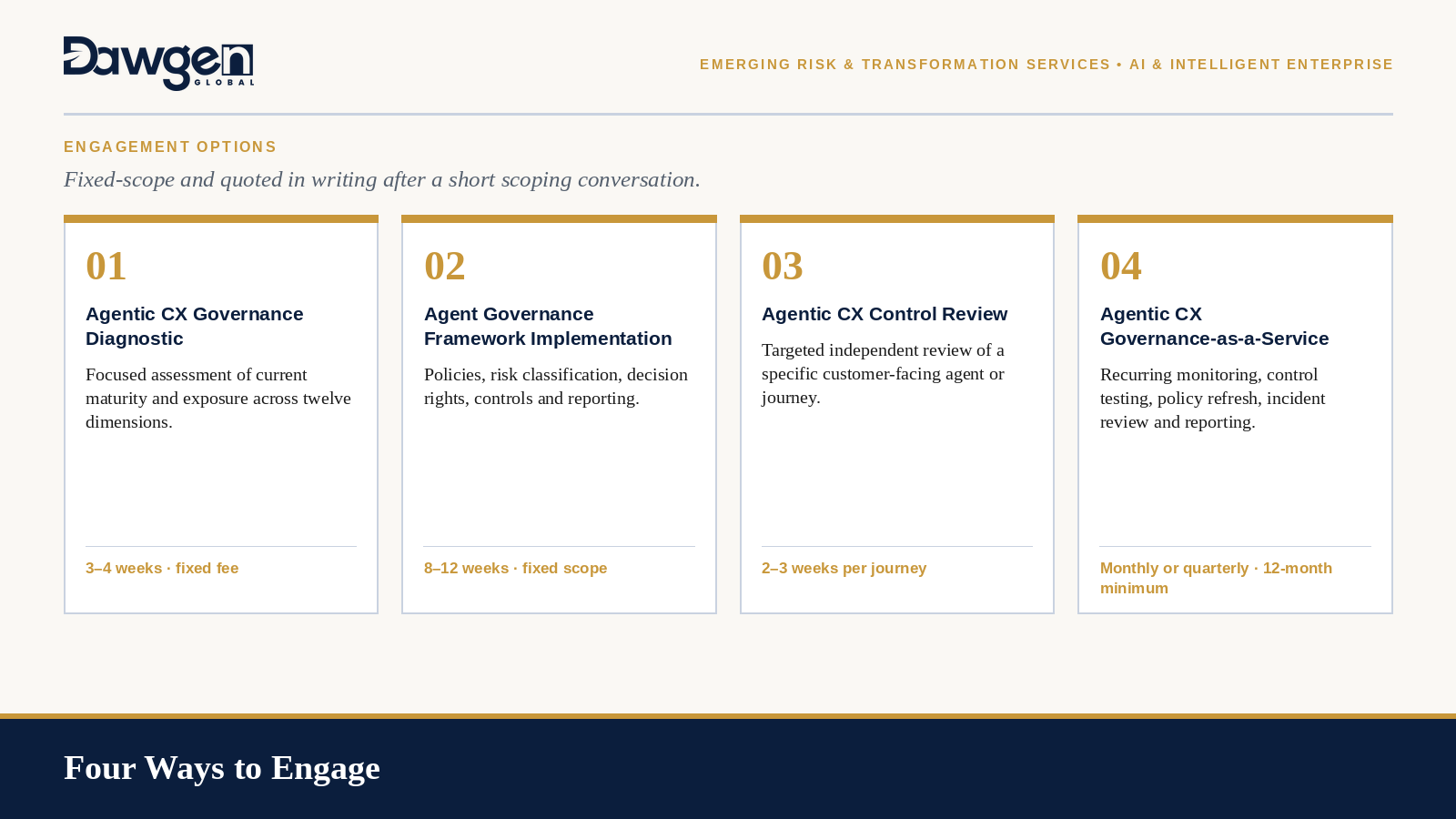
Dawgen Global’s Continuous Cyber Remediation & Cyber Resilience Services are designed to help organizations move from periodic findings toward measurable risk reduction.
Services can include the Cyber Resilience & Remediation Diagnostic; vulnerability and exposure assessments; risk-based remediation prioritization; remediation governance; independent retesting and closure validation; identity and privileged-access review; patch and configuration assurance; third-party cyber-risk assessment; incident and ransomware-readiness reviews; tabletop exercises; control testing; executive dashboards; board reporting; and Continuous Cyber Resilience-as-a-Service.
The service can operate as a focused project where an organization has a backlog of existing findings or as a recurring programme that provides continuous visibility, validation and management reporting.
The objective is straightforward: find the risk, fix the risk, prove the risk was reduced and continue monitoring as the environment changes.
Conclusion: Cyber Risk Does Not Wait for the Next Assessment
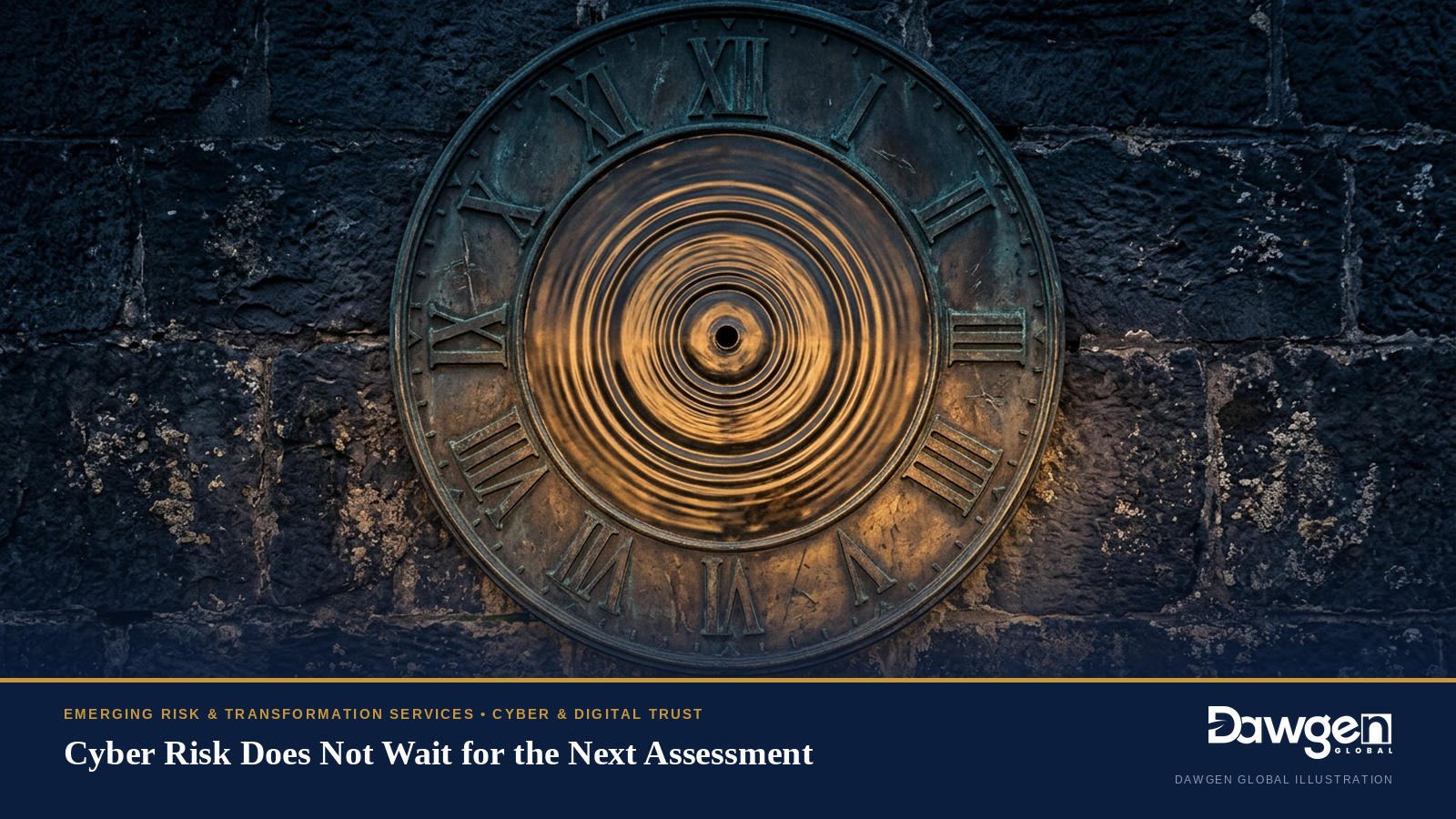
Cybersecurity assessments are snapshots. Cyber risk is a moving picture.
The gap between those two realities is where many organizations become exposed. A strong annual assessment can identify weaknesses, but risk remains until those weaknesses are prioritized, remediated, validated and monitored. New exposure can also emerge immediately after the assessment through software changes, new vulnerabilities, access changes, third parties, cloud services, AI adoption and changing attacker behaviour.
The organizations best positioned for the next phase of cyber risk will therefore not be those that simply conduct more assessments. They will be those that develop the operating discipline to convert findings into continuous risk reduction.
That requires visibility, business-context prioritization, accountable remediation, independent validation, executive reporting and tested recovery capability.
For boards and management teams, the central question is no longer merely: “When was our last cybersecurity assessment?”
The better question is: “What is our material cyber exposure today, and can we demonstrate that it is being reduced?”
Cyber risk does not operate annually. Neither should the cybersecurity programme.
Start with the Dawgen Cyber Resilience & Remediation Diagnostic
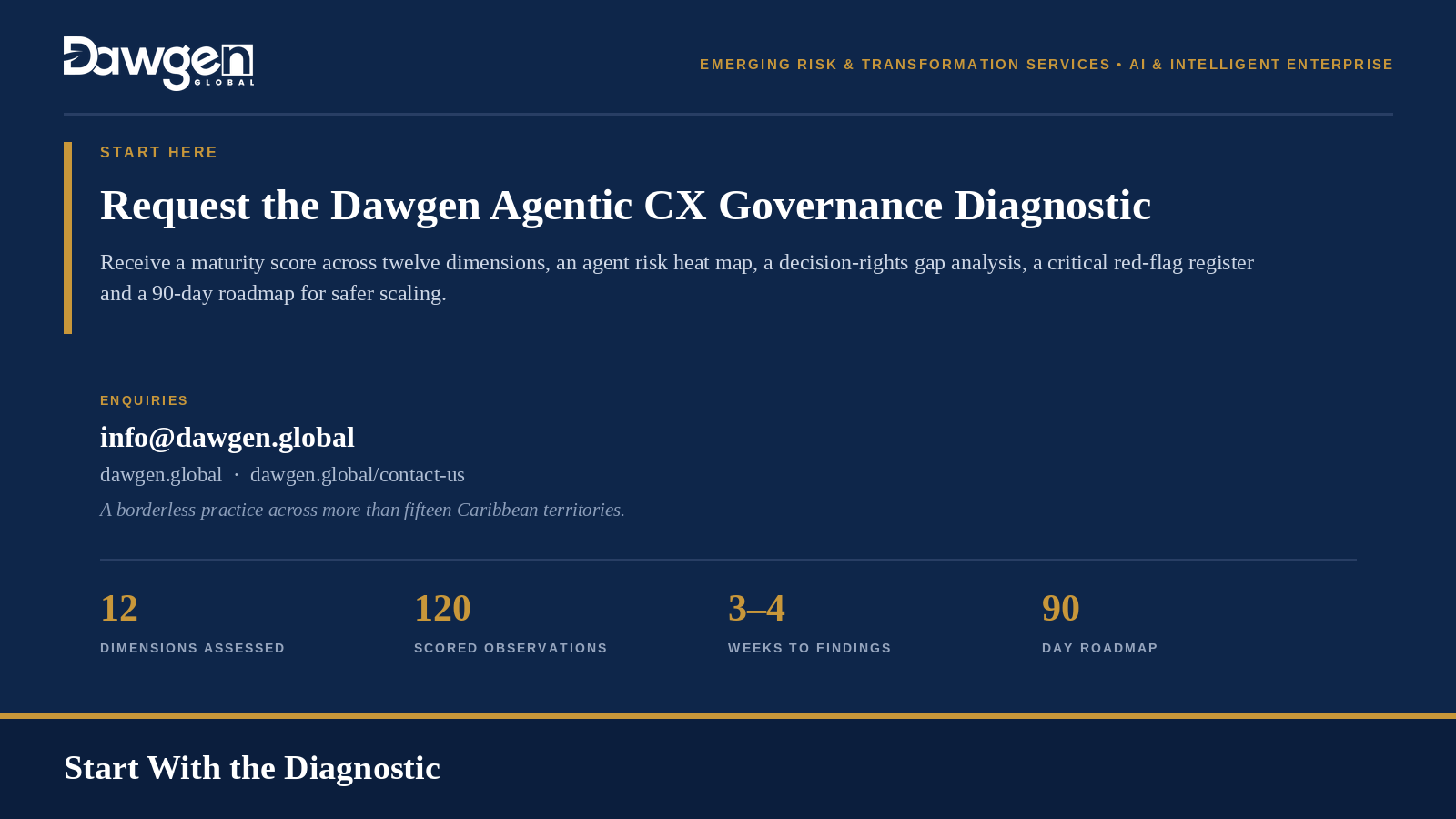
Can management demonstrate that cyber findings are being closed, prioritized by business impact, and independently validated — and that reported fixes actually worked?
The Diagnostic assesses cyber governance, asset visibility, vulnerability management, risk-based prioritization, remediation governance and ageing, patch and configuration management, identity and privileged access, third-party risk, detection and monitoring, incident and ransomware readiness, recovery and resilience, and reporting and assurance — across 12 dimensions and 120 scored observations. The result is a maturity score, a critical-risk view, a prioritized remediation roadmap and a 90-day action plan.
Typical duration. 3–4 weeks. Delivery model. Remote, hybrid or on-site across the Caribbean. Fees. Fixed-scope and quoted in writing after a short scoping conversation.
Dawgen Global helps organizations make Smarter and More Effective Decisions.
Contact
Email info@dawgen.global
Web dawgen.global
Enquiries dawgen.global/contact-us
Dawgen Global operates as a borderless practice across more than fifteen Caribbean territories. Enquiries arising from this publication are handled by email and routed to the relevant service line, wherever the client and the specialist happen to sit.
Sources
- 2026 Data Breach Investigations Report (DBIR). https://www.verizon.com/business/resources/reports/dbir/
- Cybersecurity Framework (CSF) 2.0. https://www.nist.gov/publications/nist-cybersecurity-framework-csf-20
- Cybersecurity Framework FAQs – Govern Function. https://www.nist.gov/cyberframework/faqs
- Known Exploited Vulnerabilities Catalog. https://www.cisa.gov/known-exploited-vulnerabilities-catalog
Important Notices
Client acceptance. All requests for Dawgen Global services are subject to the firm’s client acceptance procedures, including an independence and conflict-of-interest check, before any engagement is accepted.
Independence and scope of service. Where Dawgen Global or an associated firm provides audit or other assurance services to an entity, the services described in this article are provided only to the extent permitted by applicable ethical and independence requirements, including the International Code of Ethics for Professional Accountants issued by the International Ethics Standards Board for Accountants (IESBA). Advisory, design and implementation services are not provided in a manner that would create a self-review threat to an assurance engagement.
Nature of the work. Unless an engagement letter expressly provides otherwise, the services described here are advisory in nature. They are not an audit, review or assurance engagement performed under International Standards on Auditing or International Standard on Assurance Engagements 3000 (Revised), and no assurance opinion or conclusion is expressed.
Third-party research. Statistics and findings attributed to third parties are taken from the sources listed and have not been independently verified by Dawgen Global. Where research has been produced or commissioned by a technology vendor, that fact is stated so that readers can weigh it accordingly.
Illustrative material. Case studies are anonymized composite illustrations drawn from patterns commonly observed in the region and do not describe any specific Dawgen Global client.
General information only. This article is general in nature, does not take account of the circumstances of any particular organization, and should not be relied upon as professional advice.
Dawgen Global is an independent, integrated multidisciplinary professional services firm and is not a member of any international network.
© 2026 Dawgen Global. All rights reserved.
About Dawgen Global
Dawgen Global is an independent, integrated multidisciplinary professional services firm headquartered at Dawgen Towers, 47-49 Trinidad Terrace, Kingston 5, Jamaica, serving more than 15 territories across the Caribbean. Founded and led by Dr. Dawkins Brown, Executive Chairman, the firm is independent and not affiliated with any international network. It delivers a full suite of professional services under one roof: audit and assurance; tax advisory; IT and digital transformation; risk management; cybersecurity; actuarial and insurance regulatory advisory; HR advisory; mergers and acquisitions; corporate recovery; business advisory and strategy; accounting BPO and virtual CFO services; and legal process outsourcing.
The proposition is simple: big-firm capability without the big-firm price. Dawgen Global’s integrated approach is built for the specific complexities and opportunities of the Caribbean market, helping organizations make sharper, better-informed decisions that drive measurable progress.
To explore a partnership, reach out:
- Website: dawgen.global
- Email: info@dawgen.global
- WhatsApp (Global): +1 555-795-9071
- Caribbean offices: +1 876-929-3670 | +1 876-926-5210
Related service: Explore how we can help →



