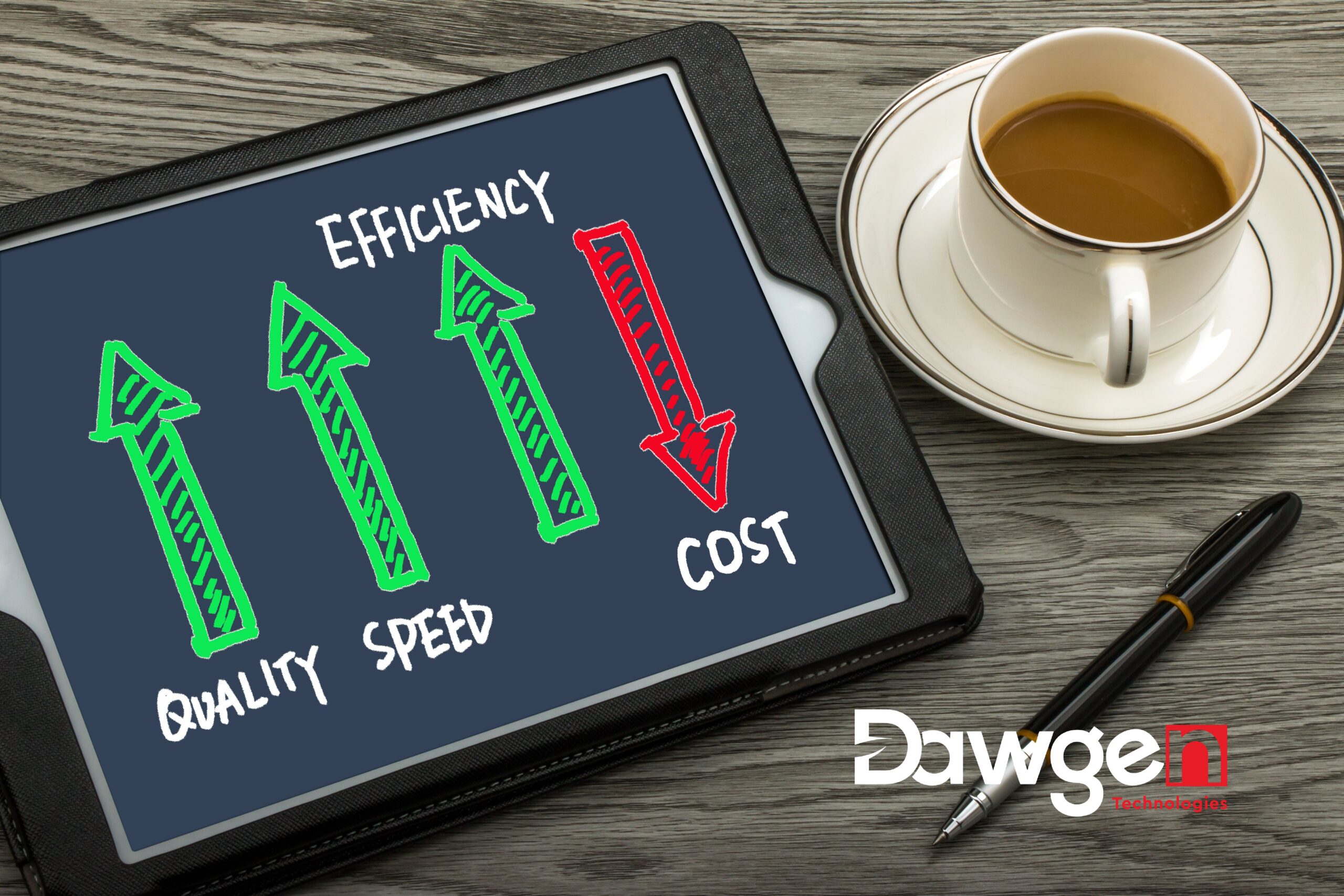
In times of economic turbulence, cost management becomes an imperative for organizations across industries. For the IT function, this challenge is especially complex. CIOs and IT leaders are expected to reduce expenses while ensuring the enterprise remains digitally capable, secure, and future-ready. Traditional cost-cutting measures—blanket budget reductions, deferred projects, or indiscriminate layoffs—can weaken resilience and undermine long-term competitiveness.
The Dawgen Global IT Transformation Model positions Short-term Cost Reduction not merely as a defensive exercise, but as a strategic catalyst for future growth. Our approach emphasizes pragmatism, business alignment, and reinvestment. By focusing on three key actions—renegotiating contracts and sourcing arrangements, confronting business-driven IT costs, and delayering IT organizations—CIOs can deliver immediate savings while laying the foundation for transformation.
This whitepaper explores how to execute cost reduction in a way that creates agility, protects innovation, and enables long-term value creation.
1. The Double Challenge of IT Cost Management
Economic downturns and disruptive shocks place extraordinary pressure on IT budgets. Organizations often look to the IT function as a quick source of savings, given its large share of operational costs. Yet CIOs face a double challenge:
-
Deliver savings to preserve financial stability in the short term.
-
Protect and even enhance IT capabilities to drive long-term competitiveness.
This balancing act defines the essence of smart IT cost reduction. At Dawgen Global, we believe IT should not be viewed simply as an expense line to be trimmed, but as an investment portfolio to be optimized. Short-term cost management, when executed correctly, strengthens—not weakens—the organization.
2. The Pitfalls of Traditional Cost-Cutting
Too often, companies resort to blunt instruments when cutting IT costs. These methods may deliver temporary relief but carry severe risks:
-
Indiscriminate budget slashes: Across-the-board cuts weaken critical systems, leaving gaps in cybersecurity, compliance, or customer-facing platforms.
-
Deferred strategic projects: Postponing digitization, automation, or data initiatives can erode competitiveness.
-
Talent erosion: Layoffs targeting IT staff demotivate teams, increase attrition of top talent, and reduce institutional knowledge.
-
Hidden long-term costs: Deferred maintenance or underfunded innovation leads to higher costs later when systems fail or competitors outpace the business.
These pitfalls highlight why cost reduction must be strategic, not tactical.
3. Dawgen Global’s Pragmatic Approach to Cost Reduction
Our model rests on three guiding principles:
-
Business Alignment: Cost actions must support the broader enterprise strategy, not just IT efficiency.
-
Value Preservation: Reduce waste, not capability. Protect the systems and people that generate future advantage.
-
Reinvestment Mindset: Free resources to fund digital priorities, ensuring transformation does not stall.
This approach transforms cost reduction from a crisis response into a competitive advantage.
4. Key Actions for CIOs and Executives
4.1 Review IT Contracts and Sourcing Arrangements
Vendors are critical partners in IT operations. During downturns, CIOs should move beyond transactional renegotiation and seek strategic partnerships.
-
Revisit service-level agreements (SLAs) and align them with current needs.
-
Explore volume discounts, bundled services, or joint innovation initiatives.
-
Shift from rigid contracts to flexible, consumption-based models where feasible.
Example: A Caribbean retail group renegotiated its cloud hosting contract, moving to a pay-per-use model. This reduced monthly spend by 30% while maintaining scalability.
4.2 Confront Business-Driven IT Costs
Much of IT expenditure is driven by business demand: number of PCs per employee, service desk response times, or application redundancy. During downturns, expectations must be recalibrated.
-
Rationalize device provisioning (e.g., reducing multiple devices per user).
-
Adjust non-critical SLAs, such as extending response times for low-priority requests.
-
Retire underutilized applications to eliminate licensing costs.
Example: A financial institution reduced costs by consolidating its analytics tools from six vendors to two, cutting license fees by half while improving standardization.
4.3 Delayer the IT Organization
Over time, IT functions often accumulate excessive layers of management and duplicated roles. Delayering improves efficiency and accelerates decision-making.
-
Remove unnecessary management tiers to increase agility.
-
Cross-train staff to handle multiple responsibilities.
-
Empower frontline IT managers to respond directly to business needs.
Example: A regional telecom company removed two layers of middle management in its IT service delivery unit, resulting in 20% savings in personnel costs and a 25% improvement in incident response time.
5. Case-Based Examples and Scenarios
Scenario 1: Regional Micro Finance Entity
Faced with shrinking margins, a Caribbean Micro Finance Entity needed to cut IT costs by 15% without risking cybersecurity or digital banking initiatives. Dawgen Global helped the entity renegotiate vendor contracts, implement desktop virtualization to reduce hardware costs, and streamline IT governance. The result: annual savings of USD 1 M, reinvested into mobile banking enhancements.
Scenario 2: Retail Group
A retail conglomerate operating across multiple islands was spending heavily on IT licenses for overlapping software. Dawgen Global conducted an application rationalization exercise, eliminating redundancies and renegotiating enterprise agreements. The result: a 25% cost reduction and improved operational consistency.
Scenario 3: Public Sector Agency
Under fiscal pressure, a government agency needed immediate IT savings. Instead of across-the-board cuts, Dawgen Global introduced shared IT services across departments, consolidated contracts, and retrained staff for multi-role coverage. The agency reduced costs by 18% while improving service delivery to citizens.
6. Cost Reduction as a Catalyst for Transformation
Smart cost reduction delivers more than financial relief—it creates momentum for broader transformation:
-
Funding for Innovation: Savings can be redirected into cloud migration, AI adoption, or cybersecurity upgrades.
-
Cultural Shift: Leaner, more agile IT organizations foster a culture of efficiency and accountability.
-
Stronger Business-IT Alignment: Reassessing costs strengthens dialogue between IT and business units, ensuring spending reflects real value creation.
This reinforces the interconnected nature of Dawgen Global’s IT Transformation Model. Cost reduction is the first step, but it feeds directly into Investment Optimization, HR empowerment, and ultimately, IT Function Transformation.
7. The Dawgen Global Advantage
Dawgen Global partners with clients to deliver cost management programs that are:
-
Analytical: Using rigorous cost diagnostics to identify waste and inefficiency.
-
Pragmatic: Designing actions that deliver quick wins without eroding capabilities.
-
Multi-disciplinary: Combining financial acumen, IT expertise, and HR advisory to ensure sustainable results.
-
Execution-Oriented: Working side by side with CIOs and executives to implement changes, not just design them.
Our regional knowledge and global-standard methodologies ensure solutions that are fit-for-purpose, impactful, and sustainable.
Next Step!
Short-term cost reduction is often seen as a painful necessity. Dawgen Global reframes it as an opportunity—to become leaner, more agile, and better prepared for future growth. By approaching cost reduction strategically—through vendor management, demand recalibration, and organizational streamlining—CIOs can deliver immediate financial relief while strengthening IT’s role as a driver of transformation.
The Dawgen Global IT Transformation Model ensures cost reduction is not the end, but the beginning of a holistic transformation journey.
📧 Connect with Us: [email protected]
🔗 Discover More: https://dawgen.global
📞 Caribbean Office: 876-9293670 | 876-9293870
📞 USA Office: 855-354-2447
💬 WhatsApp Global: +1 555 795 9071
At Dawgen Global, we help you make Smarter and More Effective Decisions. Let’s begin your IT cost transformation today.
About Dawgen Global
“Embrace BIG FIRM capabilities without the big firm price at Dawgen Global, your committed partner in carving a pathway to continual progress in the vibrant Caribbean region. Our integrated, multidisciplinary approach is finely tuned to address the unique intricacies and lucrative prospects that the region has to offer. Offering a rich array of services, including audit, accounting, tax, IT, HR, risk management, and more, we facilitate smarter and more effective decisions that set the stage for unprecedented triumphs. Let’s collaborate and craft a future where every decision is a steppingstone to greater success. Reach out to explore a partnership that promises not just growth but a future beaming with opportunities and achievements.
✉️ Email: [email protected] 🌐 Visit: Dawgen Global Website
📞 📱 WhatsApp Global Number : +1 555-795-9071
📞 Caribbean Office: +1876-6655926 / 876-9293670/876-9265210 📲 WhatsApp Global: +1 5557959071
📞 USA Office: 855-354-2447
Join hands with Dawgen Global. Together, let’s venture into a future brimming with opportunities and achievements


