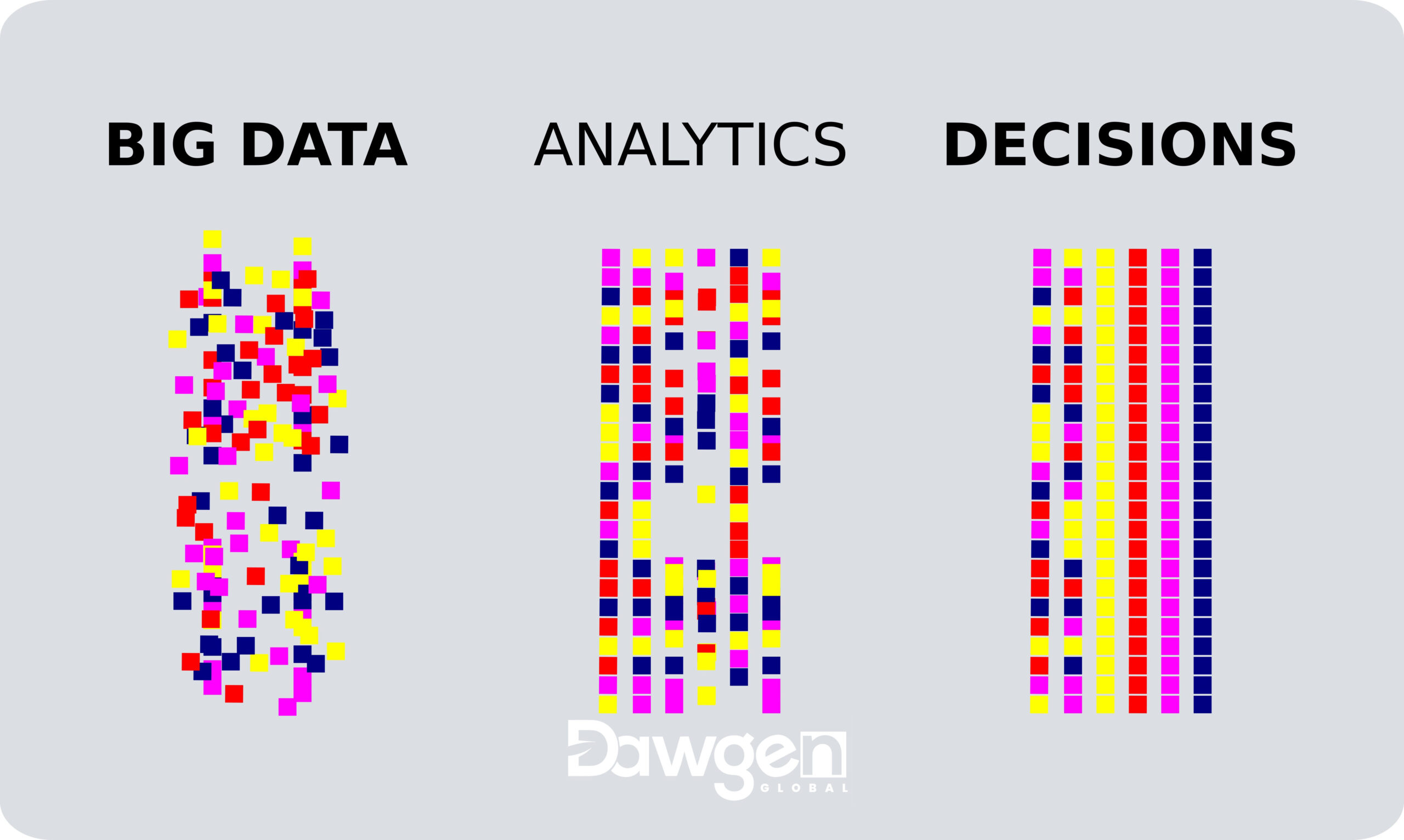
Data is not a strategy—and dashboards are not decisions. The companies that widen their ROIC spread don’t hoard data; they convert it into weekly, team-level decisions that move revenue, margin, cash, and risk. The Dawgen Insight Cloud™ is the analytics backbone of the Dawgen Delta Framework™. It connects your 3Cs—Customers, Company, and Competitors—to a single, governed source of truth that powers your Value Map™, Coverage Matrix™, TOM Blueprint™, Wargame Lab™, and Pricing system with SLA credits and price fences.
This article is your complete, practical guide to standing up the Insight Cloud in 90 days. We’ll define the minimum viable architecture, the five conformed data objects you actually need, the decision-first KPI tree, and the governance that makes numbers trustworthy. You’ll get templates, sector playbooks (with Caribbean realities like multi-island logistics and FX volatility), and a rollout plan that lifts your Dawgen Fit Index™ before the quarter ends.
1) What the Dawgen Insight Cloud™ Is (and What It Isn’t)
It is a lightweight, decision-first analytics layer that:
-
Consolidates a handful of essential data tables with clean keys and audit trails,
-
Standardizes metric definitions used across Commercial, Operations, Finance, and Compliance,
-
Pushes role-based views into weekly cadences (squad huddles, Commercial Council, Strategy Council),
-
Feeds Playbooks (Pricing, Coverage, Wargame) with the alerts and ratios they need.
It is not a multi-year data lake fantasy, a tooling parade, or an attempt to model the universe. If a metric doesn’t change a weekly decision, it doesn’t go in.
2) The Five Conformed Data Objects (Start Here)
-
Customers & Segments
-
Keys: customer_id, segment (objective-based), tier (Value/Assured/Premium), geography/island, regulated_flag.
-
Why: drives Value Map offers, coverage assignment, price fences, and NPS/cohort analysis.
-
-
Products & Offers
-
Keys: offer_id, SLA_tier, price_fence_id, meter (usage/seat/transaction), effective_dates.
-
Why: supports pricing architecture, SLA credit math, and mix analysis.
-
-
Orders/Contracts & Transactions
-
Keys: order_id, contract_terms, revenue_recognition fields, transaction_ts, amount, credits_issued.
-
Why: LTV/CAC, ARPU, credit cost vs budget, cash forecasting.
-
-
SLA & Ticketing
-
Keys: ticket_id, SLA_target, SLA_met_flag, breach_reason, resolution_ts, first_contact_resolution flag.
-
Why: time-to-first-value (TTFV), SLA attainment, credits, proof stacks.
-
-
Competitor & Partner Signals
-
Keys: signal_id, type (price/feature/partner/regulatory), R×M×C score, status (Watch/Prepare/Act).
-
Why: Wargame Lab triggers, price index monitoring, partner coverage density.
-
Optional 6th: Finance & Working Capital (DSO/DPO/DIO, margin by tier). Useful in month two if your ERP access is clean.
3) The Minimum Lovable Stack (MLS)
You don’t need exotic tools; you need clarity:
-
Ingest/Pipelines: simple, scheduled pulls from CRM, billing, support, ERP. Add quality checks (row counts, nulls, timestamp sanity).
-
Warehouse: one reliable store (cloud SQL/warehouse).
-
Metrics Layer (as code): versioned formulas for NPS, TTFV, early churn, LTV/CAC, relative price index, SLA attainment, credit rate, win-rate, OTIF, ROIC components.
-
Dashboards: three packages only: Exec (DFI + KPI Tree), Commercial Council (price integrity, mix, win-rate), Ops/Assurance (TTFV, SLA, incident & credits).
-
Access & Audit: role-based access; metric lineage; query logs retained.
If a team can’t make a weekly decision from a chart, remove the chart.
4) KPI Tree: From Data to ROIC
All roads lead to ROIC, so wire your metrics accordingly:
-
Top: Dawgen Fit Index™ (DFI) — Customer Fit, Company Fit, Competitor Fit.
-
Growth: conversion, expansion, churn ≤90 days, premium tier adoption, win-rate.
-
Margin: deal margin by tier, gross margin mix, SLA credit % of revenue.
-
Capital: DSO/DPO/DIO, cash conversion, capex yield.
-
Risk/Assurance: incident frequency/severity, audit findings closure, regulatory backlog.
Every metric has an owner, a cadence, and a decision it supports.
5) Governance that Makes Numbers Real
-
Metric Charter: a 1–2 page definition for each KPI (formula, grain, source, latency, caveats).
-
Change Control: updates to a KPI require approval by the “thin center” (Data + Finance) so reported history remains consistent.
-
Data Contracts: upstream systems promise specific fields and update schedules; alerts fire when contracts break.
-
Access Policy: tie to decision rights—Pricing Council sees price integrity; CSMs see SLA for their accounts; auditors see lineage.
-
Evidence by Default: logs and screenshots are generated automatically to populate Assurance Packs.
6) The 90-Day Dawgen Delta Cadence to Stand It Up
Weeks 1–2 — Diagnose & Blueprint
-
Decisions-first workshop: list the 15 recurring decisions that matter (pricing exceptions, SLA credits, partner adds, coverage assignment, wargame triggers).
-
Map to metrics: which KPIs and tables do those decisions require?
-
Source assessment: where each field lives (CRM, billing, support, ERP).
-
Goal: agree the five data objects, KPI tree, and access matrix.
Weeks 3–4 — Build the MLS
-
Connect sources; create the first model of the five objects.
-
Ship the Metrics Layer v1 and the three dashboards with placeholders.
-
Create metric charters for the 15 core KPIs.
-
Begin backfilling three months of history.
Weeks 5–8 — Instrument & Pilot
-
Add SLA timestamps and credit issuance logic.
-
Stand up relative price index and win-rate by segment (watch your definitions!).
-
Run the first Commercial Council and Ops Huddles using Insight Cloud views.
-
Collect feedback; prune charts; add two automations (e.g., flag “Premium outcome requested at Value price”).
Weeks 9–12 — Scale & Govern
-
Extend to partner coverage density and signal tracker R×M×C scores.
-
Lock the access matrix and change-control.
-
Publish the Assurance Pack (export from the Cloud) for compliance-sensitive clients.
-
Tie variable comp to ΔDFI, price integrity, TTFV, and premium mix using the Cloud’s KPIs.
7) Design for Decisions (By Role)
Executive Team
-
View: DFI trend, ROIC drivers, price integrity, premium mix, working capital.
-
Decision: capital allocation, three “big moves,” incentives for next quarter.
Pricing/Deal Desk
-
View: price index vs rivals, discount waterfalls, SLA credits vs budget, exception log.
-
Decision: guardrail tightening, fence tuning, exception approvals.
Sales/KAM/Inside
-
View: coverage assignment, next best offer, premium eligibility, referenceable outcomes.
-
Decision: which accounts to upgrade, what to propose, when to escalate deal desk.
Success/Service/Operations
-
View: TTFV, SLA risk prediction, incident heatmap, churn triggers.
-
Decision: proactive outreach, fast-lane activation, credit authorization.
Compliance/Assurance
-
View: control health, audit log completeness, monthly assurance pack status.
-
Decision: remediate gaps, schedule attestations, communicate with regulators.
Wargame/Competitive Intelligence
-
View: top signals (R×M×C), partner coverage density, feature lead/lag days.
-
Decision: Watch/Prepare/Act status; launch pre-approved plays.
8) Templates You Can Lift
Metric Charter (example: Time-to-First-Value)
-
Purpose: leading indicator of churn and expansion; feeds DFI (Customer Fit).
-
Formula: days from signed order to first verified value event (event table + SLA timestamp).
-
Grain: account-level, also cohort-level.
-
Source: CRM (order), product analytics (event), SLA logs.
-
Thresholds: P50 ≤ 7 days (Premium), ≤ 14 days (Value).
-
Owner: Head of Onboarding.
-
Decisions: staffing, fast-lane eligibility, credit prevention.
Decision Card (example: SLA Credit)
-
Trigger: SLA_met_flag = false.
-
Rule: credits only on Assured+ tiers; cap = 10%/period; account credits default.
-
Owner: Success Manager; approval Finance if >5%.
-
Evidence: Cloud export: incident, timestamps, remediation note.
-
KPI impact: credit % of revenue; DFI (Company Fit).
Dashboard Spec (Commercial Council)
-
Tiles: premium mix %, relative price index, discount waterfall, win-rate vs top 3, credit cost vs budget, early churn.
-
Actions: tighten fence X; launch proof stack Y; wargame Z.
9) Sector Playbooks (Illustrative)
Financial Services & Fintech
-
Reality: settlement windows, AML/KYC, chargeback risk, multi-island agents.
-
Cloud focus: SLA logs at transaction-level; dispute timer; agent performance; index-linked fees; regulator-ready exports.
-
Wins: fewer fee disputes, faster approvals, premium adoption in Certainty segment.
Professional Services & B2B SaaS
-
Reality: project variability, audit readiness, usage activation, milestone billing.
-
Cloud focus: onboarding event streams; accuracy/error logs; milestone attainment; expansion propensity.
-
Wins: TTFV ↓ 30–40%; expansion ↑; references pipeline for proof stacks.
FMCG & Distribution
-
Reality: OTIF, shelf execution, returns, fragmented islands.
-
Cloud focus: route-level OTIF; shelf audit ingestion (photos/scans); planogram compliance; promo ROI.
-
Wins: returns ↓ 20–35%; shelf availability ↑; mix and price integrity defended.
Energy & Utilities
-
Reality: uptime, restoration, safety, regulator scrutiny.
-
Cloud focus: SAIDI/SAIFI; crew dispatch analytics; incident logs with evidence; customer comms timestamps.
-
Wins: fewer SLA credits; improved regulator relations; better capex yield.
10) Predictive & AI—When (and Only When) It Pays
Don’t start with models; start with decisions. Add ML only where it creates actionable lift:
-
Churn risk → triggers proactive outreach and fast-lane support.
-
SLA breach prediction → pre-empt credits.
-
Next best offer → nudge premium upgrades.
-
Price integrity anomalies → flag out-of-guardrail quotes.
Every model must pass the Intervention Test: who acts, how fast, and what’s the business impact?
11) Caribbean & Regional Nuances
-
Multi-Island Data Hygiene: normalize timestamps and currencies; capture island codes at every table; model indexation (fuel/FX) explicitly in pricing views.
-
Connectivity Gaps: design for offline/async partner uploads (mobile scans, CSV drops) with validation and re-run capability.
-
Regulatory Engagement: shape the Assurance Pack to local expectations; schedule biannual briefings with data in hand.
-
Omnichannel Reality: include WhatsApp/agent orders and tickets as first-class events so SLA and proof stacks are complete.
12) Measuring the Impact (Fit Index & ROIC)
Expect to see leading movement in the DFI within one quarter:
-
Customer Fit: TTFV ↓, early churn ↓, outcome NPS ↑, premium adoption ↑.
-
Company Fit: cycle-time ↓, credit % vs budget ↓, unit economics transparency ↑.
-
Competitor Fit: price index stability, win-rate ↑, partner coverage density ↑, signal responsiveness time ↓.
Translate into financials over the next 1–2 quarters:
-
Gross margin +150–300 bps (mix + fewer unpriced credits),
-
CAC payback −1–2 months (conversion + lower early churn),
-
Working capital days −5 to −10,
producing a wider ROIC spread over WACC.
13) Common Pitfalls (and Dawgen Fixes)
-
Tool-first projects
-
Fix: start with 15 decisions → five tables → three dashboards.
-
-
Metric sprawl
-
Fix: KPI charters; quarterly cull; only what changes weekly behavior.
-
-
Definition drift
-
Fix: metrics-as-code; change control; backfill scripts.
-
-
Shadow data
-
Fix: access policy + training; deprecate rogue spreadsheets by replacing with faster, trusted views.
-
-
No ownership
-
Fix: every KPI has an owner, a meeting, and a decision tied to it.
-
-
Pretty dashboards, no action
-
Fix: embed in cadences; require “decision notes” on key tiles.
-
14) What You Can Build in Week One
-
The five-table data model (even mocked with extracts),
-
Metric charters for TTFV, early churn, premium mix, credit %, price index, win-rate,
-
A skeletal Commercial Council dashboard,
-
A Decision Card for SLA credits (to prevent leakage),
-
A draft Assurance Pack layout.
Momentum beats perfection.
Ready to Turn Data into Decisions?
Dawgen Global can stand up your Insight Cloud™ in 90 days—wired to your Value Map, Coverage Matrix, TOM Blueprint, and Pricing system—so every dashboard drives a decision, and every decision moves ROIC.
Request a proposal today:
📧 [email protected]
💬 WhatsApp (Global): +1 555 795 9071
Let’s make your data a profit engine—the Dawgen Way.
About Dawgen Global
“Embrace BIG FIRM capabilities without the big firm price at Dawgen Global, your committed partner in carving a pathway to continual progress in the vibrant Caribbean region. Our integrated, multidisciplinary approach is finely tuned to address the unique intricacies and lucrative prospects that the region has to offer. Offering a rich array of services, including audit, accounting, tax, IT, HR, risk management, and more, we facilitate smarter and more effective decisions that set the stage for unprecedented triumphs. Let’s collaborate and craft a future where every decision is a steppingstone to greater success. Reach out to explore a partnership that promises not just growth but a future beaming with opportunities and achievements.
✉️ Email: [email protected] 🌐 Visit: Dawgen Global Website
📞 📱 WhatsApp Global Number : +1 555-795-9071
📞 Caribbean Office: +1876-6655926 / 876-9293670/876-9265210 📲 WhatsApp Global: +1 5557959071
📞 USA Office: 855-354-2447
Join hands with Dawgen Global. Together, let’s venture into a future brimming with opportunities and achievements


