HomeCategory

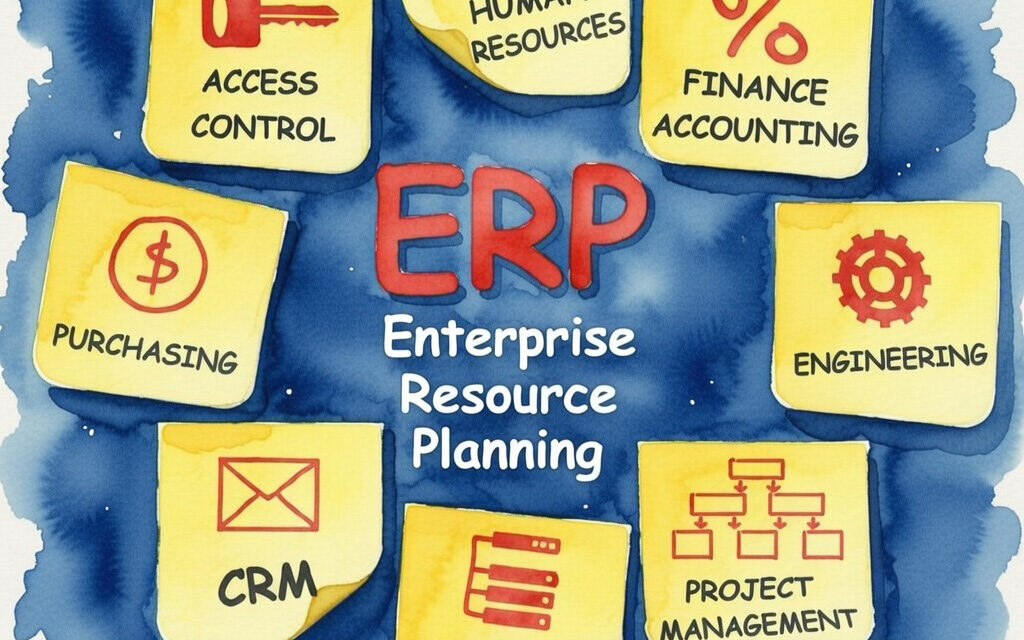
Enterprise Resource Planning (ERP)

Interoperability First: Building DCTR and E-Invoicing That Don’t Create Trade Barriers — A Caribbean Playbook

  Digital Continuous Transactional Reporting (DCTR) can dramatically improve VAT compliance, but only if it is interoperable—with business systems, with service providers, and increasingly, across borders. The OECD guidance is explicit that DCTR technical specifications can either facilitate seamless compliance or create obstacles, and that jurisdictions should build on the growing convergence of e-invoicing standards...
Dawgen Decodes: ERP Inventory Management — Turning Stock Visibility into Cash Flow

Inventory is often the largest “quiet” consumer of cash in an organisation—especially when stock records are inaccurate, replenishment is manual, and warehouse activity is invisible to Finance. An ERP-enabled inventory and warehouse management capability replaces spreadsheets and disconnected systems with real-time visibility, disciplined controls, and automated replenishment logic. The result is fewer stockouts, lower excess...

ERP in Supply Chain Management: Building an End-to-End, Data-Driven Value Chain

Supply chains fail most often at the “handoffs”—where demand planning doesn’t match purchasing, purchasing doesn’t match inventory reality, inventory doesn’t match production schedules, and production doesn’t match logistics capacity. An Enterprise Resource Planning (ERP) system reduces these breaks by aligning data, workflows, and accountability across the full supply chain. When implemented well, ERP improves forecast...

Inventory & Supply Chain in ERP: Turning Stock Into Cash, and Data Into Decisions

For many SMEs, “inventory” is where profitability quietly leaks: stockouts that lose sales, overbuying that ties up cash, write-offs from expiry or damage, and pricing decisions made without reliable cost and margin data. An ERP-enabled inventory and supply chain module set changes that by creating one source of truth across purchasing, receiving, warehousing, production (where...

ERP Controls & Audit Readiness: How to Build a Clean Trail for Financial Statements, Compliance, and Decision-Making

Many SMEs struggle with audit readiness not because they lack transactions, but because they lack traceability—a reliable way to prove who did what, when, why, and with what approval. An ERP system can change that by embedding controls into everyday workflows: purchase approvals before commitments are made, segregation of duties across cash and procurement cycles,...

Manufacturing & Production in ERP: From Bill of Materials to Board-Ready Cost and Performance Reporting

Executive Summary For manufacturing SMEs—whether producing food and beverage, building materials, fabricated components, consumer goods, or assembling imported parts—profitability often depends on factors that traditional accounting systems do not capture well: yield losses, scrap, rework, overtime, downtime, quality exceptions, and the true cost of converting materials into finished goods. Without a production-capable ERP, management reporting...

Inventory & Supply Chain in ERP: Turning Stock, Suppliers, and Fulfilment into Reliable Profit and Reporting

Executive Summary For many SMEs, inventory and supply chain are the silent drivers of profit and cash—yet they are often the least controlled and least visible parts of the business. Stock records do not match physical counts, purchase lead times are unclear, reorder decisions are intuitive rather than data-driven, and management struggles to answer basic...

From Quote to Cash: How ERP CRM Strengthens Sales Governance, Revenue Forecasting, and Cash Collection

Executive Summary In many SMEs, the path from a sales opportunity to cash is fragmented. Leads live in personal inboxes, quotations sit in spreadsheets, customer terms are informal, invoices are raised late, disputes are handled ad hoc, and management cannot confidently answer the questions that matter: What is our real pipeline? Which deals are likely...

People, Payroll, and Performance: How ERP Strengthens HR Control, Compliance, and Workforce Reporting

Executive Summary For many SMEs, workforce costs are the largest controllable expense—and often the least governed. HR data sits in emails and spreadsheets, payroll is processed under time pressure, leave records are inconsistent, and leadership struggles to answer basic questions with confidence: How many people do we actually employ? What is our true payroll cost...

https://www.dawgen.global/wp-content/uploads/2023/07/Foo-WLogo.png

Dawgen Global is an integrated multidisciplinary professional service firm in the Caribbean Region. We are integrated as one Regional firm and provide several professional services including: audit,accounting ,tax,IT,Risk, HR,Performance, M&A,corporate recovery and other advisory services

Where to find us?
https://www.dawgen.global/wp-content/uploads/2019/04/img-footer-map.png
Dawgen Social links
Taking seamless key performance indicators offline to maximise the long tail.
https://www.dawgen.global/wp-content/uploads/2023/07/Foo-WLogo.png

Dawgen Global is an integrated multidisciplinary professional service firm in the Caribbean Region. We are integrated as one Regional firm and provide several professional services including: audit,accounting ,tax,IT,Risk, HR,Performance, M&A,corporate recovery and other advisory services

Where to find us?
https://www.dawgen.global/wp-content/uploads/2019/04/img-footer-map.png
Dawgen Social links
Taking seamless key performance indicators offline to maximise the long tail.

© 2023 Copyright Dawgen Global. All rights reserved.

© 2024 Copyright Dawgen Global. All rights reserved.