

A Permanent Secretary in Jamaica sits on a thirteen-point band and can grow 34.5 per cent within it over twelve years. In the Cayman Islands the equivalent grade has five points and 10.4 per cent of headroom. In Barbados the Permanent Secretary is paid a single flat figure of BBD 164,782 with no progression whatever. Three jurisdictions, the same career apex, and three entirely different answers to the question of whether the top job should have a scale at all.
The most discussed and least comparable figure in public pay
Nothing in public sector compensation attracts more attention than what the top officials are paid, and nothing is harder to compare honestly. The reason is not secrecy — apex pay is generally among the best documented figures in any public service. It is that the word “top” means at least five different things, and a comparison that does not specify which produces a number that is precise and meaningless.
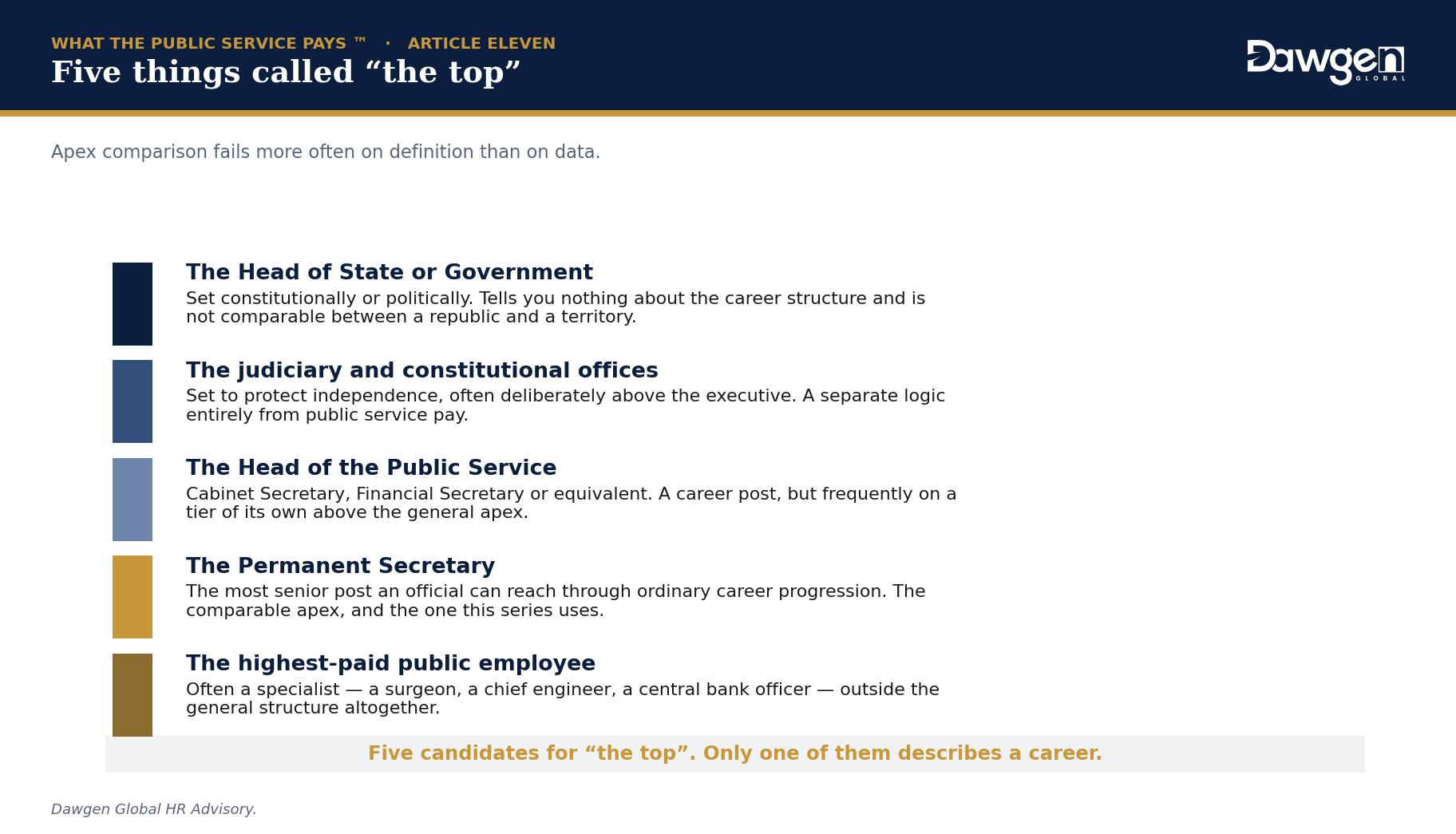
Exhibit 1. Five candidates for the top of a public service, only one of which describes a career.
The Head of State or Government is set constitutionally or politically and tells you nothing about the structure beneath. The judiciary is deliberately insulated, often placed above the executive precisely to protect its independence. The highest-paid public employee is frequently a specialist — a surgeon, a chief engineer, a central bank officer — outside the general structure altogether.
This series uses the Permanent Secretary, or its equivalent, throughout: the most senior post an official can reach by working their way up. It is the only one of the five that describes a career rather than an office, and it is therefore the only one that says anything about the structure below it.
| WHY THE CHOICE MATTERS SO MUCH
Jamaica has a tier above the Permanent Secretary — Pay Band 16, occupied by the Financial Secretary, the Cabinet Secretary and the Auditor General. Measuring against that tier rather than against Pay Band 15 raises the reported apex from about US$145,000 to about US$177,000 and moves the compression ratio from 23.6 to 28.7. Both are correct. Neither is comparable with a jurisdiction that has no such tier unless the basis is stated. |
What the top career post pays
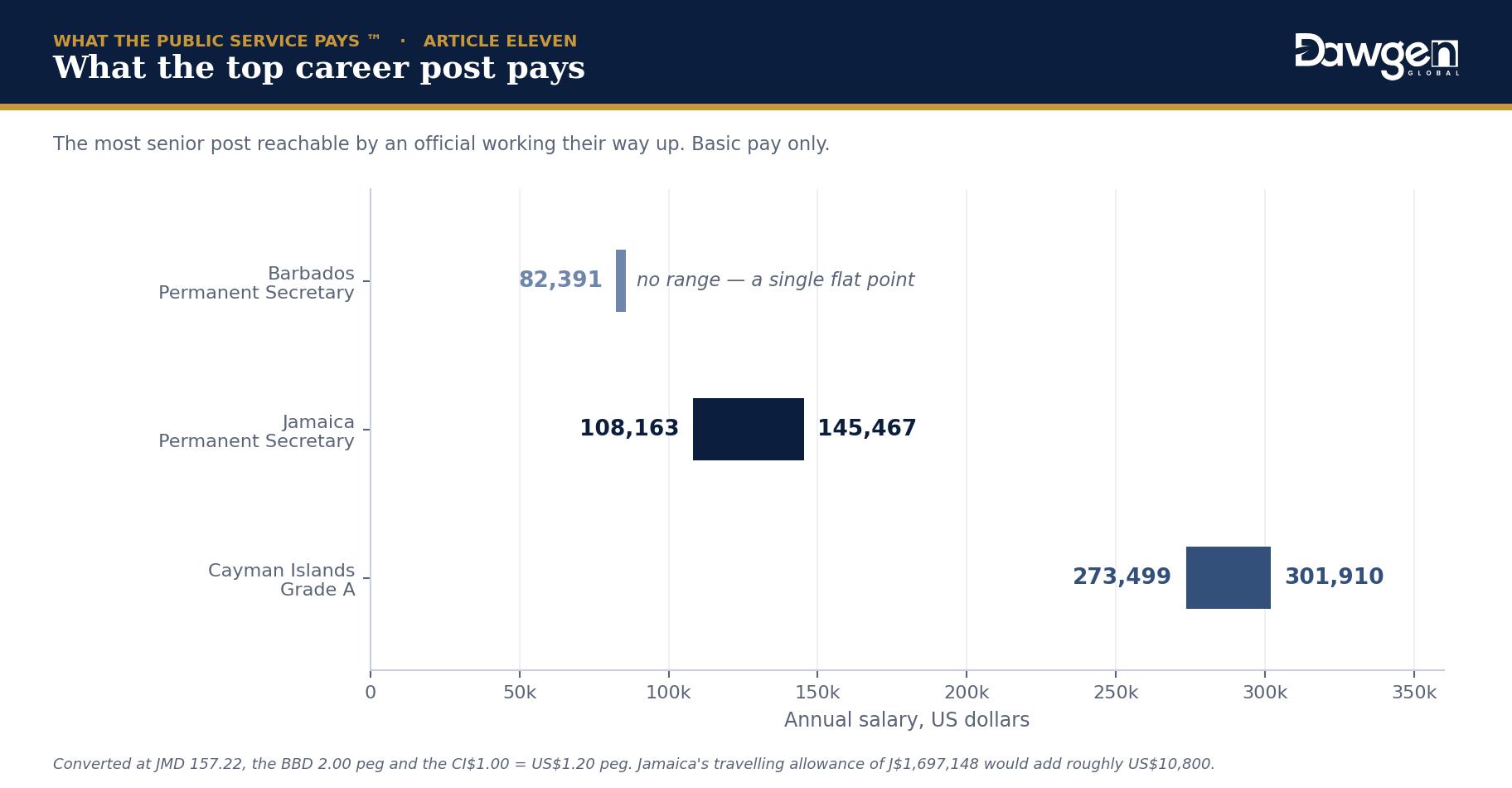
Exhibit 2. The most senior career post in three Caribbean public services, on basic pay.
A Barbados Permanent Secretary is paid the equivalent of about US$82,400. A Jamaican one sits on a band running from roughly US$108,200 to US$145,500, with a travelling allowance worth a further US$10,800 or so. A Cayman Islands Grade A officer runs from about US$273,500 to US$301,900.
The Cayman figure is more than three and a half times the Barbados one for what is, in organisational terms, a comparable position. Some of that reflects the cost of living in a jurisdiction where housing and imported goods are expensive. Some reflects the labour market a Cayman Islands government competes in, which includes a large offshore financial services sector paying private rates on the same island.
Readers of the third article will recognise the other half of this. Cayman also pays its floor about seven times what Jamaica pays its floor. The Cayman public service is not simply more generous at the top; it is more expensive throughout, and its compression ratio is a third of Jamaica’s.
Three ways to build a top grade
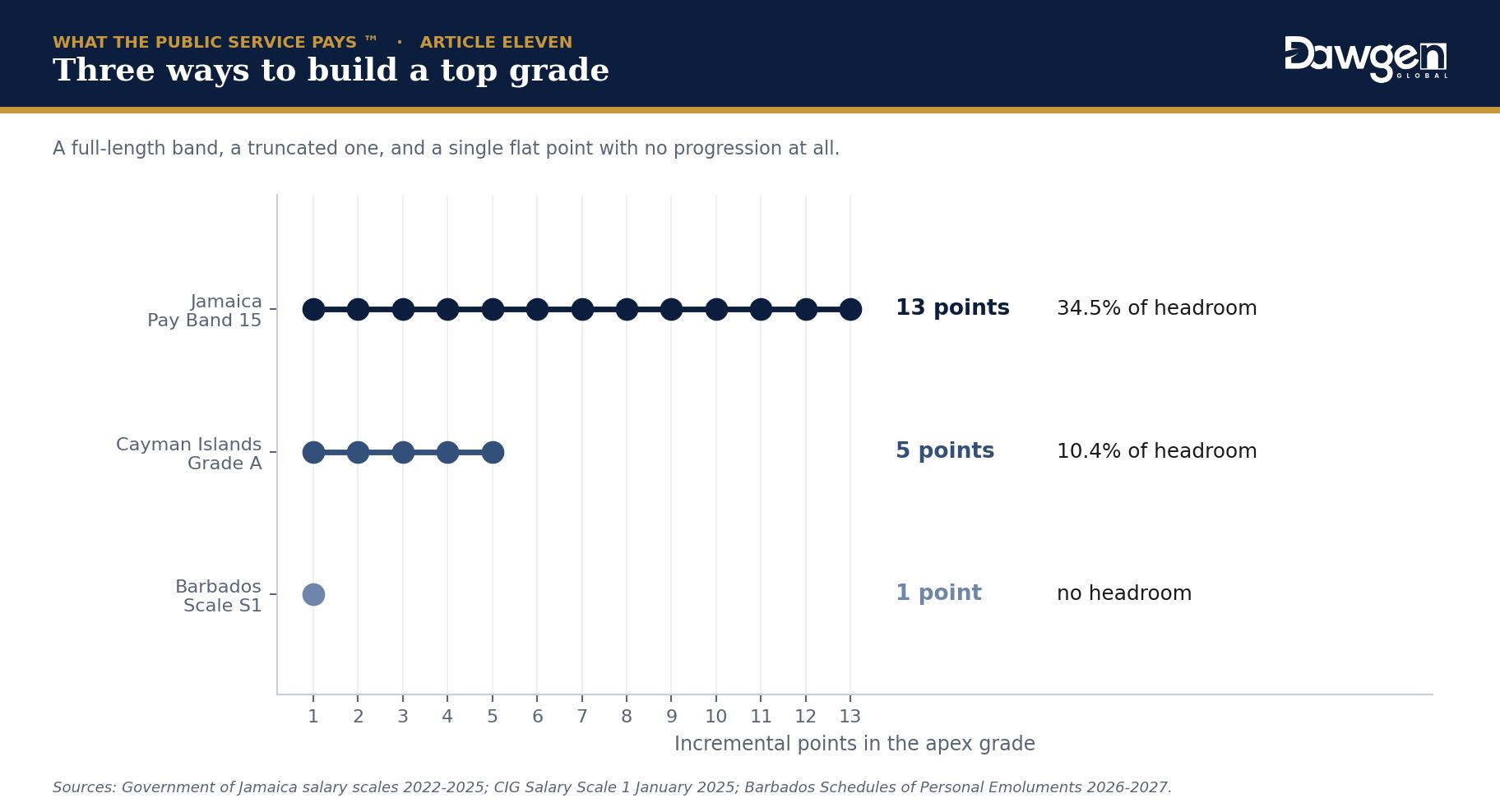
Exhibit 3. The apex grade in each jurisdiction, by number of incremental points.
This is the finding of the article, and it is a design question that most organisations never consciously decide.
The full band
Jamaica’s Pay Band 15 has thirteen incremental points, exactly like every other band in the core service. A newly appointed Permanent Secretary starts at the minimum and can progress for twelve years to a maximum 34.5 per cent higher.
The argument for this is consistency and tenure. The apex is treated no differently from any other grade, which is administratively clean and easy to defend. It also means a long-serving Permanent Secretary is paid materially more than a newly appointed one, which reflects a real difference in accumulated experience.
The argument against is cost. A thirteen-point band at the apex commits the employer to twelve years of automatic increases for the most expensive people in the organisation, whether or not the role has grown.
The truncated band
The Cayman Islands takes the middle course. Grade A has five points and 10.4 per cent of headroom — four years of progression. As the second article showed, this is not a different structure but the same 2.5 per cent ladder cut short.
The logic is straightforward. Some recognition of tenure is appropriate; twelve years of it at the apex is not. Truncating caps automatic cost growth at the top while leaving the junior structure untouched. It is the most common design internationally, and on the evidence here it is the one we would generally recommend.
The flat point
Barbados does something else entirely. Scale S1 is a single figure. Every Permanent Secretary in the establishment schedule appears at BBD 164,782. There is no range, no increment and no progression.
The case for a flat apex is clarity. The rate for the job is the rate for the job, it is publicly known, and it cannot be influenced by how long someone has been there or how well they negotiated. In a role of this visibility, an unambiguous figure has real value.
The case against is that it removes any financial recognition of tenure at the top of a career, and it creates an abrupt ceiling. An officer promoted into the apex reaches their final salary on the day of appointment, potentially with fifteen years of service ahead of them in which their pay will move only when the scale itself moves.
| THE RETENTION CONSEQUENCE
A flat apex places the entire weight of senior retention on non-financial factors — the standing of the role, public service motivation, pension accrual. Those can be powerful. But an organisation choosing a flat top grade should know that it has chosen them, because it has removed the only financial lever it had for the people it can least afford to lose. |
Who decides, and how
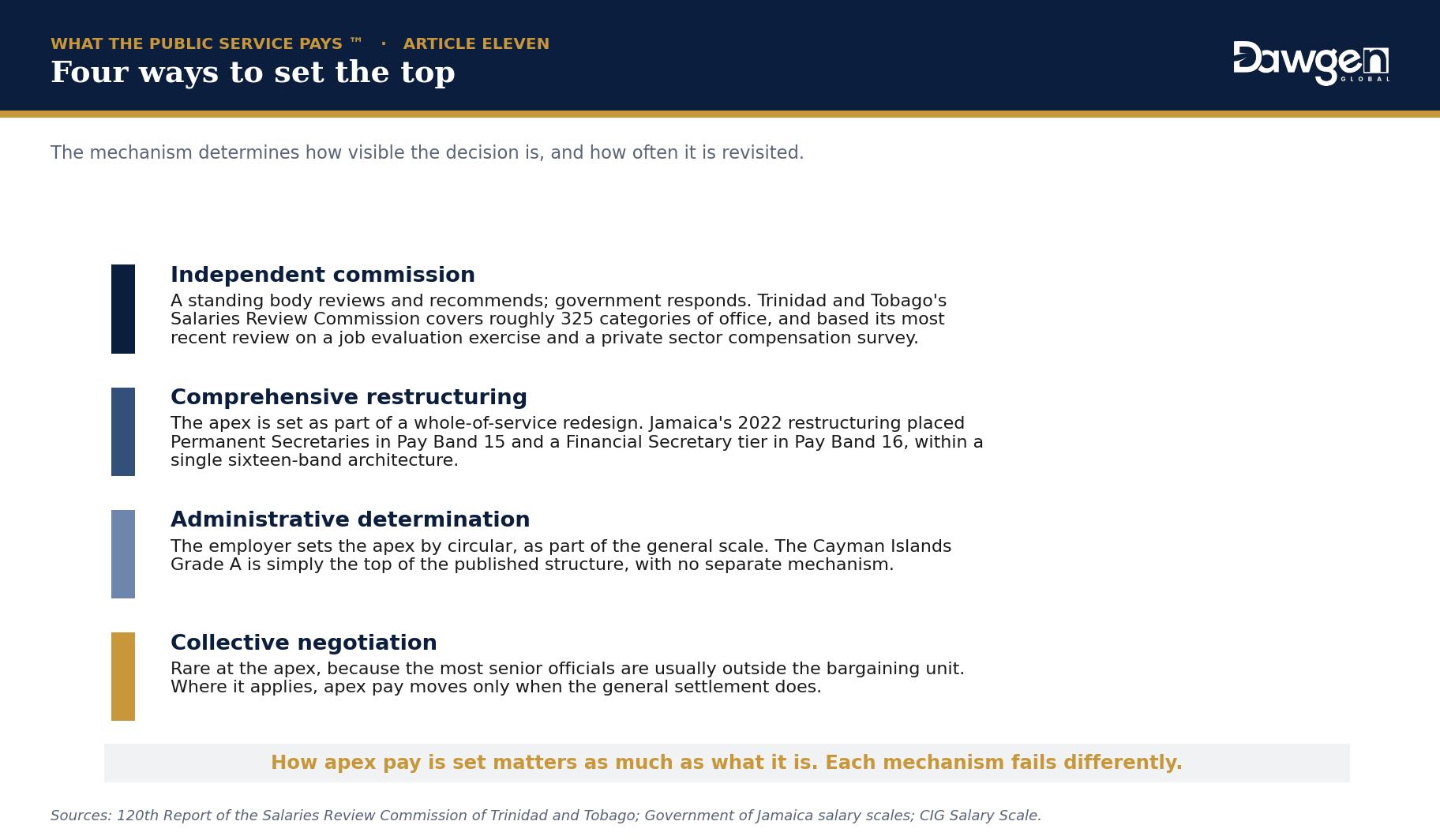
Exhibit 4. Four mechanisms by which apex pay is determined.
The mechanism matters as much as the number, because it determines how visible the decision is and how often it is revisited.
Trinidad and Tobago uses an independent standing commission. The Salaries Review Commission covers approximately 325 categories of office and based its most recent review on a Cabinet-approved job evaluation exercise together with a compensation survey establishing how comparable private sector jobs are paid. That is a considerable amount of methodological transparency, and it is published.
Jamaica set its apex as part of a whole-of-service restructuring, placing Permanent Secretaries in Pay Band 15 within a single sixteen-band architecture. The Cayman Islands determines it administratively: Grade A is simply the top of the published scale, with no separate mechanism at all.
Why the independent commission model exists
The problem apex pay presents is structural and applies to any organisation. The people best placed to judge what the top job is worth are the people who hold it or who appoint to it, and any decision they take is open to the obvious objection.
An independent commission removes the decision from those with an interest in it and requires the reasoning to be published. That is why the model has persisted in the Westminster tradition despite being slower and more expensive than administrative determination. Its weakness is the one identified in the eighth article: a commission can recommend, but implementation still requires a decision, and recommendations can sit unimplemented for years.
What sits around the salary
Apex packages carry elements that rarely appear in the quoted rate, and at this level they are large enough to change the comparison materially.
Trinidad and Tobago’s Salaries Review Commission sets out the position for senior offices in unusual detail. For the Tobago House of Assembly Chief Secretary, the Commission recorded a salary of TT$52,159 a month with effect from 1 October 2023, having been TT$47,500 for the preceding three years. Attaching to that are a transport allowance of TT$6,660 a month, a subsistence allowance of TT$2,000 a month, an official vehicle fully maintained, an official driver, and a motor vehicle loan facility of up to TT$350,000 at six per cent over six years with full exemption from motor vehicle tax, value added tax and customs duty.
The transport allowance alone is 12.8 per cent of salary. The loan facility and the duty exemptions are not salary at all, and cannot readily be valued, but they are plainly worth something substantial to the holder.
| WHY APEX PACKAGES ARE THE HARDEST TO COMPARE
At junior grades, reward is mostly salary plus a small number of stated allowances. At the apex it routinely includes vehicles, drivers, housing, subsidised loans, duty concessions and representation allowances — several of which have no market price and none of which appear in the quoted salary. A comparison of apex SALARIES across jurisdictions is therefore comparing the most visible part of the most complicated package in each service. |
This is one reason we have been cautious throughout about the apex figures, and why the compression ratios in this series are consistently labelled as basic pay. The direction of the error is knowable even where its size is not: adding the non-salary elements would raise every apex figure, and would raise them unevenly.
The measurement problem
For anyone computing compression — the measure the third article argued is the most revealing in any pay structure — the apex creates a specific difficulty.
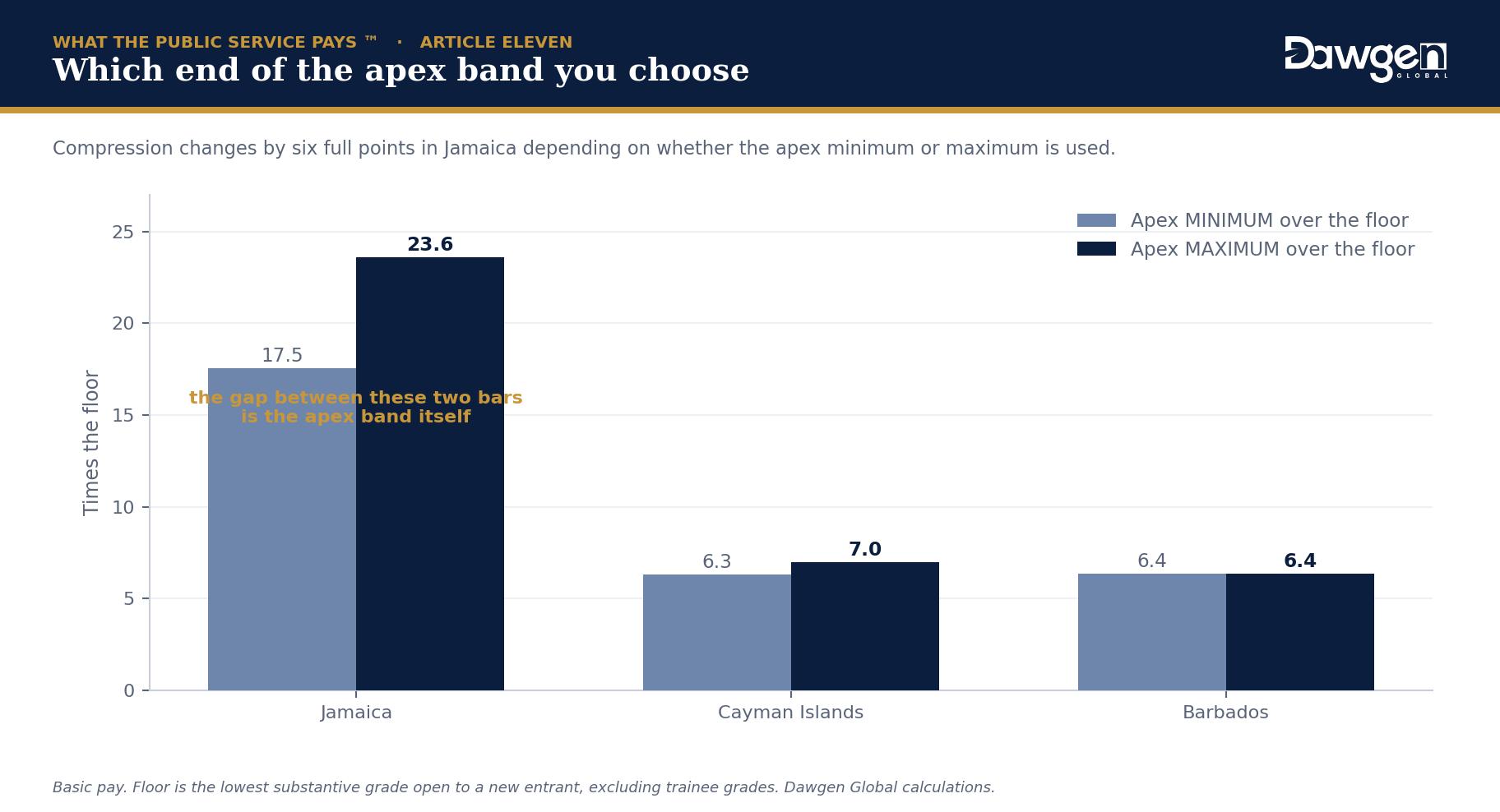
Exhibit 5. Compression computed on the apex minimum against the apex maximum.
In Jamaica, measuring compression against the apex band minimum gives 17.5. Measuring against its maximum gives 23.6. The gap between those two numbers is six full points, and it is entirely an artefact of which end of one band you choose.
In Barbados the question does not arise, because the apex has only one point. In the Cayman Islands the two figures differ by less than a point, because the band is short.
So the more headroom a jurisdiction gives its apex, the more sensitive its compression ratio becomes to a methodological choice that has nothing to do with pay policy. This is why our method states the basis on every figure, and why a compression ratio quoted without one should be treated with caution.
Why apex pay is politically difficult
There is a reason apex pay attracts scrutiny out of all proportion to its share of the wage bill, and it is worth stating plainly because the same dynamic operates in private organisations.
The tenth article established that a public service is a small number of very large occupational groups. Permanent Secretaries are perhaps a few dozen people in any Caribbean jurisdiction. Whatever they are paid, it is a rounding error against a wage bill dominated by teachers, clerical officers, nurses and the uniformed services.
Apex pay is therefore never really an affordability question. It is a legitimacy question. It is read as a statement about what the organisation values, and it is read most closely by the people at the other end of the structure — which is why the compression ratio, rather than the apex figure itself, is what actually carries meaning.
| THE PRACTICAL IMPLICATION
An organisation defending its apex rate on affordability grounds is answering a question nobody asked. The answerable question is what the apex is worth relative to the rest of the structure, and whether that relationship can be explained. A ratio of 6.4 and a ratio of 23.6 both require an explanation; they simply require different ones. |
This also explains a pattern visible across the region: apex pay tends to move either as part of a comprehensive restructuring, where it is one element among many, or on the recommendation of an independent body. Both routes exist largely to avoid a standalone decision that would have to be defended on its own.
What this means for private employers
The apex question arises in every organisation with a chief executive, and the same three designs are available.

Exhibit 6. Six rules, in the order our HR Advisory practice applies them.
The third is where executive pay most often comes apart. Job-based discipline — evaluate the post, pay the grade — holds reasonably well through most of an organisation and breaks down almost entirely at the top, because the population is one person, the negotiation is individual, and there is no comparator inside the organisation.
The discipline that helps is separating the two questions explicitly. What is this post worth, evaluated on the same basis as every other post? And separately: what will it take to secure the particular individual we want? Answering the second without the first is how organisations end up unable to explain their own top rate.
The fifth is worth acting on before somebody else does. Your apex-to-floor ratio is the single figure an outsider will compute about your organisation if they ever examine it — a journalist, a union, a prospective employee with a spreadsheet. Knowing it, and being able to explain why it is what it is, costs an afternoon.
The three designs, and when each fits
Compressing the choice into practical guidance:
- A FLAT APEX suits an organisation where the top rate needs to be unambiguous and publicly defensible, where appointments are for fixed terms, and where tenure at the top is not something you wish to reward financially. It is the most transparent option and the least flexible.
- A TRUNCATED BAND suits most organisations. It recognises the first few years of accumulated experience, gives a new appointee somewhere to go, and caps automatic cost growth at the level where it is most expensive. Four to six points is the usual range.
- A FULL BAND suits organisations where apex tenure is genuinely long and the role genuinely grows with it — and where the cost of twelve years of automatic increase on the highest salary in the organisation has been modelled and accepted. It is the most generous option and the one most likely to be questioned later.
What matters more than the choice is that it was made. In our experience the apex structure of most organisations was inherited, and nobody currently in post can say why the top grade has the shape it does.
A note on our work
This research sits within Dawgen Global’s HR Advisory practice, which advises on job evaluation, grading reviews, pay structure design and reward benchmarking across the Caribbean. Executive pay reviews are among the most sensitive assignments we take, and the technical content is usually the easy part. The value is in producing a decision that can be explained to people who were not in the room, some years after everyone who was has moved on.
A closing observation on the three designs
The most striking thing about Exhibit 3 is not that the three jurisdictions differ. It is that each design is internally coherent and none of them is obviously wrong.
Barbados has decided the top job has a rate. Jamaica has decided it has a career. Cayman has decided it has a short one. Each answer follows from a defensible view of what the apex is for, and each carries a cost the others do not.
That is the pattern this whole series has kept finding. The variation across Caribbean public pay is not mostly the accumulated residue of inattention, though there is some of that. It is largely the result of different jurisdictions answering the same structural questions differently, usually for reasons that made sense at the time and were rarely written down. Recovering those reasons — or at least recording the answers — is most of what this research has turned out to be.
Next in this series
Article twelve is the last, and it turns to what it would take to finish this work: the eleven jurisdictions still to collect, the documents required for each, and the shape of the first published edition.
| AN INVITATION
Apex pay is among the better documented figures in most public services, but the mechanism by which it is set is often not. We would be glad to hear from anyone able to describe how the top of their jurisdiction’s structure is determined and reviewed. More broadly, eleven of the sixteen jurisdictions in this study have not yet been collected. Public service ministries, personnel departments and statistical offices wishing to supply information, or to correct anything published in this series, are invited to contact the firm. |
SOURCES
Government of Jamaica, Salary Scales for Monthly Paid Staff 2022-2025 and the Summary of Public Sector Salary Scales, Ministry of Finance and the Public Service. Cayman Islands Government Salary Scale effective 1 January 2025, Appendix B to Personnel Circular 11 of 2024. Barbados, Schedules of Personal Emoluments 2026-2027. Republic of Trinidad and Tobago, One Hundred and Twentieth Report of the Salaries Review Commission, 24 October 2024. Currency conversions at JMD 157.22, the BBD 2.00 peg and the CI$1.00 = US$1.20 peg. Compression ratios and headroom percentages are Dawgen Global calculations from those published sources. No individual officer’s name or salary has been recorded or reported.
This article is the eleventh in What the Public Service Pays™, a Dawgen Global series drawn from research across sixteen Caribbean jurisdictions. Dawgen Global is an independent, integrated multidisciplinary professional services firm serving the Caribbean. Enquiries: [email protected] | dawgen.global
About Dawgen Global
Dawgen Global is an independent, integrated multidisciplinary professional services firm headquartered at Dawgen Towers, 47-49 Trinidad Terrace, Kingston 5, Jamaica, serving more than 15 territories across the Caribbean. Founded and led by Dr. Dawkins Brown, Executive Chairman, the firm is independent and not affiliated with any international network. It delivers a full suite of professional services under one roof: audit and assurance; tax advisory; IT and digital transformation; risk management; cybersecurity; actuarial and insurance regulatory advisory; HR advisory; mergers and acquisitions; corporate recovery; business advisory and strategy; accounting BPO and virtual CFO services; and legal process outsourcing.
The proposition is simple: big-firm capability without the big-firm price. Dawgen Global’s integrated approach is built for the specific complexities and opportunities of the Caribbean market, helping organizations make sharper, better-informed decisions that drive measurable progress.
To explore a partnership, reach out:
- Website: dawgen.global
- Email: [email protected]
- WhatsApp (Global): +1 555-795-9071
- Caribbean offices: +1 876-665-5926 | +1 876-929-3670 | +1 876-926-5210


