

Across the Cayman Islands civil service, total remuneration is 1.29 times salary. For its senior management the figure is 1.36. And of the reward that sits outside pay, employer health care costs four and a half times what the pension promise does — 18.6 per cent of total remuneration against 4.0 per cent. That inverts the assumption on which almost all reward analysis in this region is built, including, until we found it, our own.
Why basic pay is the wrong number
Every article in this series so far has compared basic salary, and each has carried the same warning: that basic pay understates public sector reward. This article is about the size of that understatement, where it comes from, and what an employer should do about it.
The problem is not that allowances exist. It is that they are distributed unevenly — differently between jurisdictions, differently between occupational groups within a jurisdiction, and differently up and down a single structure. A comparison built on basic pay is not merely conservative. It is distorted in ways that cannot be predicted without opening the allowance schedule.
What total reward means
Total reward is the full employer cost of employing someone in a post: basic salary, plus fixed allowances attaching to that post, plus the employer’s cost of pension and health provision, plus any other guaranteed element. It is measured at employer cost, not at what the employee believes the benefit is worth — those are different numbers and only the first is auditable.
Deciding what belongs inside that boundary is the whole exercise, and it is where most comparisons fail before they begin.
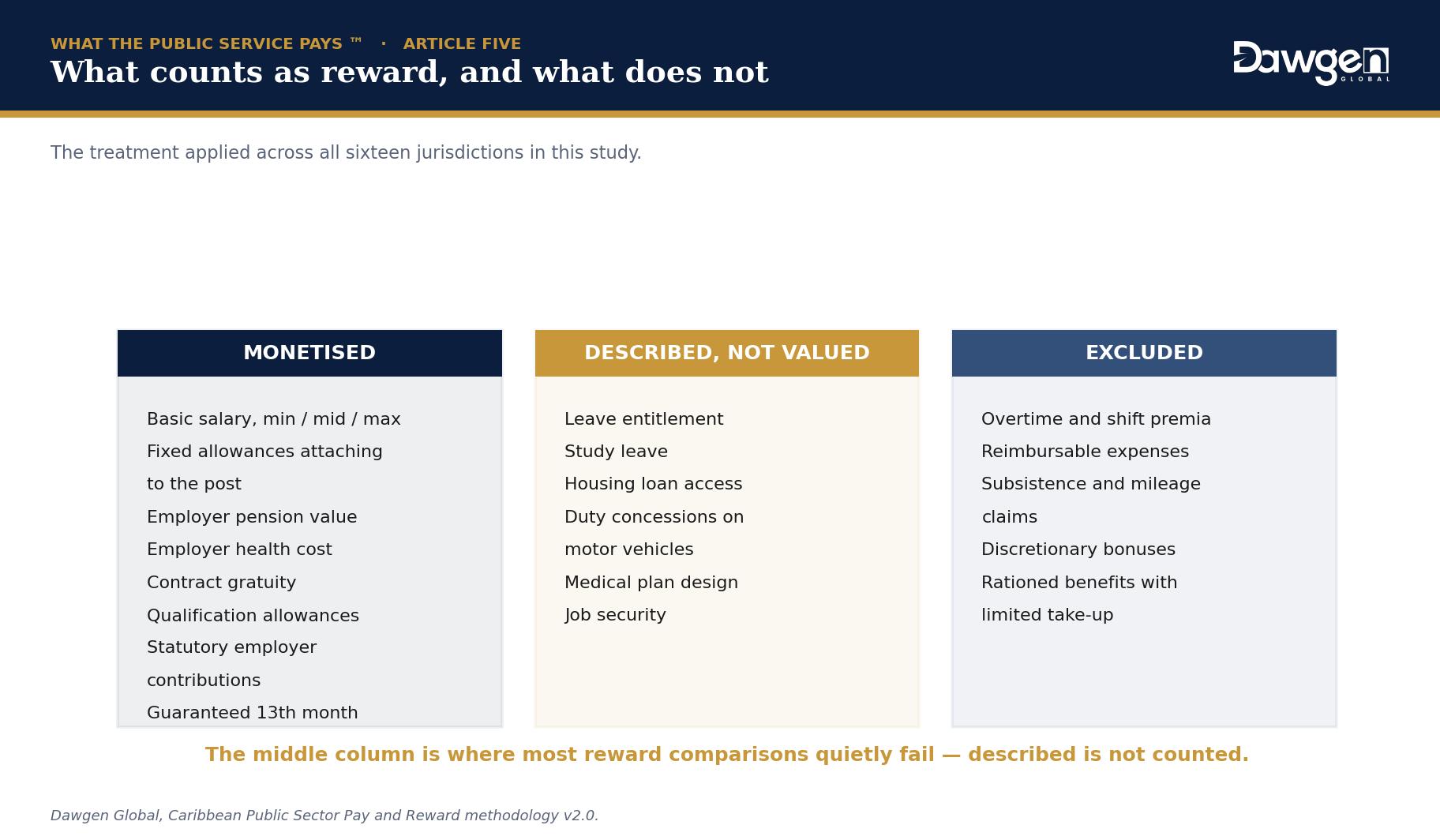
Exhibit 1. The treatment applied to each reward component across all sixteen jurisdictions.
The three columns follow one principle. If a payment is GUARANTEED and attaches to the POST, it is reward and it is counted. If it is contingent on hours worked, distance travelled or discretionary judgement, it is not. And if it is real but cannot be valued credibly from published information, it is described and the omission is stated.
| THE MIDDLE COLUMN IS THE DANGEROUS ONE
Leave entitlement, study leave, housing loan access and motor vehicle duty concessions are genuine reward. We do not monetise them because doing so requires plan-level and take-up data that is not consistently published, and a badly valued benefit is worse than an acknowledged gap. But a reader who forgets that column exists will conclude that our total reward figures are complete. They are a floor, not a total. |
The evidence, and where it comes from
Only one jurisdiction in this study publishes audited figures at the level of detail needed to settle the question. The Cayman Islands Office of the Auditor General reported on civil service remuneration for 2022 across 4,566 staff.
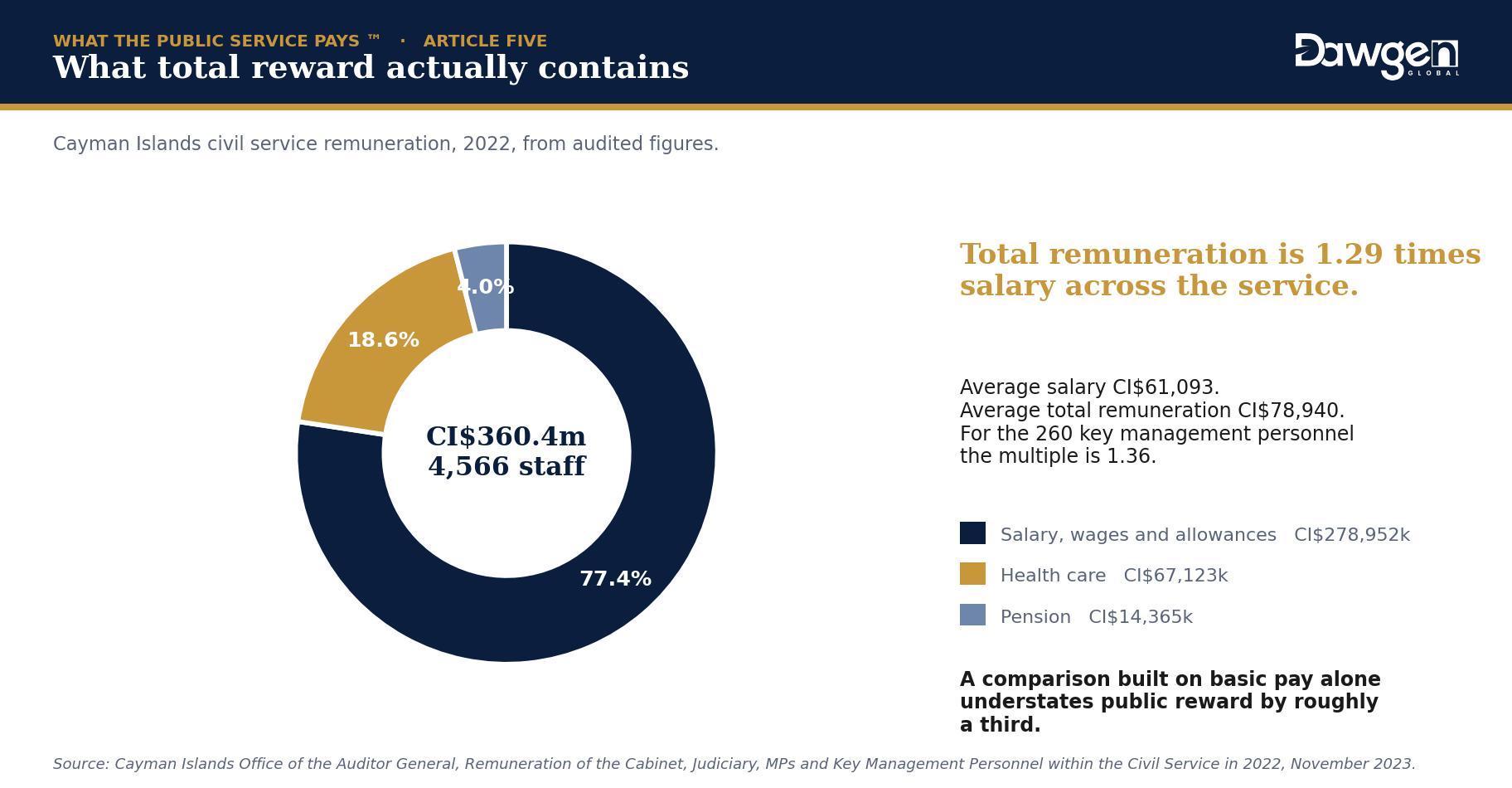
Exhibit 2. Cayman Islands civil service remuneration, 2022, from audited figures.
Of CI$360.4 million in total remuneration, salary, wages and allowances accounted for CI$279.0 million, health care for CI$67.1 million and pension for CI$14.4 million. Average salary across the service was CI$61,093; average total remuneration CI$78,940. For the 260 staff classified as key management personnel the figures were CI$99,823 and CI$136,252.
Two multiples follow: 1.29 for the service as a whole, and 1.36 for senior management. These are the first hard total-reward multiples we have been able to establish anywhere in the Caribbean, and they are audited rather than estimated.
They also tell us something about distribution. The multiple is higher at the top, which means the non-salary element grows faster than salary as you rise. That is the opposite of what Jamaica’s travelling allowance does, and it is a reminder that there is no general rule about how these things behave.
The finding that changed our method
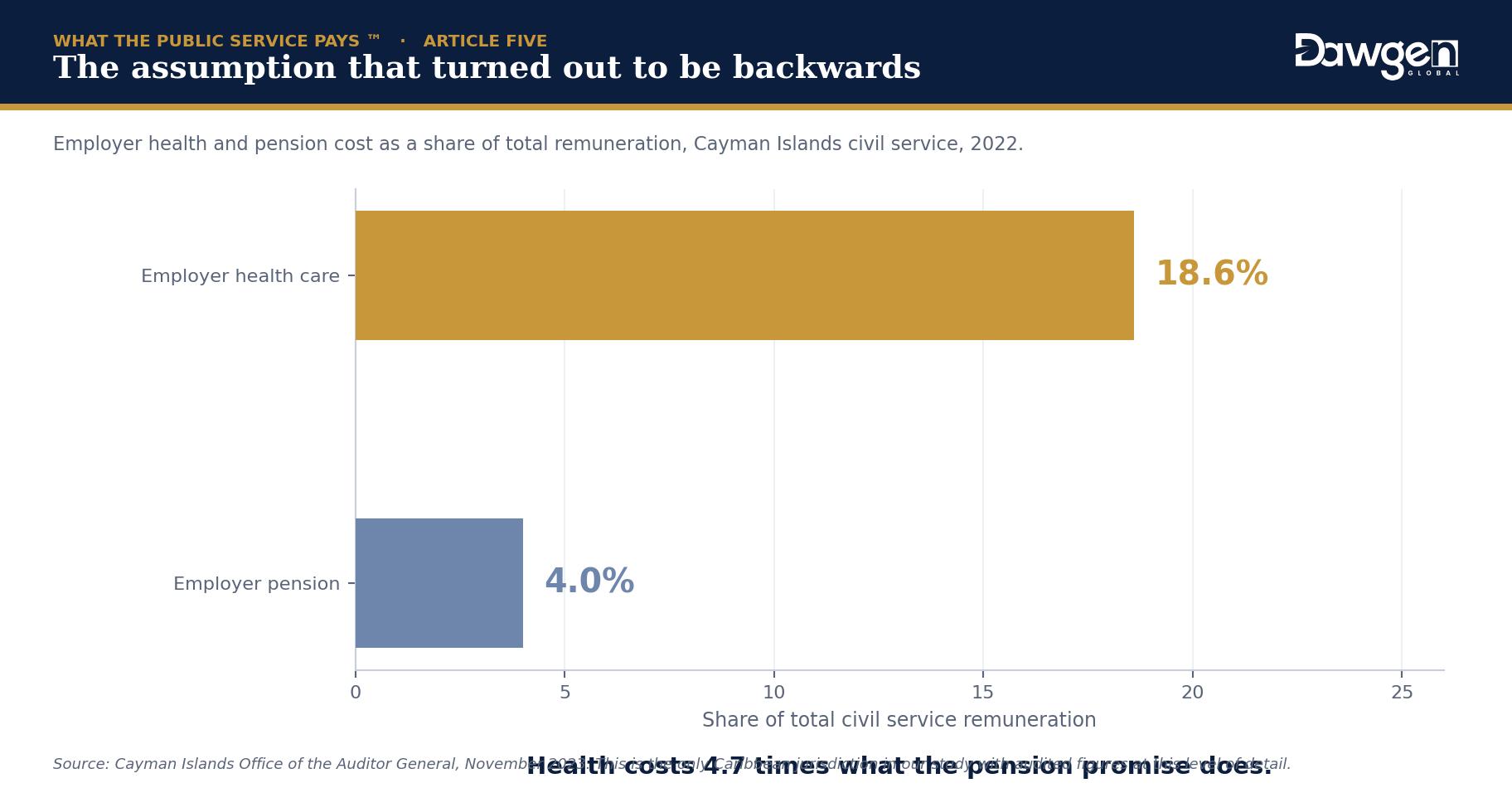
Exhibit 3. Employer health and pension cost as a share of total remuneration.
Employer health care is 18.6 per cent of total remuneration. Employer pension is 4.0 per cent. Health costs 4.7 times what the pension promise does.
This is not what a reward specialist would expect. Public sector pension provision in the Westminster tradition is generally the headline benefit — defined benefit, often non-contributory or lightly contributory, and the single element a private employer struggles most to match. It dominates the conversation. Health insurance is treated as an administrative matter, mentioned in the benefits summary and rarely costed.
| WHAT WE HAD SPECIFIED, AND WHAT WE CHANGED
Our original methodology monetised employer pension value and treated health as a component to be described but not valued. On the Cayman evidence that is precisely backwards: it counts the smaller element and omits the larger one, understating total reward by roughly a fifth in that jurisdiction. We amended the method so that both are monetised wherever the employer contribution rate is published, and both are described where it is not. The asymmetry could not stand. |
We are stating this publicly, at some cost to our own authority, for a practical reason. This series invites public service ministries and statistical offices to correct us. An invitation of that kind is worth nothing from a firm that will not correct itself, and a research programme that cannot revise its method is not a research programme.
Why health may be so expensive here
We should be careful about generalising from one jurisdiction, and we have only one. But two features of the Caribbean context make a high health cost unsurprising, and both are worth testing as the other fifteen jurisdictions are collected.
The first is that small populations make insurance pools small, and small pools price badly. A civil service of a few thousand people cannot spread catastrophic claims the way a national scheme or a large corporate pool can.
The second is medical inflation and offshore referral. Where specialist treatment is not available locally, plans must cover overseas care at overseas prices. That is a structural cost driver largely outside an employer’s control, and it compounds faster than salary.
If either factor generalises, health cost is likely to be a larger component of Caribbean public reward than the regional literature has recognised — and a larger component of private reward too.
How allowances behave inside a structure
The Cayman figures tell us the aggregate. To see how reward is distributed, we need Jamaica, which publishes allowance rates by classification.
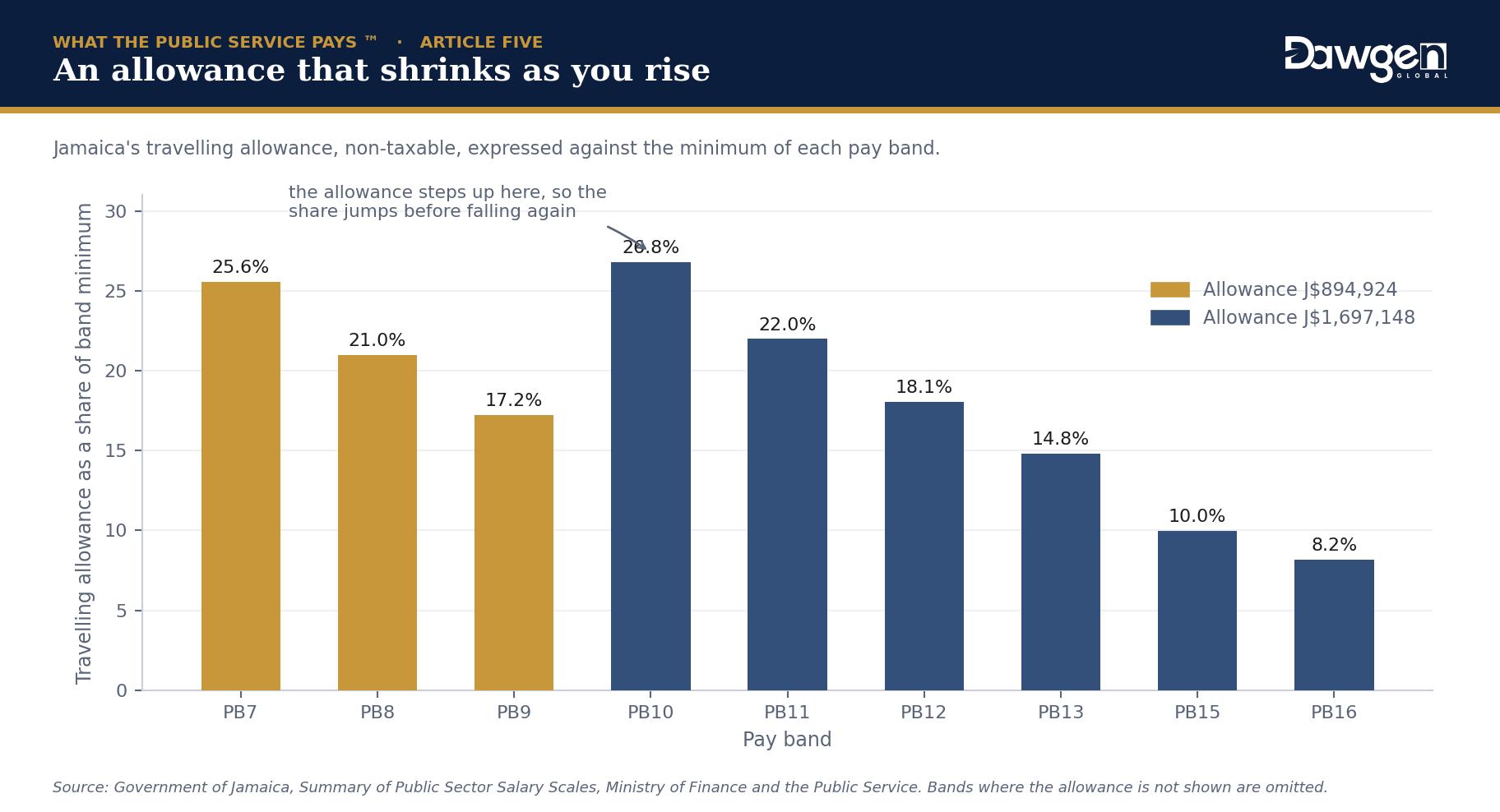
Exhibit 4. Jamaica’s travelling allowance as a share of each band minimum.
The travelling allowance is worth 25.6 per cent of the Pay Band 7 minimum and 8.2 per cent at Pay Band 16. It is also non-taxable, which raises its effective value further. In proportional terms it is regressive: it delivers more, relative to salary, to those who earn less.
The pattern is not a smooth decline, and the exception is instructive. The allowance is paid at two rates — J$894,924 for Pay Bands 7 to 9 and J$1,697,148 for Pay Bands 10 and above. At the step-up point the share jumps from 17.2 per cent to 26.8 per cent before resuming its fall. An officer promoted from Pay Band 9 to Pay Band 10 receives a larger increase in allowance than in salary.
| WHY THIS MATTERS FOR MEASUREMENT
Because the allowance is proportionally larger lower down, adding it COMPRESSES the structure. Jamaica’s compression ratio measured on basic pay is 23.6. Measured on basic plus travelling it is lower. Any figure quoted from this series — including our own compression figures — must therefore state whether it is basic or total, because the two answer differently. |
The nursing case, and a deliberate design
Jamaica’s Registered Nurses scale carries four attaching allowances: standby and on-call, porterage, a location incentive and, at the two senior grades, travelling. The standby allowance runs from J$562,692 at HPC/RN 1 to J$1,750,788 at HPC/RN 8.
What is striking is the proportion. At RN 1 the standby allowance is 17.4 per cent of the band minimum. At RN 4 it is 16.3 per cent. At RN 8 it is 17.5 per cent. Across a scale where the basic salary triples, the allowance holds almost exactly constant as a share of pay.
That is not accidental. Someone designed the nursing allowance to scale with salary while designing the travelling allowance to be flat within broad tiers. Two allowances in the same public service, built on opposite principles, producing opposite distributional effects. Neither is wrong, but an employer benchmarking a nurse and an accountant against Jamaican public rates is comparing against two different reward philosophies.
What the region actually pays beyond salary
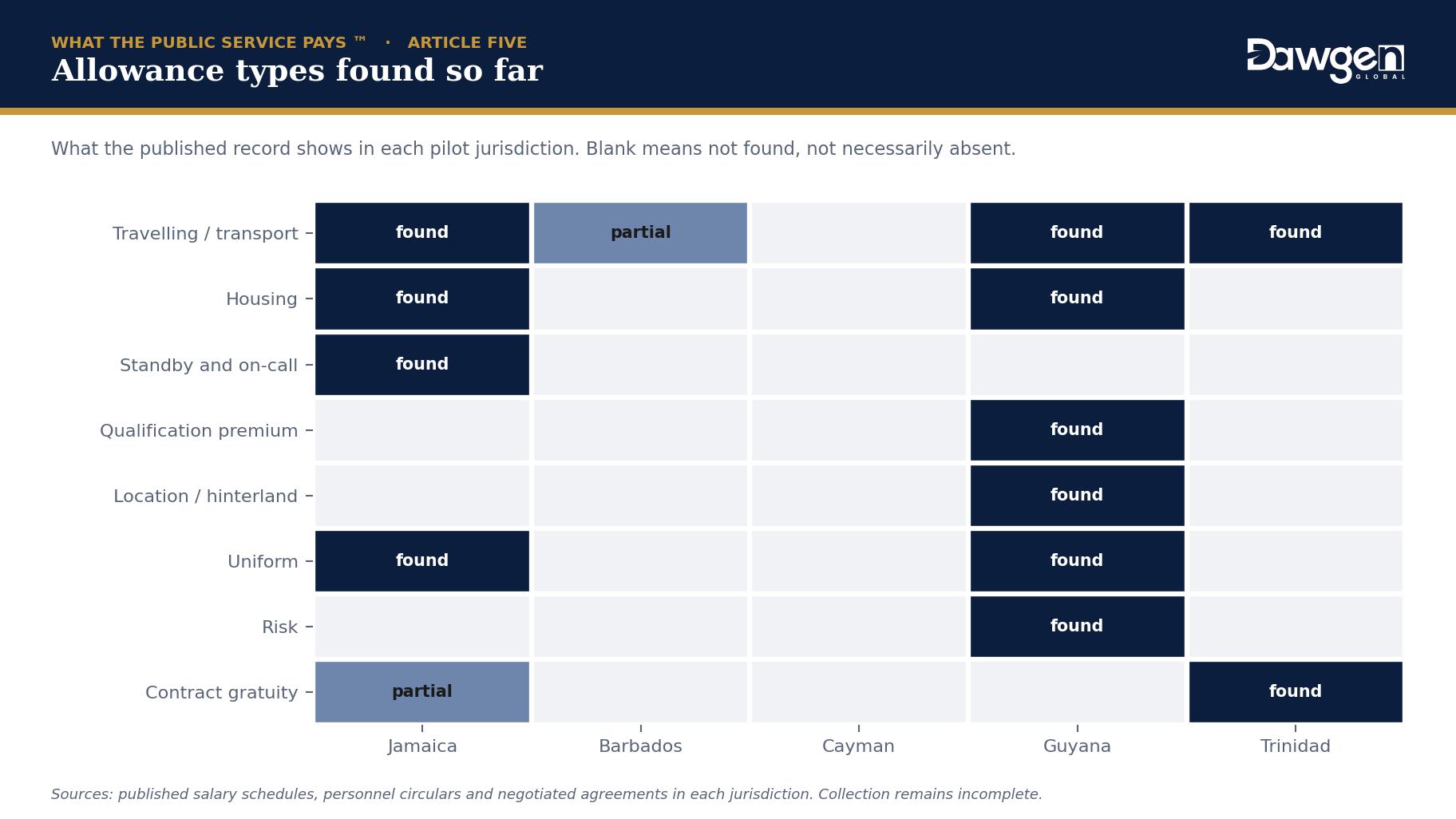
Exhibit 5. Allowance types located in the published record of each pilot jurisdiction.
Blank cells mean not found rather than absent. Collection is incomplete, and in several jurisdictions the allowance framework is issued by circular rather than published with the salary scale. But two entries deserve comment.
Guyana pays for qualifications
Under its 2024 agreement, Guyana pays a monthly allowance for professional and academic qualification: G$15,000 for ACCA, G$22,000 for a master’s degree and G$32,000 for a doctorate. Annualised, those are G$180,000, G$264,000 and G$384,000.
We have found nothing equivalent in any other jurisdiction, and it is a distinct kind of component. It attaches to the HOLDER rather than to the POST. Two officers doing identical work on the same grade receive different total reward according to what they have qualified in. That is a deliberate instrument for building professional capability, and it bears directly on the market for accountants — the premium is paid for precisely the qualification a private firm competes for.
Trinidad prices its contract terms explicitly
Trinidad and Tobago’s Legal Central contract positions carry a transport allowance, a subsistence rate and a special allowance, each stated per position. For Legal Counsel I the transport allowance alone is 11.4 per cent of monthly salary; for Legal Counsel II in civil law the transport and special allowances together come to 18.7 per cent.
These are contract posts, which raises the component that most often goes unrecorded.
Why allowances exist at all
A reasonable question, given the complexity they create, is why public services pay allowances rather than simply setting salaries higher. There are four reasons, and understanding them explains a good deal about why allowance structures are so resistant to reform.
| The reason | How it works | The consequence |
| Tax treatment | An allowance may be non-taxable where salary is not. Jamaica’s travelling allowance is stated to be non-taxable. | The allowance is worth more to the recipient than the same sum in salary, so it is cheaper for the employer to deliver value this way. |
| Pensionability | Salary usually counts toward pension; many allowances do not. | Paying through allowance contains the long-term liability. It also means the officer’s pension is based on less than they earned. |
| Targeting | An allowance can attach to a condition — a location, a shift pattern, a qualification — rather than to everyone in the grade. | It solves a specific recruitment problem without disturbing the whole structure. |
| Reversibility | An allowance can in principle be withdrawn when the condition ends. A salary increase cannot. | In practice allowances are rarely withdrawn, and accumulate. Jamaica carried roughly 185 of them before its restructuring. |
The third reason is the legitimate one, and it is what a market supplement does properly. The first two are why allowance structures grow: they let an employer deliver more value at less cost and less pension liability than the equivalent salary. That is a real efficiency, and it is also how a pay system becomes something nobody can explain.
| THE REFORM TRADE-OFF
Jamaica’s 2022 restructuring consolidated allowances into salary where possible. That makes the system transparent and makes pay pensionable — both improvements. It also converts a non-taxable payment into a taxable one and increases the long-term pension liability. Consolidation is the right direction, but it is not free, and an employer considering the same move should price both effects before announcing it. |
Pensionable and contract are not the same job
Across the Caribbean, senior and technical posts are frequently filled on fixed-term contract rather than on established, pensionable terms. The contract typically carries an end-of-contract gratuity in lieu of pension, commonly in the region of twenty to twenty-five per cent of basic salary.
The same post on the two bases therefore carries materially different total reward, and in different shapes. The pensionable officer receives a deferred benefit whose employer cost is spread over their service. The contract officer receives a cash sum at the end of a defined term. One is worth more over a career; the other is worth more within three years.
| THE ERROR THIS PRODUCES
Reporting a post’s pay without saying which basis it is held on is among the most common failures in this field, and it can move total reward by a quarter. Our method records both wherever both exist and reports the pensionable basis as primary. It is also about to matter a great deal in one jurisdiction: Trinidad and Tobago expects its job evaluation exercise to reduce fixed-term contract employment by as much as 63 per cent, moving a large population from one basis to the other. |
Building a total reward statement
For an employer, the practical output of all this is a total reward statement — a document that sets out, for each post, what the organisation actually spends and what the holder actually receives.
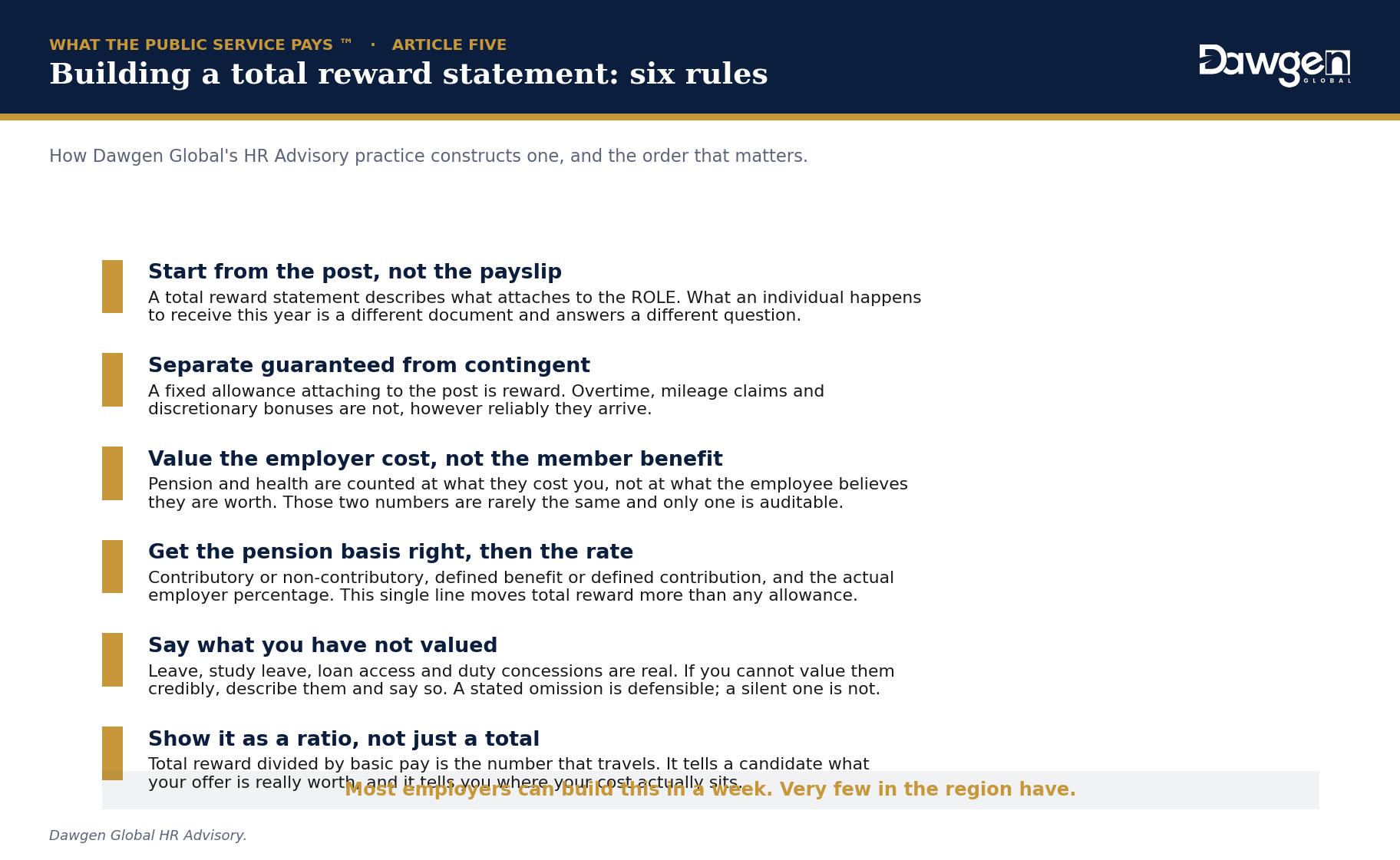
Exhibit 6. Six rules, in the order our HR Advisory practice applies them.
The fourth rule is where most of the value sits. Establishing the pension basis — contributory or not, defined benefit or defined contribution, and the actual employer percentage — moves the total reward figure further than any allowance, and it is the line most often carried forward unexamined from year to year.
The sixth rule produces the number that travels. Total reward divided by basic pay is a single ratio a candidate can understand and a board can act on. Cayman’s 1.29 is exactly that number, and the reason it is quotable is that somebody computed it and published it.
What to do with the answer
- Compare on total reward or state that you are not. A basic-pay comparison is legitimate provided the reader knows that is what it is. The failure is silence, not simplification.
- Check whether your allowances work with your grade structure or against it. Jamaica’s travelling allowance compresses a structure designed to be stretched. Very few organisations have looked.
- Cost health at what you pay, and look at it. If Cayman’s proportions generalise even partly, employer health is a larger line than most Caribbean organisations treat it as, and it is growing faster than salary.
- Record the engagement basis on every benchmark. Pensionable and contract are different offers for the same work.
A worked example
The arithmetic is worth doing once, because the result surprises people.
Take a Jamaican post at Pay Band 7, the entry professional band. Basic salary at the band minimum is J$3,501,526. The travelling allowance attaching to that classification is J$894,924, non-taxable. Cash reward is therefore J$4,396,450 before any employer pension or health cost is counted — 25.6 per cent above the basic figure that every published comparison of Jamaican public pay would use.
Now apply the only total-reward multiple we have from the region. If employer pension and health together added the same proportion they add in the Cayman Islands, roughly 29 per cent of salary, total reward would approach J$5.4 million against a headline of J$3.5 million.
We are not asserting that Jamaican employer costs match Cayman’s; we do not have the Jamaican contribution rates and have said so. The point of the calculation is its shape. A private employer benchmarking against J$3.5 million and concluding they are competitive at J$3.8 million may be a third short of the real comparison, and will not understand why their offers are being declined.
A note on our work
This research sits within Dawgen Global’s HR Advisory practice, which advises on job evaluation, grading reviews, pay structure design and reward benchmarking across the Caribbean. Total reward statements are among the more valuable exercises we run, and not because of the headline number. The value is that organisations routinely discover they are spending significantly more than they thought on elements they never mention when recruiting — paying for a benefit and getting no competitive credit for it.
Next in this series
Article six turns from what jurisdictions pay to what they publish. Only one of the five we have examined discloses an establishment schedule mapping posts to salary scales. The genuinely universal source turned out to be something else altogether — and knowing what it is would save any researcher in this field a great deal of time.
| AN INVITATION
Eleven of the sixteen jurisdictions in this study have not yet been collected, and in several of the five that have, documents remain outstanding. We are particularly interested in employer pension and health contribution rates, which are the least consistently published element of Caribbean public reward. Public service ministries, personnel departments and statistical offices wishing to supply information, or to correct anything published in this series, are invited to contact the firm. |
SOURCES
Cayman Islands Office of the Auditor General, Remuneration of the Cabinet, Judiciary, MPs and Key Management Personnel within the Civil Service in 2022, November 2023. Government of Jamaica, Summary of Public Sector Salary Scales and the job-family salary schedules, Ministry of Finance and the Public Service. Guyana: 2024 agreement between the Government of Guyana and the Guyana Public Service Union, as published by the Department of Public Information. Republic of Trinidad and Tobago, Personnel Department Circular Memorandum No. 2 of 2026, Chief Personnel Officer, and the Budget Statement 2026. Percentages and multiples are Dawgen Global calculations from those published sources.
This article is the fifth in What the Public Service Pays™, a Dawgen Global series drawn from research across sixteen Caribbean jurisdictions. Dawgen Global is an independent, integrated multidisciplinary professional services firm serving the Caribbean. Enquiries: [email protected] | dawgen.global
About Dawgen Global
Dawgen Global is an independent, integrated multidisciplinary professional services firm headquartered at Dawgen Towers, 47-49 Trinidad Terrace, Kingston 5, Jamaica, serving more than 15 territories across the Caribbean. Founded and led by Dr. Dawkins Brown, Executive Chairman, the firm is independent and not affiliated with any international network. It delivers a full suite of professional services under one roof: audit and assurance; tax advisory; IT and digital transformation; risk management; cybersecurity; actuarial and insurance regulatory advisory; HR advisory; mergers and acquisitions; corporate recovery; business advisory and strategy; accounting BPO and virtual CFO services; and legal process outsourcing.
The proposition is simple: big-firm capability without the big-firm price. Dawgen Global’s integrated approach is built for the specific complexities and opportunities of the Caribbean market, helping organizations make sharper, better-informed decisions that drive measurable progress.
To explore a partnership, reach out:
- Website: dawgen.global
- Email: [email protected]
- WhatsApp (Global): +1 555-795-9071
- Caribbean offices: +1 876-665-5926 | +1 876-929-3670 | +1 876-926-5210


