Executive summary
The World Economic Forum’s Global Risks Report 2026 ranks State-based armed conflict as the #2 global risk most likely to trigger a material crisis in 2026, selected by 14% of respondents—just behind Geoeconomic confrontation (18%).
For business leaders, “armed conflict” is often misread as a distant geopolitical issue. In reality, it propagates into corporate performance through supply disruption, logistics shocks, insurance repricing, cyber escalation, regulatory change, sanctions exposure, FX volatility, workforce safety, and sudden demand swings—often with little warning. WEF frames 2026 as an “age of competition” where kinetic wars and economic tools are fragmenting societies and stressing the rules that previously underpinned stability.
This article provides a board-ready, practical framework to operationalize conflict readiness: scenario planning, early-warning indicators, resilient supply and treasury structures, crisis governance, and tested continuity playbooks. It also outlines how Dawgen Global Risk Advisory Services can help clients move from “we have a BCP document” to real operational resilience.
1) Why state-based armed conflict is a top-tier business risk in 2026
When WEF respondents elevate state-based armed conflict to the #2 near-term global risk, they are signaling probability and proximity, not just severity. WEF reports that geopolitical and geoeconomic risks dominate the 2026 outlook, with nearly one-third of respondents selecting either geoeconomic confrontation or state-based armed conflict as the top crisis risk for the year.
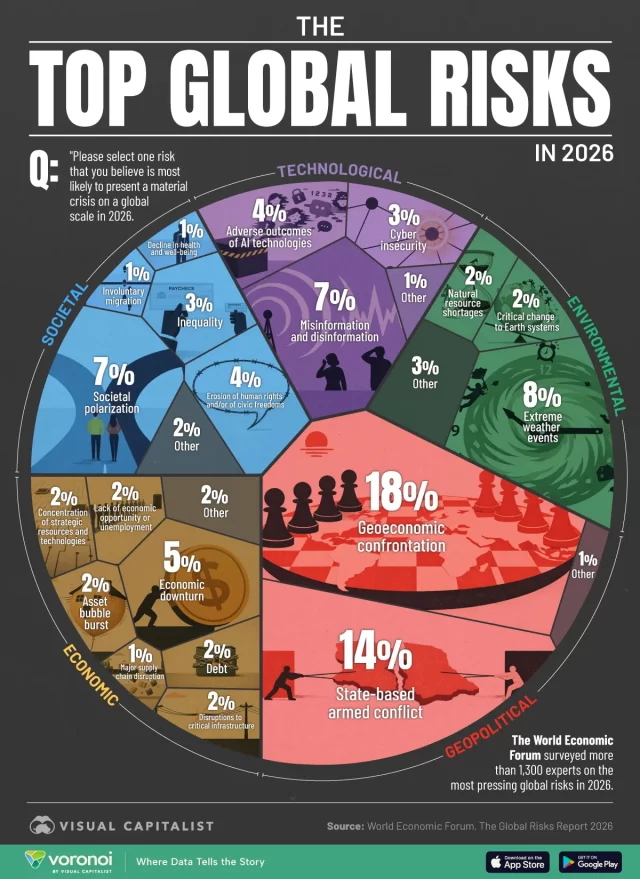
Separately, commentary drawing on WEF’s findings notes that the world is experiencing an unusually high level of state-based conflict—Visual Capitalist highlights 59 active state-based conflicts worldwide, described as the highest number since World War II. Independent conflict-tracking analysis from the Council on Foreign Relations similarly notes that the number of armed conflicts is at its highest since the end of World War II.
Business implication: the “conflict premium” is now embedded into everyday operations—shipping, procurement, compliance, cybersecurity, and capital allocation—whether you trade with conflict zones or not.
2) What “state-based armed conflict” means for corporate risk strategy
In enterprise risk terms, state-based armed conflict is a systemic risk amplifier. It doesn’t only create a single hazard (“war happens”); it intensifies multiple risk categories at once:
-
Operational risk: route closures, port disruption, supplier failure, fuel volatility, and physical asset exposure
-
Financial risk: FX swings, liquidity tightening, counterparty default, higher insurance premiums, and impaired assets
-
Compliance risk: sanctions, export controls, restricted parties, enhanced due diligence, and contractual enforceability
-
Technology risk: cyber escalation and disruption of critical infrastructure
-
People risk: staff safety, travel restrictions, duty of care, trauma, and absenteeism
-
Reputation risk: perceived affiliations, misinformation, stakeholder polarization
WEF’s framing of “kinetic wars” alongside economic instruments underscores that in 2026, conflict risk is intertwined with trade, finance, and technology.
3) How conflict hits the P&L: the six transmission channels boards should monitor
Most leadership teams underestimate conflict risk because they look for direct exposure (“Are we operating in a war zone?”). The more common impact is indirect, through these channels:
A) Logistics and route disruption
Conflict or spillover can trigger:
-
shipping delays and reroutes
-
port congestion and unreliable lead times
-
fuel price spikes and surcharges
-
reduced carrier capacity
-
higher freight insurance and war-risk premiums
Board metric: lead-time volatility (standard deviation), % shipments rerouted, freight cost per unit trend.
B) Input shortages and supplier failure
Even if your supplier isn’t in a conflict area, they may depend on:
-
a component sourced from an affected region
-
a transit route that becomes unreliable
-
a payment corridor that becomes constrained
Board metric: single-source critical items count; “time-to-replace supplier” for top 20 inputs.
C) Sanctions and counterparty risk
Conflict often expands sanctions regimes and increases compliance expectations. Firms get hurt not only by penalties but by:
-
delayed settlements
-
disrupted correspondent banking
-
clients becoming “unserviceable”
-
blocked goods, licenses, or services
Board metric: % revenue dependent on high-friction corridors; screening exceptions; payment delays.
D) Cyber escalation and infrastructure disruption
Modern conflicts commonly include cyber operations and disruptions to communications or payment systems. WEF notes cyber insecurity as a rising concern in the near-term landscape.
Board metric: critical system recovery time objective (RTO) readiness; third-party cyber posture; incident response drill results.
E) Demand shocks and reputational spillovers
Conflict can:
-
shift consumer sentiment abruptly
-
reduce travel and hospitality demand
-
trigger government procurement reprioritization
-
intensify misinformation and polarization (which WEF also ranks highly)
Board metric: demand sensitivity to travel advisories, headlines, or commodity price changes.
F) Capital and insurance repricing
Insurers reprice risk quickly; lenders become more cautious; investors demand more resilience. This affects:
-
project viability
-
covenant headroom
-
cost of capital
-
asset impairments
Board metric: insurance renewal increases; liquidity days; covenant buffer; project IRR under stress.
4) Conflict readiness is not a document: it’s a capability
Many organizations have a “BCP binder” that hasn’t been tested in 12–24 months. Conflict conditions expose that weakness because they are fast-moving, multi-domain, and emotionally charged.
A resilient organization builds four capabilities:
-
Prepared options (alternate suppliers, routes, payment rails, staffing contingencies)
-
Decision speed (clear governance and authority during disruption)
-
Proof of control (auditable processes—screening, approvals, incident logs)
-
Continuous testing (tabletop exercises and post-incident learning)
WEF’s description of 2026 as a period of fragmentation and rising propensity for conflict makes this operational posture more urgent.
5) A practical scenario approach for 2026: three conflict pathways
A useful approach is to define three credible scenarios and build responses around “triggers” rather than predictions.
Scenario 1: Contained conflicts, persistent disruption (baseline)
-
conflicts continue but do not expand into broad regional war
-
trade and logistics remain volatile, but functional
-
insurance and compliance costs trend upward
Primary risk: slow margin erosion and working capital strain.
Scenario 2: Regional spillover and route shock (escalation)
-
a key corridor becomes unreliable or effectively closed
-
war-risk insurance spikes
-
governments tighten controls and approvals
Primary risk: acute supply disruption and delivery failure.
Scenario 3: Conflict + financial tightening (stress scenario)
-
energy and commodity prices surge
-
FX volatility increases
-
lenders reduce risk appetite and shorten terms
Primary risk: liquidity stress, covenant pressure, and forced cost cutting.
What makes scenarios actionable: each includes
-
Early-warning indicators (EWIs)
-
Financial stress test (margin, cashflow, covenant)
-
Operational playbooks (procurement, routing, staffing)
-
Governance (who decides what, by when)
6) Early-warning indicators (EWIs) that trigger action—without overwhelm
A dashboard is useful only if it changes decisions. Strong EWIs are few, measurable, and linked to playbooks:
-
route lead times and port congestion index for your main corridors
-
shipping insurance premium changes (war-risk and cargo)
-
supplier on-time delivery degradation and quality drift
-
sanctions list changes relevant to your customer/supplier footprint
-
payment delay trends by corridor or bank
-
FX volatility bands on key currencies
-
commodity price thresholds that trigger repricing clauses
-
travel advisory levels affecting staff movement
Rule: each EWI should have a predefined escalation action (e.g., “if lead time > X, activate supplier B; if FX moves > Y, execute hedge tranche; if payment delay > Z days, change terms”).
7) Composite case study (anonymised): the importer hit by a route shock and insurance repricing
Business profile (composite): A Caribbean distributor imports packaged goods and inputs through a small number of shipping lanes; sells domestically in local currency; relies on a narrow supplier base.
Trigger: A conflict escalation raises war-risk premiums and forces rerouting. Freight times lengthen and insurance costs jump.
Failure pattern (common):
-
inventory buffers rise → cash tied up
-
stockouts occur anyway due to unreliable ETAs
-
customer service levels drop → lost market share
-
margin compresses because pricing changes lag cost changes
-
management responds too late, negotiating under stress
Resilient response playbook:
-
pre-qualified alternate routes and carriers
-
inventory strategy: buffer only high-velocity SKUs; reduce slow movers
-
contract clauses: shorter quote validity; indexed freight surcharges
-
treasury: liquidity triggers and short-term funding plan
-
communications: proactive customer messaging and delivery transparency
Result: disruption remains painful but controlled—cashflow stays positive and customer attrition is minimized.
8) Composite case study (anonymised): the professional services firm facing sanctions friction and payment delays
Business profile (composite): A regional services firm with cross-border clients and payments.
Trigger: Conflict expands regulatory scrutiny and de-risking behaviour by banks. Payments slow, onboarding takes longer, and some clients become higher-risk.
Operational impact:
-
DSO increases; cash conversion cycle worsens
-
compliance costs rise; staff time shifts from delivery to documentation
-
client drop-off due to onboarding delays
Controls that protect value:
-
corridor segmentation: identify high-friction revenue concentrations
-
diversified payment rails and banking relationships
-
enhanced KYC/KYB workflows with documented approvals
-
contract refresh: fees and terms aligned to higher compliance overhead
Result: revenue becomes more predictable; the firm remains bankable and defensible.
9) What boards should require: the “conflict-ready” operating model
Here is a concise operating model you can implement without bureaucracy:
1) Exposure map (90% of value, 10% of effort)
-
top 20 suppliers, by dependency and substitution difficulty
-
key corridors and ports
-
client revenue by jurisdiction and payment route
-
critical systems and vendors (cloud, comms, payments)
2) Risk appetite thresholds (so decisions aren’t emotional)
-
max single-supplier dependency for critical inputs
-
minimum liquidity buffer and trigger points
-
FX exposure limits and hedge coverage targets
-
insurance coverage adequacy and renewal thresholds
3) Stress testing (turn risk into numbers)
-
margin impact: freight + insurance + FX shock
-
cashflow impact: higher inventory + delayed receivables
-
covenant headroom under stress
4) Playbooks (the “do this now” scripts)
-
procurement substitution steps
-
routing switch procedures
-
sanctions escalation steps
-
cyber incident and comms escalation
-
staff safety and travel protocols
5) Governance and decision rights
-
a cross-functional crisis committee
-
delegated authority and spending limits
-
board escalation thresholds
6) Testing cadence
-
quarterly tabletop exercises
-
annual live simulation for critical functions
-
post-event lessons learned and updates
10) How Dawgen Global Risk Advisory can help
Given WEF’s assessment that geopolitical risks are driving a turbulent near-term outlook, organizations benefit from structured, implementable readiness—not just risk narratives.
Dawgen deliverables (practical, execution-oriented)
-
Conflict Risk Diagnostic (2–4 weeks)
-
exposure mapping (suppliers, routes, payments, customers, systems)
-
materiality and prioritization
-
board-ready briefing pack and action list
-
-
Scenario & Stress Testing Pack (3–6 weeks)
-
three scenarios with triggers and EWIs
-
cashflow, margin, and covenant stress tests
-
risk appetite thresholds and reporting cadence
-
-
BCP / Crisis Playbooks Upgrade (4–8 weeks)
-
procurement and logistics playbooks
-
sanctions/compliance escalation workflow
-
cyber + communications integration
-
tabletop exercise facilitation and after-action improvement
-
-
Ongoing Monitoring & Governance Support (monthly/quarterly)
-
EWI dashboard linked to decisions
-
executive risk committee support
-
continuous improvement program
-
Resilience is built before the headline
State-based armed conflict is ranked as a top near-term crisis risk in 2026 because the world is operating under higher rivalry and lower cooperative friction-absorption capacity. The organizations that outperform will not be those that “predict correctly,” but those that prepare options, define decision triggers, and test responses until they work under pressure.
Next Step!
If your organization depends on cross-border suppliers, shipping lanes, international clients, or sensitive trade corridors, now is the time to upgrade your conflict readiness.
Engage Dawgen Global Risk Advisory Services to build scenarios, stress tests, early-warning indicators, and crisis playbooks that protect cashflow and continuity.
🔗 Contact us: https://www.dawgen.global/contact-us/
📧 [email protected] | 📞 USA: 855-354-2447 | WhatsApp Global: +1 555 795 9071
“Embrace BIG FIRM capabilities without the big firm price at Dawgen Global, your committed partner in carving a pathway to continual progress in the vibrant Caribbean region. Our integrated, multidisciplinary approach is finely tuned to address the unique intricacies and lucrative prospects that the region has to offer. Offering a rich array of services, including audit, accounting, tax, IT, HR, risk management, and more, we facilitate smarter and more effective decisions that set the stage for unprecedented triumphs. Let’s collaborate and craft a future where every decision is a steppingstone to greater success. Reach out to explore a partnership that promises not just growth but a future beaming with opportunities and achievements.
 Email: [email protected]
  Visit: Dawgen Global Website

 WhatsApp Global Number : +1 555-795-9071
Caribbean Office: +1876-6655926 / 876-9293670/876-9265210  WhatsApp Global: +1 5557959071
USA Office: 855-354-2447
Join hands with Dawgen Global. Together, let’s venture into a future brimming with opportunities and achievements


