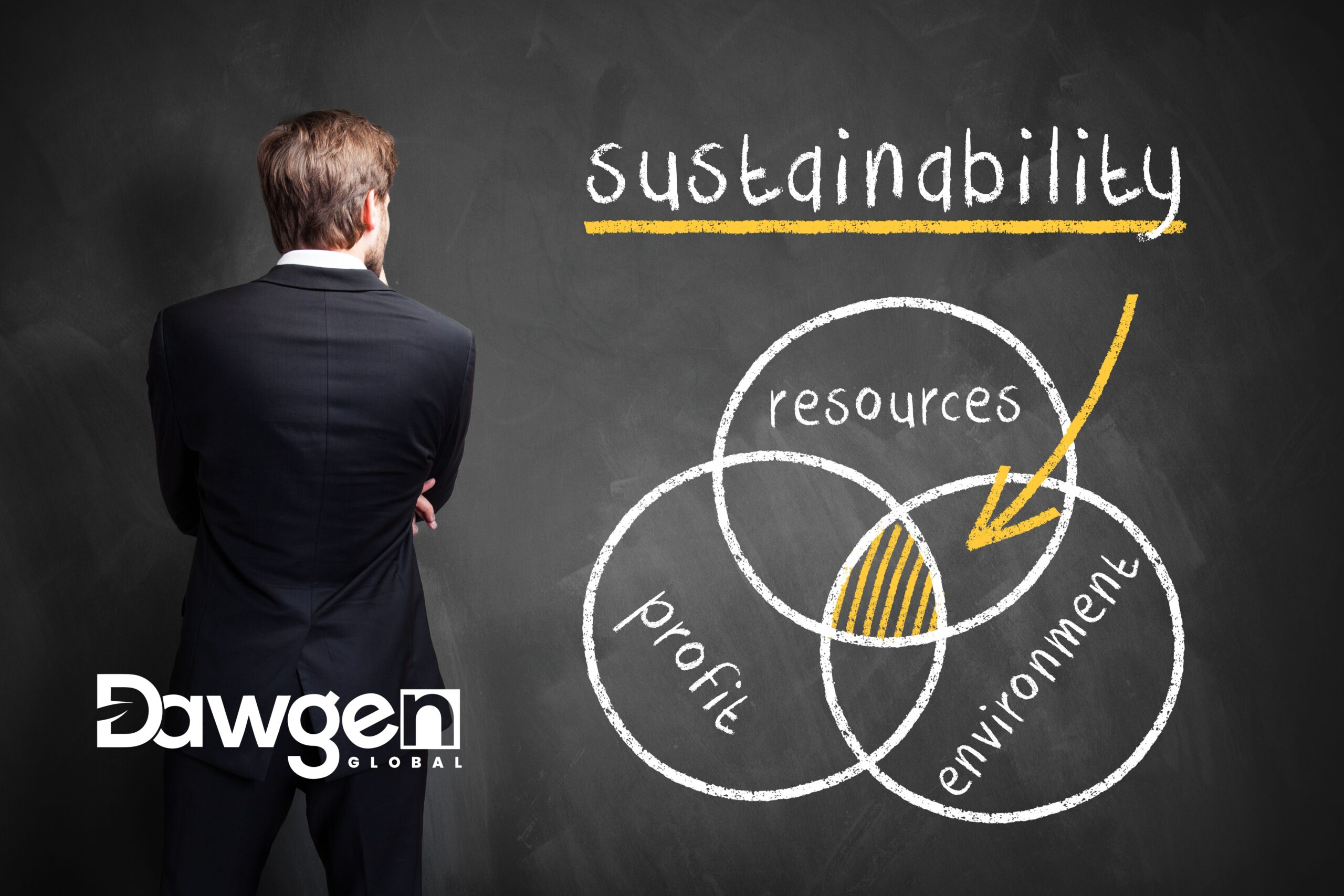
In every conversation about agriculture, one truth quietly sits beneath the surface:
If the numbers don’t work, nothing is sustainable.
You can have climate-smart practices, strong governance, and cutting-edge technology—but if the business cannot generate reliable profits and cannot attract appropriate finance, it will struggle to survive, much less grow.
For Caribbean agribusiness, this reality is especially sharp:
-
High dependence on imported inputs
-
Exposure to foreign exchange and global price volatility
-
Small and fragmented producers competing with large international players
-
Limited access to affordable, well-structured capital
This is why the fourth pillar of the Dawgen C-AGRI™ Caribbean Agribusiness Transformation Framework is “R – Returns, Finance & Cost Structures.”
In this article—the fifth in our “Feeding the Future” C-AGRI™ series—we explore how Caribbean agribusinesses can:
-
Understand their true unit economics
-
Transform their cost structures
-
Build bankable, investment-ready cases
-
Manage working capital and liquidity
-
Align finance, strategy, and risk
—and how Dawgen Global supports this transformation through the C-AGRI™ “R” pillar.
1. The Profitability Challenge in Caribbean Agribusiness
Most agribusiness leaders in the region do not need spreadsheets to know that margins are tight. They live it daily.
Common features across many operations include:
-
High cost base: imported fertilisers, feed, fuel, packaging, equipment.
-
Price taker status: limited ability to influence selling prices, especially when competing with cheaper imports.
-
Volatile yields: due to weather, pests, disease, and limited access to technology.
-
Supply chain inefficiencies: post-harvest losses, storage challenges, logistics bottlenecks.
The consequences are familiar:
-
Struggle to generate consistent profitability.
-
Difficulty building reserves for reinvestment.
-
Limited ability to attract and service external finance.
Against this backdrop, the “R” pillar asks a fundamental question:
What would it take to make this agribusiness model consistently profitable and attractive to capital—given Caribbean realities?
2. Why “Returns & Finance” Is a Pillar in C-AGRI™
Many transformation programmes focus on technical and operational changes but treat finance as an afterthought—something to “sort out later with the bank.”
The C-AGRI™ Framework deliberately integrates finance, cost structures, and profitability into the heart of transformation:
-
New technology? It must have a clear economic case.
-
Climate-smart practices? They must support resilience and returns.
-
Governance and risk improvements? They must translate into better creditworthiness and investor confidence.
-
Inclusive value chains? They must be fair and financially viable for all participants.
“R – Returns, Finance & Cost Structures” ensures that transformation is commercially grounded, not just technically interesting.
3. The Building Blocks of the “R” Pillar
Within the Dawgen C-AGRI™ Framework, the “R” pillar is built on five key components:
-
Unit Economics & Cost Transparency
-
Cost Structure Transformation & Efficiency
-
Capital Structure & Investment Strategy
-
Working Capital, Liquidity & Risk Mitigation
-
Performance Management, KPIs & Financial Discipline
Let’s break these down.
4. Unit Economics & Cost Transparency: Knowing Where Money Is Made (or Lost)
You cannot manage what you cannot see.
In many agribusinesses, especially growing or multi-product operations, costs are tracked in aggregate:
-
“Total fertiliser spend,”
-
“Total labour,”
-
“Total feed costs,”
…but not always broken down by crop, herd, field, product line, or customer segment.
The “R” pillar starts by building financial visibility:
4.1 Defining Unit Economics
Unit economics answers questions such as:
-
What is the true cost per kilo of a specific crop or product?
-
What is the cost per bird, per litre of milk, per tonne of output?
-
What is the gross margin by product, customer segment, or channel?
This requires:
-
Standardising cost classification (direct vs indirect, fixed vs variable).
-
Allocating overheads logically and consistently.
-
Linking financial data to operational data (yields, loss rates, utilisation).
4.2 Benefits of Cost Transparency
Once unit economics are clear, leaders can:
-
Identify loss-making products or customers.
-
Focus on high-margin segments.
-
Determine where efficiency initiatives will have the greatest impact.
-
Build more realistic business plans and pricing strategies.
This is not an accounting exercise for its own sake. It is the foundation for strategic and operational decision-making.
5. Cost Structure Transformation: From Surviving to Thriving
After understanding unit economics, the next question is:
How can we structurally improve our cost position without compromising quality or resilience?
The “R” pillar focuses on cost structure transformation, not just “cost-cutting”.
5.1 Input Optimisation
-
Using AgriTech & Data (A pillar) to apply fertilisers, water, and crop protection products more efficiently.
-
Reviewing procurement strategies: bulk purchasing, long-term contracts, or cooperative-based procurement to secure better terms.
-
Exploring alternative inputs where appropriate (e.g. local feed ingredients to reduce FX exposure).
5.2 Process Efficiency & Waste Reduction
-
Analysing process flows from farm to processing to distribution.
-
Identifying choke points, duplication, and non-value-adding activities.
-
Reducing post-harvest losses through better handling, storage, and cold chain.
-
Applying lean principles to processing and logistics.
5.3 Scale and Collaboration
-
Exploring options for shared services (e.g. joint logistics, shared storage, shared equipment).
-
Considering strategic partnerships, joint ventures, or cluster models to achieve economies of scale.
-
Structuring inclusive value chains (I pillar) that create win–win cost efficiencies.
5.4 Operating Model Redesign
-
Adjusting organisational structure, roles, and responsibilities to support efficient operations.
-
Leveraging digital tools to reduce manual, error-prone tasks.
The goal is not simply to spend less, but to spend smarter—all while building resilience and maintaining quality.
6. Capital Structure & Investment Strategy: Making Agribusiness Investable
A strong underlying business can still struggle if its capital structure is misaligned:
-
Too much short-term debt financing long-term assets.
-
Interest costs that consume available cash.
-
Overreliance on a single lender.
-
Underutilised equity or missing strategic investors.
The “R” pillar helps answer key questions:
-
What is the optimal mix of debt and equity for this business or project?
-
Which assets should be financed with short-term versus long-term instruments?
-
Where could development finance institutions, impact investors, or blended finance play a role?
-
How can we package investment opportunities to meet the expectations of financiers?
6.1 Investment Case Development
For expansion or modernisation projects (e.g. new processing facility, irrigation system, protected agriculture, feed mill), C-AGRI™ supports:
-
Detailed capital expenditure (CAPEX) estimation.
-
Scenario-based revenue and cost projections.
-
Sensitivity analysis (e.g. prices, yields, FX, interest rates).
-
Calculation of key metrics: NPV, IRR, payback period, DSCR.
This translates technical ambition into a clear, credible investment case.
6.2 Matching Finance to Strategy
Different sources of finance have different expectations, tenors, and risk appetites. Dawgen Global helps clients:
-
Identify appropriate commercial banks, development banks, DFIs, impact investors, and grant providers.
-
Explore guarantee schemes, concessional funding, and blended finance where suitable.
-
Structure financing in ways that balance risk and flexibility.
The objective is to ensure that capital supports strategy, instead of constraining it.
7. Working Capital, Liquidity & Risk Mitigation
Many agribusiness failures are not due to poor long-term prospects, but short-term cash flow crises:
-
Payments from buyers come late, but payroll, suppliers, and loan repayments are due now.
-
Inventory builds up due to logistics disruptions or market changes.
-
Input prices spike, squeezing margin and cash.
The “R” pillar therefore pays close attention to working capital and liquidity:
7.1 Working Capital Management
-
Optimising inventory levels to balance availability with carrying costs.
-
Managing receivables through better credit policies, contracts, and follow-ups.
-
Negotiating favourable payment terms with suppliers where possible.
-
Using tools like factoring, invoice discounting, or supply chain finance where appropriate.
7.2 Liquidity Planning
-
Developing cash flow forecasts that integrate production cycles, sales seasonality, and debt service.
-
Maintaining appropriate liquidity buffers for shocks.
-
Aligning financing structures with cash generation patterns (e.g. seasonal working capital lines).
7.3 Risk Mitigation Instruments
-
Exploring insurance products (crop, livestock, business interruption, parametric weather insurance).
-
Using hedging for key commodities or currencies where viable.
-
Reflecting risk mitigation strategies within Enterprise Risk Management (G pillar).
Managing working capital well is one of the most powerful ways to create financial resilience in agribusiness.
8. Performance Management, KPIs & Financial Discipline
A robust “R” pillar is not a one-time exercise; it is an ongoing discipline.
Dawgen C-AGRI™ encourages the design of performance management systems that align strategy, operations, and finance:
8.1 Defining the Right KPIs
Key metrics might include:
-
Gross margin by crop/product
-
Cost per unit of output
-
Yield per hectare / per animal / per cycle
-
Post-harvest loss percentages
-
EBITDA margin and net profit margin
-
Return on assets (ROA) and return on equity (ROE)
-
Debt service coverage ratio (DSCR)
-
Days inventory, days receivables, days payables (working capital KPIs)
8.2 Integrating KPIs into Management Routines
-
Regular management and board reporting on financial and operational KPIs.
-
Clear target-setting and accountability for performance.
-
Using KPI trends to trigger course corrections and strategic decisions.
8.3 Building a Culture of Financial Discipline
-
Educating non-financial managers about the economic drivers of the business.
-
Rewarding evidence-based decision-making, not just intuition.
-
Ensuring that every major initiative answers:
How does this improve returns, resilience, or risk?
This financial discipline connects naturally with the other C-AGRI™ pillars—ensuring that Climate (C), AgriTech & Data (A), Governance & Risk (G), and Inclusive Value Chains (I) all contribute to sustainable returns.
9. How “R” Connects with the Other C-AGRI™ Pillars
The strength of C-AGRI™ lies in its integration:
-
C – Climate & Sustainability: Climate-smart investments are assessed for their financial returns, payback periods, and risk reduction potential.
-
A – AgriTech & Data: Digital tools and technology are chosen based on business value, measured through improved unit economics and margins.
-
G – Governance, Risk & Compliance: Strong GRC improves creditworthiness, reduces risk premiums, and increases investor confidence.
-
I – Inclusive Value Chains & Markets: Value chain development focuses on models that deliver fair and viable returns for all participants.
“R – Returns, Finance & Cost Structures” acts as the financial lens that brings the entire transformation picture into focus.
10. How Dawgen Global Applies the “R” Pillar in Practice
A typical Dawgen C-AGRI™ Returns, Finance & Cost Structures engagement may include:
-
Financial & Cost Structure Diagnostic
-
Review financial statements, management reports, and costing approaches.
-
Map cost drivers, margins, and financial risks.
-
Identify quick wins and structural issues.
-
-
Unit Economics & Costing Model Development
-
Build detailed costing models for key crops, livestock, products, and services.
-
Integrate operational data (yields, losses, utilisation).
-
Provide tools for ongoing management use.
-
-
Cost Transformation & Efficiency Programme
-
Identify and prioritise cost transformation levers.
-
Design and support implementation of specific initiatives (procurement, process efficiency, waste reduction, logistics optimisation).
-
-
Investment Case & Capital Structure Design
-
Develop financial models for planned investments.
-
Analyse capital structure options and lender/investor expectations.
-
Prepare documentation and support engagement with banks, DFIs, and investors.
-
-
Working Capital & Liquidity Management Support
-
Design tools for cash flow forecasting and working capital management.
-
Advise on financing instruments, risk mitigation, and covenant management.
-
-
Performance Management & Capability Building
-
Design KPI dashboards and reporting routines.
-
Train management teams in financial analysis and decision-making.
-
Support boards and owners in using financial information strategically.
-
As an integrated multidisciplinary professional service firm in the Caribbean, Dawgen Global brings together:
-
Audit and accounting expertise
-
Corporate finance and valuation capability
-
Tax and structuring knowledge
-
Strategy, operations, and risk advisory
-
Sector-specific understanding of agribusiness
—all aligned around one objective: to help you build a profitable, resilient, and investable agribusiness grounded in robust financial foundations.
11. A Call to Action: Turn Potential into Profitable, Investable Reality
The Caribbean has significant agricultural potential—fertile land, favourable climates, proximity to major markets, and a rich tradition of farming and food.
But potential alone is not bankable.
To unlock scale, resilience, and long-term impact, agribusinesses, cooperatives, and sector initiatives must demonstrate:
-
Clear, sustainable returns
-
Well-managed cost structures
-
Credible, well-designed finance strategies
The “R – Returns, Finance & Cost Structures” pillar of the Dawgen C-AGRI™ Framework is designed precisely for this.
If you are:
-
A Ministry of Agriculture, Finance, or Investment Promotion shaping national agribusiness strategies
-
A board, owner, or CEO of a growing agribusiness or agro-processor
-
A cooperative or producer organisation seeking to improve viability and bargaining power
-
A bank, investor, or development partner wanting stronger, more bankable agribusiness projects in your portfolio
then now is the time to put returns, finance, and cost structures at the centre of your transformation agenda.
Invite Dawgen Global to Develop a C-AGRI™ Returns & Finance Advisory Proposal
Dawgen Global can work with you to:
-
Conduct a C-AGRI™ Financial & Cost Structure Diagnostic of your agribusiness, value chain, or sector.
-
Design and implement a Cost Transformation & Performance Improvement Programme.
-
Build investment-ready financial models and proposals that speak the language of banks and investors.
At Dawgen Global, we help you make Smarter and More Effective Decisions.
Let’s have a conversation about how the “R” in C-AGRI™ can help transform your agribusiness from surviving on thin margins to thriving as a profitable, investable Caribbean success story:
🔗 Discover More: https://dawgen.global
📧 Email: [email protected]
📞 Caribbean Office (Jamaica): 876-929-3670 / 876-929-3870
📞 USA Office: 855-354-2447
Together, we can turn Caribbean agricultural potential into sustainable profits, resilient businesses, and real value for farmers, investors, and communities alike.
About Dawgen Global
“Embrace BIG FIRM capabilities without the big firm price at Dawgen Global, your committed partner in carving a pathway to continual progress in the vibrant Caribbean region. Our integrated, multidisciplinary approach is finely tuned to address the unique intricacies and lucrative prospects that the region has to offer. Offering a rich array of services, including audit, accounting, tax, IT, HR, risk management, and more, we facilitate smarter and more effective decisions that set the stage for unprecedented triumphs. Let’s collaborate and craft a future where every decision is a steppingstone to greater success. Reach out to explore a partnership that promises not just growth but a future beaming with opportunities and achievements.
✉️ Email: [email protected] 🌐 Visit: Dawgen Global Website
📞 📱 WhatsApp Global Number : +1 555-795-9071
📞 Caribbean Office: +1876-6655926 / 876-9293670/876-9265210 📲 WhatsApp Global: +1 5557959071
📞 USA Office: 855-354-2447
Join hands with Dawgen Global. Together, let’s venture into a future brimming with opportunities and achievements


