HomeCategory

Guides & Publications

From Numbers to Risk Intelligence: How DG-Stress Resilience Scores™ Help Leaders Make Better Decisions

Executive Summary Financial statements prepared under IFRS are rich with information about performance, cash flow and risk. Yet most organisations still treat them as historical scorecards, not as forward-looking tools to answer a simple but critical question: How well can this business withstand shocks? Traditional analysis focuses on profitability and leverage in “normal” conditions. It...

DG-AgriValue IFRS™: Making Sense of Volatile Results in Agriculture and Agri-Business

  Executive Summary Agriculture and agri-business sit at the intersection of biology, climate, commodity markets, and finance. Output is seasonal, yields vary, and prices move with global supply and demand. Under IFRS, these realities often translate into highly volatile reported profits driven by fair value changes in biological assets, inventory movements, and commodity prices. As...

DG-BankScan IFRS™: A Deeper Approach to Analysing Banks Under IFRS 9 and IFRS 7

Executive Summary Banks sit at the centre of the financial system, transforming deposits into loans and risk into return. Their IFRS financial statements are packed with data – staging, expected credit losses, fair values, capital ratios and liquidity disclosures – yet many readers still struggle to answer a basic question: How healthy is this bank,...

Data to Decisions: Standing Up the Dawgen Insight Cloud™

Data is not a strategy—and dashboards are not decisions. The companies that widen their ROIC spread don’t hoard data; they convert it into weekly, team-level decisions that move revenue, margin, cash, and risk. The Dawgen Insight Cloud™ is the analytics backbone of the Dawgen Delta Framework™. It connects your 3Cs—Customers, Company, and Competitors—to a single,...

Assurance as Advantage: Dawgen’s Compliance-as-a-Service Playbook

Most companies treat compliance as a checklist—necessary, expensive, and perpetually “almost done.” High performers turn it into a competitive advantage. In regulated or trust-sensitive markets, the ability to prove that you do the right things, the right way, every time is worth money: it wins tenders, unlocks partnerships, expands access to capital, and stabilizes pricing....

When Policy Meets Rails: How National Payment Systems Bend the Curve

Notes to Nodes: The Great Payment Transition The difference a rail makes Many countries don’t reduce cash usage by persuading people; they do it by lowering the cost of switching. That’s what national, interoperable, instant-payment rails do. When the rulebook (policy) and the track (infrastructure) are aligned, paying digitally becomes the default—cheap for small merchants,...

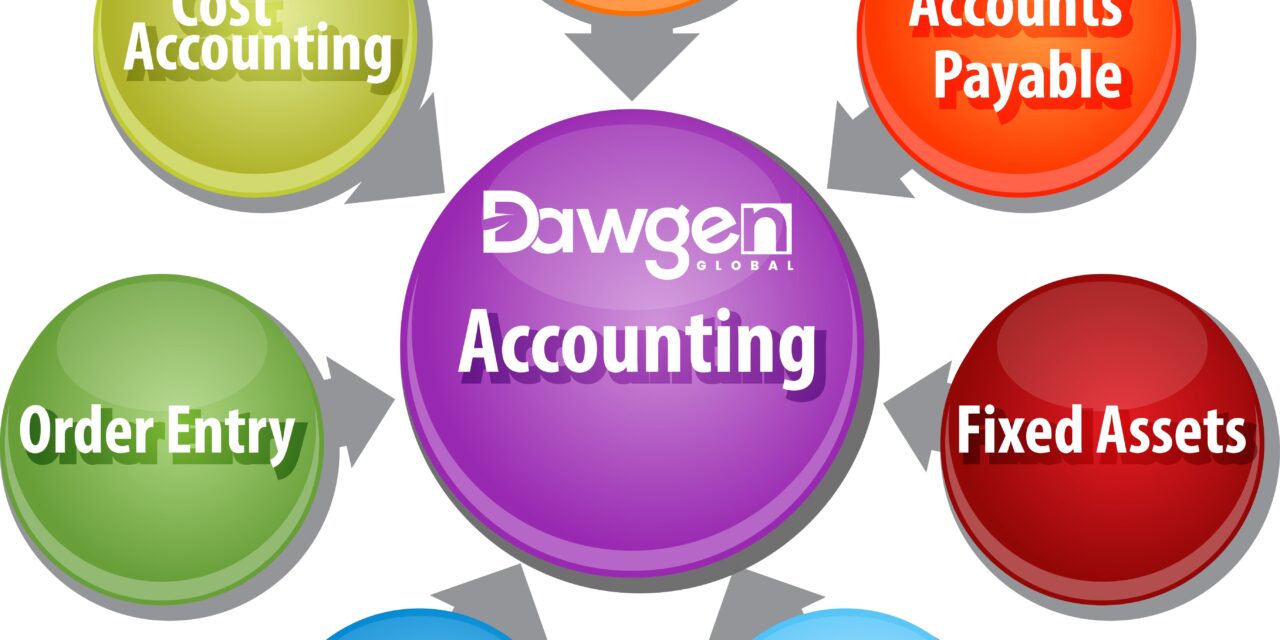
Accounting & Bookkeeping: Building a Reliable Finance Engine for Growth

SMEs and mid-market companies often outgrow DIY bookkeeping. This article explains how Dawgen Global designs a right‑sized accounting stack—people, process, and platforms—to deliver accurate, timely financials that support decisions, funding, and compliance. Who This Is For Founders, CFOs, and operations leaders seeking clean books, faster closes, and audit‑ready records. Common Pain Points Late or error‑prone...

Income Taxes After a Hurricane: Current, Deferred & Disclosures (Policyholders / Non-Insurers)

  Applying IAS 12 Income Taxes to storm-related losses, insurance proceeds, provisions, impairments, ECL updates, and rebuild projects—plus interaction with IAS 1/10, IAS 16, IAS 37, IFRS 9, IAS 23, IAS 20. Hurricanes can swing taxable profit, create tax losses, and move large temporary differences all at once. Under IAS 12, you must: Compute current...

Cash Flow Statement After a Hurricane: Where Everything Goes (Policyholders / Non-Insurers)

  Applying IAS 7 Statement of Cash Flows (with links to IAS 1, IAS 10, IAS 16, IAS 37, IAS 20, IFRS 9, IFRS 15) to classify and disclose cash effects of asset losses, rebuild projects, insurance proceeds (including BI), grants, provisions, and debt/liquidity actions—without netting. In disaster reporting, the cash flow statement is your...

IFRS 9 Credit Losses After a Hurricane: Receivables, Contract Assets & Overlays (Policyholders / Non-Insurers)

Applying IFRS 9 Expected Credit Loss (ECL) to trade receivables, contract assets and other short-term financial assets after a natural disaster—staging, overlays, forbearance, write-offs, recoveries, and disclosures. Links to IFRS 15 (contract assets), IAS 1/10 (presentation & events), IAS 12 (tax), IAS 37 (provisions). Hurricanes reshape credit risk overnight. IFRS 9 requires forward-looking ECL that...

Foo-WLogo

Dawgen Global is an integrated multidisciplinary professional service firm in the Caribbean Region. We are integrated as one Regional firm and provide several professional services including: audit, accounting, tax, IT, risk, HR, performance, M&A, corporate recovery and other advisory services

Where to find us?
img-footer-map
Dawgen Social links
Stay ahead of Caribbean business
Receive our latest insights on tax, regulation, technology and the economy across the region.


    © 2026 Copyright Dawgen Global. All rights reserved.  ·  Privacy Notice  ·  Cookie Policy  ·  Website Terms  ·  Accessibility

    Talk to us