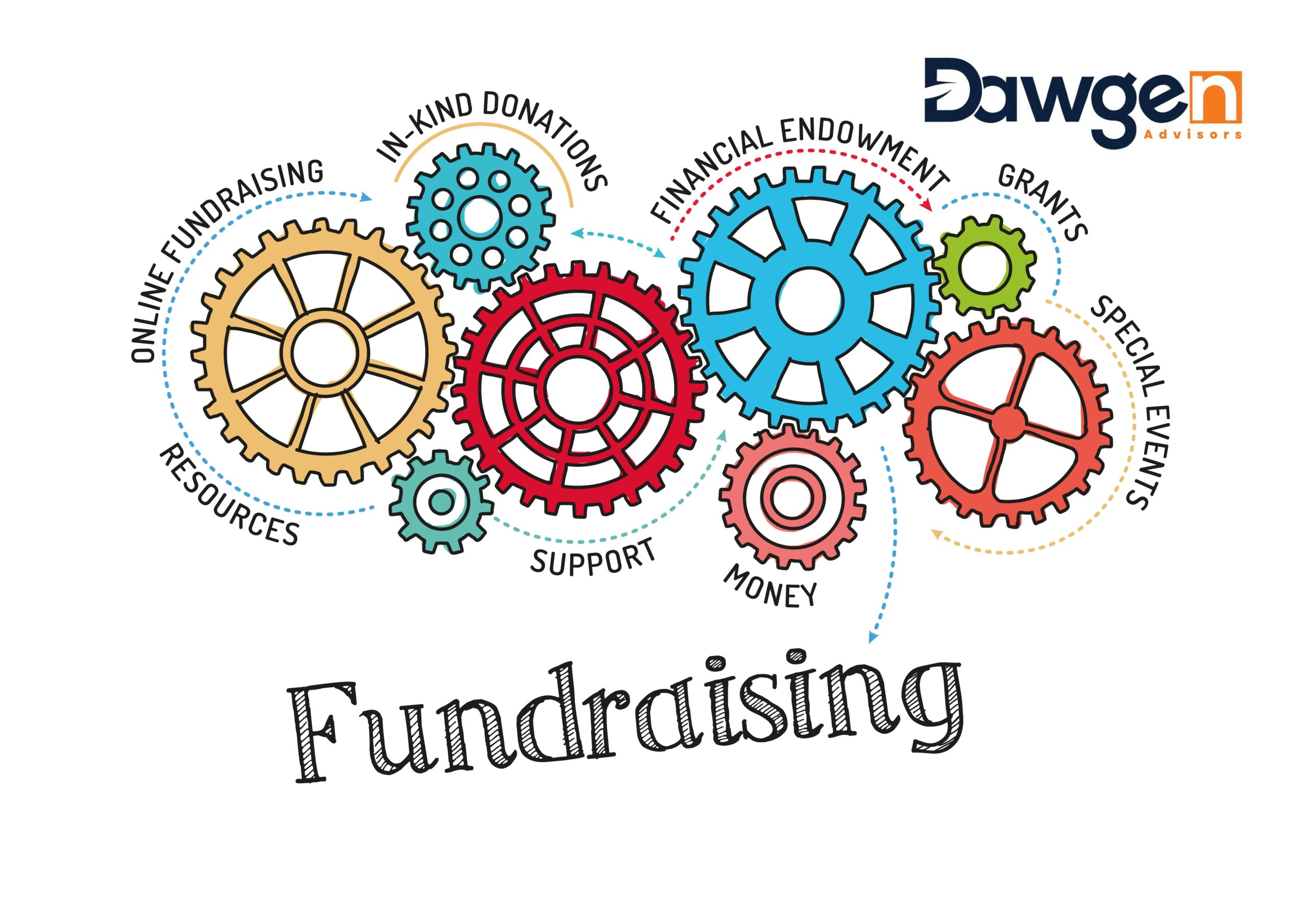
Relief, Recovery – and the Need for High-Quality Reporting
Hurricane Melissa has pushed Jamaica’s social and economic systems to their limits. In response, non-profit organisations, churches, foundations and NGOs have become central channels for relief and recovery funds—domestic, regional and international.
Alongside humanitarian urgency, these organisations now face serious reporting expectations:
-
Major donors and multilaterals are asking for IFRS or IFRS for SMEs-based financial statements and grant reports.
-
Jamaica’s corporate reporting framework is itself based on IFRS, with the Companies Act requiring audited financial statements for companies.
-
Regulators and stakeholders expect transparency, comparability and a clear story about how funds—especially Melissa-related support—have been used.
Yet many non-profits were not originally designed to handle:
-
Large volumes of restricted donations, multi-year grants and in-kind assistance.
-
Complex performance conditions tied to outcomes and milestones.
-
The need to distinguish between relief, recovery and long-term development in their financial statements.
This article in the “Dawgen Decodes: Financial Governance for Hurricane Melissa Relief” series explains how non-profit entities in Jamaica can apply IFRS and IFRS for SMEs principles to disaster relief and recovery activities, in a way that is technically sound and practically achievable.
2. The IFRS Landscape for Non-Profits in Jamaica
2.1 IFRS and IFRS for SMEs as the Baseline
Jamaica has adopted IFRS Accounting Standards for most public interest entities, and IFRS for SMEs is widely used by smaller entities.
Although IFRS and IFRS for SMEs were developed mainly with for-profit entities in mind, they are commonly applied or adapted for non-profits around the world. Guidance from professional bodies highlights that non-profits can use IFRS for SMEs but will often need additional disclosures to meet the needs of donors, beneficiaries and regulators.
2.2 Emerging NPO-Specific Guidance
Recognising the gap, international initiatives are underway to create non-profit-specific accounting guidance by adapting IFRS for SMEs concepts—such as the International Non-Profit Accounting Guidance (INPAG) project, led by CIPFA and Humentum and reported by bodies like ICAEW.
While these are still in development, they reinforce a key point: IFRS principles are the starting point, but non-profits must interpret them in light of their unique context.
For Jamaican charities and NGOs handling Hurricane Melissa funds, this means:
-
Using IFRS / IFRS for SMEs as the primary framework, and
-
Supplementing with policies, formats and disclosures that speak to donor restrictions, project-based activities and public accountability.
3. Core IFRS Concepts Non-Profits Must Get Right
Before diving into specific standards, there are foundational concepts that matter enormously in disaster relief settings.
3.1 Accrual Basis and the Concept of Control
IFRS requires accrual-basis accounting: recognise income and expenses when they are earned or incurred, not just when cash moves.
For non-profits, this means:
-
Recognising donations and grants when the organisation obtains control of the resources and entitlement to them, subject to conditions (see Section 4).
-
Recognising expenses when goods and services are received, not only when payments are made.
3.2 Faithful Representation and Transparency
The IFRS Conceptual Framework emphasises relevance and faithful representation—information must be complete, neutral and free from material error.
For relief and recovery:
-
Financial statements should clearly distinguish between Melissa-related activities and the entity’s normal operations, where material.
-
Restricted vs unrestricted funds, and relief vs development expenditure, should be transparent.
3.3 Substance Over Form
IFRS requires entities to account for transactions based on their economic substance, not mere legal form.
Example: a grant described as “refundable” may, in substance, be non-repayable if conditions are minimal; conversely, a “donation” with strict performance conditions may function more like a conditional grant.
4. Donations, Grants and Pledges: Applying IFRS Principles
This is the heart of the IFRS challenge for non-profits.
4.1 Unconditional Donations
Unconditional donations (no enforceable conditions attached) are relatively straightforward:
-
When an entity receives cash or gains an unconditional right to receive cash, the donation is recognised as income.
-
Under IFRS or IFRS for SMEs, this is generally treated as “other income” rather than revenue from contracts with customers under IFRS 15, because there is no reciprocal exchange.
Key considerations:
-
If donors express a “preference” (e.g. “we’d like this to support Melissa relief”) but the entity remains free to use the funds otherwise, this usually remains unrestricted income, with disclosure of how the funds were used.
4.2 Conditional Grants and Government Grants (IAS 20 / IFRS for SMEs Section 24)
Where there are conditions tied to performance or compliance, the accounting becomes more nuanced.
-
IFRS addresses government grants through IAS 20, which states that an entity recognises a grant only when there is reasonable assurance that it will comply with the conditions and receive the grant.
-
IFRS for SMEs has a dedicated section on government grants (Section 24), requiring measurement at fair value and recognition in profit or loss over the periods in which related costs are recognised.
For non-profit relief organisations:
-
A grant from a government or multilateral body that funds specific Melissa projects is often accounted for by analogy with IAS 20 / IFRS for SMEs Section 24.
-
If funds are received in advance but subject to substantial performance conditions (e.g. delivering shelters, meeting beneficiary targets), they may initially be recognised as a liability (deferred income) and taken to income as conditions are met.
This approach aligns income recognition with service delivery and compliance, preventing premature recognition.
4.3 Multi-Year and Performance-Based Grants
Multi-year grants, common in recovery programmes, pose additional complexity:
-
If conditions relate to activity over multiple years, income may be recognised over time, matching expenditure and progress.
-
Careful reading of grant agreements is critical to determine whether unmet conditions create a repayment obligation or a right for the donor to withhold future payments.
IFRS itself does not provide non-profit-specific grant rules, but professional guidance recommends a policy consistent with IAS 20 principles, adapted to reflect non-reciprocal contributions.
4.4 Pledges and Promises to Give
Pledges from diaspora groups and corporate donors are common after a disaster:
-
Binding, unconditional pledges where collection is probable can be recognised as receivables and income, usually at present value if settlement is delayed.
-
Conditional or non-binding pledges are generally disclosed in the notes until conditions are satisfied or the pledge becomes enforceable.
Transparent policies here are essential to avoid overstating income and assets.
5. In-Kind Donations and Volunteer Services
Disaster relief usually includes large volumes of non-cash support:
-
Food, clothing, hygiene and medical supplies.
-
Construction materials and equipment.
-
Free use of warehouses, office space or vehicles.
-
Professional services provided pro bono.
5.1 When to Recognise In-Kind Donations
IFRS requires recognition of assets and income when the entity:
-
Controls the resource,
-
Can measure its fair value reliably, and
-
Expects future economic benefits or service potential.
In practice:
-
Donated goods (e.g. medical supplies, food parcels) are often recognised as inventory on receipt and expensed when distributed.
-
Donated property or equipment used in operations are recognised as property, plant and equipment and depreciated over their useful life.
Fair value may be based on:
-
Recent purchase prices for similar goods;
-
Supplier price lists; or
-
Donor documentation of cost or value.
5.2 Volunteer Time and Services
Volunteer services are harder:
-
While volunteers create enormous service potential, they usually do not meet the criteria for asset recognition because the entity does not control a resource that can be measured reliably.
-
Many non-profits therefore do not recognise volunteer time in the primary statements but disclose its importance in the notes or annual report.
The key is consistency: once a policy is chosen, it should be applied consistently and explained transparently.
6. Disaster-Related Assets, Liabilities and Provisions
Hurricane Melissa relief and recovery create specific balance sheet issues.
6.1 Reconstruction of Owned Assets
Where the organisation rebuilds assets it owns (e.g. clinics, shelters, offices):
-
Expenditure that meets the criteria for recognition as property, plant and equipment (PPE) under IAS 16 is capitalised and depreciated.
-
Related grants may be recognised as deferred income and amortised to income over the asset’s useful life, in line with IAS 20 options.
Clear distinction is needed between:
-
Immediate relief costs (expensed), and
-
Capital investments in long-term infrastructure (capitalised).
6.2 Provisions and Onerous Contracts
IFRS requires recognition of a provision when an entity has a present obligation from a past event and outflows of resources are probable and measurable (IAS 37).
Examples:
-
Unavoidable costs under contracts that have become onerous due to Melissa (e.g. lease of an unusable facility where termination penalties exceed benefits).
-
Legal or constructive obligations to restore damaged properties.
NGOs often overlook these, but proper recognition ensures that financial statements capture the full cost of recovery commitments.
6.3 Events After the Reporting Period
If Hurricane Melissa occurs after the reporting date but before the financial statements are authorised, IFRS distinguishes between:
-
Adjusting events (providing evidence of conditions that existed at the reporting date), and
-
Non-adjusting events (indicative of conditions arising after the reporting date).
Most natural disasters are non-adjusting, but may require significant disclosure—especially where they affect going concern assessments or create major commitments.
7. Presentation and Disclosure: Telling the Story Behind the Numbers
For non-profits, the narrative behind the numbers is crucial.
7.1 Statements and “Funds” Presentation
Under IFRS / IFRS for SMEs, charities typically present:
-
A Statement of Financial Position,
-
A Statement of Income and Expenditure or Statement of Comprehensive Income,
-
A Statement of Changes in Equity / Net Assets, and
-
A Statement of Cash Flows.
To meet stakeholder needs, many non-profits adapt the presentation to show:
-
Restricted vs unrestricted funds/equity, and
-
Movements in specific project or emergency funds (e.g. “Hurricane Melissa Relief Fund”).
While IFRS doesn’t prescribe “fund accounting”, careful disaggregation and notes can achieve similar transparency.
7.2 Disclosures About Grants and Donations
High-quality IFRS-based reports will disclose:
-
The organisation’s accounting policies for grants, donations, in-kind support and restricted funds.
-
The nature and amounts of significant grants, including conditions and the extent to which they are met.
-
Movements in restricted funds, including opening balances, income, expenditure and closing balances.
-
Significant judgements and estimates in revenue recognition and valuation of in-kind support.
For Hurricane Melissa, this may include separate note disclosure on:
-
Total Melissa-related income,
-
Total Melissa-related expenditure by major category, and
-
Unspent Melissa funds and their restrictions at year-end.
8. Common IFRS Pitfalls for Non-Profits in Disaster Contexts
-
Recognising all grants as income on receipt, even when heavily conditional.
-
Ignoring in-kind donations altogether, leading to understatement of both income and programme costs.
-
Not distinguishing restricted vs unrestricted funds, making it difficult for donors to see whether their funds were used as intended.
-
Treating multi-year grants as if they all related to the current year.
-
Failing to disclose key judgements, risks and commitments associated with major relief programmes.
Each of these weakens the usefulness of financial statements for decision-makers and can undermine donor confidence.
9. Building an IFRS Implementation Roadmap for Relief and Recovery
For a Jamaican charity or NGO involved in Hurricane Melissa activities, a practical IFRS roadmap might look like this:
Step 1 – Diagnose Your Current Position
-
What framework do you currently use (full IFRS, IFRS for SMEs, other)?
-
How are donations, grants and in-kind support currently recorded?
-
What do key donors and regulators expect?
Step 2 – Define Accounting Policies
-
Develop written policies for donations, grants, pledges, in-kind donations, restricted funds and volunteer services, grounded in IFRS principles.
-
Approve these at board or finance committee level.
Step 3 – Align Systems and Chart of Accounts
-
Configure your accounting system and chart of accounts to support these policies (e.g. separate codes for restricted funds, Melissa projects, in-kind income/expense).
-
Ensure flexibility to report by donor and programme.
Step 4 – Train Your People
-
Train finance staff, programme managers and key volunteers on documentation, coding and reporting.
-
Provide board-level training on how to interpret IFRS-based reports.
Step 5 – Strengthen Disclosures
-
Build templates for note disclosures on grants, Melissa relief, restricted funds and significant judgements.
-
Align external reporting with donor and regulatory expectations in Jamaica.
Step 6 – Use Assurance to Build Trust
-
Engage auditors early and agree on expectations for Melissa-related disclosures and grant reporting.
-
Consider special-purpose assurance engagements for key donors.
10. How Dawgen Global Can Support Your IFRS Journey
Dawgen Global, as an integrated multidisciplinary professional services firm in the Caribbean, combines technical IFRS expertise with a deep understanding of Jamaica’s regulatory and charitable environment.
For non-profits and donors involved in Hurricane Melissa relief and recovery, our team can help you:
-
Develop and Document IFRS-Aligned Policies
-
Tailored policies for donations, grants, multi-year pledges, in-kind support and restricted funds.
-
Adaptation of IFRS for SMEs concepts for non-profit realities.
-
-
Design IFRS-Ready Systems and Charts of Accounts
-
Reconfiguring your accounting system to support project and donor reporting.
-
Integrating Melissa-specific tracking into your broader financial architecture.
-
-
Prepare and Review IFRS / IFRS for SMEs Financial Statements
-
Drafting and reviewing financial statements and disclosures.
-
Ensuring compliance with Jamaica’s IFRS-based reporting requirements.
-
-
Provide Audit and Assurance Services
-
Statutory audits of financial statements.
-
Special-purpose donor audits and agreed-upon procedures for Melissa funds.
-
-
Train Boards and Finance Teams
-
Practical IFRS workshops focused on non-profit and disaster-relief issues.
-
Governance sessions for trustees on reading and challenging IFRS-based reports.
-
11.Next Step: Turning Standards into Stewardship
IFRS may feel technical, but at its core it is about credibility, comparability and trust. For Jamaican non-profits responding to Hurricane Melissa, getting IFRS right is not simply a compliance exercise—it is an act of stewardship towards donors, beneficiaries and the wider public.
If your organisation:
-
Is managing significant Melissa relief or recovery funds,
-
Needs to align its reporting with IFRS or IFRS for SMEs, or
-
Wants to strengthen transparency and donor confidence through better financial statements,
Dawgen Global is ready to partner with you.
At Dawgen Global, we help you make Smarter and More Effective Decisions.
Let’s have a conversation:
🔗 Discover More: https://dawgen.global
📧 Email Us: [email protected]
📞 Jamaica Caribbean Office: 876-9293670
📞 USA Office: 855-354-2447
Together, we can turn IFRS from a technical burden into a powerful tool for rebuilding trust, resilience and hope in post-Melissa Jamaica.
About Dawgen Global
“Embrace BIG FIRM capabilities without the big firm price at Dawgen Global, your committed partner in carving a pathway to continual progress in the vibrant Caribbean region. Our integrated, multidisciplinary approach is finely tuned to address the unique intricacies and lucrative prospects that the region has to offer. Offering a rich array of services, including audit, accounting, tax, IT, HR, risk management, and more, we facilitate smarter and more effective decisions that set the stage for unprecedented triumphs. Let’s collaborate and craft a future where every decision is a steppingstone to greater success. Reach out to explore a partnership that promises not just growth but a future beaming with opportunities and achievements.
✉️ Email: [email protected] 🌐 Visit: Dawgen Global Website
📞 📱 WhatsApp Global Number : +1 555-795-9071
📞 Caribbean Office: +1876-6655926 / 876-9293670/876-9265210 📲 WhatsApp Global: +1 5557959071
📞 USA Office: 855-354-2447
Join hands with Dawgen Global. Together, let’s venture into a future brimming with opportunities and achievements


