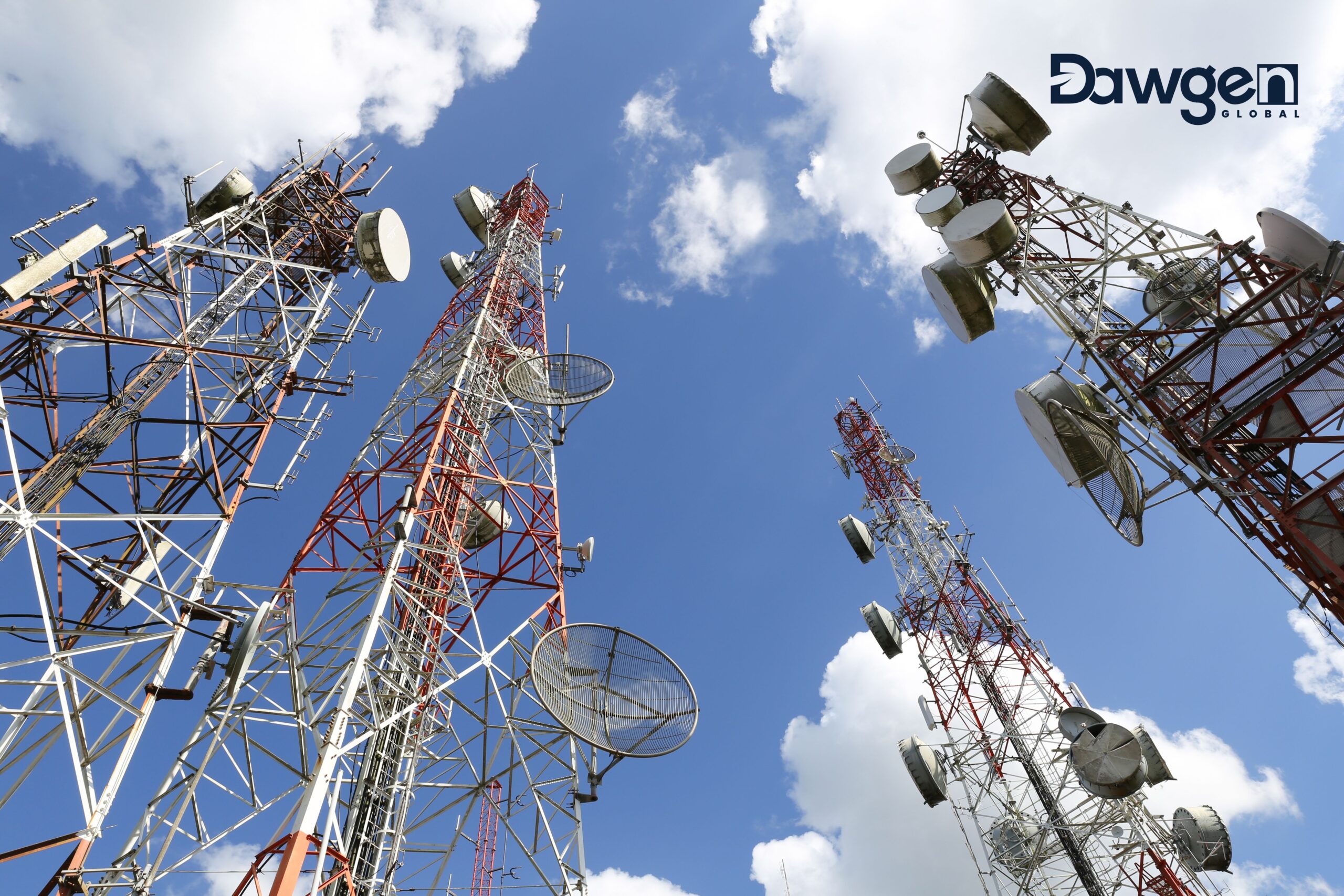
Telecommunications and digital platforms now form the nervous system of Caribbean and Latin America & the Caribbean (LAC) economies. Mobile networks, fibre broadband, data centres, media content and digital apps enable everything from tourism bookings and remittances to online banking, e-commerce and e-government.
For investors, boards, lenders and regulators, a key question keeps surfacing:
“What is this telecom, ISP or digital platform really worth — in a world of 4G/5G, fibre, OTT competition and rapid technological change?”
The answer is not trivial. TMT (Telecom, Media & Technology) businesses are capital-intensive, highly regulated in some segments, lightly regulated in others, and increasingly dependent on data, platforms and ecosystems rather than just towers and cables. Traditional shortcuts like “apply 6–7x EBITDA” risk ignoring critical drivers such as spectrum, churn, digital monetisation and regulatory risk.
To deal with this complexity, Dawgen Global has developed Dawgen CARI-VAL TMT™, a sector-specific adaptation of our broader Dawgen CARI-VAL™ Sector Valuation Series. It is designed to value:
-
Mobile and fixed telecom operators
-
Internet Service Providers (ISPs) and fibre network operators
-
Tower companies and passive infrastructure businesses
-
Data centres and cloud/hosting providers
-
Media and content platforms
-
Fintech and other digital platform businesses with strong telecom linkages
with a sharp focus on Caribbean and LAC realities.
This article sets out the Dawgen CARI-VAL TMT™ framework and explains how it supports robust, decision-ready valuations for TMT assets in the region.
1. Why TMT Valuations Are Different
Telecoms and digital platforms operate at the intersection of infrastructure, regulation, technology and consumer behaviour. That creates several unique valuation challenges:
-
Heavy upfront capex, long-lived but evolving assets
-
Networks (fibre, mobile, subsea cables, towers) require large investments with multi-year payback periods.
-
Technology cycles (3G → 4G → 5G, copper → fibre, on-premise → cloud) can shorten useful lives or require major upgrades.
-
-
Regulated and scarce inputs
-
Spectrum licences, numbering resources and rights-of-way are finite and often regulated.
-
Regulatory decisions on interconnection, termination rates, tower sharing and net neutrality directly affect profitability.
-
-
Intangible and network effects
-
Brand, customer data, platforms and ecosystems can generate network effects and switching costs that are not reflected on the balance sheet.
-
Valuation must account for user base quality, engagement and monetisation potential, not just subscriber counts.
-
-
Converging competition
-
Telecoms compete with OTT players (WhatsApp, Netflix, YouTube), fintechs, cloud providers and global platforms.
-
Traditional revenue streams (voice, SMS) are declining while data and digital services rise.
-
-
Small markets, big expectations
-
Many Caribbean markets are small, with limited scale but high expectations for world-class connectivity and digital services.
-
This magnifies the importance of capital discipline, market structure and regulatory clarity.
-
A robust valuation must therefore integrate infrastructure economics, regulatory risk, digital strategy and platform dynamics — not just today’s EBITDA.
That is the purpose of Dawgen CARI-VAL TMT™.
2. The Dawgen CARI-VAL TMT™ Framework
The CARI-VAL family is built around seven pillars:
-
C – Context & Cycle
-
A – Assets & Advantage
-
R – Risks, Regulation & Resilience
-
I – Intangibles, Innovation & Integration
-
V – Value Drivers & Financial Engine
-
A – Alternative Scenarios & Stress Tests
-
L – Liquidity, Listings & Exit
For telecoms and digital platforms, we adapt this to Dawgen CARI-VAL TMT™, with sector-specific lenses and metrics at each step.
3. C – Context & Cycle: The Digital Landscape
Valuation starts with where the business operates and where the market is going.
3.1 Market Structure and Competitive Intensity
We assess:
-
Number of mobile and fixed competitors (duopoly vs 3- or 4-player markets)
-
Presence of regional and global groups vs local challengers
-
Degree of infrastructure sharing (towers, fibre, backhaul)
-
Market maturity: penetration levels for mobile, broadband, pay TV, smartphones
A near-duopoly with disciplined competition supports different assumptions from a crowded market locked in price wars.
3.2 Macroeconomic and Demographic Trends
We consider:
-
Population growth, urbanisation and income levels
-
Tourism and business travel (which affect roaming and corporate demand)
-
SME growth and digital adoption in key sectors (tourism, BPO, logistics, financial services)
-
Government digital agendas (e-government, e-health, e-education)
These factors influence data demand, enterprise services growth and willingness to pay.
3.3 Technology and Investment Cycle
We locate the operator in its technology cycle:
-
Where is the market on 4G/5G rollout, fibre deployment, legacy switch-off?
-
Are major investments peaking, stabilising or still ahead?
-
How are regional and global trends (cloud, edge, AI, IoT) likely to play through in this market?
Valuation needs to reflect where the company is in its capex and technology upgrade cycle, not just “steady-state” assumptions.
4. A – Assets & Advantage: Networks, Licences and Beyond
In TMT, asset value is much more than the book value of towers and cables.
4.1 Network Assets
We map:
-
Mobile network coverage, capacity and quality (spectrum holdings, sites, backhaul, core network)
-
Fixed network footprint: fibre-to-the-home/business, copper, HFC, wireless local loop
-
International connectivity: subsea cable capacity, satellite links, peering arrangements
-
Data centre and cloud infrastructure (where applicable)
We examine metrics such as:
-
Population and geographic coverage (%)
-
4G/5G coverage and capacity, average downlink speeds
-
Utilisation rates and congestion hotspots
-
Network quality indicators (dropped calls, latency, jitter)
High-quality, scalable networks can generate sustainable competitive advantages and support premium valuations.
4.2 Spectrum and Regulatory Rights
Spectrum is a critical intangible asset:
-
Bands held (low, mid, high frequency) and renewal timelines
-
Licence terms, obligations and fees
-
Competitive spectrum position vs peers
Rights of way, tower permits and long-term access arrangements also matter. Difficult or politically sensitive permitting environments can slow expansion and increase risk.
4.3 Customer Base and Distribution
We analyse:
-
Subscriber base by segment (prepaid, postpaid; consumer, SME, corporate)
-
ARPU by product and segment
-
Churn rates and reasons for churn
-
Distribution network: retail stores, dealers, online channels, corporate account teams
A large subscriber base is not automatically valuable; what matters is quality, stability and monetisation potential.
4.4 Strategic Advantage
We ask:
-
What does this operator or platform do better than others?
-
Does it own unique content, platforms or partnerships?
-
Does it have a strong B2B position (connectivity, cloud, managed services, security)?
-
Is it the preferred partner for regional or global OTTs and digital platforms?
These advantages will influence growth, margins and the credibility of long-term projections.
5. R – Risks, Regulation & Resilience
TMT businesses live under a mix of telecom regulation, competition law and digital policy.
5.1 Regulatory Environment
We examine:
-
Licensing regime (individual vs unified licences, duration, conditions)
-
Rules on interconnection, termination rates, number portability and infrastructure sharing
-
Spectrum allocation and renewal mechanisms (administrative vs auction, pricing)
-
Consumer protection rules (quality of service, billing, privacy)
For digital platforms, we also consider:
-
Data protection and cybersecurity regulations
-
Fintech, payments and e-money rules (where applicable)
-
Content regulation and media ownership restrictions
Regulatory behaviour (predictable vs discretionary, pro-investment vs populist) has a direct impact on risk premia and valuation multiples.
5.2 Competitive & Disruption Risk
We look at:
-
Aggressiveness of price competition (ARPU trends, promotional intensity)
-
OTT substitution for voice, messaging and content
-
Entry of new players (MVNOs, fibre challengers, satellite broadband, Big Tech initiatives)
-
Risk of disintermediation via global platforms and super-apps
We carefully consider whether current earnings are defensible, or whether we are looking at a temporary peak before further erosion.
5.3 Operational and Cyber Resilience
Key questions:
-
How resilient is the network to hurricanes, storms and power cuts?
-
What is the track record on outages and service interruptions?
-
How robust is cybersecurity – have there been data breaches or cyber incidents?
-
Are disaster recovery and business continuity plans tested and credible?
In disaster-prone environments, outages and cyber incidents carry financial, regulatory and reputational repercussions that must be priced into valuation.
6. I – Intangibles, Innovation & Integration
For TMT, this pillar often contains the most powerful and most misunderstood sources of value.
6.1 Brand and Customer Perception
We consider:
-
Brand strength in mobile, broadband, TV, enterprise and digital services
-
Customer satisfaction, NPS scores and complaint patterns
-
Perception of network quality, customer service and value for money
In markets where switching is easy and promotions are frequent, brand and trust still play a vital role in retention and premium pricing.
6.2 Data, Platforms and Ecosystems
We examine:
-
Quality and depth of customer data (usage, behaviour, payment history)
-
Data governance and analytics capabilities
-
Existence of proprietary platforms (self-care apps, digital marketplaces, OTT services, loyalty programmes)
-
Partnerships with fintechs, content providers, cloud platforms, e-commerce players and super-apps
The ability to cross-sell, up-sell and monetise data responsibly is increasingly central to valuation.
6.3 Innovation and Product Development
We look at:
-
Pipeline of new services (IoT, smart home, enterprise cloud, cybersecurity, digital ID, e-learning)
-
Time-to-market and execution track record
-
Organisational capacity for innovation (teams, processes, governance)
For digital platforms and start-ups, product-market fit, user growth and monetisation pathways are core.
6.4 Integration with the Real Economy
We consider:
-
Role in enabling key sectors (tourism, BPO, finance, logistics, creative industries)
-
Partnerships with government on digital transformation (e-gov, digital IDs, smart cities)
-
Participation in national or regional digital strategies
This shapes long-term relevance and policy attitudes, as well as access to anchor customers and projects.
7. V – Value Drivers & Financial Engine
Armed with a detailed qualitative picture, we turn to the earnings engine and quantitative value drivers.
7.1 Revenue Drivers and KPIs
We break down revenues into:
-
Mobile: voice, data, messaging, roaming, value-added services
-
Fixed: broadband, pay TV, fixed voice, enterprise services
-
Digital services: cloud, hosting, IoT, security, fintech, content, advertising
-
Wholesale: interconnection, international transit, infrastructure leasing (towers, ducts, dark fibre)
Key metrics:
-
ARPU by segment and product
-
Subscriber growth and mix (prepaid vs postpaid; consumer vs enterprise)
-
Churn rates and porting activity
-
Data usage growth (GB per user, traffic profile)
We pay attention to where growth is coming from: sustainable data and digital services vs temporary promotions or low-margin wholesale.
7.2 Cost Structure and Efficiency
We analyse:
-
Network operating costs (power, maintenance, leases, spectrum and licence fees)
-
Sales and distribution costs (commissions, subsidies, marketing)
-
Customer service and back-office costs
-
IT and digital transformation spend
Efficiency metrics include:
-
EBITDA margin trends
-
Opex per subscriber
-
Capex-to-sales ratio over time
Network sharing, tower spin-offs and digitalisation can significantly improve efficiency and thus valuation.
7.3 Capex and Technology Roadmap
We model:
-
Ongoing network capex (coverage, capacity, quality enhancements)
-
Major technology transitions (e.g. 5G rollout, fibre upgrades, copper switch-off)
-
IT and digital platform investments
-
Regulatory or policy-driven projects (rural coverage obligations, universal service)
The capex profile influences free cash flow timing and risk: an operator that has just completed a major upgrade may be entering a harvest phase, while one at the start faces several years of heavy spending.
7.4 Capital Structure and Financing
We consider:
-
Debt levels, interest costs and covenants
-
Currency mix of debt vs revenues
-
Access to capital markets, bank funding and infrastructure investors
-
Dividend policy and historical payout ratios
These factors impact both equity cash flows and the cost of capital used in valuation models.
7.5 Valuation Techniques
Dawgen CARI-VAL TMT™ typically employs a blend of:
-
Discounted Cash Flow (DCF)
-
Projecting free cash flow to firm and/or equity over a suitable horizon (often 5–10 years) plus terminal value, explicitly modelling price, volume, ARPU, churn, capex and spectrum costs.
-
-
EV/EBITDA and Other Multiples
-
EV/EBITDA, EV/EBIT, EV/subscriber, EV/GB, EV/home-passed or home-connected (for fibre businesses).
-
Carefully adjusted for country risk, competitive intensity, growth stage and technology mix.
-
-
Sum-of-the-Parts (SOTP)
-
Necessary where entities own multiple distinct businesses: towers, data centres, core telecom, digital platforms, media.
-
Each segment may warrant its own multiple or valuation approach.
-
-
Venture-style and Platform Valuation (for high-growth digital businesses)
-
Combining revenue multiples, cohort analysis, unit economics and scenario-based DCF for start-up or scale-up platforms.
-
All these methods are grounded in earlier CARI-VAL insights, not generic rules of thumb.
8. A – Alternative Scenarios & Stress Tests
TMT valuations are particularly sensitive to competition, regulation, technology and demand growth — so scenario analysis is essential.
8.1 Scenario Design
We typically consider:
-
Base Case – consistent with current strategies, realistic competitive behaviour and moderate digital adoption.
-
Digital Upside Case – stronger data growth, successful digital services, better churn and pricing discipline.
-
Pressure Case – intensified price competition, slower economic growth, delayed technology deployment or regulatory pressure on tariffs and fees.
For digital platforms and start-ups, we may also include:
-
Hyper-growth case – strong user and revenue scale-up, improved unit economics.
-
Stagnation case – growth plateau, customer acquisition costs rising, monetisation challenges.
8.2 Stress Testing
We run specific stresses such as:
-
ARPU decline beyond expectations
-
Increased churn triggered by a new entrant or aggressive promotions
-
Capex overruns or delays in 5G/fibre rollout
-
Adverse regulatory decisions (price controls, reduced termination rates, new taxes)
-
Major network outage or cyber incident
These tests expose downside risks and breakpoints: points where leverage becomes problematic, covenants are threatened or investment plans need rethinking.
9. L – Liquidity, Listings & Exit
Finally, we consider how and when value can be realised.
9.1 Market Listing and Trading Profile
We evaluate:
-
Listing status (local, regional, international exchange)
-
Market capitalisation, free float and daily liquidity
-
Composition of investor base (local vs international, institutional vs retail)
Illiquid listings in small markets may trade at a structural discount to intrinsic value, affecting both minority investors and potential buyers.
9.2 Strategic vs Financial Buyers
Potential acquirers include:
-
Regional or global telecom groups
-
Infrastructure funds (interested in towers, fibre, data centres)
-
Private equity and growth investors (especially for digital platforms)
-
Local conglomerates seeking diversification
Each buyer type has different synergy assumptions, risk appetites and valuation approaches, which we reflect in our advice.
9.3 Control and Governance
We distinguish:
-
Full control transactions vs minority stakes
-
Governance frameworks and shareholder rights
-
Track record of management execution and capital allocation
Control positions generally justify premiums for synergies and strategic flexibility; minority positions in complex or opaque structures may warrant discounts.
10. How Dawgen Global Uses CARI-VAL TMT™ in Practice
We apply Dawgen CARI-VAL TMT™ across a wide range of TMT engagements:
-
M&A, IPOs and Capital Raising
-
Valuation of operators, ISPs, tower companies, data centres and digital platforms for acquisitions, disposals and IPOs.
-
Fairness opinions and independent value assessments for boards and committees.
-
-
Strategic and Portfolio Reviews
-
Sum-of-the-parts valuations to evaluate spin-offs (e.g. towers, fintech subsidiaries, data centres).
-
Assessment of digital investments and potential divestments or partnerships.
-
-
Regulatory and Policy Support
-
Independent valuations for spectrum auctions, infrastructure sharing, or market structure reforms.
-
Input to policymakers on investment incentives and returns required to support digital agendas.
-
-
Private and Family Ownership
-
Valuations of privately-held telecoms, media and digital businesses for succession planning, shareholder rebalancing and estate planning.
-
Our differentiator is the combination of valuation discipline, sector expertise and regional insight: we understand both the global TMT trends and the Caribbean/LAC realities of small markets, infrastructure constraints and evolving regulation.
Next Step: Put a Real Value on Your Connectivity and Digital Assets
If you are:
-
A telecom or ISP board considering network investments, divestments, tower spin-offs or partnerships,
-
A digital platform founder or investor looking at fundraising, partial exit or strategic alliances,
-
A regulator or policymaker evaluating market structure, spectrum policy or digital infrastructure strategies, or
-
A lender or infrastructure investor assessing TMT opportunities in Jamaica, the Caribbean or the wider LAC region,
…you need more than a quick multiple.
The Dawgen CARI-VAL TMT™ Framework gives you a structured, transparent and sector-aware approach to valuing telecoms and digital platforms — grounded in the realities of technology, regulation, competition and digital transformation.
To explore how Dawgen Global can support you with TMT valuation, strategy or transactions:
📧 Email: [email protected]
📱 WhatsApp (Global): +1 555 795 9071
At Dawgen Global, we help you make Smarter and More Effective Valuation Decisions — across telecoms, media and the digital economy.
About Dawgen Global
“Embrace BIG FIRM capabilities without the big firm price at Dawgen Global, your committed partner in carving a pathway to continual progress in the vibrant Caribbean region. Our integrated, multidisciplinary approach is finely tuned to address the unique intricacies and lucrative prospects that the region has to offer. Offering a rich array of services, including audit, accounting, tax, IT, HR, risk management, and more, we facilitate smarter and more effective decisions that set the stage for unprecedented triumphs. Let’s collaborate and craft a future where every decision is a steppingstone to greater success. Reach out to explore a partnership that promises not just growth but a future beaming with opportunities and achievements.
✉️ Email: [email protected] 🌐 Visit: Dawgen Global Website
📞 📱 WhatsApp Global Number : +1 555-795-9071
📞 Caribbean Office: +1876-6655926 / 876-9293670/876-9265210 📲 WhatsApp Global: +1 5557959071
📞 USA Office: 855-354-2447
Join hands with Dawgen Global. Together, let’s venture into a future brimming with opportunities and achievements


