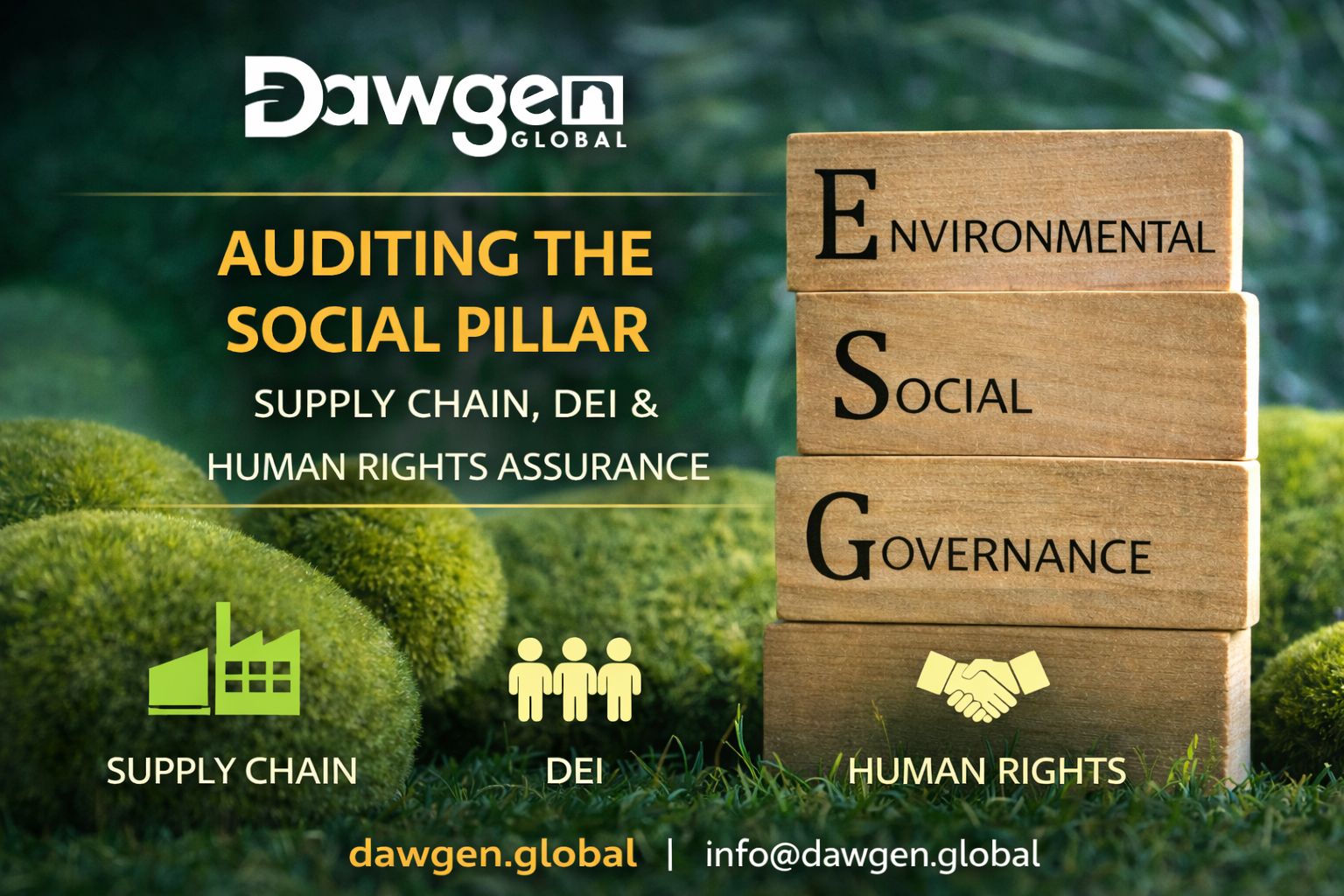
The ‘S’ in ESG — the Social dimension — is frequently described as the least defined, the hardest to measure, and the most difficult to audit. This characterisation is partly true and entirely consequential. Because social performance is harder to quantify than carbon emissions or board gender ratios, it is often either excluded from audit scope or addressed superficially. The result is a significant governance gap in ESG programmes that otherwise appear comprehensive.
For Caribbean organisations, the Social pillar carries distinctive risks. Tourism, agriculture, manufacturing, and financial services — the region’s economic anchors — all involve significant human capital exposure, supply chain complexity, and community interdependencies that international buyers, investors, and development finance institutions are increasingly scrutinising through an ESG lens. Auditing the Social pillar credibly requires structured methodology, not good intentions.
| GRI Standards on Social Topics
The GRI Standards address social performance through multiple topic standards including GRI 401 (Employment), GRI 403 (Occupational Health and Safety), GRI 404 (Training and Education), GRI 405 (Diversity and Equal Opportunity), GRI 406 (Non-discrimination), GRI 407 (Freedom of Association), GRI 408 (Child Labour), GRI 409 (Forced or Compulsory Labour), GRI 413 (Local Communities), and GRI 414 (Supplier Social Assessment). Each standard specifies disclosure requirements that the auditor can use as an audit criteria framework. |
Audit Domain 1: Human Capital & Employee Relations
Human capital is the Social pillar’s most consistently material topic for Caribbean organisations. Key audit procedures address whether the organisation’s workforce-related disclosures are accurate and whether the underlying management systems are functioning.
| Audit Area | Key Questions | Evidence Required |
| Workforce composition | Are gender, ethnicity, and employment type breakdowns accurate? Does the denominator include temporary, part-time, and contractor workers as disclosed? | HRIS extract, payroll records, contractor agreements |
| Turnover and retention | Are voluntary and involuntary turnover rates correctly calculated? Are exit interview themes reflected in management programmes? | HRIS turnover report, exit interview data |
| Living wage | Does base compensation meet or exceed applicable living wage benchmarks? Is this assessed across the full workforce including contracted workers? | Payroll data, living wage benchmark sources |
| Employee engagement | Are engagement survey results accurately reported? What is the response rate? Are results acted upon? | Survey platform data, management response plans |
| Training & development | Are training hours reported per the disclosed methodology? Are mandatory vs voluntary training hours disaggregated correctly? | LMS records, training attendance logs |
Audit Domain 2: Diversity, Equity & Inclusion (DEI)
DEI disclosures are among the most frequently questioned by investors and ESG rating agencies. The auditor must verify that DEI metrics are accurately measured, that DEI commitments are reflected in actual organisational practice, and that the boundary conditions for DEI reporting are fully disclosed.
- Verify that gender diversity at each reported level (board, executive, management, workforce) matches HR system data for the relevant reporting date.
- Assess whether the DEI policy addresses all protected characteristics required under applicable employment law in each jurisdiction where the organisation operates.
- Evaluate whether DEI targets are specific, measurable, and time-bound, and whether progress is tracked through formal monitoring mechanisms.
- Confirm whether pay equity analysis has been conducted. If disclosed, verify the methodology (adjusted vs unadjusted gap) is clearly stated.
- Assess whether DEI training records confirm coverage across the full workforce, not merely senior management.
Audit Domain 3: Supply Chain Social Compliance
Supply chain social risk is among the highest-stakes areas in ESG audit for Caribbean organisations with international supply chains or those supplying to international markets subject to mandatory due diligence regimes. The EU Corporate Sustainability Due Diligence Directive (CSDDD) and similar legislation impose obligations on supply chain social performance that extend to Caribbean suppliers.
Supply Chain Social Audit Procedures
- Obtain and review the Supplier Code of Conduct. Assess whether it addresses the ILO Core Conventions: child labour, forced labour, freedom of association, collective bargaining, non-discrimination, minimum wage, and safe working conditions.
- Map the supply chain. Identify tier-1 suppliers and, where material, tier-2 and tier-3 suppliers. Confirm the reported boundary for supply chain social disclosures.
- Evaluate the supplier due diligence process. Is there a risk-based screening mechanism? Are high-risk suppliers subject to more intensive evaluation?
- Review evidence of supplier audits or assessments conducted during the reporting period. What proportion of tier-1 suppliers were assessed? What findings were identified and how were they remediated?
- Assess whether the organisation has a formal supplier grievance mechanism and whether suppliers are aware of it.
- Evaluate the organisation’s modern slavery and human trafficking risk assessment, including whether the geographic and sector risk factors of its supply chain are reflected in the assessment.
Audit Domain 4: Community Impact
Community relations and social licence to operate are particularly material for extractive, infrastructure, and tourism organisations in the Caribbean. The auditor evaluates whether community engagement mechanisms are substantive, whether community impacts are accurately assessed, and whether commitments made to communities are tracked and honoured.
- Review records of community consultations conducted during the reporting period. Are consultations structured, documented, and do they reach affected communities (not merely community leaders)?
- Evaluate whether a community grievance mechanism exists, is accessible, and is operational. Review the log of grievances received and assess resolution rates and timelines.
- Verify community investment figures against payment records and confirm the definition of ‘community investment’ (cash donations, in-kind contributions, employee volunteering) is clearly disclosed and consistently applied.
- Assess whether social impact assessments have been conducted for new projects or operations and whether findings have informed project design and community engagement.
| Audit Insight: The Social Data Infrastructure Gap
The most common finding in Social pillar audits is not intentional misrepresentation — it is inadequate data infrastructure. HR systems often cannot disaggregate workforce data by the dimensions required for ESG reporting. Training records may be maintained in multiple incompatible systems. Supply chain data may be collected manually from suppliers with no verification mechanism. The audit finding here is a data governance gap that must be remediated before credible Social pillar disclosure is possible. |
Dawgen Global is a multidisciplinary professional services firm serving the Caribbean region. Dawgen Global’s Social audit practice draws on GRI Standards, the UN Guiding Principles on Business and Human Rights, and ILO Core Conventions.
| Partner with Dawgen Global for ESG Assurance
Dawgen Global’s DESGAF™ specialists provide comprehensive ESG internal audit support — from governance reviews and controls testing to data verification and disclosure assurance across the Caribbean. Request a Proposal Today Email: [email protected] | Tel: +1 (876) 929-3670 | +1 (876) 665-5926 | US: 1-855-354-2447 www.dawgen.global — Big Firm Capabilities. Caribbean Understanding. |
About Dawgen Global
“Embrace BIG FIRM capabilities without the big firm price at Dawgen Global, your committed partner in carving a pathway to continual progress in the vibrant Caribbean region. Our integrated, multidisciplinary approach is finely tuned to address the unique intricacies and lucrative prospects that the region has to offer. Offering a rich array of services, including audit, accounting, tax, IT, HR, risk management, and more, we facilitate smarter and more effective decisions that set the stage for unprecedented triumphs. Let’s collaborate and craft a future where every decision is a steppingstone to greater success. Reach out to explore a partnership that promises not just growth but a future beaming with opportunities and achievements.
 Email: [email protected]
  Visit: Dawgen Global Website

 WhatsApp Global Number : +1 555-795-9071
Caribbean Office: +1876-6655926 / 876-9293670/876-9265210  WhatsApp Global: +1 5557959071
USA Office: 855-354-2447
Join hands with Dawgen Global. Together, let’s venture into a future brimming with opportunities and achievements


