
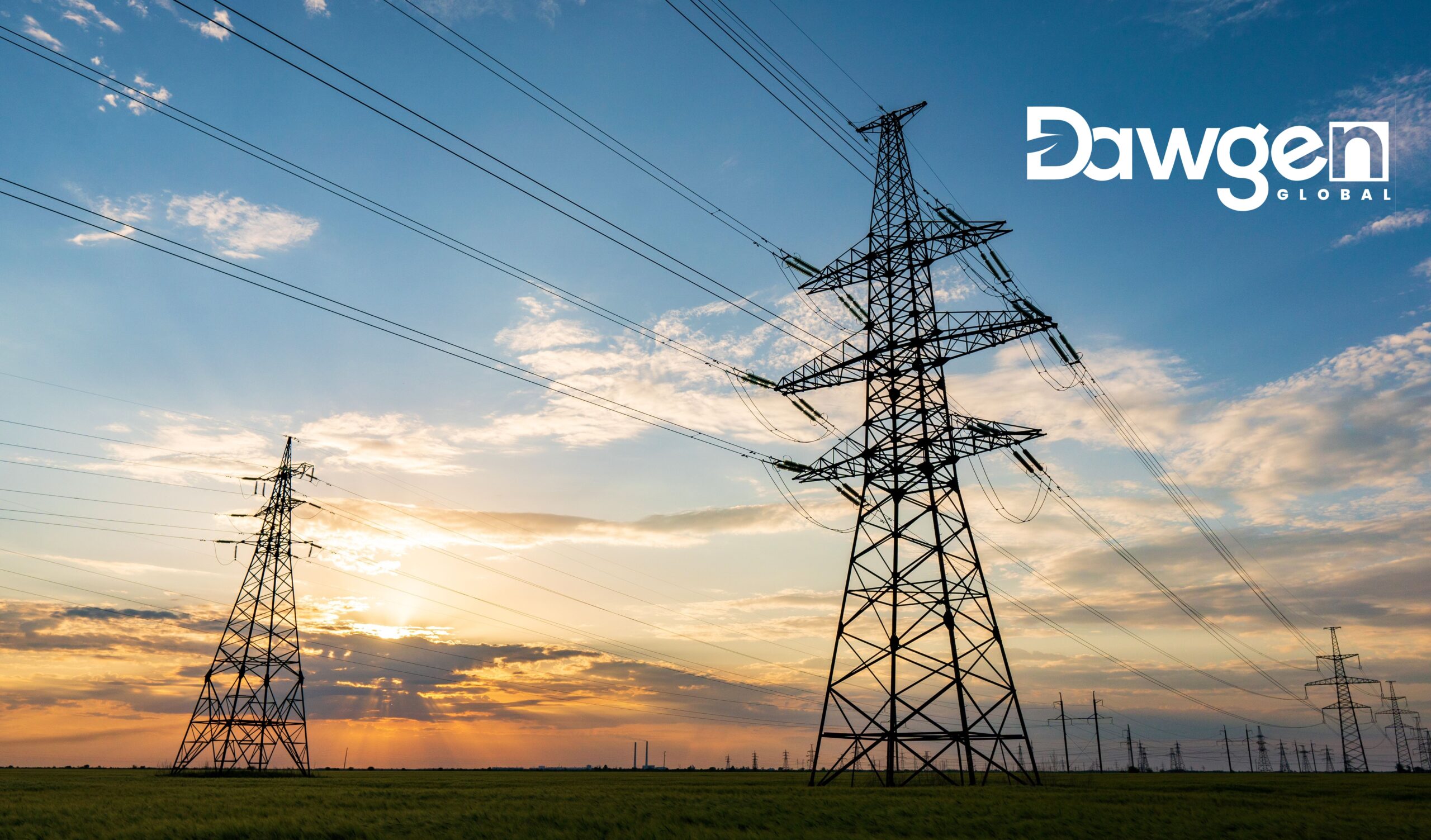
Latin America and the Caribbean (LAC) are often celebrated for their exceptional renewable energy potential—hydropower, solar, wind, geothermal, and increasingly green hydrogen. Yet a quiet reality sits behind the headlines: no matter how much renewable capacity is announced, financed, or even built, it cannot unlock its full value without one critical piece of infrastructure—the transmission grid.
The Inter-American Development Bank’s (IDB) technical note “Unlocking the Grid: How to Ensure Reliable and Sustainable Energy in Latin America and the Caribbean” makes this point bluntly: electric power transmission is now the axis that will determine whether LAC can build resilient, reliable, and competitive energy systems. Without modern, reliable grids, the region cannot fully integrate its renewable potential, safeguard supply, or sustain economic and social development.
In other words, transmission is no longer a supporting actor in the energy story. It has become the backbone of the region’s future energy architecture.
This article—first in Dawgen Global’s thought leadership series on “Unlocking the Grid”—explores why transmission has moved to centre stage, what is at stake for LAC and the Caribbean, and how a structured transformation agenda can turn power lines into a strategic development platform.
1. Transmission: From Background Infrastructure to Strategic Asset
For decades, energy debates in the region have revolved around generation: how to attract investment into large hydro, gas plants, or renewables; how to diversify the generation mix; how to cut emissions from power plants.
Transmission, by contrast, was treated as a technical necessity—wires and towers that quietly followed where generation led. The IDB report shows why this view is now obsolete. It argues that without robust, modern transmission networks, three critical goals are unattainable:
-
Integrating renewable potential across diverse geographies.
-
Ensuring reliable supply amid demand growth and climate risks.
-
Sustaining economic and social development through competitive, secure energy.
Today, transmission must be seen as:
-
A climate infrastructure asset—enabling low-carbon generation and electrification.
-
A resilience tool—designed to withstand extreme weather and recover quickly.
-
A competitiveness lever—reducing losses, congestion and costs, thereby improving the cost of doing business.
This re-framing is particularly important for the Caribbean, where small power systems, exposure to hurricanes, and high import dependence make reliability and resilience non-negotiable.
2. The Five Pillars of Grid Transformation
The IDB technical note proposes a comprehensive roadmap for the region’s transmission systems. It identifies structural gaps that run through the entire project and policy cycle—from planning and regulation to financing, permitting, and technology adoption—and organises its recommendations around five pillars.
2.1 Planning
The first pillar is to strengthen planning processes so they are realistic, resilient, and coordinated. That means planning frameworks that:
-
Anticipate long-term demand and electrification trends.
-
Integrate climate and technological uncertainty.
-
Link generation, transmission, and distribution in a coherent way.
-
Translate high-level visions into executable project portfolios, not just wish lists.
For LAC and Caribbean countries, this implies moving beyond incremental, short-term expansion plans towards scenario-based, system-wide planning that aligns with industrial policy, regional integration goals, and climate commitments.
2.2 Regulation
The second pillar calls for modernising regulatory frameworks to enable investment, resilience, and innovation. The report stresses the need for:
-
Multi-criteria methodologies that value cost, reliability, sustainability, and resilience—rather than cost alone.
-
Performance-based remuneration schemes that reward quality of service, efficiency, and innovation.
-
Adaptive rules that recognise the system-wide value of the grid, including the role of digital technologies and new operational tools.
In practice, this means regulatory models that treat transmission not merely as a cost to be minimised, but as a strategic asset that supports national development and climate objectives.
2.3 Financing
The third pillar focuses on mobilising public and private capital at scale. Transmission projects often face specific financing hurdles:
-
Long development times and complex permitting.
-
Political and regulatory risks.
-
Difficulty in capturing the broader system benefits within traditional project finance frameworks.
The IDB proposes creating enabling conditions, predictable regulatory and tariff frameworks, and innovative financing tools—including blended finance and climate-related instruments—to reduce risk and improve bankability.
This is particularly relevant for smaller Caribbean economies, where projects are smaller in size but critical in impact, and where access to concessional climate finance can be transformative.
2.4 Permitting and Implementation
The fourth pillar addresses a familiar bottleneck: environmental and social (E&S) permitting. Transmission lines cross long distances and multiple jurisdictions, frequently interacting with sensitive ecosystems and local communities.
The report recommends:
-
Greater inter-institutional coordination among agencies.
-
Strengthening technical capacity in E&S authorities.
-
Using digital tools to improve efficiency and transparency.
-
Maintaining high sustainability standards while avoiding unnecessary delays.
The objective is not to weaken protections but to streamline processes, reduce uncertainty, and build trust with affected communities.
2.5 Technological Innovation
Finally, the fifth pillar emphasises technological innovation—especially grid-enhancing and modernisation technologies. These include digital solutions, advanced control systems, automation, and grid-enhancing technologies that increase the effective capacity and flexibility of existing networks. IADB Publications
Rather than relying solely on new lines, LAC can:
-
Use dynamic line rating, power-flow controllers, and topology optimisation to relieve congestion.
-
Deploy sensors, data analytics, and automation for smarter operation.
-
Integrate storage and demand-side flexibility as part of the grid toolbox.
For islands and remote systems, these innovations can be a cost-effective way to boost reliability and resilience without oversizing infrastructure.
3. The Current State of Grids in Latin America and the Caribbean
The IDB report presents a sobering diagnosis: transmission infrastructure across LAC is not keeping up with the region’s needs. The study highlights:
-
Congestion and bottlenecks that prevent optimal use of existing generation.
-
Insufficient regional interconnection, limiting power trading and balancing opportunities.
-
Lagging expansion relative to the growth of renewable generation.
-
Exposure to climate-related shocks, including extreme weather that can damage assets and disrupt service.
In the Caribbean, these challenges are intensified by the characteristics of small systems:
-
High dependence on single lines or corridors.
-
Greater vulnerability to storms and hurricanes.
-
Higher per-unit costs for infrastructure.
-
Limited redundancy, meaning single failures can have system-wide impacts.
The result is a paradox. LAC and the Caribbean possess abundant renewable potential and technical knowledge, yet gaps in the grid threaten to constrain the region’s ability to decarbonise, electrify, and grow.
4. What Is at Stake for Key Stakeholders?
Recognising transmission as a strategic asset reshapes the conversation for every stakeholder in the energy ecosystem.
Governments
For governments, grid investment is no longer just a sectoral issue; it is central to:
-
Energy security – reducing the risk of blackouts and supply disruptions.
-
Industrial policy – supporting competitive power for manufacturing, services, and digital industries.
-
Climate commitments – enabling large-scale integration of renewables and electrification.
-
Fiscal and social stability – containing costs, reducing vulnerability to imported fuels, and avoiding politically damaging outages.
Regulators
Regulators face the challenge of balancing multiple objectives:
-
Keeping tariffs affordable.
-
Ensuring quality and reliability.
-
Incentivising investment and innovation.
-
Embedding environmental and social safeguards.
Modern transmission regulation must be transparent, predictable, and multi-dimensional, recognising that the lowest upfront cost is not always the lowest long-term cost for society.
Utilities and System Operators
For utilities and system operators, under-invested grids create operational headaches:
-
Congestion and curtailment of low-cost renewable generation.
-
Limited flexibility to manage variability and extreme events.
-
Higher technical and non-technical losses, affecting financial health.
At the same time, new technologies—from grid-enhancing tools to advanced analytics—offer a path to do more with existing networks if regulatory and financial frameworks are aligned.
Investors and Lenders
Investors and financiers increasingly see transmission as a climate-aligned infrastructure class. However, they also worry about:
-
Regulatory and political risk.
-
Permitting uncertainty.
-
Counterparty creditworthiness.
A credible roadmap—like the one outlined by IDB—helps reduce these risks by signalling long-term commitment and clarifying the direction of reform. IADB Publications
Consumers and Businesses
Ultimately, households and businesses experience the consequences of grid underinvestment through:
-
Higher tariffs.
-
Poor quality of service and outages.
-
Lost economic opportunities where unreliable power discourages investment.
Strengthening the grid is therefore not a technical luxury; it is a social and economic priority.
5. Strategic Opportunities for LAC and the Caribbean
While the report is frank about the challenges, it also underscores that LAC “possesses the knowledge, experience, and conditions to advance toward a new generation of transmission systems—smarter, stronger, more sustainable, and development-oriented.”
Several strategic opportunities stand out:
5.1 Building a Low-Carbon, Competitive Power Platform
By investing in modern grids, LAC can:
-
Reduce reliance on imported fuels and volatile global prices.
-
Attract investment in renewables and energy-intensive industries.
-
Position itself as a competitive region for green manufacturing, services, and digital infrastructure.
For Caribbean economies, the prize is a more resilient and diversified growth model, less exposed to fuel price shocks and climate disasters.
5.2 Regional Integration and Cross-Border Corridors
Enhanced interconnection within LAC and between mainland and island systems can:
-
Improve reliability by sharing reserves.
-
Optimise the use of diverse generation resources.
-
Support regional power markets and trade.
Strategic transmission corridors can thus become economic corridors, linking energy, logistics, and industrial development.
5.3 Climate Finance and Development Finance Alignment
Transmission infrastructure sits at the intersection of mitigation and adaptation:
-
Mitigation, by enabling renewables and electrification.
-
Adaptation, by hardening networks against extreme weather and climate risks.
This dual role makes well-structured grid investments attractive for climate finance, multilateral development banks, and impact investors—provided that projects are well-prepared, governed, and integrated into national strategies. IADB Publications
6. Dawgen Global’s Perspective: Turning Vision into Execution
Dawgen Global approaches this agenda from the vantage point of an integrated multidisciplinary professional services firm rooted in the Caribbean and active across the region. The themes identified by the IDB resonate strongly with the needs we see on the ground: policy constraints, regulatory gaps, financing bottlenecks, and execution challenges that cut across energy, infrastructure, and broader public sector management.
To move from technical notes to real-world change, countries and utilities need partners who can operate at the intersection of policy, regulation, finance, risk, and implementation. Dawgen Global can support this transition in several ways:
6.1 Policy and Regulatory Advisory
-
Reviewing energy and transmission policies for consistency with climate and industrial objectives.
-
Supporting the design of modern regulatory frameworks that incorporate multi-criteria objectives and performance-based approaches.
-
Advising on market design, tariff methodologies, and regulatory sandboxes for innovation.
6.2 Planning and Investment Strategy
-
Assisting in the review and strengthening of transmission planning processes.
-
Supporting scenario analysis that integrates climate risks, electrification pathways, and regional integration.
-
Linking technical plans to fiscal space, debt management, and climate-finance opportunities.
6.3 Financing and Transaction Support
-
Preparing feasibility studies, financial models, and bankability assessments for grid projects.
-
Structuring PPPs, concessions, and blended-finance solutions.
-
Supporting governments and utilities in engaging multilaterals, climate funds, and private investors.
6.4 Environmental, Social and Governance (ESG) and Risk Management
-
Advising on E&S risk assessment and permitting strategies that align with best practice and IDB standards.
-
Designing governance and compliance frameworks for grid programmes.
-
Integrating climate and operational risk management, including disaster preparedness for Caribbean systems.
6.5 Digital, Technology and Cybersecurity
-
Assessing readiness for grid-enhancing technologies, digitalisation, and advanced analytics.
-
Supporting the design of pilot projects and innovation frameworks.
-
Advising on cybersecurity and data governance for increasingly digital grids.
By bringing together auditors, accountants, financial advisors, technologists, and legal experts, Dawgen Global can help bridge the gap between technical aspirations and implementation reality—offering big-firm capabilities without big-firm pricing, tailored to the context of Caribbean and LAC clients.
7. Next Step: Unlocking the Grid, Unlocking the Future
The IDB’s “Unlocking the Grid” technical note delivers a clear message: the future of LAC’s energy systems will be decided as much on transmission towers and substations as in solar fields and wind farms. The region’s ability to deliver reliable, affordable, low-carbon power—and, by extension, its capacity to grow, diversify, and thrive—depends on how quickly and coherently it can transform its transmission networks.
The good news is that the roadmap is now on the table:
-
Plan better, with realistic, resilient, coordinated frameworks.
-
Regulate smarter, aligning incentives with resilience and innovation.
-
Finance strategically, leveraging climate and development finance.
-
Permit efficiently and fairly, protecting people and nature while avoiding unnecessary delays.
-
Innovate boldly, embracing technologies that make grids smarter, not just bigger.
For Latin America and the Caribbean, especially its small and vulnerable island systems, this is not merely a technical upgrade—it is a development imperative.
Dawgen Global stands ready to work with governments, regulators, utilities, investors, and development partners to turn this vision into concrete strategies, projects, and reforms.
Partner with Dawgen Global
At Dawgen Global, we help you make Smarter and More Effective Decisions—from boardroom strategy to on-the-ground execution.
If your government, utility, regulator, or investment vehicle is exploring how to:
-
Develop or strengthen transmission and energy transition roadmaps.
-
Reform regulatory frameworks to unlock investment and innovation.
-
Prepare bankable, climate-aligned infrastructure projects.
-
Enhance ESG, risk and governance around major grid investments.
…our multidisciplinary team is ready to support you.
Let’s have a conversation:
Dawgen Global – Integrated multidisciplinary professional services for a resilient, sustainable, and competitive Caribbean and Latin America.
About Dawgen Global
“Embrace BIG FIRM capabilities without the big firm price at Dawgen Global, your committed partner in carving a pathway to continual progress in the vibrant Caribbean region. Our integrated, multidisciplinary approach is finely tuned to address the unique intricacies and lucrative prospects that the region has to offer. Offering a rich array of services, including audit, accounting, tax, IT, HR, risk management, and more, we facilitate smarter and more effective decisions that set the stage for unprecedented triumphs. Let’s collaborate and craft a future where every decision is a steppingstone to greater success. Reach out to explore a partnership that promises not just growth but a future beaming with opportunities and achievements.
✉️ Email: info@dawgen.global ? Visit: Dawgen Global Website
? ? WhatsApp Global Number : +1 555-795-9071
? Caribbean Office: +1876-6655926 / 876-9293670/876-9265210 ? WhatsApp Global: +1 5557959071
? USA Office: 855-354-2447
Join hands with Dawgen Global. Together, let’s venture into a future brimming with opportunities and achievements


