
After the Storm: IFRS Guidance for Policyholders
Applying IAS 38 (Intangible Assets) with interactions from IAS 36 (Impairment), IFRS 16 (Leases), IAS 37 (Provisions), IFRS 15 (Contracts), IAS 1/10 (Presentation & Events) after hurricanes
Hurricanes don’t just hit physical assets—they disrupt software platforms, licenses, customer relationships, rights to operate, and data. These often carry significant value on the balance sheet and can quickly face impairment indicators: prolonged downtime, customer churn, regulatory hurdles, or the permanent loss of a location critical to cash flows. This guide shows policyholders how to:
-
Identify impairment triggers for intangibles and related rights.
-
Determine the unit of account (individual intangible vs CGU) and test under IAS 36.
-
Distinguish expense vs capitalization for post-storm restoration and resilience projects.
-
Handle ROU asset interactions (IFRS 16), contracts and customer lists (IFRS 15/IAS 38), and provisions/reimbursements (IAS 37).
-
Present transparent disclosures and avoid pitfalls like netting insurance against losses or capitalizing abnormal costs.
Golden rule (unchanged): Recognize losses first; recognize insurance recoveries only when receivable/virtually certain and present them separately.
1) What Counts as an Intangible (IAS 38) — Post-Disaster Lens
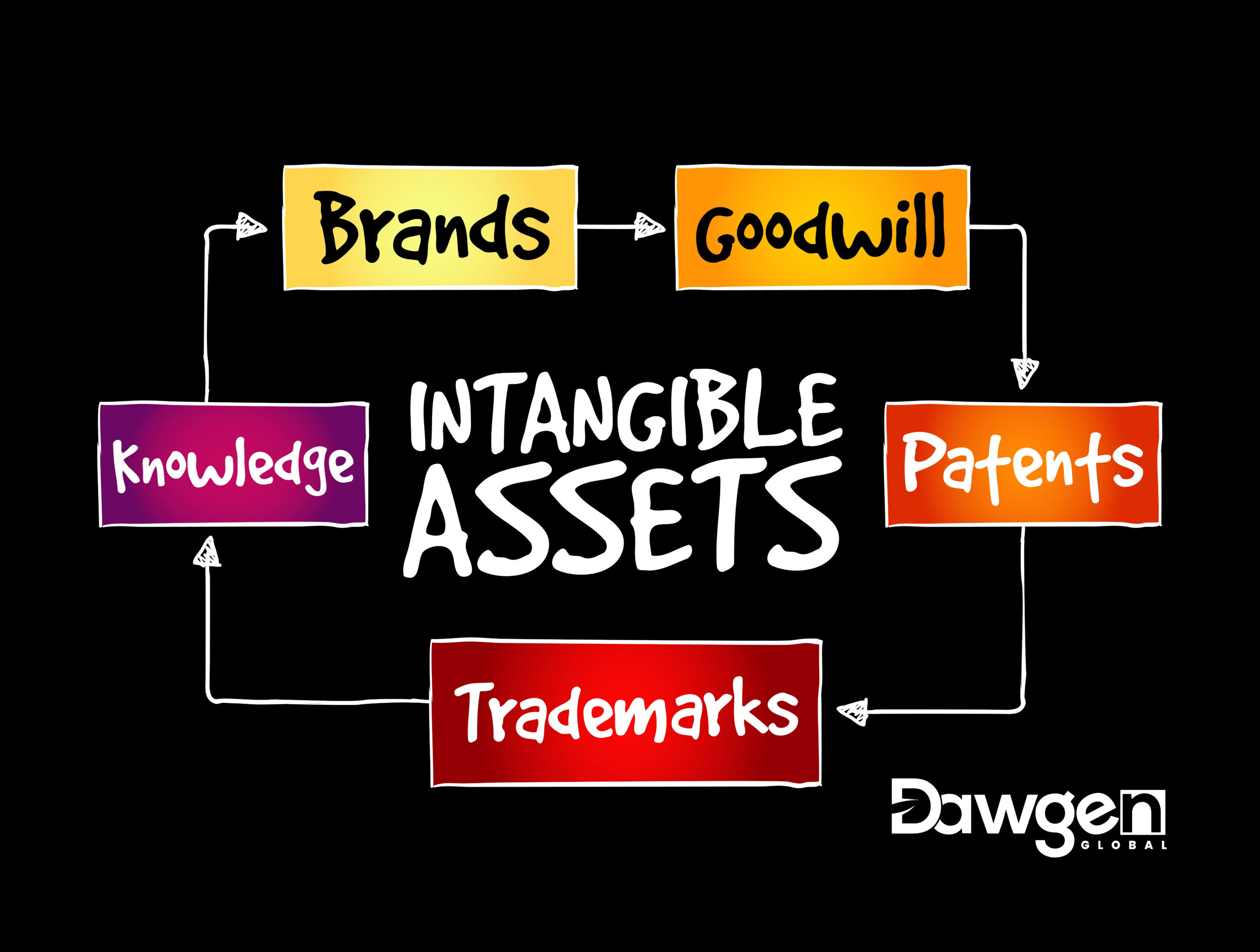
An intangible asset is identifiable, non-monetary, without physical substance, and controlled by the entity (e.g., software, licenses, patents, customer lists, brands, capitalized development, franchise/operating rights).
Common post-hurricane categories
-
Software & platforms: ERP, POS, manufacturing execution, data warehouses.
-
Licenses/permits: Utilities, environmental approvals, telecom, tourism concessions.
-
Customer-related: Lists, relationships (from acquisitions), loyalty program intangibles.
-
Marketing-related: Brands and trademarks.
-
Development assets: Capitalized internal projects (apps, portals).
-
Right-to-use technology or data: Where accounted as intangible (not lease).
2) Impairment Triggers You’ll See First (IAS 36)
-
Extended downtime of IT platforms → lost online sales/service capacity.
-
Demand shock & churn → customer list/relationship value drops.
-
Regulatory obstacles → permits suspended; costly new compliance conditions.
-
Site dependency → intangibles tied to a specific location lose utility if the site is unusable.
-
Abandoned projects → development assets no longer expected to deliver benefits.
-
Brand damage → reputational impacts affecting pricing power and renewal rates.
Maintain a Trigger Log: date observed, evidence (churn, SLA breaches, regulator letters), preliminary impact (asset vs CGU), and next steps.
3) Unit of Account: Asset vs CGU (and Goodwill)
-
Test individually when the intangible’s cash inflows are largely independent (e.g., a separately monetized software module).
-
Otherwise test with the CGU that benefits from the asset (e.g., customer relationships that drive plant or retail chain sales).
-
Goodwill is tested at CGU (or group) level; intangibles with indefinite useful lives (e.g., some brands) require annual impairment tests and whenever indicators exist.
4) Measuring Recoverable Amount (IAS 36): VIU vs FVLCD
-
Value in Use (VIU): Exclude insurance recoveries from operating cash flows; model ramp-up, churn, pricing, SaaS/vendor costs, renewal patterns, and incremental cyber/DR costs if part of ongoing operations.
-
Fair Value Less Costs of Disposal (FVLCD): Use market participant assumptions; consider license marketability, comparable transactions, royalty rates, relief-from-royalty methods for brands.
Key modelling nuances
-
For customer lists/relationships, build decay curves and cost-to-serve; adjust for churn spikes and concessions.
-
For brands, test with recognized valuation methods (relief-from-royalty, multi-period excess earnings) anchored in updated post-storm revenue/royalty bases.
-
For permits, value depends on whether they remain enforceable/transferable and whether new compliance costs are material.
5) Expense vs Capitalize: Post-Storm Activities (IAS 38)
Usually expense (period cost)
-
Data recovery and emergency IT workarounds not creating future separable benefits.
-
Restoring data from backups and re-hosting onto like-for-like infrastructure.
-
Brand repair campaigns (advertising and promotional spend).
-
Training, change management, and administration.
Potentially capitalize (if criteria met)
-
Enhancements that increase functionality, capacity, or security (e.g., new disaster-resilient architecture, multi-region active-active design).
-
Development that meets IAS 38 criteria (technical feasibility, intention to complete, ability to use/sell, probable future benefits, resources, reliable measurement).
-
Acquired rights/permits re-granted or extended by authorities with measurable costs and future benefits.
Betterment vs maintenance: If work simply restores original functionality with no incremental future benefits, expense it—even if costly.
6) Interactions With Other Standards
-
IFRS 16 (Leases): If an intangible (e.g., software) is obtained via a service or license (not a lease of an identified asset), it remains under IAS 38. ROU assets (premises, equipment) are impaired with their CGUs; hurricane-related rent concessions/modifications may apply.
-
IFRS 15 (Revenue): Customer churn, cancellations, and penalties affect VIU cash flows; assess contract assets impairment separately from intangibles.
-
IAS 37 (Provisions/Contingent Assets): Onerous IT service contracts (e.g., colocation or SaaS minimums) may require provisions; reimbursements recognized only when virtually certain.
-
IAS 1/10: Going concern and events-after assessments; disclose significant judgments/uncertainties.
-
IAS 16/IAS 36: Physical site loss may trigger impairment for intangibles dependent on the site (permits, location-based rights).
7) Journal Entry Library (Copy/Paste)
-
Impairment of a separately tested intangible
-
Impairment of a CGU containing goodwill and intangibles
(Allocate to goodwill first, then other assets pro-rata within floors.)
-
Expense emergency restoration work (non-capitalizable)
-
Capitalize qualifying enhancement (development)
-
Recognize reimbursement when virtually certain (IAS 37)
No netting of losses with expected insurance. Recognize compensation only when receivable/virtually certain.
8) Estimation Playbook for Key Intangibles
A) Software Platforms (ERP, POS, apps)
-
Triggers: Extended outage, data loss, vendor termination.
-
Testing: CGU-level if the platform supports a wider business; otherwise module-level.
-
Cash flows: Include stabilization timelines, licensing uplifts, cloud DR costs, cyber insurance premia (if recurring).
-
Capitalize? Only enhancements (e.g., new DR architecture, added features). Data restoration and re-hosting are typically expensed.
B) Customer Lists/Relationships
-
Triggers: Churn spikes, lost territories.
-
Testing: With the selling CGU; model decay curves and renewal probabilities by segment.
-
Evidence: CRM churn reports, price concessions, pipeline attrition.
-
Reversal? Possible if churn normalizes with new evidence; never for goodwill.
C) Brands/Trademarks
-
Triggers: Reputational damage, distribution loss.
-
Testing: Often indefinite life → annual test plus triggers.
-
Method: Relief-from-royalty with updated revenue base and royalty rate; ensure tax/discount rate consistency.
D) Licenses/Permits/Franchises
-
Triggers: Suspension, costly new compliance, site unavailability.
-
Testing: If linked to a site/CGU, test with that CGU; consider renewal probability and compliance costs in cash flows.
-
If revoked/expired: Derecognize carrying amount; consider legal rights under IAS 37.
E) Capitalized Development
-
Triggers: Project delays/abandonment, market shift.
-
Testing: Impair if future benefits are no longer probable; expense further costs until criteria are re-met.
-
Governance: Stage-gate documentation (technical feasibility, funding, market case).
9) Mini-Case: Hospitality Group (North Coast)
Fact pattern:
-
Resort management system (RMS) intangible carrying amount J$42m; brand (indefinite life) J$60m within the Resort CGU.
-
Hurricane forces 5-month closure; forecast occupancy recovery over 3 seasons; additional cybersecurity/DR OPEX J$8m p.a.; marketing push J$12m (expense).
-
Rebuild capex is PPE (separate). No insurer confirmation yet.
Assessment:
-
Triggers present → CGU impairment test.
-
VIU model with staged occupancy: 40%/70%/90%; include DR OPEX; exclude insurance.
-
Pre-tax discount rate 17%. Recoverable amount is J$1,140m vs carrying J$1,190m → J$50m impairment.
-
Allocation: goodwill J$30m (to nil), remainder J$20m to intangibles pro-rata (brand J$12m, RMS J$8m).
-
Disclose key assumptions, sensitivities (+200 bps rate; −5 pts occupancy).
Entries:
Later (insurer confirms specific intangible-related costs reimbursement):
10) Disclosures That Build Trust (IAS 36/IAS 1)
Provide entity-specific detail:
-
CGU descriptions and the intangible assets involved.
-
Key assumptions (ramp-up, churn, royalty rates, renewal probabilities).
-
Discount/long-term growth rates (pre-tax disclosure).
-
Sensitivity to changes in rates, occupancy/churn, compliance costs.
-
Impairment losses/reversals by asset class (note: no reversal for goodwill).
-
Useful life changes (finite vs indefinite) and amortization updates.
-
Events after reporting and going-concern linkages where relevant.
11) Common Pitfalls (and How to Avoid Them)
-
Capitalizing restoration that merely returns original function → expense.
-
Netting insurance in cash flows or against carrying amounts → prohibited.
-
CGU boundary drift to avoid impairment → document stable, defensible mapping.
-
Ignoring contract economics (IFRS 15) when customer churn or penalties drive recoverable amounts.
-
Over-optimistic brand assumptions without post-storm market data.
-
Premature reversals without new external/internal evidence.
12) Checklists You Can Use This Week
A. Trigger & Evidence Pack
-
Churn and renewal analytics (CRM exports)
-
Platform uptime/outage logs; vendor SLAs & penalties
-
Regulator letters; license/permit status
-
Marketing and pricing data post-storm
-
Stage-gate files for development projects
B. Measurement & Entries
-
CGU map confirmed; goodwill allocations updated
-
VIU/FVLCD models with scenario analysis
-
Discount rate paper (country/size/peril premia)
-
Entries for impairments; capitalization memos for enhancements
-
Insurance receivable thresholds (receivable/virtually certain)
C. Disclosure & Governance
-
Sensitivity tables (rates, churn, royalty)
-
Useful life reassessments (finite/indefinite)
-
Onerous IT/service contracts assessment (IAS 37)
-
Events-after & going-concern conclusions (IAS 10/IAS 1)
13) FAQs
Q1: We rebuilt our cloud architecture with extra redundancy. Capitalize?
If it enhances future benefits (capacity/resilience) and meets IAS 38 criteria, yes. Data restoration and migration to like-for-like hosting are generally expensed.
Q2: Our customer list is intact but spending is down. Impair?
If reduced cash inflows are significant and persistent, test the CGU and consider impairment. Document evidence, scenarios, and sensitivities.
Q3: Can we write back brand impairments later?
Yes for finite-life intangibles if new evidence shows increased recoverable amount; no reversal for goodwill.
Q4: Licenses tied to a damaged site?
If rights can’t be exercised or require material new compliance costs, test for impairment; derecognize if the right is lost and no future benefits remain.
14) How the Dawgen Global Team Can Assist
Intangibles & CGU Rapid Response (1–2 weeks):
-
Trigger assessment, CGU mapping, and goodwill allocation refresh.
-
Build VIU/FVLCD models for brands, customer relationships, software, and permits with Caribbean-specific risk overlays.
-
Decide expense vs capitalize for IT/brand/permit actions with audit-ready memos.
Valuation & Appraisal Interface:
-
Royalty-rate benchmarking, market participant adjustments, reconciliations to VIU.
-
Evidence packs for regulators/insurers aligning technical and financial narratives.
Governance & Disclosure:
-
Draft IAS 36/IAS 38 policies, sensitivity analytics, and entity-specific disclosures.
-
Workshops for finance and legal teams on post-disaster intangibles.
Contact Dawgen Global:
? Discover More: https://dawgen.global
? Email: info@dawgen.global
? Jamaica/Caribbean Office: 876-929-3670 | USA: 855-354-2447
Appendix: Quick Reference
-
IAS 38 — Recognition, measurement, subsequent expenditure, amortization, derecognition.
-
IAS 36 — Indicators, CGU testing, VIU vs FVLCD, goodwill (no reversal).
-
IFRS 16 — Lease ROU asset impairment and modifications (for physical assets; software often a service/license).
-
IAS 37 — Onerous contracts; reimbursements when virtually certain.
-
IFRS 15 — Contract assets/liabilities, penalties, churn effects on cash flows.
-
IAS 1/10 — Significant judgments, estimation uncertainty, going concern, and events after reporting.
Final Thought
Intangibles carry invisible risk—and opportunity. If you separate restoration from enhancement, test CGUs with realistic scenarios, and disclose transparently, you’ll keep audits smooth and strengthen lender and regulator confidence. When you need speed and rigor, Dawgen Global can lead the way.
About Dawgen Global
“Embrace BIG FIRM capabilities without the big firm price at Dawgen Global, your committed partner in carving a pathway to continual progress in the vibrant Caribbean region. Our integrated, multidisciplinary approach is finely tuned to address the unique intricacies and lucrative prospects that the region has to offer. Offering a rich array of services, including audit, accounting, tax, IT, HR, risk management, and more, we facilitate smarter and more effective decisions that set the stage for unprecedented triumphs. Let’s collaborate and craft a future where every decision is a steppingstone to greater success. Reach out to explore a partnership that promises not just growth but a future beaming with opportunities and achievements.
✉️ Email: info@dawgen.global ? Visit: Dawgen Global Website
? ? WhatsApp Global Number : +1 555-795-9071
? Caribbean Office: +1876-6655926 / 876-9293670/876-9265210 ? WhatsApp Global: +1 5557959071
? USA Office: 855-354-2447
Join hands with Dawgen Global. Together, let’s venture into a future brimming with opportunities and achievements


