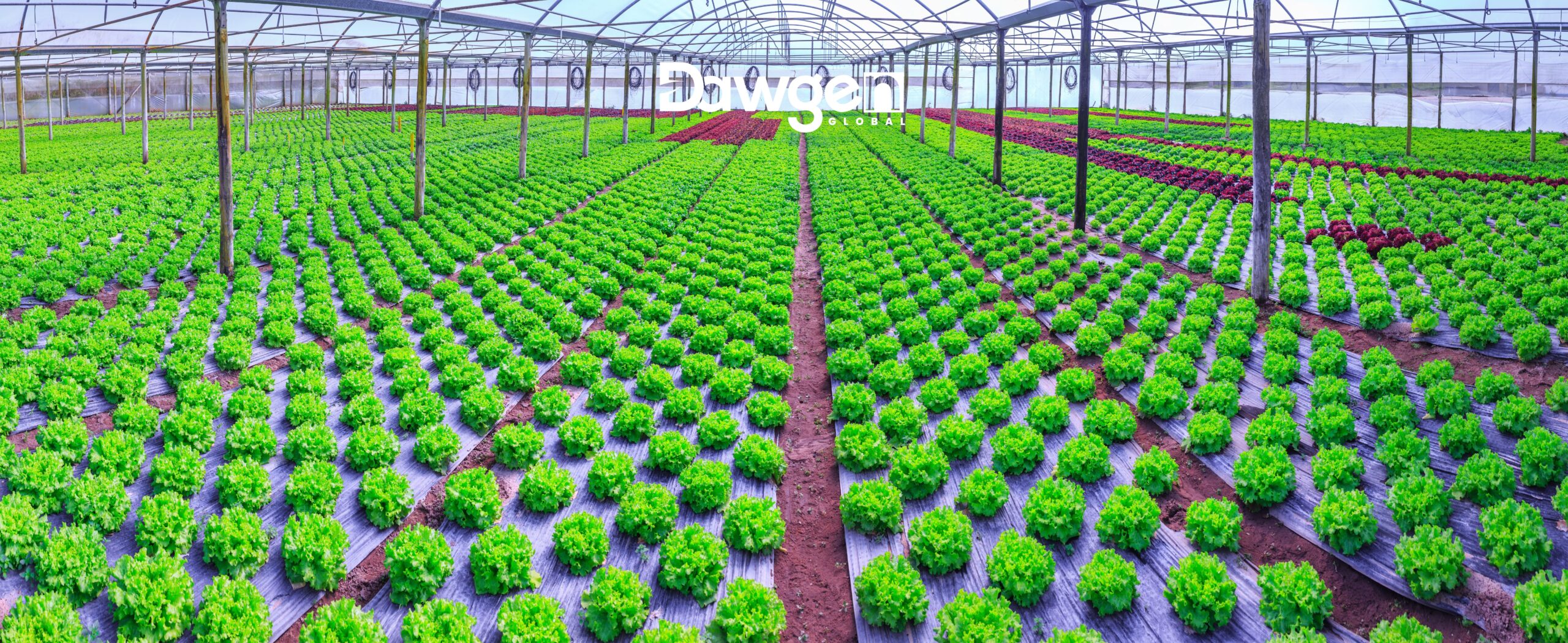
Agriculture and humanity have walked together for millennia. From the first settled communities to today’s complex global food systems, farming has always been about one fundamental promise: feeding people while sustaining livelihoods.
But in the 21st century, that quiet promise is under intense pressure.
Disruptive technologies, global competition, shifting consumer expectations, and escalating ecological risks are forcing agribusinesses everywhere to change faster and smarter than ever before. For the Caribbean, the urgency is even greater: small island economies, high food import bills, climate vulnerability, and fragmented value chains all converge to make food security both a strategic imperative and a national security issue.
Dawgen Global believes the region can respond—not defensively, but decisively. That is why we have developed the Dawgen C-AGRI™ Caribbean Agribusiness Transformation Framework: a structured, branded model to help agribusiness leaders, investors, cooperatives, and policymakers grow sustainably, transform cost structures, and modernise operating models while strengthening food security and resilience.
This first article in our series explains why Caribbean agribusiness must transform now and how the Dawgen C-AGRI™ Framework provides a practical, regionalised roadmap for doing so.
1. The New Reality: Agriculture at an Inflection Point
For much of history, agriculture was local, slow to change, and largely shaped by tradition. Today, the reality is starkly different:
-
Technology is reshaping production – Precision agriculture, sensors, drones, artificial intelligence, and data-driven decision-making are redefining what “efficient farming” looks like.
-
Markets are global and unforgiving – Caribbean producers no longer compete only with their neighbours; they compete with producers in Latin America, North America, Europe, and Asia who may enjoy economies of scale, advanced logistics, and heavy R&D investment.
-
Climate risk is no longer theoretical – Droughts, flooding, hurricanes, soil degradation, and saltwater intrusion are already impacting yields, supply chains, and insurance costs.
-
Consumers are more demanding – End-markets increasingly require traceability, sustainability, certifications, and adherence to global food safety and ESG standards.
For Caribbean agribusinesses—whether a smallholder cooperative, a vertically integrated producer, a large agro-processor, or a state-owned entity—standing still now equals falling behind.
2. Why Transformation Is Non-Negotiable for the Caribbean
Caribbean countries face a unique combination of constraints and opportunities. While the detail varies by island, several structural realities are shared across the region:
2.1 Food Security and Import Dependence
Many Caribbean economies import a large share of their food consumption. This leads to:
-
Vulnerability to global price shocks and supply chain disruptions.
-
Pressure on foreign exchange reserves.
-
Increased exposure to geopolitical and logistical disruptions (shipping, fuel, conflict).
Strengthening local and regional production is therefore not only a development goal but a strategic hedge against global volatility.
2.2 Climate Vulnerability and Ecological Stress
The region sits on the frontline of climate change:
-
More frequent and intense hurricanes.
-
Drought and water scarcity in some territories.
-
Coastal erosion and saltwater intrusion affecting arable land.
-
Soil degradation and loss of biodiversity.
Agribusiness must become climate-smart, adopting practices that both adapt to and mitigate climate impacts, while maintaining or increasing yields.
2.3 Fragmented Value Chains and Scale Challenges
Many producers operate at small scale, with:
-
Limited aggregation of output.
-
Weak links between primary producers, processors, distributors, and export markets.
-
Insufficient cold chain, storage, and logistics capability.
-
Underdeveloped branding, marketing, and market intelligence.
Without integrated value chains, it is hard to capture value, attract investment, and ensure consistent quality.
2.4 Cost Pressures and Low Productivity
High input costs, inefficient operations, and outdated production practices translate into:
-
Thin or negative margins.
-
Difficulty competing with imports.
-
Limited ability to invest in technology or expansion.
Transforming cost structures is not just about cutting costs; it is about reconfiguring operations and capital deployment for long-term competitiveness.
2.5 Demographics, Employment and Social Stability
Agriculture is central to rural livelihoods. Without a transformed, profitable, future-oriented agribusiness sector:
-
Youth may continue to exit agriculture, deepening labour and skills gaps.
-
Rural communities risk economic stagnation and social instability.
-
The perception of agriculture as “backward” remains unchallenged.
A modern, tech-enabled agribusiness sector can reposition agriculture as a high-potential career and investment path for the next generation.
3. A Strategic Opportunity: From Vulnerability to Value Creation
While the challenges are significant, so too are the opportunities:
-
Year-round growing conditions enable multiple cropping cycles.
-
Proximity to major markets (e.g., North America) supports fresh export potential.
-
Niche, high-value segments—organics, specialty crops, functional foods, nutraceuticals—are growing globally.
-
Rising interest in sustainable, traceable, ethically produced products aligns well with community-based, smallholder-driven models.
What is missing in many cases is not potential, but a coherent, structured, investable transformation roadmap.
That is exactly what the Dawgen C-AGRI™ Caribbean Agribusiness Transformation Framework is designed to provide.
4. Introducing the Dawgen C-AGRI™ Framework
The Dawgen C-AGRI™ Framework is a structured model tailored to the realities of Caribbean agribusiness. It has one clear purpose:
To help agribusiness leaders transform their organisations into climate-smart, tech-enabled, financially resilient, and market-competitive enterprises that strengthen Caribbean food security.
C-AGRI stands for:
-
C – Climate & Sustainability
-
A – AgriTech & Data
-
G – Governance, Risk & Compliance
-
R – Returns, Finance & Cost Structures
-
I – Inclusive Value Chains & Markets
These five pillars are supported by a cross-cutting focus on operating models, talent, and partnerships.
This article provides a high-level overview of each pillar. In subsequent articles, we will dive deeper into each component, providing more detailed tools, case examples, and decision frameworks.
5. C – Climate & Sustainability: Building Resilience, Not Just Yield
The first pillar recognises that in the Caribbean, climate and sustainability cannot be afterthoughts—they must be design principles.
Under the Climate & Sustainability pillar, the C-AGRI™ Framework focuses on:
-
Climate-smart production systems – crop selection, rotation, integrated pest management, livestock systems adapted to changing conditions.
-
Water management – irrigation efficiency, rainwater harvesting, watershed management.
-
Soil health and biodiversity – regenerative practices, organic matter management, agroforestry, and conservation agriculture.
-
Resilience planning – disaster risk reduction, insurance strategies, infrastructural resilience, and contingency planning.
-
Sustainability metrics and reporting – monitoring environmental impact, aligning with emerging ESG expectations from banks, investors, and export markets.
The goal is to shift from reactive responses to storms and droughts towards proactive, system-level resilience.
6. A – AgriTech & Data: From Intuition to Intelligence
Many Caribbean farms still rely heavily on experience and intuition. While this knowledge is invaluable, it must be augmented by data and technology to remain competitive.
The AgriTech & Data pillar addresses:
-
Digital farm management – using software to track inputs, yields, labour, and costs in real time.
-
Precision agriculture tools – sensors, satellite imagery, and drone data to optimise fertiliser, water, and pesticide use.
-
Automation and mechanisation – appropriate-scale equipment that boosts productivity without destroying employment.
-
Data-driven decision-making – using analytics to answer key questions: Which crops are most profitable? Which fields underperform? Where do we lose margin in the value chain?
-
Tech partnerships and platforms – collaborating with technology providers, startups, and research institutions to pilot and scale innovations.
The outcome is a shift from reactive management to predictive and prescriptive decision-making.
7. G – Governance, Risk & Compliance: Trust as a Competitive Advantage
As agribusiness becomes more capital-intensive, regulated, and integrated into international markets, strong governance and robust risk management move from “nice to have” to “non-negotiable”.
The Governance, Risk & Compliance pillar focuses on:
-
Corporate governance structures – boards, oversight, clear roles and responsibilities.
-
Enterprise risk management (ERM) – identifying and managing key risks: climate, operational, financial, reputational, regulatory, and cyber.
-
Food safety and quality standards – HACCP, GLOBALG.A.P, ISO standards, and other certifications relevant to target markets.
-
Traceability and transparency – systems that track product from farm to fork, building trust with buyers and regulators.
-
Regulatory compliance – understanding and meeting local and international requirements (labelling, phytosanitary rules, export regulations).
In a world where buyers demand reliability and transparency, trust becomes a tangible competitive advantage—and good governance is how you manufacture that trust.
8. R – Returns, Finance & Cost Structures: Making Agribusiness Investable
No transformation is sustainable if the economics do not work.
The Returns, Finance & Cost Structures pillar helps agribusinesses:
-
Understand their true unit economics – cost per hectare, per kilo, per processed unit; break-even points; margin by product line.
-
Identify cost transformation levers – input optimisation, process redesign, logistics efficiency, waste reduction.
-
Structure investment projects – greenfield and brownfield investments, CAPEX planning, scenario modelling, and risk-adjusted returns.
-
Access appropriate finance – bank lending, development finance institutions, blended finance, impact investors, PPPs, and venture capital where appropriate.
-
Strengthen financial management – budgeting, forecasting, working capital management, and performance dashboards.
By repositioning agribusinesses as investable assets, this pillar connects farm and field to the broader world of capital markets and strategic investors.
9. I – Inclusive Value Chains & Markets: From Isolated Actors to Integrated Ecosystems
Finally, the Inclusive Value Chains & Markets pillar recognises that no actor can transform alone.
This pillar addresses:
-
Aggregation models – cooperatives, producer organisations, outgrower schemes, contract farming, and cluster models.
-
Processing and value addition – moving beyond raw commodity exports to higher-value products and branded goods.
-
Market development and diversification – local, regional (CARICOM), and extra-regional markets; niche and premium segments.
-
Logistics and distribution – storage, cold chain, transport, and last-mile delivery solutions.
-
Social inclusion and community impact – ensuring that smallholders, women, youth, and rural communities share in the value created.
The objective is to build integrated, inclusive, and competitive value chains that link Caribbean producers not just to buyers, but to resilient, long-term market relationships.
10. From Framework to Action: How Dawgen C-AGRI™ Supports Leaders
A framework is only as powerful as its implementation.
Dawgen Global has designed C-AGRI™ not as a theoretical model, but as a practical advisory architecture that guides real-world projects across the region.
A typical C-AGRI™ engagement may include:
-
C-AGRI™ Diagnostic
-
Assess current performance and maturity across the five pillars.
-
Identify gaps, risks, and high-impact opportunities.
-
-
Strategic Roadmap & Operating Model Design
-
Define a 3–5 year transformation vision.
-
Redesign the operating model (processes, technology, governance, partnerships).
-
-
Financial Modelling & Investment Case
-
Build robust financial projections and scenarios.
-
Develop an investment case suitable for banks, investors, and development partners.
-
-
Implementation Support
-
Programme management office (PMO).
-
Technology selection and vendor coordination.
-
Governance, risk, and compliance frameworks.
-
-
Capability Building & Change Management
-
Training for management and operational teams.
-
Coaching for leaders and boards.
-
Change communication and stakeholder engagement.
-
Because Dawgen Global is an integrated multidisciplinary professional services firm, we can bring together:
-
Strategy and transformation specialists
-
Financial and tax advisors
-
Risk, governance, and ESG professionals
-
Technology and digital transformation experts
-
Legal and compliance advisors
…all aligned around one ambition: to help you build a stronger, more resilient, more profitable agribusiness that supports Caribbean food security.
11. Partner with Dawgen Global on Your C-AGRI™ Journey
The Caribbean does not lack potential. It lacks:
-
Coordinated, actionable frameworks for transformation.
-
Investable strategies that attract the right capital.
-
Integrated advisory partners who understand both the region and the technicalities of modern agribusiness.
The Dawgen C-AGRI™ Caribbean Agribusiness Transformation Framework was created precisely to fill that gap.
If you are:
-
A government ministry or agency responsible for agriculture, food security, or rural development.
-
A ** commodity board, cooperative, or producer organisation** seeking to modernise and scale.
-
A private agribusiness, agro-processor, or distributor ready to upgrade operations, secure new markets, or attract investment.
-
An investor, lender, or development partner exploring Caribbean agribusiness opportunities.
…then now is the time to act.
Invite Dawgen Global to Develop a Tailored C-AGRI™ Advisory Proposal
Dawgen Global can work with you to:
-
Conduct a focused C-AGRI™ Diagnostic of your current agribusiness or sector.
-
Co-create a transformation roadmap aligned to national or corporate priorities.
-
Develop a bankable, investment-ready proposal that speaks the language of financiers, regulators, and stakeholders.
At Dawgen Global, we help you make Smarter and More Effective Decisions.
Let’s have a conversation about how the Dawgen C-AGRI™ Framework can support your agribusiness or national food security agenda:
🔗 Discover More: https://dawgen.global
📧 Email: [email protected]
📞 Caribbean Office (Jamaica): 876-929-3670 / 876-929-3870
📞 USA Office: 855-354-2447
Together, we can move Caribbean agriculture from vulnerability to vision, value, and victory—feeding our people, protecting our environment, and building a stronger regional future.
About Dawgen Global
“Embrace BIG FIRM capabilities without the big firm price at Dawgen Global, your committed partner in carving a pathway to continual progress in the vibrant Caribbean region. Our integrated, multidisciplinary approach is finely tuned to address the unique intricacies and lucrative prospects that the region has to offer. Offering a rich array of services, including audit, accounting, tax, IT, HR, risk management, and more, we facilitate smarter and more effective decisions that set the stage for unprecedented triumphs. Let’s collaborate and craft a future where every decision is a steppingstone to greater success. Reach out to explore a partnership that promises not just growth but a future beaming with opportunities and achievements.
✉️ Email: [email protected] 🌐 Visit: Dawgen Global Website
📞 📱 WhatsApp Global Number : +1 555-795-9071
📞 Caribbean Office: +1876-6655926 / 876-9293670/876-9265210 📲 WhatsApp Global: +1 5557959071
📞 USA Office: 855-354-2447
Join hands with Dawgen Global. Together, let’s venture into a future brimming with opportunities and achievements


