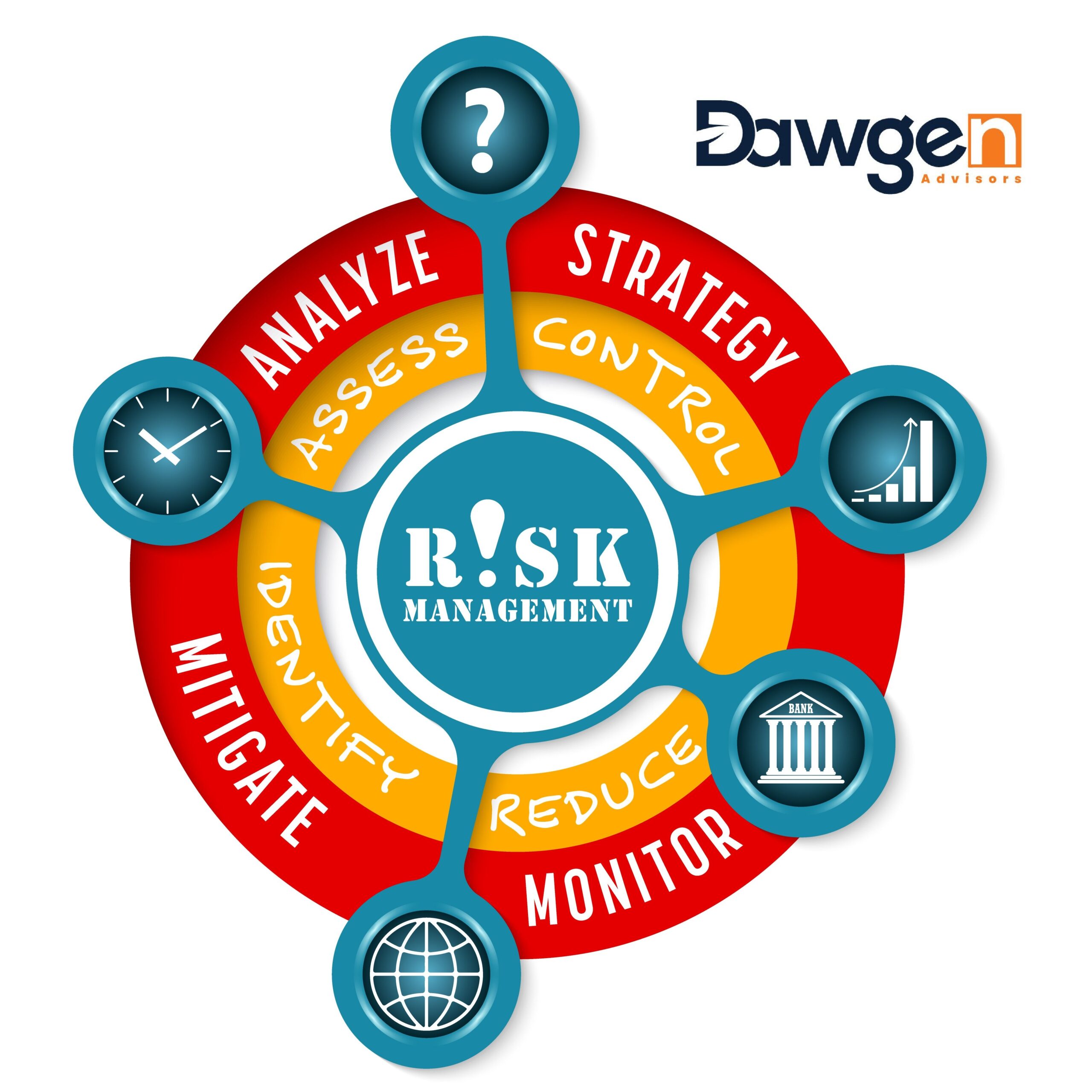
How Jamaica and the wider Caribbean can keep visitor spend flowing—and local value rising—through shocks, surprises, and systemic risk
Why resilience is now the core strategy
Caribbean tourism succeeds in a world of volatility: hurricanes, heavy rainfall, droughts, sargassum blooms, pandemics, cyber incidents, supply-chain snags, commodity spikes, social unrest, airline scheduling shocks—you name it. If Micro, Small and Medium Tourism Enterprises (MSTEs) (expanded here at first mention as Micro, Small and Medium Tourism Enterprises) and anchor buyers can’t keep trading through disruptions, leakages soar as imports and foreign intermediaries step back in.
Resilience is therefore not a side project; it is the operating system for keeping the tourism value chain alive—farm to fork, dock to dining room, workshop to hotel retail, and community trail to concierge desk. This playbook lays out a practical, metrics-driven approach to de-risking Caribbean tourism linkages. It expands each abbreviation on first use and focuses on routines that organizations can adopt this quarter, not someday.
What “resilience” really means in tourism linkages
Resilience is the capacity to prepare for, absorb, adapt, and rapidly recover from disruptions—while learning and improving after each event. In practice, it combines:
-
Business Continuity Planning (BCP)—Business Continuity Planning—for properties, suppliers, hubs, and tour operators.
-
Operational redundancy and substitution (people, products, routes, and systems).
-
Finance that cushions cash-flow and funds quick restarts.
-
Data and governance that surface risk early and coordinate decisions across ministries, Destination Management Organizations (DMOs)—Destination Management Organizations—buyers, and communities.
The five big risk families—and how they hit the chain
-
Hydro-meteorological risks (hurricanes, flooding, drought, landslides, sargassum): Damage to farms and landing sites; road closures; refrigeration failures; canceled tours.
-
Health risks (pandemics, foodborne illness outbreaks): Demand shocks; staffing shortages; sudden standards tightening (e.g., hygiene).
-
Supply & logistics risks (fuel price spikes, vessel delays, labor disruptions): OTIF failures—on-time, in-full (OTIF) is expanded here as on-time, in-full—and cost escalations that push buyers back to imports.
-
Cyber & data risks (ransomware, fraud, system outages): Portal downtime; e-invoicing failures; payment diversion scams.
-
Social, security, and regulatory risks (protests, crime spikes, licensing changes): Route cancellations; insurance gaps; concierge reluctance.
A 3-layer resilience architecture (policy → operations → site)
-
Policy layer (national/regional): Roles, funding, standards, and information flows.
-
Operating layer (industry & programme): Hubs, buyers, SDCs, logistics partners, and finance facilities.
-
Site layer (supplier and experience): Farm, landing beach, bakery, craft studio, tour trail, and property back-of-house.
Resilience fails if any layer is missing. The rest of this article climbs up and down these layers with concrete tools.
Layer 1 — Policy & coordination that shorten crises
1. Tourism Risk Steering Group (TRSG)
A standing committee that includes the tourism ministry, DMO, statistics office, meteorological and disaster agencies, agriculture and fisheries ministries, utilities, police, hotel and attractions associations, logistics partners, and banks. It activates pre-agreed protocols when alerts hit.
-
Cadence: Quarterly readiness reviews; Emergency Operations Center (EOC)—Emergency Operations Center—activation for severe events.
-
Tools: A “Resilience Mode” playbook with substitution policies, temporary waivers (e.g., duties for emergency parts), and public messaging templates.
2. Early Warning to Procurement (EWP) pipeline
Link official Early Warning Systems (EWS)—Early Warning Systems—to procurement calendars. When alerts cross thresholds, the portal pushes Request-for-Quote (RFQ) pooling, pre-positioned orders, and automatic substitution menus (e.g., snapper ↔ lionfish; lettuce ↔ callaloo).
3. Rapid damage & needs assessment (RDNA)
Within 72 hours post-event, an RDNA template collects supplier status via mobile forms (offline-capable). A minimal dataset—location, damage type, power/water status, cold chain, staff availability—drives targeted support and route rebuilding.
Layer 2 — Operating model for reliability under stress
4. Dual-sourcing & substitution rules
Every priority category (produce, seafood, bakery, soft goods, tours) maintains:
-
Primary + alternate suppliers with clear escalation when OTIF drops.
-
Substitution menus with pre-approved specs and prices (reduce buyer rework).
-
Buffer stock thresholds at Aggregation Hubs (cold room days defined per item).
5. Aggregation Hubs as resilience nodes
Hubs are more than logistics—they’re micro-grids for continuity:
-
Power: Backup generator + Uninterruptible Power Supply (UPS)—Uninterruptible Power Supply—to protect freezers/chillers.
-
Water: Storage tanks and filtration.
-
Communications: Multi-SIM routers with failover; radio as last resort.
-
Quality: Temperature data loggers with alerts (SMS/app) and simple Internet of Things (IoT)—Internet of Things—sensors.
-
Staging: Pre-labeled emergency SKUs and route maps that avoid blocked roads.
6. Contract clauses that breathe
Standard Service-Level Agreements (SLAs)—Service-Level Agreements—include:
-
Force-majeure windows with data-backed substitutions rather than blanket cancellations.
-
Escalators/De-escalators for volume when performance stabilizes/declines.
-
Rapid dispute timelines (≤7 days) to keep cash flowing.
7. Finance instruments for shock absorption
-
Supply-Chain Finance (SCF)—Supply-Chain Finance—keeps Days-to-Cash ≤ 15 even when volumes drop.
-
Credit Guarantees (CGs)—Credit Guarantees—for short-term working capital top-ups.
-
Results-Based Grants (RBGs)—Results-Based Grants—for safety gear, generator hookups, and certification renewals post-event.
-
Parametric micro-insurance (payout on wind/rain thresholds) for small suppliers and CBT operators.
8. Cyber hygiene & payment integrity
-
Multi-Factor Authentication (MFA)—Multi-Factor Authentication—on bank detail changes; enforced cool-off period.
-
Whitelist payments to verified accounts; Application Programming Interface (API)—Application Programming Interface—logging for portal events.
-
Routine tabletop exercises for ransomware and payment diversion scenarios.
Layer 3 — Site-level resilience (templates you can deploy)
9. Supplier BCP mini-plan (one-pager)
-
People: Role backups; emergency contact tree.
-
Assets: Inventory of critical equipment; storage location; spare parts list.
-
Power & water: Generator schedule, fuel suppliers, tank capacity.
-
Data: Daily paper fallback for invoices/delivery notes; safe storage for stamps and seals.
-
Triggers: What to do at Watch, Warning, and Impact phases (lockdown, move stock, secure tools).
-
Restart: 24/48/72-hour checklists and quality re-validation steps.
Provide this as a laminated sheet. Keep it simple; practice twice a year.
10. Safe-operations kits by category
-
Produce/Seafood: Ice boxes, thermometers, sanitizers, PPE—Personal Protective Equipment, labels, moisture-resistant manifests.
-
Bakery: Moisture-barrier containers, generator-safe ovens (where applicable), allergen labels.
-
Soft goods: Waterproof bins, silica packs, repair kits.
-
Tours: First-aid kit, radios, GPS pins, shaded rest points, extra water, printed safety scripts.
11. Experience reroute plans
For every curated trail, define Plan B and Plan C with pre-approved timing, prices, and insurance. Concierge scripts and QR codes update guests in plain language with options—rebook, substitute, or refund.
12. Food safety continuity (HACCP under stress)
Hazard Analysis and Critical Control Point (HACCP)—Hazard Analysis and Critical Control Point—plans include emergency temperature limits, discard thresholds, and corrective actions after power disruptions. Hubs maintain “red tag” logs for suspect batches.
The Resilience Dashboard (what to watch weekly & quarterly)
Weekly Ops View (for hubs, buyers, SDCs):
-
OTIF trend (last 8 weeks) by category.
-
Quality Acceptance Rate and rejection reasons.
-
Incidents (safety, cyber, logistics) and status.
-
Days-to-Cash for small suppliers.
-
Route heatmap (GIS pins for blocked/delayed segments).
Quarterly Leadership View (for TRSG/Council):
-
Resilience Score (0–100) per category: composite of redundancy, buffer days, alternate suppliers verified, drills done, and incident closure time.
-
Finance uptake: SCF/CG/RBG volumes; parametric insurance penetration.
-
Inclusion lens: share of women-/youth-led/CBT suppliers with active BCPs.
-
Public Net Promoter Score (NPS)—Net Promoter Score—trend for experiences, with a note on resilience-related recoveries.
All indicators roll into Monitoring, Evaluation, Accountability, and Learning (MEAL)—Monitoring, Evaluation, Accountability, and Learning—cycles and inform Tourism Satellite Account (TSA)—Tourism Satellite Account—extensions (e.g., domestic inputs retained during shocks). They also feed the government Planning, Monitoring, Evaluation, and Reporting System (PMES)—Planning, Monitoring, Evaluation, and Reporting System.
Seven resilience practices that pay for themselves
-
Forecast + Freeze: In peak seasons, lock two-week rolling forecasts and freeze three days of core SKUs at hubs. Waste drops; imports fall.
-
Escorted Consolidation: During security concerns, run convoy windows—shared, timed routes with a lead/lag vehicle and hotline.
-
Menu Engineering: Chef-approved substitution ladders (taste-tested) avoid emergency imports and guest disappointment.
-
Ticketed Time Windows: Tours depart in waves to manage weather windows and reroutes without chaos.
-
Proactive Certification: Stagger HACCP renewals and insurance so they don’t all fall in storm months.
-
Power Triage: A simple matrix that assigns generator hours to the highest-impact equipment first (freezers before lights).
-
After-Action Learning: Two-page After-Action Review (AAR) template—what happened, what worked/failed, what we’ll change; publish top three fixes within a week.
People: training and command during disruption
-
Incident Command System (ICS)—Incident Command System—lite: define who is Incident Lead at hub/supplier; who talks to buyers; who clears roads/permits.
-
Tabletop drills every six months (storm, cyber, contamination, protest).
-
Psychological safety: Leaders reward early reporting; no blame for raising concerns fast.
-
Volunteer rosters: Cross-train staff for packing, dispatch, concierge communications.
Communications: clarity beats speed (but aim for both)
-
Single source of truth: Event page updated by the Secretariat; status messages syndicated to hotel apps, portal, and WhatsApp lists.
-
Templates: Pre-approved SMS/app scripts for guests and staff; multilingual where needed.
-
Media posture: Spokespeople trained; facts, not speculation; show action steps and expected review time; protect privacy.
Finance: keep oxygen in the system
-
Automatic SCF trigger: When a delivery is marked accepted, portal pushes an offer: Advance up to 85% within 48 hours.
-
Dynamic Discounting: Buyers with cash pay early at a sliding discount (cheapest resilience tool in the kit).
-
Emergency RBG window (60 days): Reimburses safety kits, labels, and small equipment after verification.
-
Bank moratoria: TRSG brokers short moratoria on principal for impacted suppliers, tied to BCP proof.
Inclusion & equity in resilience
-
Priority routing for women- and youth-led firms and Community-Based Tourism (CBT)—Community-Based Tourism—partners during constrained capacity.
-
Childcare and safe transport stipends for evening shifts during catch-up periods.
-
Accessible reroutes for guests with mobility needs; captioned audio for hearing-impaired visitors.
Cyber resilience for the sourcing portal and buyers
-
Segregated backups (immutable) daily; recovery time objective (RTO) ≤ 8 hours for core ordering and invoicing.
-
Least-privilege access; quarterly access reviews.
-
Anomaly detection for invoice edits, bank detail changes, or unusual order spikes.
-
Phishing drills for concierge and accounts-payable teams.
Worked examples (category scenarios)
A. Bakery & Pastry: 48-hour flood disruption
-
T-24h: EWS alert; hub freezes 3-day flour/butter/yeast; buyers swap buffet pastries ↔ packaged items; SCF line extended by 20%.
-
T+0–24h: Two bakeries flooded; alternates activated; deliveries rerouted; generators run proofer cycles.
-
T+48h: OTIF back to 88% (from 95%); DD reduces Days-to-Cash to 10 days; AAR identifies drain retrofits.
B. Seafood: Sargassum bloom + small-craft advisory
-
T-72h: Portal pushes species substitution (lionfish, farmed tilapia) and menu notes to chefs; price escalators apply.
-
T+0–72h: Cold chain maintained; tours pivot to “dock-to-kitchen” storytelling with training on sustainable species.
-
Outcome: Local content dips only 6 points (vs 20+ without plan); NPS holds at +58.
C. Community Trails: Security advisory on a popular route
-
T-0: TRSG flags a corridor risk; Plan B activates (alternate studio + museum stop).
-
Comms: Concierges brief guests; refunds offered; 72% choose reroute.
-
Post: Police/Community mediate; route re-opens with earlier slots; experience NPS rebounds to +62.
Indicators for leaders (with exact formulas)
-
Resilience Score (0–100)
-
Weighted composite of: % suppliers with BCPs; dual-source coverage; buffer days at hubs; drill completion; incident closure time.
-
-
Local Content Retained During Shock (%)
-
Domestic spend during shock period ÷ Domestic spend baseline for comparable days × 100.
-
-
OTIF Recovery Time (days)
-
Days from shock onset to return to ≥90% OTIF.
-
-
Days-to-Cash (median)
-
Delivery accepted → funds received (tracked for small suppliers).
-
-
Incident Closure Rate (%)
-
Incidents closed within target window ÷ total incidents × 100.
-
-
Safety Incidents per 10,000 Guests
-
Serious and minor, reported separately; target = zero serious.
-
-
Inclusion Continuity Index (0–100)
-
Share of inclusion-priority suppliers (women/youth/CBT) that remain active through shock.
-
90-day resilience installation plan (Jamaica-ready, Caribbean-portable)
Days 0–15 — Design & Commit
-
Stand up the TRSG; approve Resilience Mode playbook.
-
Choose three categories (e.g., produce, bakery, tours).
-
Agree substitution menus; baseline OTIF, Local Content, Days-to-Cash.
Days 16–45 — Build & Drill
-
Equip hubs (UPS, radios, temp loggers); set buffer-stock rules.
-
Issue one-page BCP templates; run tabletop drills (storm + cyber).
-
Wire EWS → portal alerts; pre-approve force-majeure clauses and DD terms.
Days 46–90 — Pilot & Publish
-
Run a planned “simulation week”: trigger substitutions and convoy windows.
-
Fix friction (paperwork, label gaps, comms).
-
Publish first Resilience Dashboard; add a two-case public note.
What success looks like after 6–12 months
-
Local Content Retained During Shock ≥ 85% vs baseline.
-
OTIF Recovery Time ≤ 5 days for mid-level disruptions.
-
Days-to-Cash ≤ 15 for small suppliers using SCF or DD.
-
Safety: Zero serious incidents; drills completed on schedule.
-
Inclusion: ≥ 70% of women-/youth-led and CBT suppliers active through two disruptions.
-
Confidence: Quarterly public Resilience Dashboard on time; learning actions closed before the next season.
How Dawgen Global implements resilience end-to-end
-
Design: TRSG setup, playbooks, substitution menus, contract language, and parametric micro-insurance options.
-
Operations: Hub upgrades, buffer-stock maths, route redesign, and BCP coaching through Supplier Development Centres (SDCs)—Supplier Development Centres.
-
Digital: EWS→portal integration, OTIF/quality telemetry, Geographic Information System (GIS)—Geographic Information System—route heatmaps, and Resilience Dashboard.
-
Finance: SCF/DD triggers, Credit Guarantees (CGs), and Results-Based Grants (RBGs) to restart fast.
-
MEAL: Indicator definitions, quarterly reviews, and public Resilience Scorecards aligned to TSA and PMES.
Next Step!
Shocks are certain; collapse is optional. With clear roles, practical buffers, smart substitutions, quick finance, clean data, and disciplined learning, Jamaica and the wider Caribbean can trade through disruption—keeping guests safe and satisfied while local value stays local.
If you want a 90-day installation that makes resilience real before the next season, Dawgen Global can lead the build, run the drills, and hand over a playbook your teams will own.
About Dawgen Global
“Embrace BIG FIRM capabilities without the big firm price at Dawgen Global, your committed partner in carving a pathway to continual progress in the vibrant Caribbean region. Our integrated, multidisciplinary approach is finely tuned to address the unique intricacies and lucrative prospects that the region has to offer. Offering a rich array of services, including audit, accounting, tax, IT, HR, risk management, and more, we facilitate smarter and more effective decisions that set the stage for unprecedented triumphs. Let’s collaborate and craft a future where every decision is a steppingstone to greater success. Reach out to explore a partnership that promises not just growth but a future beaming with opportunities and achievements.
✉️ Email: [email protected] 🌐 Visit: Dawgen Global Website
📞 📱 WhatsApp Global Number : +1 555-795-9071
📞 Caribbean Office: +1876-6655926 / 876-9293670/876-9265210 📲 WhatsApp Global: +1 5557959071
📞 USA Office: 855-354-2447
Join hands with Dawgen Global. Together, let’s venture into a future brimming with opportunities and achievements


