Executive Summary
For manufacturing SMEs—whether producing food and beverage, building materials, fabricated components, consumer goods, or assembling imported parts—profitability often depends on factors that traditional accounting systems do not capture well: yield losses, scrap, rework, overtime, downtime, quality exceptions, and the true cost of converting materials into finished goods. Without a production-capable ERP, management reporting can become a negotiation between operations and finance rather than a trusted fact base. Bills of Materials are maintained in spreadsheets, stock issues are approximate, WIP is unclear, and product costs drift away from reality over time.
ERP-enabled Manufacturing and Production modules solve this by connecting the shop floor (or assembly line) to inventory, purchasing, quality, and finance through a single set of controlled transactions. This creates traceability from raw material receipt → production consumption → yield and scrap → finished goods → shipment → COGS, and enables consistent reporting on unit economics, operational efficiency, and margin drivers. The outcome is not “more data,” but decision-grade reporting—accurate cost of sales, credible margin by product, and operational KPIs tied directly to financial performance.
This article explains how ERP manufacturing modules add value to SME reporting systems: BOM governance and version control, work orders, materials planning, WIP and backflushing, labour and overhead capture, yield/scrap reporting, quality management, and manufacturing analytics. We also outline a vendor-neutral approach to turning these requirements into an ERP RFP pack and demonstration scenarios that quickly reveal whether a solution is fit-for-purpose.
Next step: If your organisation is preparing to invite proposals, Dawgen Global can develop a vendor-neutral manufacturing requirements pack—process maps, costing/valuation design, control requirements, and board-ready dashboards. Request a proposal.
1) Why manufacturing capability changes the quality of financial reporting
In many SMEs, production is measured operationally (“we ran two shifts and produced 6,000 units”), while finance measures the result financially (“COGS is higher than expected again”). The gap is typically caused by limited visibility into:
-
yield losses (actual output vs expected output)
-
scrap and rework (and whether it is normal or abnormal)
-
material substitutions and unapproved changes
-
WIP (work in progress) at month-end
-
labour and overhead drivers (overtime, downtime, changeovers)
-
quality issues leading to returns, wastage, or warranty claims
-
inventory integrity (raw material consumption posted late or inaccurately)
A manufacturing-capable ERP transforms this by enforcing consistent transactions and capturing the production narrative as auditable data. That, in turn, produces more reliable:
-
inventory valuation (raw, WIP, finished goods)
-
COGS and gross margin
-
product profitability and pricing decisions
-
waste and yield reporting
-
variance analysis (what changed, why it changed, and where)
2) What “Manufacturing in ERP” typically includes
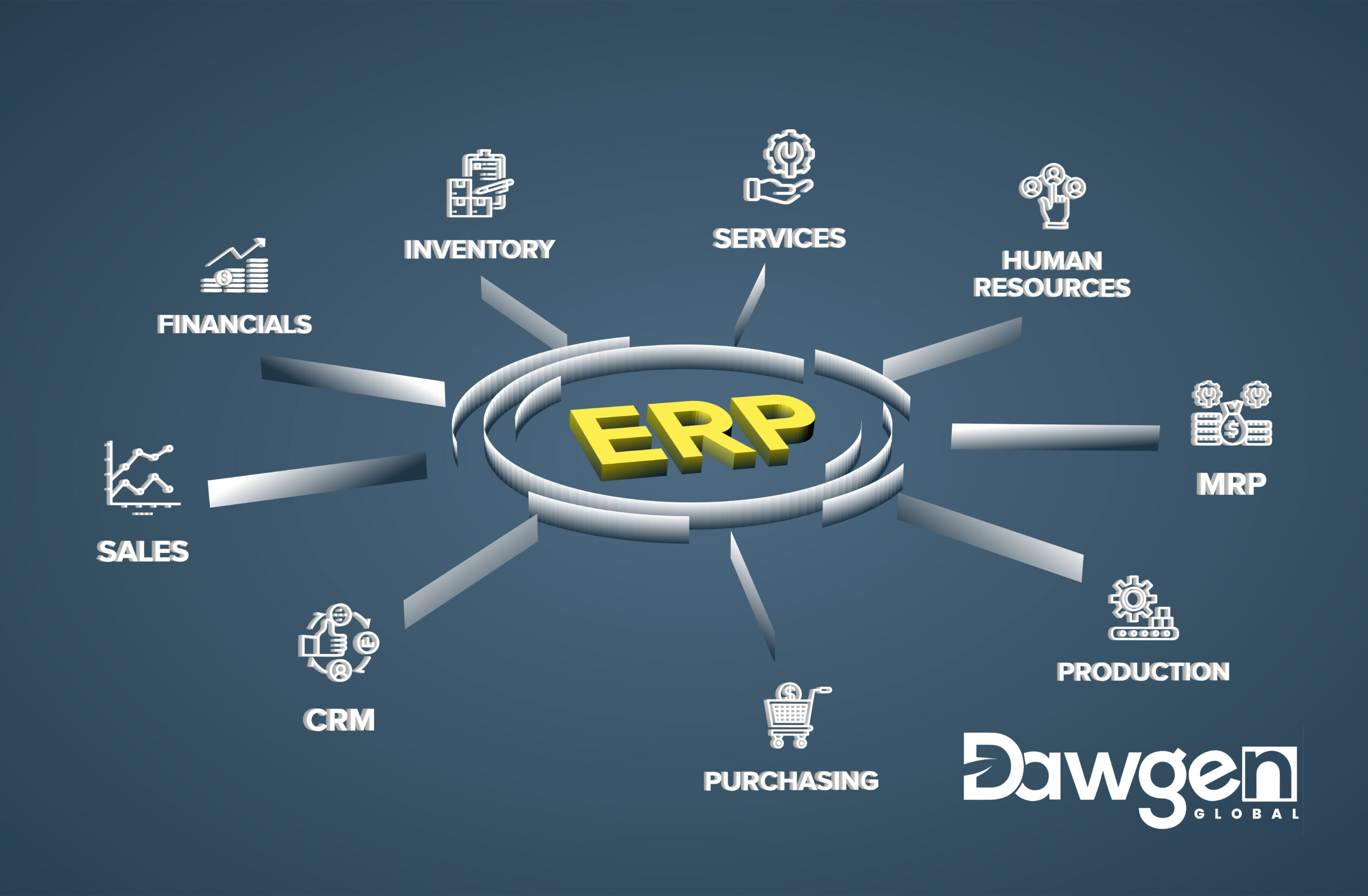
ERP manufacturing capability is usually delivered through an integrated set of components (configured according to the complexity of your operation):
-
Product & Item Master (Manufacturing Attributes)
UOM conversions, lot/serial tracking, shelf life, and manufacturing-specific classifications. -
Bill of Materials (BOM) and Routings
Component structure, alternates, substitutes, and step-by-step production operations. -
Work Orders / Production Orders
Planned and actual production, materials issue, labour capture, and completion to finished goods. -
Materials Planning (MRP or MRP-lite)
Demand-driven purchase and production suggestions, lead times, safety stock, and reorder logic. -
WIP Management
Visibility into what is in process, where it is, and how it should be valued. -
Shop Floor Execution (as required)
Time reporting, dispatch lists, status updates, and (where available) barcode or scanning support. -
Quality Management
Inspections, non-conformance, holds, rework, and traceability for recalls or customer claims. -
Costing and Variance Analysis
Standard cost or actual/average cost approaches, variances, yield impacts, and overhead allocation. -
Maintenance / Downtime (optional)
Machine uptime, preventive maintenance scheduling, and downtime reporting. -
Manufacturing Analytics
Yield, scrap, OEE-style metrics (where appropriate), throughput, and margin drivers.
Not every SME needs all of the above on day one. The goal is to implement the smallest set of controls and capture points that produce accurate costs and reliable production reporting.
3) BOM governance: the foundation of credible costing and planning
The Bill of Materials is not merely a technical document—it is a financial instrument. If the BOM is wrong, everything downstream is wrong:
-
raw material planning and purchasing
-
production scheduling
-
expected yield and standard usage
-
unit cost and gross margin
-
inventory valuation (raw/WIP/finished goods)
BOM disciplines that matter
-
version control: clearly define effective dates and approvals for BOM changes
-
alternates and substitutes: approved substitutes prevent informal substitutions that distort costs
-
unit of measure integrity: avoid silent conversions that create phantom variances
-
yield assumptions: define expected yield and pack-size realities (critical in food and process manufacturing)
-
scrap factors: specify normal loss expectations where relevant
-
routing alignment: ensure operations reflect how production actually occurs
Reporting value: With BOM governance in place, leadership can trust unit economics and variance reporting (what changed: price, usage, yield, labour, or overhead).
4) Work orders: turning production into traceable financial events
Without work orders, production can become an “after the fact” accounting exercise. Work orders create structure:
-
planned quantity and schedule
-
materials required vs materials consumed
-
labour planned vs labour used
-
status (released, in process, completed)
-
yield and scrap outcomes
-
completion into finished goods inventory
Key choices SMEs must make
-
Backflushing vs manual issue:
-
Backflushing issues standard materials automatically at completion (simpler, good for stable BOMs).
-
Manual issue records actual issues (more accurate, more operational discipline required).
-
-
WIP tracking level:
-
Some SMEs track WIP broadly. Others require step-level tracking (more detailed, more effort).
-
Reporting value: Work orders enable production performance reporting and improve month-end valuation integrity. Finance no longer relies on estimates and late journals to “balance” production.
5) Materials planning (MRP-lite): buying and producing based on demand, not intuition
When manufacturing SMEs rely on judgement alone, they tend to carry excess inventory “just in case,” while still suffering stock-outs of critical components.
ERP planning supports:
-
demand signals from sales orders, forecasts, and reorder points
-
component lead times and supplier constraints
-
safety stock and minimum batch sizes
-
suggested purchase orders and production orders
-
exception reporting for shortages and late supply
Even a simplified planning approach can reduce:
-
emergency purchases and premium freight
-
line stoppages due to missing components
-
inventory tied up in slow-moving materials
-
missed customer delivery dates
Reporting value: Planning creates measurable discipline—service levels, stock-out causes, and the cash impact of inventory decisions become visible and reportable.
6) WIP and period-end reporting: removing guesswork from management accounts
WIP is often the weakest point in SME reporting because it sits between operations and finance. Without ERP manufacturing controls, WIP is commonly valued by rough estimates or static percentages.
ERP allows WIP valuation to reflect:
-
actual materials issued to production
-
labour time captured (where used)
-
overhead allocation logic (where used)
-
stage of completion (where configured)
-
completed quantity vs planned quantity
Reporting value: Cleaner month-end close, fewer inventory and COGS corrections, and more credible management accounts.
7) Yield, scrap, and rework: making losses visible and actionable
In manufacturing, margin leakage often hides inside yield losses and scrap. ERP enables:
-
yield reporting: expected vs actual output
-
scrap classification: normal vs abnormal scrap (critical for performance accountability)
-
rework tracking: cost and time impact of rework cycles
-
root-cause categories: machine, operator, supplier quality, specification, changeovers
This creates two major benefits:
-
operational improvement is guided by facts, not opinion
-
finance can quantify loss drivers and protect margin
Reporting value: A management view of “cost of poor quality” and “cost of inefficiency” that can be tied directly to product profitability.
8) Quality management: protecting brand, compliance, and financial outcomes
For many Caribbean SMEs—particularly in food, consumer goods, and regulated environments—quality is not optional. ERP quality capabilities can include:
-
receiving inspections (supplier quality controls)
-
in-process checks (critical control points)
-
finished goods inspections
-
non-conformance reporting and corrective actions
-
quarantine/hold stock status
-
traceability by lot/serial number
-
recall readiness (where needed)
-
customer complaint and returns linkage to batches
Reporting value: Quality KPIs can be reported alongside cost KPIs, linking defects and customer claims to margin and rework costs.
9) Labour and overhead: practical options for SMEs
Not all SMEs need complex shop-floor time systems. But most need some method to reflect labour and overhead realistically.
Common SME-friendly approaches
-
Simplified labour capture: time by work order or by shift/day
-
Standard labour model: fixed labour content per unit with variance analysis
-
Overhead allocation: a practical driver (labour hours, machine hours, or units)
-
Focused variance reporting: highlight material usage variance and yield variance first (often the biggest drivers)
Reporting value: A credible view of conversion cost that supports pricing, product mix decisions, and operational improvement.
10) The manufacturing dashboards leadership should expect
A properly designed ERP manufacturing implementation should produce “board-ready” dashboards such as:
A) Production performance
-
planned vs actual output by line/product
-
schedule adherence and backlog
-
throughput and cycle time
-
downtime (where captured)
B) Yield and scrap
-
yield variance by product and batch
-
scrap rates by cause category
-
rework frequency and cost impact
-
abnormal loss reporting
C) Cost and margin drivers
-
unit cost trends (materials, labour, overhead)
-
purchase price variance vs usage/yield variance
-
gross margin by product family
-
cost-to-serve or cost-to-make indicators
D) Quality and traceability
-
defect rates by stage (incoming/in-process/finished)
-
customer complaints and returns linked to lots/batches
-
supplier quality performance and claims
These dashboards turn manufacturing from a “black box” into a reportable, measurable system.
11) A practical implementation sequence for manufacturing SMEs
Phase 1: Stabilise master data and basic controls
-
item master and UOM governance
-
BOM version control and approvals
-
work order basics (release, consume, complete)
-
inventory integrity (raw, WIP, FG movement discipline)
-
simple reporting: yield, scrap, and production completion
Phase 2: Improve planning and valuation
-
planning parameters and lead times
-
MRP-lite suggestions and exception reporting
-
WIP valuation approach aligned to finance reporting
-
standard cost model (if appropriate) and variance focus
Phase 3: Optimise and expand
-
quality management workflows and traceability depth
-
advanced scheduling, scanning, or shop-floor execution (where justified)
-
maintenance/downtime analytics (where needed)
-
integrated profitability reporting and continuous improvement metrics
The principle: secure the fundamentals first, then scale.
12) Translating manufacturing needs into a vendor-neutral ERP RFP pack
If your organisation intends to invite proposals, your RFP should make manufacturing requirements explicit and testable.
A) Functional requirements (manufacturing)
-
BOM creation, versioning, and approvals
-
alternates/substitutes and effective dates
-
work orders: release → issue/backflush → completion → scrap
-
WIP handling and visibility
-
MRP-lite planning, lead times, safety stock, batch sizes
-
lot/serial traceability (where required)
-
returns and rework workflows (as relevant)
B) Costing and reporting requirements
-
valuation method alignment (average/standard/etc.)
-
landed cost and material cost integration
-
yield and scrap reporting
-
variance reporting by type (price, usage, yield, labour, overhead)
-
management dashboards and export options
C) Controls and governance requirements
-
segregation of duties (BOM changes, inventory adjustments, approvals)
-
audit trails for master data changes
-
approval thresholds for scrap/write-offs
-
controlled status changes (released/completed/cancelled)
D) Demonstration scenarios (the fastest truth test)
Require vendors to demonstrate your real-world processes, for example:
-
Create BOM with substitutes and effective dates → approve change
-
Work order release → material consumption (manual and/or backflush) → record scrap → complete FG
-
Show yield variance report and its financial impact
-
Display WIP valuation at month-end and reconciliation to GL
-
Run planning suggestion based on demand and lead times → show exception reporting
-
Trace a finished goods batch back to raw material lots and supplier receipts
Good vendors will welcome scenarios; weak fits will avoid them.
Conclusion and Next Steps
Manufacturing profitability is not determined only by sales price—it is determined by disciplined execution and credible visibility into materials, yield, quality, and conversion costs. ERP manufacturing modules create that visibility and convert production activity into reporting leadership can trust: accurate inventory valuation, credible gross margin, and operational KPIs tied directly to financial outcomes.
How Dawgen Global can help !
Dawgen Global supports manufacturing and assembly organisations with ERP readiness, requirements definition, vendor-neutral selection and RFP facilitation, implementation governance, costing/valuation design, and dashboard reporting aligned to management accounts.
If your organisation is preparing to invite proposals, Dawgen Global can develop a vendor-neutral ERP Manufacturing RFP pack—process maps, BOM/work order requirements, costing and valuation design, controls, demo scenarios, and board-ready reporting dashboards included. Request a proposal.
Contact Dawgen Global
🔗 https://dawgen.global
📧 [email protected]
📞 Caribbean: 876-9293670 | 876-9293870
About Dawgen Global
“Embrace BIG FIRM capabilities without the big firm price at Dawgen Global, your committed partner in carving a pathway to continual progress in the vibrant Caribbean region. Our integrated, multidisciplinary approach is finely tuned to address the unique intricacies and lucrative prospects that the region has to offer. Offering a rich array of services, including audit, accounting, tax, IT, HR, risk management, and more, we facilitate smarter and more effective decisions that set the stage for unprecedented triumphs. Let’s collaborate and craft a future where every decision is a steppingstone to greater success. Reach out to explore a partnership that promises not just growth but a future beaming with opportunities and achievements.
 Email: [email protected]
  Visit: Dawgen Global Website

 WhatsApp Global Number : +1 555-795-9071
Caribbean Office: +1876-6655926 / 876-9293670/876-9265210  WhatsApp Global: +1 5557959071
USA Office: 855-354-2447
Join hands with Dawgen Global. Together, let’s venture into a future brimming with opportunities and achievements


