HomeCategory

Articles

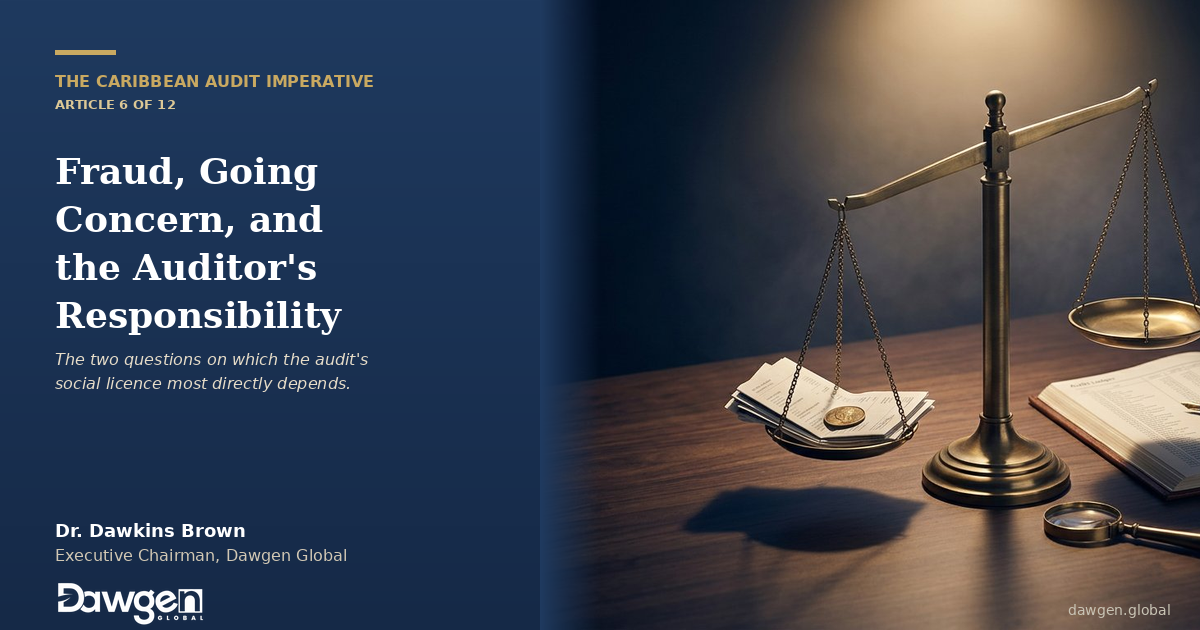
Fraud, Going Concern, and the Auditor’s Responsibility: What Caribbean Boards Must Ask

Every time an audit fails publicly, it fails in one of two places. Either a fraud the auditor did not detect comes to light and the audit is criticised for missing it, or an entity that received a clean audit opinion collapses shortly afterward and the audit is criticised for not warning. Across the Caribbean,...

The Quality Management Shift: What Caribbean Audit Committees Must Know About ISQM 1 and ISQM 2

Audit committees have spent years learning to evaluate audits. The standards on what a competent audit must do — ISA 315 (Revised), ISA 330, ISA 600 (Revised) — are now reasonably well understood at the board level. But there is a second, quieter set of standards that audit committees across the Caribbean have not yet...

Continuous Validation Protocols: Why Periodic Model Validation Cannot Govern AI.

  Why periodic model validation cannot govern AI — and what replaces it in institutions that must oversee systems faster than the institution itself can convene   THE ARGUMENT IN ONE PARAGRAPH Traditional model validation operates on calendar time: annual reviews, quarterly committee meetings, semi-annual revalidation cycles. Artificial intelligence operates on operational time: thousands of...

The Three-Owner Principle: Who Is Accountable When an AI-Influenced Decision Goes Wrong?

Who is accountable when an AI-influenced decision goes wrong — and why three separate owners are required for every consequential decision class   THE ARGUMENT IN ONE PARAGRAPH When a credit decision goes wrong, the institution must be able to identify, within hours, who is accountable for what. Traditional governance answers this with a single...

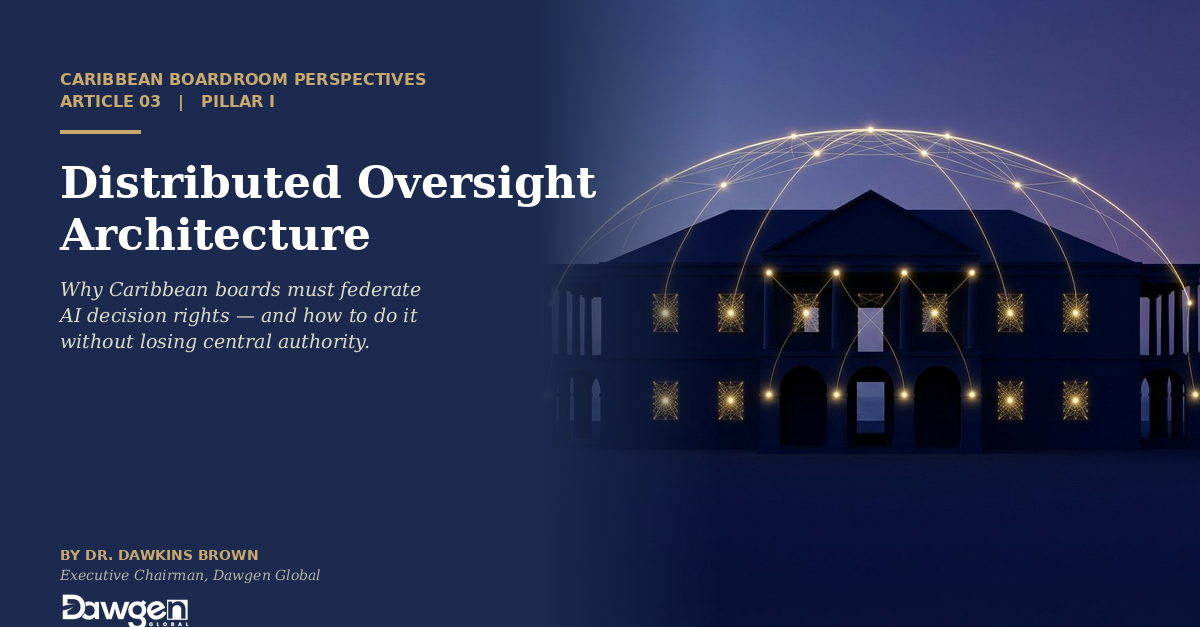
Distributed Oversight Architecture: Why Caribbean Boards Must Federate AI Decision Rights — and How to Do It Without Losing Central Authority

  THE ARGUMENT IN ONE PARAGRAPH Traditional governance routes consequential decisions to the centre. Artificial intelligence makes consequential decisions at the edge — in the credit officer’s interface, in the underwriter’s screen, in the analyst’s recommendation engine — at machine speed, in volumes the centre cannot review. Pillar I of the AEGIS™ framework — Distributed...

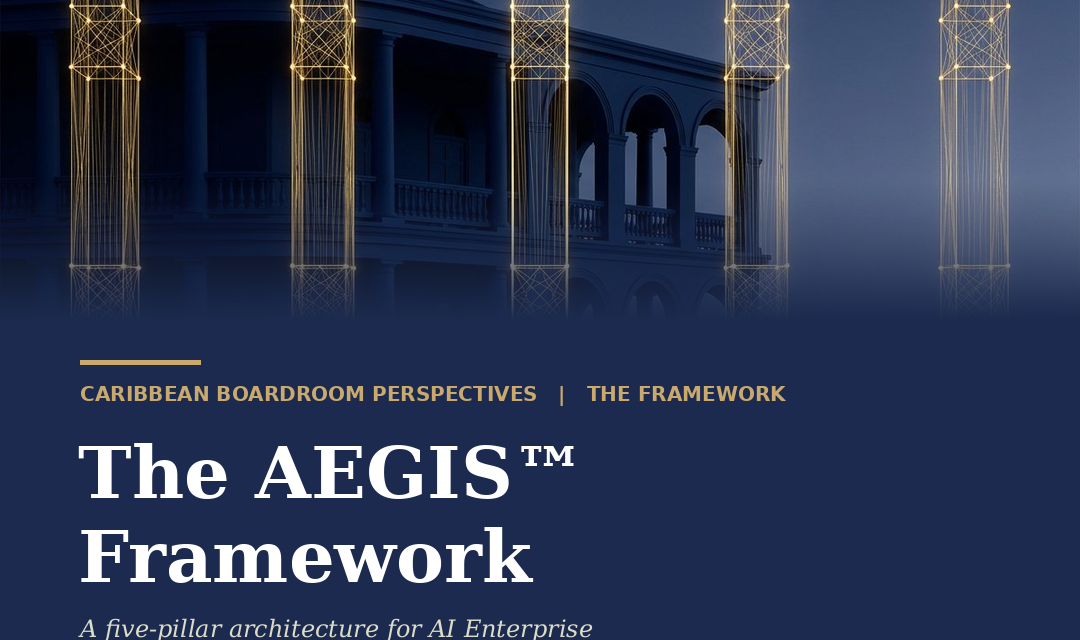
Introducing AEGIS™: A Five-Pillar AI Governance Framework for Caribbean Institutions

  THE ARGUMENT IN ONE PARAGRAPH Artificial intelligence does not extend the risk surface of an institution — it inverts the assumptions on which the institution’s governance was built. The Landmark Edition of Caribbean Boardroom Perspectives set out The Governance Inversion Thesis, arguing that AI requires governance itself to be re-architected, not merely extended. This...

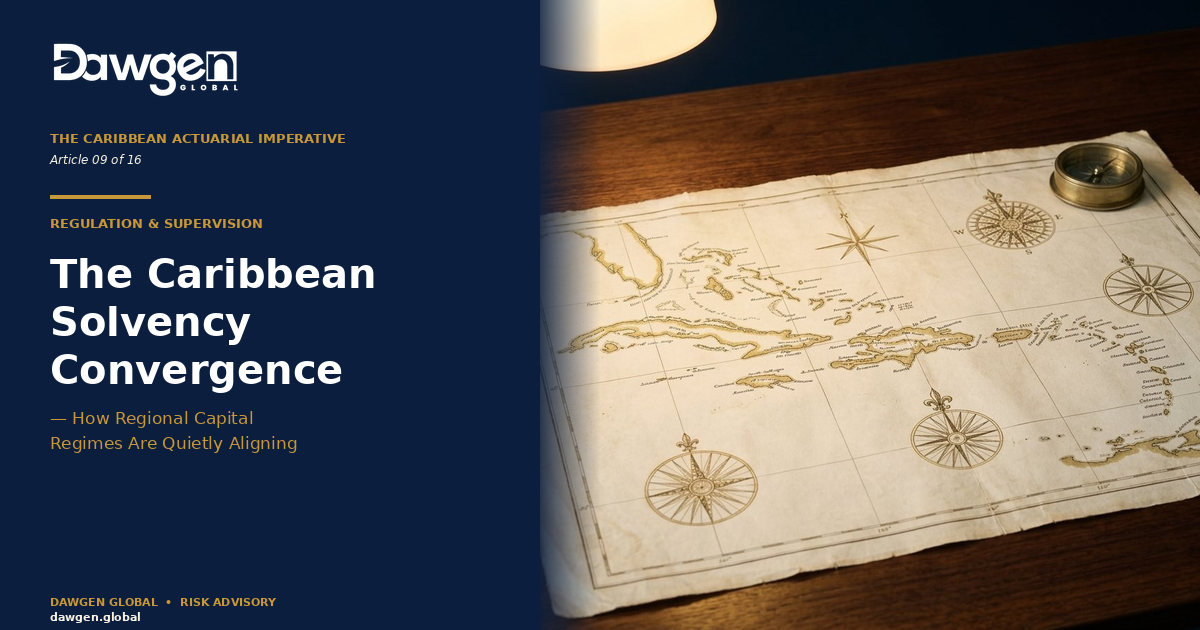
The Caribbean Solvency Convergence: How Regional Capital Regimes Are Quietly Aligning

  How regional capital regimes are quietly aligning, what cross-border insurers should be doing now to anticipate the convergence — and why the carriers that wait for the policy announcement will be the ones playing catch-up There is no Caribbean equivalent of Solvency II. There may never be one. But the regional capital regimes that...

ORSA in the Caribbean: From Regulatory Filing to Genuine Risk Management Discipline

Most regional ORSAs are written for the supervisor. The next generation will be written for the board. The difference is starting to matter — to regulators, to rating agencies, and to the carriers themselves The Own Risk and Solvency Assessment (ORSA) is the most consequential governance document a regulated insurer produces. Done well, it tells...

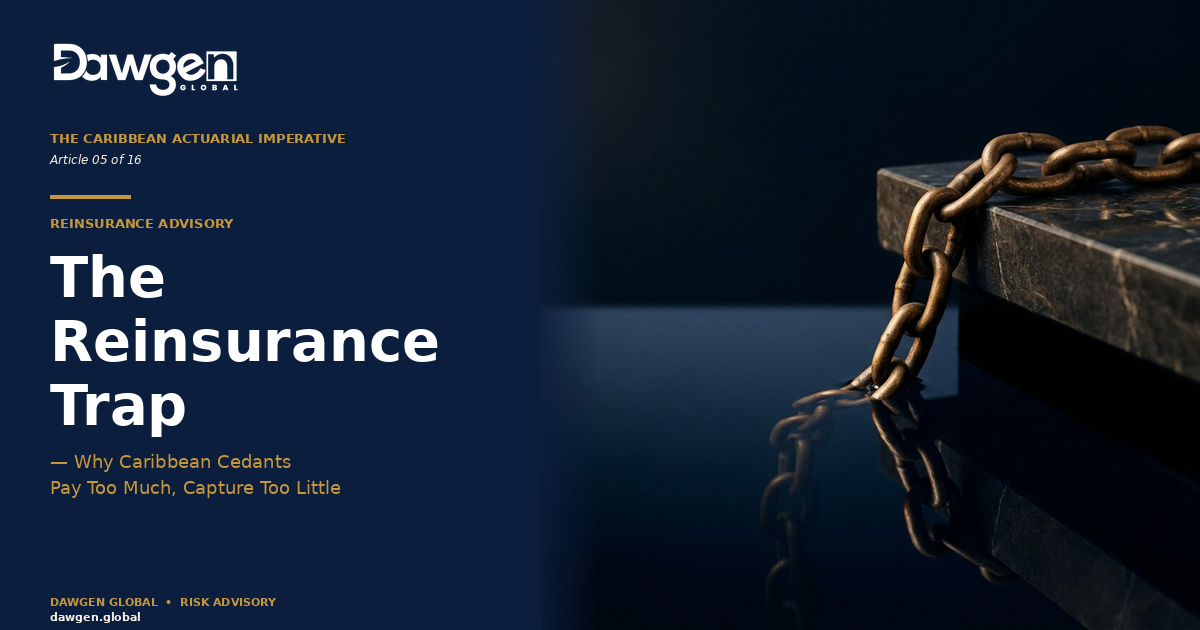
The Reinsurance Trap: Why Caribbean Cedants Pay Too Much and Capture Too Little

Three structural reasons most regional reinsurance programmes underperform — and the four-step economic review that typically recovers 10 to 20 percent of reinsurance spend within 18 months Reinsurance is the single largest expense line for most Caribbean life and health insurers after claims and operating costs. It is also the line where cedants have the...

IFRS 17, Three Years On: What Caribbean Insurers Got Right, What They Got Wrong, and What Comes Next

The technical transition is largely complete. The strategic transition is not. An honest assessment of where the region stands — and the five priorities for the next 24 months IFRS 17 became effective for accounting periods beginning 1 January 2023. For Caribbean insurers, that meant three years of implementation work, hundreds of millions in cumulative...

Foo-WLogo

Dawgen Global is an integrated multidisciplinary professional service firm in the Caribbean Region. We are integrated as one Regional firm and provide several professional services including: audit, accounting, tax, IT, risk, HR, performance, M&A, corporate recovery and other advisory services

Where to find us?
img-footer-map
Dawgen Social links
Stay ahead of Caribbean business
Receive our latest insights on tax, regulation, technology and the economy across the region.


    © 2026 Copyright Dawgen Global. All rights reserved.  ·  Privacy Notice  ·  Cookie Policy  ·  Website Terms  ·  Accessibility

    Talk to us