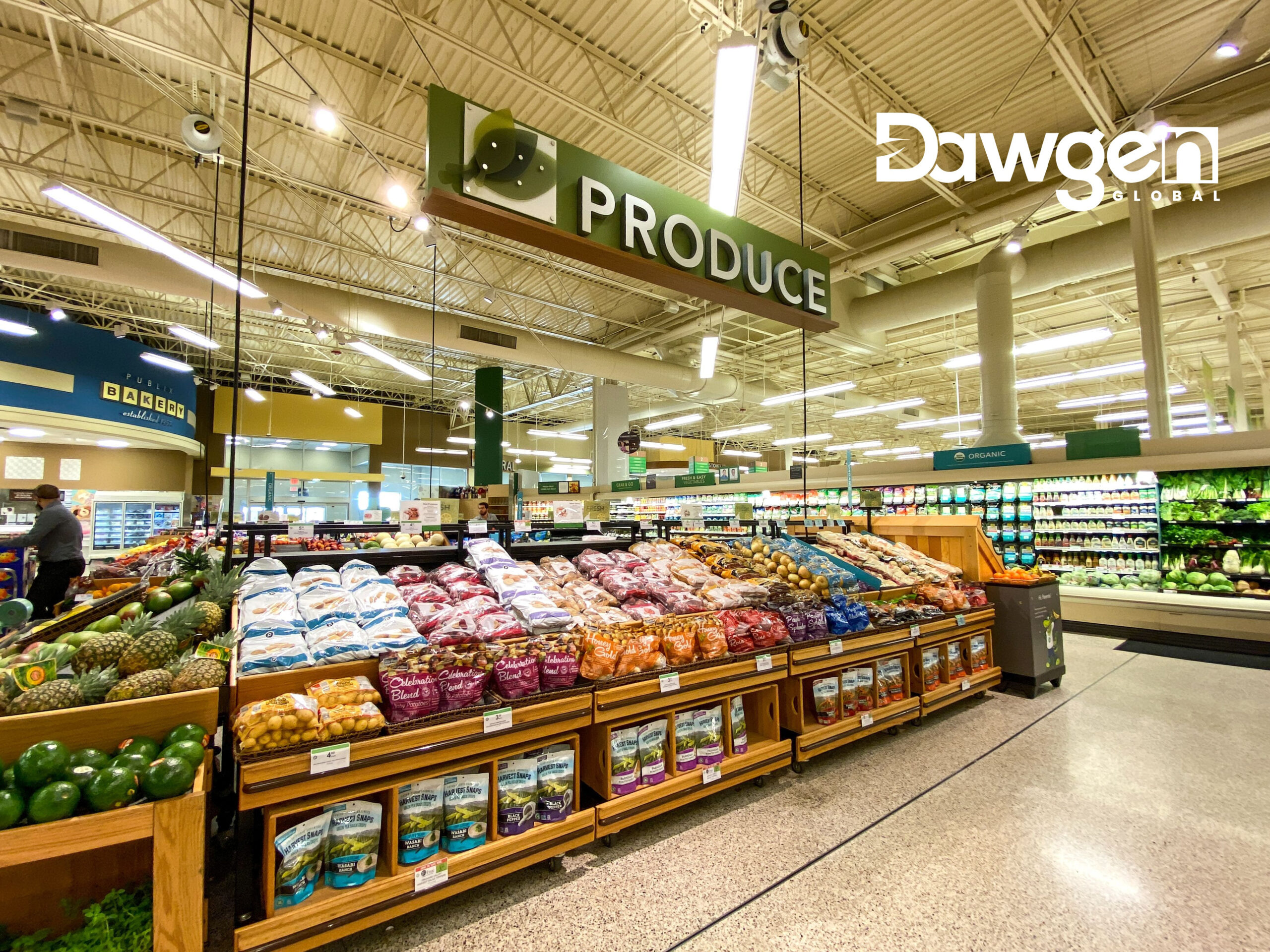
Frameworks only earn trust when they can be applied to real enterprise decisions under real constraints—margin pressure, working capital strain, customer concentration, execution risk, and governance scrutiny. Boards and executives do not merely need “innovation language.” They need a disciplined method to evaluate options, design value capture, and scale without exposing the enterprise to avoidable downside.
This article demonstrates how the Dawgen Enterprise Value Design Framework (DEVD) can be applied end-to-end using a realistic, board-relevant case scenario in food manufacturing and distribution—a sector where unit economics, supply chain reliability, pricing discipline, and operating model resilience determine survival.
The case uses the nine business model patterns (BMPs) you have been exploring:
-
Long Tail
-
Make More of It
-
Mass Customization
-
No Frills
-
Open Business Model
-
Open-Source
-
Orchestrator
-
Pay-Per-Use
-
Pay What You Want
1) Case Scenario: “CaribFoods Co.” — A Regional Food Manufacturer Under Margin and Working Capital Pressure
Background (hypothetical but realistic):
CaribFoods Co. is a mid-sized food manufacturer and distributor supplying supermarkets, wholesalers, and food-service operators across several Caribbean markets. Its portfolio includes commodity staples and a smaller set of branded and specialty products.
Current model challenges:
-
Margin compression due to retail price pressure and private label competition.
-
Cost inflation and supply volatility impacting raw materials, packaging, and energy.
-
Rising cost-to-serve driven by fragmented delivery routes, small drop sizes, and customer-specific requirements.
-
Working capital strain from long receivable cycles and inventory complexity.
-
Limited pricing power in commodity segments; frequent promotions erode value capture.
-
Operational fragility during peak seasons: service failures create retailer penalties and reputational damage.
Board concern:
“We have strong production assets and distribution reach, but our current business model is too exposed to commodity pricing, cost volatility, and retailer power. We need a more resilient model—without adding complexity we cannot govern.”
This is exactly the type of challenge DEVD is designed to solve.
2) Applying DEVD Step 1: Strategic Signal Review
DEVD begins by translating market signals into a clear enterprise value thesis.
Key signals
-
Retailers are pushing price concessions, longer payment terms, and compliance penalties.
-
Consumers are trading down on some categories while seeking niche/specialty products in others.
-
Distribution economics are deteriorating: fuel, cold chain, and last-mile costs are rising.
-
Food-service customers demand flexibility (smaller lots, faster turnarounds) without paying for it.
-
Digital ordering is growing, but many suppliers have not optimized for data-driven replenishment.
Enterprise value thesis (proposed)
CaribFoods must redesign its model to:
-
protect margin by segmenting the portfolio and controlling cost-to-serve,
-
stabilize cash conversion and reduce working capital strain,
-
monetize existing assets and capabilities beyond commodity products, and
-
scale regionally through disciplined pattern mixing and governance.
Now DEVD moves to the assumptions.
3) Applying DEVD Step 2: Enterprise Value Logic Assessment (EVLA)
EVLA makes the business model’s “hidden logic” explicit across four pillars: Demand, Differentiation, Delivery, Dollars.
Demand assumptions (examples)
-
Retailers will accept premium or niche ranges if supported by proven demand and reliable supply.
-
Food-service buyers will pay for speed and reliability if priced transparently.
-
Direct-to-business ordering can reduce friction and improve forecast accuracy.
Differentiation assumptions (examples)
-
On-time-in-full delivery (OTIF), quality consistency, and traceability can support price discipline.
-
Category management and data-driven replenishment can increase retailer confidence and shelf presence.
-
Brand trust can support niche expansions if portfolio governance is tight.
Delivery assumptions (examples)
-
Cost-to-serve can be reduced materially by route rationalization and minimum order policies.
-
Production assets have unused capacity that can be monetized through contract manufacturing or co-packing.
-
Partnerships can improve cold chain efficiency without CaribFoods owning all infrastructure.
Dollars assumptions (examples)
-
Margin leakage is concentrated in promotions, small drops, high returns, and ad hoc customer requirements.
-
Tiered pricing and service-level pricing can restore profitability without losing key accounts.
-
Variable service charging (pay-per-use logistics and handling) can make costs recoverable.
EVLA output: an Assumptions & Evidence Register with owners and proof thresholds.
Now DEVD evaluates the nine patterns.
4) Applying DEVD Step 3: Pattern Fit Evaluation Using the Nine BMPs
CaribFoods evaluates which patterns fit the value thesis and the realities of customers, operations, economics, and governance.
1) No Frills (High fit for commodity segments)
Use case: commodity staples where price dominates.
Design intent: strip non-essential variety, standardize packaging, simplify SKUs, enforce service boundaries.
Risk: attempting “cheap” without redesigning cost structure (discounting masquerading as strategy).
Governance requirement: strict portfolio and service boundary discipline.
2) Mass Customization (High fit for private label and key accounts)
Use case: retailer private label, customer-specific formats, or branded variants for top customers.
Design intent: modular product components and packaging to deliver variety without chaos.
Risk: customization overruns, operational complexity, and margin leakage.
Governance requirement: configuration pricing and cost-to-serve controls.
3) Long Tail (Moderate-to-high fit for specialty and niche growth)
Use case: specialty, health-conscious, ethnic, or seasonal products aggregated across the region.
Design intent: broaden assortment strategically to win niche margins and loyalty.
Risk: catalogue complexity and inventory carrying costs.
Governance requirement: profitability by niche and SKU governance.
4) Make More of It (Very high fit to monetize assets)
Use case: monetize capacity and know-how through co-packing, contract manufacturing, waste-to-value, by-product lines.
Design intent: create new revenue streams without proportional overhead.
Risk: cannibalization, capacity conflicts, quality risk.
Governance requirement: capacity allocation rules and quality controls.
5) Pay-Per-Use (High fit as a value capture mechanism)
Use case: logistics services, cold storage, rush orders, special handling, returns management.
Design intent: customers pay for variable services that currently destroy margin.
Risk: disputes and customer resistance if pricing is opaque.
Governance requirement: transparent rate cards, measurement, and billing integrity.
6) Open Business Model (High fit for partnerships and distribution efficiency)
Use case: partner with logistics providers, regional distributors, farmers, packaging suppliers, cold chain partners.
Design intent: expand reach and resilience without owning all assets.
Risk: partner failures become enterprise failures.
Governance requirement: third-party risk management, SLAs, audit rights, and traceability.
7) Orchestrator (Moderate fit as an expandable platform play)
Use case: a marketplace/ordering platform connecting retailers and food-service buyers to a broader supplier network, with CaribFoods coordinating quality and delivery.
Design intent: aggregate regional demand/supply and reduce distribution inefficiency.
Risk: liquidity challenges, reputational exposure, disputes.
Governance requirement: trust systems, standards enforcement, and defensible take-rate economics.
8) Open-Source (Tactical fit for capability-building)
Use case: release open forecasting templates, category management playbooks, or food safety tools to drive adoption and partnerships.
Risk: limited direct monetization unless paired with services.
Governance requirement: clear “free vs paid” boundaries and IP control.
9) Pay What You Want (Low fit for core; tactical fit for brand and trial)
Use case: sampling initiatives, recipe bundles, seasonal tasting events, or promotional kits for awareness.
Risk: brand dilution if used broadly.
Governance requirement: strictly bounded use, tied to conversion pathways.
Pattern selection decision (recommended mix):
-
No Frills for price-driven commodity lines
-
Mass Customization for private label / key accounts
-
Long Tail for niche margin growth
-
Make More of It to monetize assets and expertise
-
Pay-Per-Use to recover variable service costs
-
Open Business Model to leverage partners
-
Orchestrator held as a staged option after evidence proves feasibility
Now DEVD moves to monetization architecture.
5) Applying DEVD Step 4: Monetization Architecture and Value Capture Controls
CaribFoods redesigns monetization to align price with value and cost drivers.
Pricing and revenue architecture (illustrative)
-
Commodity Tier (No Frills): low price, standardized delivery terms, minimum order quantities, simplified SKUs.
-
Key Account Tier (Mass Customization): modular product configurations priced by complexity and service level.
-
Niche Tier (Long Tail): premium pricing, targeted distribution, curated SKUs with tight inventory controls.
Pay-Per-Use rate card (examples)
-
rush production turnaround fee,
-
special handling/cold chain surcharge,
-
small-drop delivery fee below threshold,
-
returns and reverse logistics fee,
-
category management and merchandising support fee.
Guardrails (value capture controls)
-
discount approval thresholds and promotion governance,
-
cost-to-serve reporting by customer and channel,
-
minimum order policies and delivery frequency rules,
-
billing transparency, dispute processes, and audit trails,
-
service-level agreements linked to pricing.
Monetization becomes designed and governable—not negotiated and leaky.
6) Applying DEVD Step 5: Pilot-to-Scale Governance (Evidence Before Exposure)
CaribFoods implements controlled pilots tied to decision gates.
Pilot portfolio (examples)
-
Pilot No Frills SKU rationalization with two retail chains (measure margin and service stability).
-
Pilot Pay-Per-Use logistics and handling fees with one food-service segment (measure disputes and recovery).
-
Pilot Mass Customization private label modular configuration for one retailer (measure complexity and profitability).
-
Pilot Make More of It co-packing for one external brand (measure capacity, quality, and cash terms).
-
Pilot one Long Tail niche range across three markets (measure sell-through and inventory behavior).
Evidence thresholds (examples)
-
contribution margin uplift by customer/channel,
-
OTIF performance maintained or improved,
-
dispute rate below threshold,
-
cash conversion improved (collections discipline and terms),
-
inventory turns protected for Long Tail SKUs,
-
partner SLA compliance (Open Business Model).
Decision gates
-
Gate 1: traction + delivery feasibility
-
Gate 2: unit economics and value capture confirmation
-
Gate 3: controls maturity + scale readiness
Scaling is approved only when evidence and controls justify expansion.
7) Board-Ready Oversight: Using the DEVD Decision Scorecard
CaribFoods provides a standardized DEVD board pack insert:
-
Enterprise Value Canvas
-
Assumptions & Evidence Register summary
-
Pattern Fit Scorecard summary
-
Monetization Architecture sheet
-
Risk, Controls & Assurance Map
-
Pilot-to-Scale Gate plan
Board discussion becomes structured and decision-quality improves:
-
What assumptions remain unproven?
-
Where does cost-to-serve threaten margin?
-
How do promotions and discounts affect value capture?
-
Are partner dependencies governed?
-
What evidence is required before we expand regionally?
8) Expected Outcomes: What “Success” Looks Like
If executed with discipline, outcomes include:
-
margin protection through portfolio segmentation and service-level pricing,
-
improved cash conversion through better terms, transparency, and billing discipline,
-
reduced cost-to-serve via rationalized SKUs and governed delivery rules,
-
new revenue streams from asset monetization (co-packing, by-products),
-
niche growth via a governed Long Tail strategy,
-
better resilience through partner leverage with strong controls.
Most importantly: CaribFoods develops a repeatable capability to redesign its business model as conditions change.
DEVD Makes Business Model Patterns Executable—Not Theoretical
Business model patterns provide a powerful toolkit. But without disciplined design and governance, pattern adoption becomes complexity, leakage, and risk.
DEVD converts pattern innovation into governed enterprise value creation by ensuring:
-
assumptions are explicit, owned, and tested,
-
patterns are selected based on fit, not fashion,
-
monetization is engineered as architecture,
-
pilots prove viability before exposure,
-
and boards can oversee reinvention with confidence.
Next Step!
If your organization operates in manufacturing, distribution, food production, or other margin-sensitive sectors and is exploring new pricing models, portfolio strategies, partner ecosystems, or asset monetization, Dawgen Global can apply DEVD to design and scale the right business model—without betting the enterprise.
To discuss a DEVD application workshop tailored to your organization, email [email protected].
About Dawgen Global
“Embrace BIG FIRM capabilities without the big firm price at Dawgen Global, your committed partner in carving a pathway to continual progress in the vibrant Caribbean region. Our integrated, multidisciplinary approach is finely tuned to address the unique intricacies and lucrative prospects that the region has to offer. Offering a rich array of services, including audit, accounting, tax, IT, HR, risk management, and more, we facilitate smarter and more effective decisions that set the stage for unprecedented triumphs. Let’s collaborate and craft a future where every decision is a steppingstone to greater success. Reach out to explore a partnership that promises not just growth but a future beaming with opportunities and achievements.
 Email: [email protected]
  Visit: Dawgen Global Website

 WhatsApp Global Number : +1 555-795-9071
Caribbean Office: +1876-6655926 / 876-9293670/876-9265210  WhatsApp Global: +1 5557959071
USA Office: 855-354-2447
Join hands with Dawgen Global. Together, let’s venture into a future brimming with opportunities and achievements


