
Ransomware has become the most disruptive cyber threat facing organisations in the region. Boards that rehearse their response, protect their backups and plan cyber and hurricane recovery together are the ones that recover fastest.
Every Caribbean board knows what to do when a hurricane is forecast. There is a plan, there are roles, supplies are checked and critical records are protected. Staff know who to call. Customers know services may be interrupted, and recovery begins as soon as the storm passes.
Now ask the same board what happens if every computer in the organisation is encrypted overnight by a criminal group demanding payment. In many cases there is no plan, no agreed roles, no tested backups and no idea who to call. Yet for many organisations, ransomware is now as likely to disrupt operations as a major storm, and far less predictable.
This article explains how ransomware works, why it is so damaging, and the practical steps boards can take to make sure their organisation could keep operating, or recover quickly, if it struck tonight.
How ransomware attacks unfold
Ransomware is rarely a sudden event. It is usually the final stage of an intrusion that began days or weeks earlier.
An attacker gets in, often through a stolen password, a phishing email, an unpatched internet-facing system or a remote access service without multi-factor authentication. Once inside, they explore the network quietly, steal administrator credentials and identify the most valuable systems and data. Increasingly, they copy sensitive data out of the organisation before taking any visible action.
Then, often on a weekend or public holiday, they act. They delete or encrypt backups, disable security tools and encrypt servers and computers across the organisation. A ransom note appears, demanding payment in cryptocurrency in exchange for a decryption key and a promise not to publish the stolen data.
Why ransomware is so damaging
Ransomware combines several harms at once.
- Operations stop. Billing, bookings, payroll, payments, customer service and public services can all halt at the same time. For utilities, hospitals and transport operators, the effects reach far beyond the organisation itself.
- Backups are targeted. Attackers deliberately search for and destroy backups before encrypting systems. Organisations that believed they were protected discover their backups were connected to the same network and accessible with the same stolen credentials.
- Data is stolen. Double extortion means that even if systems are restored, stolen data may be published or sold, creating legal, regulatory and reputational damage.
- Decisions are made under pressure. Leaders must decide quickly on containment, communications, regulators, insurers and whether to engage with the attackers, often without a plan or the right advice.
| Paying a ransom does not guarantee recovery. Tested backups and a rehearsed plan are the most reliable route back. |
The controls that matter most
Ransomware readiness does not require dozens of new tools. A small number of controls block most attacks or limit the damage.
Multi-factor authentication on email, remote access and administrator accounts makes stolen passwords far less useful. It is one of the most effective controls available and one of the first things insurers ask about.
Patching internet-facing systems quickly removes the vulnerabilities attackers scan for constantly.
Limiting administrator access reduces how far an attacker can move once inside. Everyday work should be done with standard accounts, and administrator rights should be granted only when needed.
Network segmentation separates critical systems so that an infection in one area cannot spread freely to everything else.
Protected, tested backups are the last line of defence. Backups should be isolated or immutable, use separate credentials and be restored in tests regularly to prove they work.
Monitoring catches the warning signs before encryption begins: unusual sign-ins, new administrator accounts, security tools being disabled and large volumes of data leaving the network.
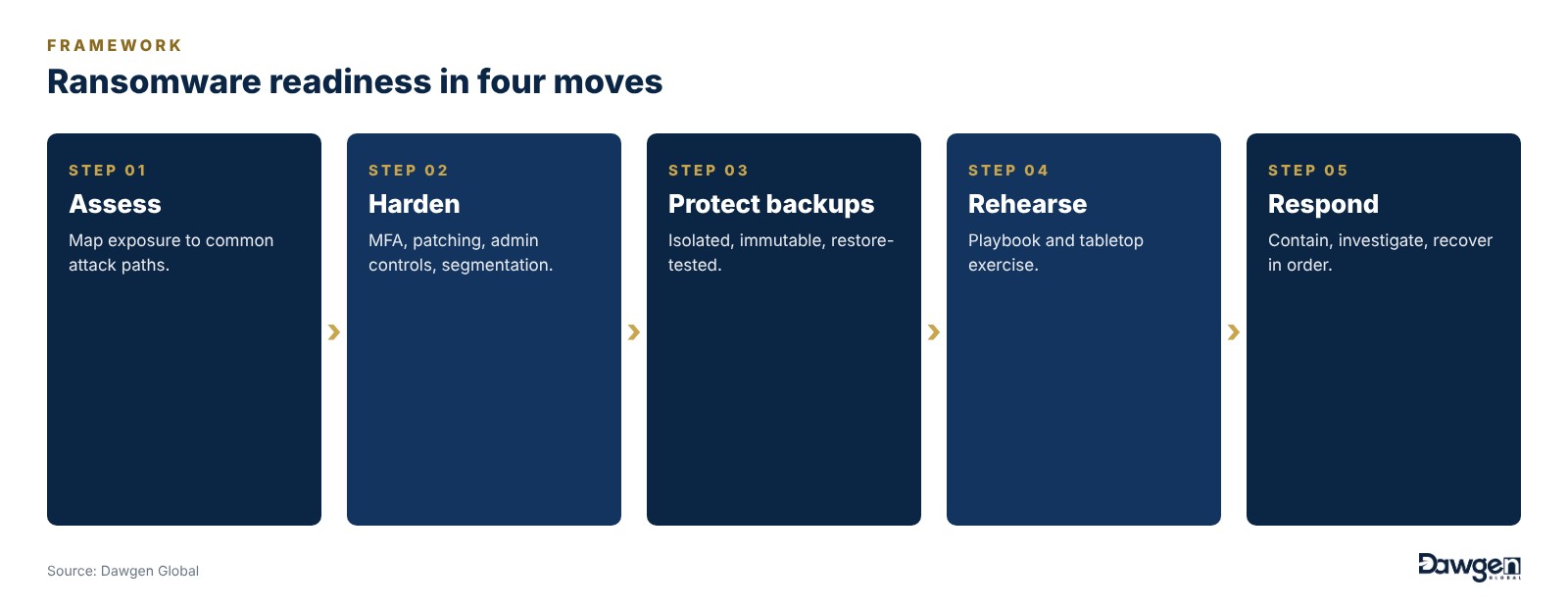
Figure 1. Ransomware readiness in four moves
Recovery assurance: proving you can restore
Many organisations discover during an attack that their backups were incomplete, infected or deleted. Recovery assurance prevents that discovery happening at the worst possible moment.
It begins with a review of backup design. Are copies held offline or in immutable storage? Are backup systems protected by separate credentials? Do backups cover all critical systems and data? Are backup jobs monitored so failures are noticed?
It continues with restore testing. Critical systems are restored in a controlled test, recovery times are measured and compared with what the business can tolerate, and the order in which systems should be recovered is agreed in advance. The result is a documented recovery runbook that IT teams can follow under pressure.
Playbooks and decision rights
In a ransomware attack, confusion about who decides what wastes precious time. A ransomware playbook sets out, in advance:
- who leads the response, and who has authority to isolate systems or shut down services
- which external advisers to call, including incident responders, legal counsel and the insurer
- how and when to inform staff, customers, regulators and the media
- how to approach the question of ransom demands, including legal and sanctions considerations
- the priority order for restoring systems
The playbook should be short enough to use under pressure and stored somewhere accessible even if company systems are down.
Tabletop exercises: rehearsing the worst day
A tabletop exercise walks the leadership team through a realistic ransomware scenario, step by step, in a safe setting. The facilitator introduces developments, such as encrypted servers, a ransom note, a journalist’s call or a regulator’s question, and the team decides how to respond.
Exercises consistently reveal gaps that documents alone do not: contact lists that are out of date, unclear decision rights, missing communication templates, assumptions about backups that turn out to be wrong and uncertainty about insurance conditions. They also build confidence, so leaders are calmer and faster in a real incident.
The most valuable exercises involve the chief executive and senior managers, IT and security leads, legal, communications and finance, and, where appropriate, board representatives. Running one every year keeps plans current as people and systems change.
Combining cyber and hurricane recovery
Caribbean organisations have a natural advantage. Many already plan for hurricanes, floods and extended power outages. The disciplines are the same: identify critical services, protect data, agree roles, communicate clearly and restore in priority order.
Rather than maintaining separate plans, the most efficient approach is a single resilience plan that covers every major disruption, with specific annexes for cyber attacks. Backups protected against ransomware are also protected against storm damage. Communication plans that work during an outage also work during a cyber crisis. Recovery priorities agreed for one apply to both.
What boards should ask
Directors do not need technical expertise to oversee ransomware risk. They need clear answers to a small number of questions.
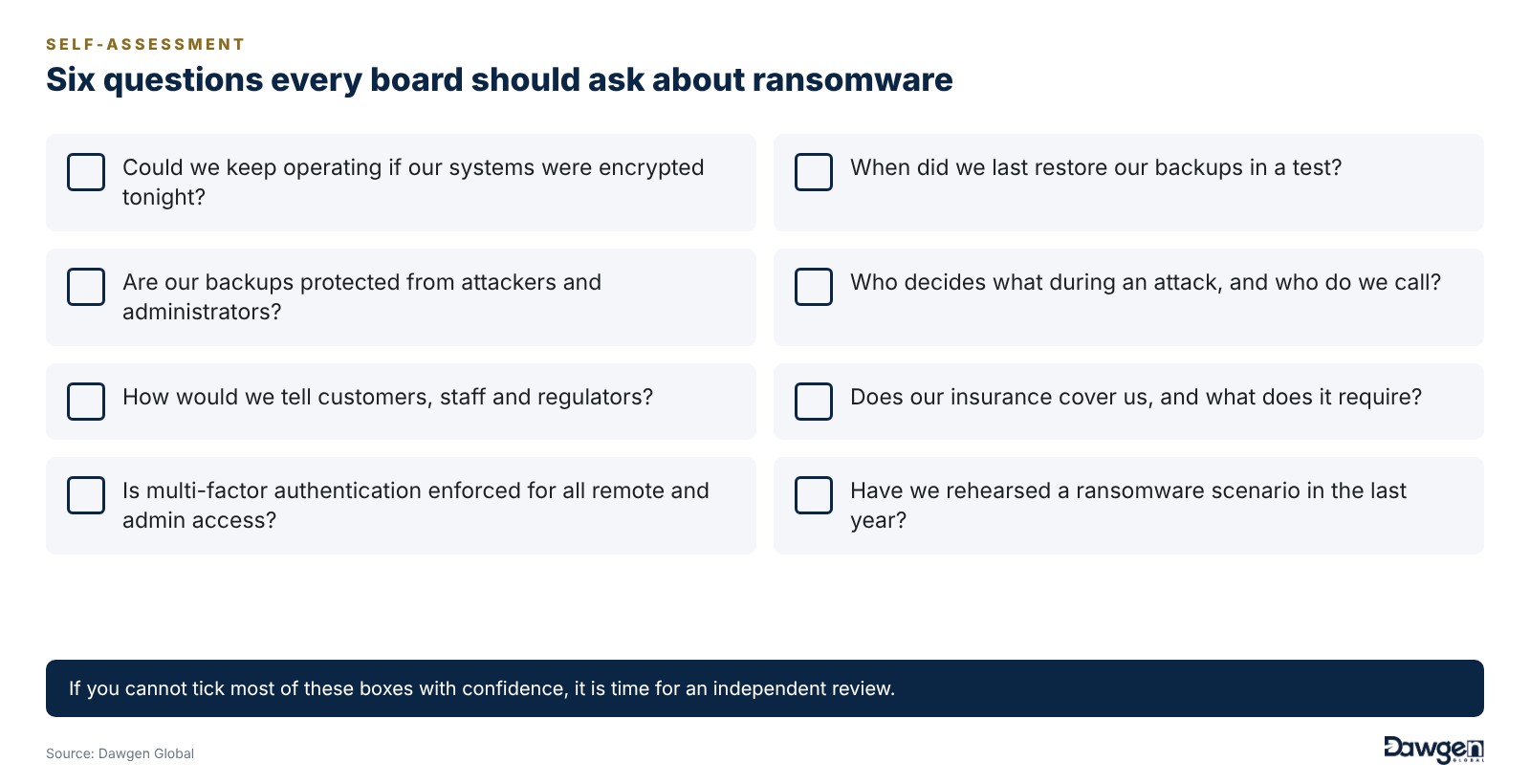
Figure 2. Six questions every board should ask about ransomware
If management cannot answer these questions confidently, the board should commission an independent readiness assessment and a tabletop exercise. Both are modest investments compared with the cost of an attack.
Starting in the next 90 days
A practical 90-day plan for ransomware readiness looks like this:
- Month one: assess. Review exposure against common attack paths and confirm whether backups are isolated and recent.
- Month two: fix the essentials. Enforce multi-factor authentication for remote and administrator access, patch internet-facing systems and test a restore of at least one critical system.
- Month three: rehearse. Write a short ransomware playbook and run a tabletop exercise with the leadership team, then report the findings to the board.
A composite case: the backup that would have failed
A public body in the region believed it was well protected. It ran nightly backups, had modern antivirus software and had never suffered a serious incident. After a ransomware attack on a similar organisation elsewhere in the Caribbean, its board asked management for assurance.
A readiness assessment and restore test told an uncomfortable story. The backups were stored on a server inside the same network, managed with the same administrator accounts used for everyday systems. An attacker who obtained those credentials, which is exactly what ransomware groups set out to do, could have deleted every backup before encrypting the network. Restore testing also showed that recovering the most critical system would take far longer than management had assumed.
The tabletop exercise that followed revealed further gaps. The contact list for the incident response team was out of date, no one was sure who had authority to shut down public-facing services, and there were no prepared statements for the media or the public.
Within three months, backups had been moved to isolated, protected storage with separate credentials, multi-factor authentication had been enforced for all administrator accounts, a ransomware playbook had been written and the board had a clear, tested plan.
The ransom question
Boards often ask whether they should pay if attacked. There is no simple answer, but several points are worth understanding in advance.
Paying does not guarantee that a working decryption key will be provided, that data will be deleted rather than sold, or that the attackers will not return. Decryption can be slow and incomplete. Payments may raise legal and sanctions questions, particularly where attackers are linked to sanctioned groups or jurisdictions, and some insurers and regulators set conditions around them. Most importantly, organisations with protected, tested backups and a rehearsed plan are rarely forced into the decision at all.
The time to consider the ransom question is during a calm planning session with legal advice, not at three in the morning with systems down and a countdown timer on the screen.
Communication during a crisis
Ransomware incidents quickly become public, especially when they disrupt services. Clear, timely communication protects trust. Effective plans prepare holding statements in advance, agree who speaks for the organisation, plan how staff will be informed if email is unavailable and set out how customers, partners and regulators will be updated. Honest, regular updates, even when the full picture is not yet known, are far better received than silence.
Conclusion
Ransomware is the cyber threat most likely to stop a Caribbean organisation in its tracks. It is also one of the most preventable and survivable, for organisations that prepare. Strong access controls, protected and tested backups, a clear playbook and a rehearsed leadership team turn a potential catastrophe into a difficult but manageable few days.
The question for every board is whether, if systems were encrypted tonight, the organisation could keep operating tomorrow. The time to find out is now, in a safe room, rather than during a real attack.
| TAKE THE NEXT STEP
Rehearse your worst day before it happens. Our Ransomware Readiness & Cyber Crisis Response brochure sets out how we assess exposure, test backups, write playbooks and run executive tabletop exercises. Read the brochure: Ransomware Readiness & Cyber Crisis Response — https://www.dawgen.global/service-brochure/ransomware-readiness/ Talk to us: Request a ransomware readiness assessment or book a tabletop exercise. Write to info@dawgen.global, or to your territory desk at territory@dawgen.com. About Dawgen GlobalDawgen Global is an independent, integrated multidisciplinary professional services firm headquartered at 47 Trinidad Terrace, New Kingston, Jamaica, serving 35 territories across the Caribbean. Founded and led by Dr. Dawkins Brown, Executive Chairman, the firm is independent and not affiliated with any international network. It delivers a full suite of professional services under one roof: audit and assurance; tax advisory; IT and digital transformation; risk management; cybersecurity; actuarial and insurance regulatory advisory; HR advisory; mergers and acquisitions; corporate recovery; business advisory and strategy; accounting BPO and virtual CFO services; and legal process outsourcing. The proposition is simple: big-firm capability without the big-firm price. Dawgen Global’s integrated approach is built for the specific complexities and opportunities of the Caribbean market, helping organizations make sharper, better-informed decisions that drive measurable progress. To explore a partnership, reach out:
|
Related service: Explore how we can help →