
In many Caribbean organisations, cybersecurity is left to an IT manager who is also running networks, help desks and projects. Without a security leader there is no strategy, no clear priorities and no reporting the board can rely on. A virtual CISO fills that gap at a fraction of the cost of a full-time hire.
Ask who is responsible for cybersecurity in a typical Caribbean organisation and the answer is usually the IT manager. Ask what the security strategy is, and the answer is often a list of tools. Ask what the board receives by way of cyber reporting, and the room goes quiet.
This is not a criticism of IT managers. They are usually stretched across networks, help desks, software projects, supplier management and security, all at once. Security leadership is a distinct discipline. It requires setting strategy, assessing risk, writing policy, managing suppliers, working with auditors and regulators, preparing for incidents and explaining all of it to the board in business terms. Few IT managers have the time, and many have not been given the mandate.
In large organisations, this role belongs to a Chief Information Security Officer, or CISO. For most Caribbean organisations, a full-time CISO is neither affordable nor necessary. A virtual CISO offers a practical alternative.
Why security leadership matters
Without someone leading security, several things tend to happen.
Spending lacks direction. Money goes on tools suggested by vendors rather than on the controls that reduce the most risk. Organisations end up with overlapping products and persistent gaps.
Risks go unmanaged. No one maintains a view of the organisation’s top cyber risks, how they are changing and who owns each one.
Policies fall behind. Information security policies are missing, copied from templates or years out of date, and staff do not know what is expected.
The board is in the dark. Directors are accountable for cyber risk but receive no regular, understandable reporting. When something goes wrong, they cannot show that they exercised proper oversight.
External questions become harder. Banks, insurers, regulators and large customers increasingly ask detailed questions about security controls and frameworks. Without a security leader, answering them becomes a scramble.
| A virtual CISO gives you senior security leadership for the hours you need, with a team behind them. |
What a virtual CISO does
A virtual CISO is an experienced security leader who works with your organisation on a part-time or fractional basis, typically a set number of days each month. They provide the strategic leadership of a full-time CISO without the full-time cost.
Their responsibilities usually include setting a security strategy and roadmap aligned with business goals; establishing governance, including policies, roles, a risk register and a security committee; overseeing security projects, suppliers and internal teams; preparing the organisation for audits, regulatory reviews and certification; leading incident preparedness and, when needed, coordinating the response; and reporting to management and the board in clear business terms.
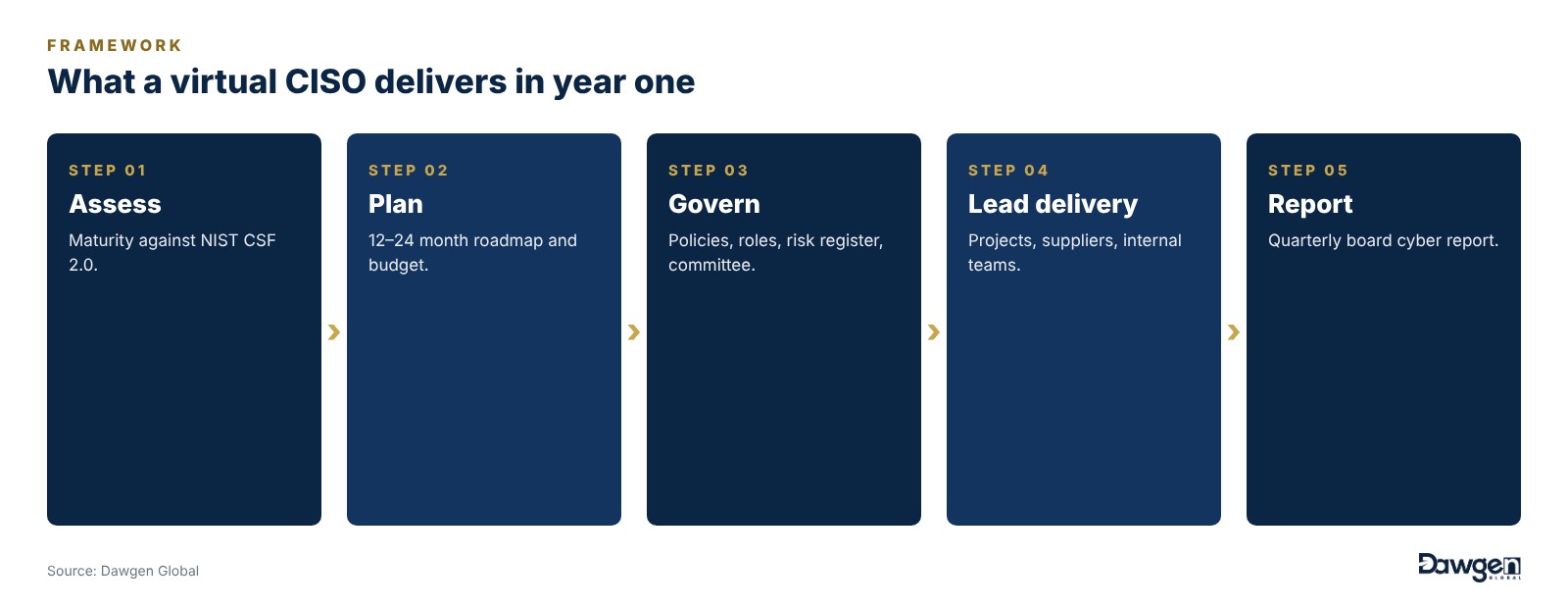
Figure 1. What a virtual CISO delivers in year one
A good virtual CISO is backed by a wider team. When a penetration test, forensic investigation or SOC service is needed, they can draw on specialists rather than starting from scratch with a new supplier.
Frameworks that bring order
Two frameworks are particularly useful for Caribbean organisations building a security programme.
The NIST Cybersecurity Framework 2.0 organises cybersecurity into six functions: Govern, Identify, Protect, Detect, Respond and Recover. The addition of the Govern function in version 2.0 places cyber risk firmly within enterprise governance and board oversight. A NIST CSF assessment scores current maturity in each area and defines a target profile, giving the roadmap a clear structure.
ISO/IEC 27001 is the international standard for information security management systems. Certification demonstrates to customers, partners and regulators that information security is managed systematically, with risk assessment, documented controls, internal audit and management review. The current version of the standard was published in 2022, with an updated set of controls reflecting modern threats such as cloud security, threat intelligence and secure coding.
The two complement each other. NIST CSF is excellent for measuring maturity and planning improvement. ISO/IEC 27001 provides a certifiable management system that customers and partners recognise.
The path to ISO/IEC 27001
For organisations whose customers, partners or regulators expect certification, a structured path makes the process manageable.
It begins with scoping: agreeing which parts of the business, locations and systems the management system will cover. A sensible scope focuses on the services customers care about most.
Next comes a gap assessment against the standard, followed by a risk assessment that identifies information risks and decides how each will be treated.
The organisation then implements the required policies, controls and records, and runs the management system for a period so there is evidence it works.
Finally, an internal audit and management review are completed before an accredited certification body carries out the external audit. A virtual CISO guides the organisation through each step, while the certification itself is awarded independently.
For business process outsourcing providers, technology firms, financial institutions and companies serving international clients, certification can be the difference between winning and losing contracts.
Board cyber reporting that works
Boards need cyber reporting that shows risk, progress and decisions in business terms. Long technical reports full of vulnerability counts do not help directors exercise oversight.
A good quarterly board cyber report fits on two pages. It shows the top cyber risks and how they have moved, progress against the security roadmap, significant incidents and lessons learned, results from testing, training and exercises, and any decisions or investments the board needs to make. Over time, it tracks maturity against the NIST framework, so directors can see whether the organisation is getting stronger.
Directors also benefit from an annual briefing on the current threat landscape, the board’s role during a cyber crisis and the questions they should be asking management.
Managing supplier risk
Many Caribbean organisations depend heavily on suppliers: managed IT providers, software vendors, cloud platforms and outsourced services. Each one with access to your systems or data is part of your attack surface.
A virtual CISO brings supplier risk under control by identifying which suppliers have access to what, assessing their security, including appropriate security clauses in contracts and monitoring critical suppliers over time. Remote access by suppliers is a particular focus, as it is a common route for attackers.
A composite case: winning the contract
Consider a business process outsourcing company bidding for a contract with an international client. The client asked for evidence of an information security management system aligned with ISO/IEC 27001. The company had capable IT staff but no security leader and few written policies.
A virtual CISO ran a gap assessment, wrote a complete policy set, built the risk register and controls, introduced supplier security reviews, led internal audits and prepared the company for certification. The work was completed within the client’s deadline, the contract was secured and the company now reports cyber risk to its board every quarter. The investment paid for itself many times over with a single contract.
Is a virtual CISO right for you?
The signs that an organisation needs security leadership are usually clear.
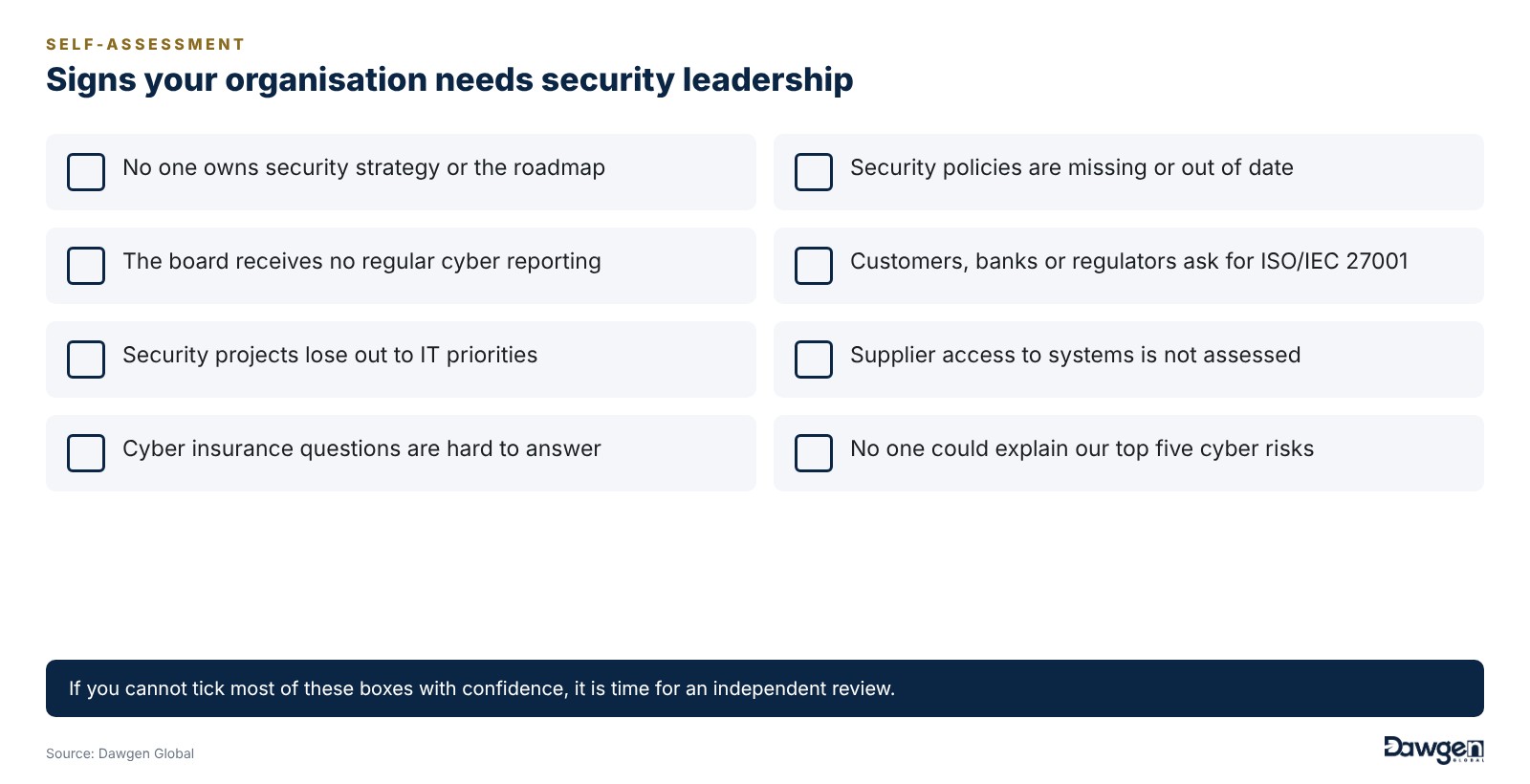
Figure 2. Signs your organisation needs security leadership
A virtual CISO is particularly well suited to mid-sized organisations without a security leader, regulated entities facing rising supervisory expectations, companies pursuing ISO/IEC 27001 to win or keep contracts, boards wanting clear cyber reporting, and organisations rebuilding their programme after an incident.
Common objections, answered
“Our IT manager handles security.” IT management and security leadership are different roles with different priorities. A virtual CISO works alongside your IT manager, giving them strategic support and a mandate, rather than replacing them.
“We cannot afford a CISO.” A virtual CISO costs a fraction of a full-time executive, scales up or down with need and comes with access to a wider team of specialists.
“Frameworks are too bureaucratic for us.” Frameworks can be applied in proportion to an organisation’s size. A small organisation needs a short, practical policy set and a simple risk register, not a library of documents.
“Certification is only for big companies.” Many small and mid-sized Caribbean firms pursue certification precisely because it lets them compete for international work.
Getting started
A NIST CSF maturity assessment is a practical first step. It shows where you stand across all six functions, identifies the most important gaps and provides the foundation for a roadmap. From there, a virtual CISO can lead delivery month by month.
The first 90 days with a virtual CISO
Organisations often ask what a virtual CISO actually does in the early months. A typical first 90 days looks like this.
Weeks one to four: listen and assess. The virtual CISO meets the chief executive, finance, operations, IT and key suppliers, reviews existing policies, audit findings, insurance requirements and recent incidents, and completes a maturity assessment against the NIST Cybersecurity Framework.
Weeks five to eight: prioritise and plan. Findings are turned into a risk register and a prioritised roadmap with costs, owners and timelines. Quick wins, such as enforcing multi-factor authentication or reviewing administrator access, begin immediately.
Weeks nine to twelve: govern and report. A security committee is established, the most urgent policies are approved, supplier access is reviewed and the first quarterly cyber report goes to the board. From this point, the virtual CISO leads delivery month by month.
Sector perspectives
For financial institutions, the virtual CISO aligns the programme with supervisory expectations, supports examinations and manages risks around digital channels and payment systems.
For BPO and technology providers, the focus is often certification, client security questionnaires and contractual requirements from international customers.
For public bodies, governance, accountability to oversight bodies and protection of citizen data take priority.
For healthcare providers, patient data protection, availability of clinical systems and supplier management are central.
Measuring the value
The value of a virtual CISO shows up in measurable ways: maturity scores rising against the NIST framework, critical vulnerabilities fixed faster, contracts won on the strength of certification, smoother insurance renewals and audits, and a board that can describe its organisation’s top cyber risks with confidence.
Conclusion
Cybersecurity is now a board-level risk, and every board needs someone leading it. For most Caribbean organisations, a full-time CISO is out of reach, but leaving security to an overstretched IT manager is no longer acceptable either.
A virtual CISO bridges that gap: senior leadership, a clear strategy, recognised frameworks, proper governance and reporting that directors can rely on, at a cost that fits.
| TAKE THE NEXT STEP
Put experienced security leadership at your table. Our Virtual CISO & Cyber Governance brochure explains how our virtual CISO service, ISO/IEC 27001 readiness programmes and NIST CSF assessments help boards govern cyber risk with confidence. Read the brochure: Virtual CISO & Cyber Governance — https://www.dawgen.global/service-brochure/virtual-ciso/ Talk to us: Request a virtual CISO proposal or a NIST CSF maturity assessment. Write to info@dawgen.global, or to your territory desk at territory@dawgen.com. About Dawgen GlobalDawgen Global is an independent, integrated multidisciplinary professional services firm headquartered at 47 Trinidad Terrace, New Kingston, Jamaica, serving 35 territories across the Caribbean. Founded and led by Dr. Dawkins Brown, Executive Chairman, the firm is independent and not affiliated with any international network. It delivers a full suite of professional services under one roof: audit and assurance; tax advisory; IT and digital transformation; risk management; cybersecurity; actuarial and insurance regulatory advisory; HR advisory; mergers and acquisitions; corporate recovery; business advisory and strategy; accounting BPO and virtual CFO services; and legal process outsourcing. The proposition is simple: big-firm capability without the big-firm price. Dawgen Global’s integrated approach is built for the specific complexities and opportunities of the Caribbean market, helping organizations make sharper, better-informed decisions that drive measurable progress. To explore a partnership, reach out:
|
Related service: Explore how we can help →