A Caribbean renewable energy company approaches three local banks for $8M expansion financing. Project economics are solid: 18% IRR, 5.2-year payback, long-term power purchase agreement with utility.
Response from all three banks:
- “We’re at lending capacity for energy sector”
- “Need 40% equity contribution (you have 25%)”
- “12% interest rate, 7-year term (economics don’t work)”
Project appears dead. Company lacks additional equity. Local debt markets won’t work.
CFO asks: “What about international financing? Development banks? Climate funds?”
Advisor responds: “They require ESG frameworks, impact metrics, sustainability reporting. You don’t have any of that.”
Six months later, different scenario:
- Developed ESG framework aligned with IFC Performance Standards
- Measured environmental impact (CO₂ reduction, energy generation)
- Documented social impact (jobs created, community benefits)
- Established governance structure meeting international standards
Result:
- $10M financing secured from International lenders
- 7.5% interest rate (vs. 12% local banks)
- 12-year term (vs. 7-year local)
- 20% equity requirement (vs. 40% local)
- Technical assistance grant: $150K for capacity building
Better terms. Larger amount. Longer tenor. Plus free technical support.
The difference? ESG credentials unlocked access to $12+ trillion sustainable finance market completely unavailable to companies lacking ESG frameworks.
This article reveals how Caribbean businesses access sustainable finance, which ESG lenders actually operate in the region, what they require, and the step-by-step roadmap for becoming “bankable” to this massive capital pool.
The $12 Trillion Sustainable Finance Market: Why Caribbean Businesses Are Mostly Shut Out
Global sustainable finance has exploded:
- 2015: $500 billion
- 2020: $5 trillion
- 2024: $12+ trillion
This includes:
Green Bonds: $2.3 trillion outstanding (renewable energy, energy efficiency, sustainable transport)
Sustainability-Linked Loans: $1.8 trillion (interest rates tied to ESG performance targets)
ESG Funds: $4.2 trillion assets under management
Development Finance: $3.7 trillion from multilateral/bilateral institutions
Caribbean businesses could theoretically access significant portions. But most don’t. Why?
Barrier #1: ESG Frameworks Required
Sustainable finance lenders require demonstrable ESG performance BEFORE providing capital. They want to see:
- Environmental impact measurement
- Social impact documentation
- Governance structures
- ESG risk management
Most Caribbean mid-market companies lack these frameworks entirely.
Barrier #2: Impact Metrics and Reporting
Sustainable finance isn’t just about claims. It requires quantified, verified impact:
- Tons of CO₂ reduced
- Renewable energy generated (MWh)
- Jobs created (disaggregated by gender)
- Water conserved
- Waste diverted from landfills
Caribbean companies typically don’t track these metrics systematically.
Barrier #3: Third-Party Verification
Lenders don’t just accept self-reported impact. They require independent verification:
- Annual ESG audits
- Impact measurement validation
- Compliance certification
This adds cost and complexity Caribbean companies often avoid.
The result? Massive capital pool theoretically available. Practically inaccessible to most Caribbean businesses.
But here’s the opportunity: Building ESG credentials isn’t as difficult or expensive as most think—and unlocks financing unavailable through traditional channels.
The Sustainable Finance Ecosystem: Which Lenders Actually Operate in the Caribbean
Not all $12 trillion is accessible to Caribbean mid-market companies. But significant portions ARE—if you know where to look:
Tier 1: Multilateral Development Banks
IFC (International Finance Corporation)
- Focus: Private sector development
- Ticket size: $2M-$100M
- Sectors: Infrastructure, renewable energy, financial institutions, manufacturing, agribusiness
- Requirements: IFC Performance Standards (8 core standards covering E&S risk)
- Sweet spot: $5M-$25M deals in climate, renewable energy, sustainable infrastructure
IDB (Inter-American Development Bank)
- Focus: Latin America and Caribbean development
- Ticket size: $5M-$50M
- Sectors: Infrastructure, climate resilience, renewable energy, SME financing
- Caribbean specificity: Climate adaptation financing priority
CDB (Caribbean Development Bank)
- Focus: Caribbean-specific development
- Ticket size: $1M-$20M
- Sectors: Infrastructure, tourism, renewable energy, climate resilience
- Advantage: Understanding of Caribbean context, smaller deal sizes
Tier 2: Climate Funds
Green Climate Fund (GCF)
- Focus: Climate mitigation and adaptation
- Ticket size: $10M-$250M (but co-financing structures enable smaller deals)
- Access: Through accredited entities (including CDB, IDB)
- Caribbean opportunity: Small island developing states (SIDS) priority
Adaptation Fund
- Focus: Climate adaptation projects
- Ticket size: $1M-$10M
- Caribbean relevance: Hurricane resilience, coastal protection, water security
Tier 3: Impact Investors and ESG Funds
Blue like an Orange Sustainable Capital
- Focus: Caribbean sustainable businesses
- Ticket size: $500K-$5M
- Structure: Equity and debt
Responsibility
- Focus: Emerging markets impact
- Ticket size: $1M-$15M
- Sectors: Financial inclusion, climate, agriculture
Tier 4: Local Banks with Green Financing Programs
Several Caribbean commercial banks now offer green financing:
- FirstCaribbean Green Financing
- JMMB Green Bonds
- NCB Renewable Energy Financing
Ticket sizes smaller ($500K-$3M) but easier access than multilaterals.
Key Insight: Multiple financing sources exist at different scales. Caribbean companies can start with local green financing ($500K-$3M), then graduate to impact investors ($1M-$5M), then multilaterals ($5M+) as ESG credentials strengthen.
The ESG Bankability Framework: Making Your Business Attractive to Sustainable Finance
Accessing sustainable finance requires systematic ESG credential building. Here’s the roadmap:
Phase 1: ESG Foundation (Months 1-3)
Step 1: ESG Materiality Assessment
Identify which ESG issues matter most:
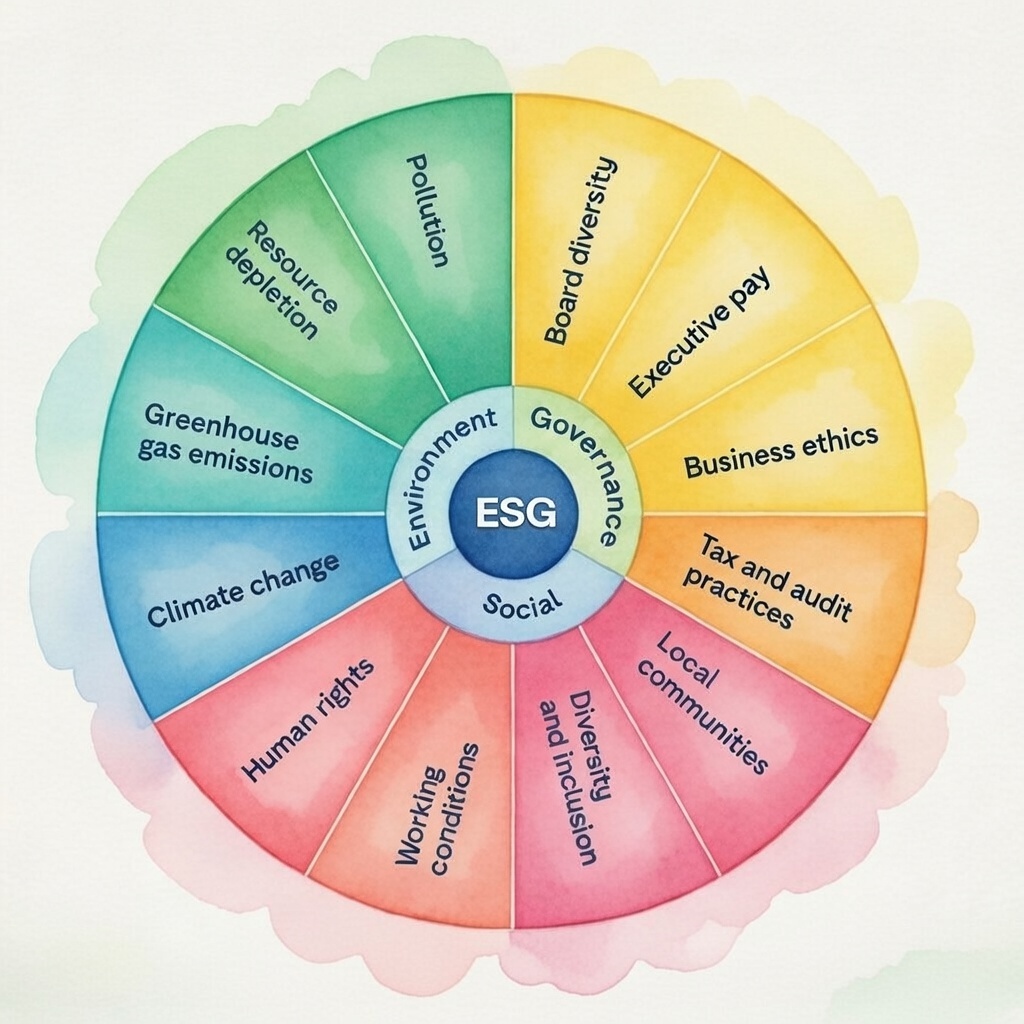
- Environmental: Energy use, emissions, waste, water, biodiversity
- Social: Labor practices, health/safety, community impact, diversity
- Governance: Board structure, ethics, compliance, risk management
Focus on 5-7 material issues (not all 30+ possibilities).
Investment: $5K-$8K facilitated assessment
Step 2: Baseline Measurement
Measure current performance on material issues:
- Energy consumption: Total kWh, cost, % renewable
- Emissions: Scope 1 + 2 (direct + electricity) minimum
- Water: Consumption, source, efficiency
- Waste: Generation, diversion rate, recycling
- Employment: Total jobs, % women, % local, turnover
- Safety: Lost time injury frequency rate (LTIFR)
Investment: 40-60 hours internal data collection OR $8K-$12K external support
Step 3: Policy Development
Create core ESG policies:
- Environmental policy (commitments, targets, management approach)
- Labor and working conditions
- Health and safety
- Community engagement
- Ethics and anti-corruption
Investment: $6K-$10K policy development
Total Phase 1: $19K-$30K, 3 months
Phase 2: Impact Quantification (Months 4-6)
Step 4: Impact Measurement Framework
Define how you’ll measure and report impact:
- Environmental impact metrics (CO₂ avoided, energy generated, water conserved)
- Social impact metrics (jobs created, training hours, community investment)
- Governance metrics (board diversity, compliance, ethics training)
Align with recognized standards:
- IRIS+ (Impact Reporting & Investment Standards)
- GHG Protocol (greenhouse gas emissions)
- SDG alignment (Sustainable Development Goals)
Investment: $10K-$15K framework development
Step 5: Data Collection Systems
Implement tracking:
- Monthly data collection processes
- Automated where possible (utility bills, HR systems)
- Manual tracking for non-automated metrics
- Quarterly verification and validation
Investment: $5K-$8K setup, 10-15 hours monthly ongoing
Total Phase 2: $15K-$23K, 3 months
Phase 3: Governance & Risk (Months 7-9)
Step 6: ESG Risk Management
Develop systematic risk management:
- ESG risk register (identify, assess, prioritize)
- Mitigation plans for top risks
- Monitoring and review process
- Incident response procedures
Investment: $8K-$12K development
Step 7: Governance Structure
Formalize ESG oversight:
- Board-level ESG responsibility (committee or designated director)
- Management ESG committee (cross-functional)
- Clear accountability (who owns what)
- Reporting lines and escalation
Investment: $5K-$8K structure development
Total Phase 3: $13K-$20K, 3 months
Phase 4: External Validation (Months 10-12)
Step 8: First ESG Report
Produce annual ESG report:
- Baseline year performance
- Material issues focus
- Impact quantification
- Forward-looking targets
Format: 20-30 pages (NOT 100+ page comprehensive report)
Investment: $12K-$18K report production
Step 9: Third-Party Verification
Obtain independent assurance:
- Limited assurance ESG audit (environmental data, social metrics)
- GHG emissions verification
- Verification statement for report
Investment: $15K-$25K verification
Total Phase 4: $27K-$43K, 3 months
TOTAL 12-MONTH INVESTMENT: $74K-$116K
At completion, you have:
✓ Comprehensive ESG framework
✓ Quantified impact metrics
✓ Verified performance
✓ Published ESG report
✓ BANKABILITY to sustainable finance lenders
From Capital Constrained to Capital Advantaged: The ESG Transformation
Return to our opening scenario—the renewable energy company denied by local banks.
Here’s what the 12-month ESG credential building delivered:
Without ESG Credentials:
- Local bank maximum: $5M
- Interest rate: 12%
- Term: 7 years
- Equity required: 40% ($3.2M)
- Technical assistance: $0
- Project economics: Marginal (barely works)
With ESG Credentials:
- IFC financing: $10M
- Interest rate: 7.5% (4.5% savings = $450K over term)
- Term: 12 years (improved cash flow)
- Equity required: 20% ($2M, vs. $3.2M)
- Technical assistance grant: $150K
- Project economics: Strong (22% IRR)
Net benefit of ESG credentials:
- $1.2M less equity required
- $450K interest savings over term
- $150K technical assistance
- Improved project viability
Total value: $1.8M+ from $95K ESG investment (18:1 return)
Plus: Project actually happens (vs. not happening with local financing).
This pattern repeats across sectors:
Manufacturing: IFC working capital facilities at LIBOR+4% vs. local 10-12%
Agriculture: IDB/CDB sustainable agriculture financing with technical assistance
Tourism: Green Climate Fund climate-resilient infrastructure financing
Infrastructure: Multilateral development bank project finance at attractive terms
The lesson:
ESG isn’t compliance overhead. It’s a strategic capital access tool.
For Caribbean businesses facing expensive, restrictive local financing, building ESG credentials unlocks:
- Larger financing amounts
- Lower interest rates (300-450 bps savings common)
- Longer terms (improving cash flow)
- Lower equity requirements
- Technical assistance and capacity building
Investment: $75K-$115K over 12 months
Return: 10-20x through improved financing terms, larger deals, and project viability
The $12 trillion sustainable finance market is real. It’s active. It’s accessible.
But only to businesses with ESG credentials.
TAKE ACTION: Unlock Sustainable Finance Access
Need financing for expansion, infrastructure, or climate projects? Dawgen Global’s ESG Bankability Assessment evaluates your readiness for sustainable finance and charts the path to access.
Get Your Complimentary ESG Bankability Assessment—a 30-minute consultation where we’ll:
✓ Assess current ESG credential level
✓ Identify which sustainable finance sources match your sector/size
✓ Outline gaps preventing bankability
✓ Provide 12-month roadmap to sustainable finance readiness
Practical guidance on accessing capital unavailable through traditional channels.
Available via secure video call to businesses across Jamaica, Trinidad & Tobago, Barbados, and the wider Caribbean.
SCHEDULE YOUR ESG BANKABILITY ASSESSMENT
 Email: [email protected]

 WhatsApp Global Number : +1 555-795-9071
About Dawgen Global
“Embrace BIG FIRM capabilities without the big firm price at Dawgen Global, your committed partner in carving a pathway to continual progress in the vibrant Caribbean region. Our integrated, multidisciplinary approach is finely tuned to address the unique intricacies and lucrative prospects that the region has to offer. Offering a rich array of services, including audit, accounting, tax, IT, HR, risk management, and more, we facilitate smarter and more effective decisions that set the stage for unprecedented triumphs. Let’s collaborate and craft a future where every decision is a steppingstone to greater success. Reach out to explore a partnership that promises not just growth but a future beaming with opportunities and achievements.
Email: [email protected]  Visit: Dawgen Global Website
WhatsApp Global Number : +1 555-795-9071
Caribbean Office: +1876-6655926 / 876-9293670/876-9265210  WhatsApp Global: +1 5557959071
USA Office: 855-354-2447
Join hands with Dawgen Global. Together, let’s venture into a future brimming with opportunities and achievements


